Amid evolving US-China relations, what comes next for China's trade policy?
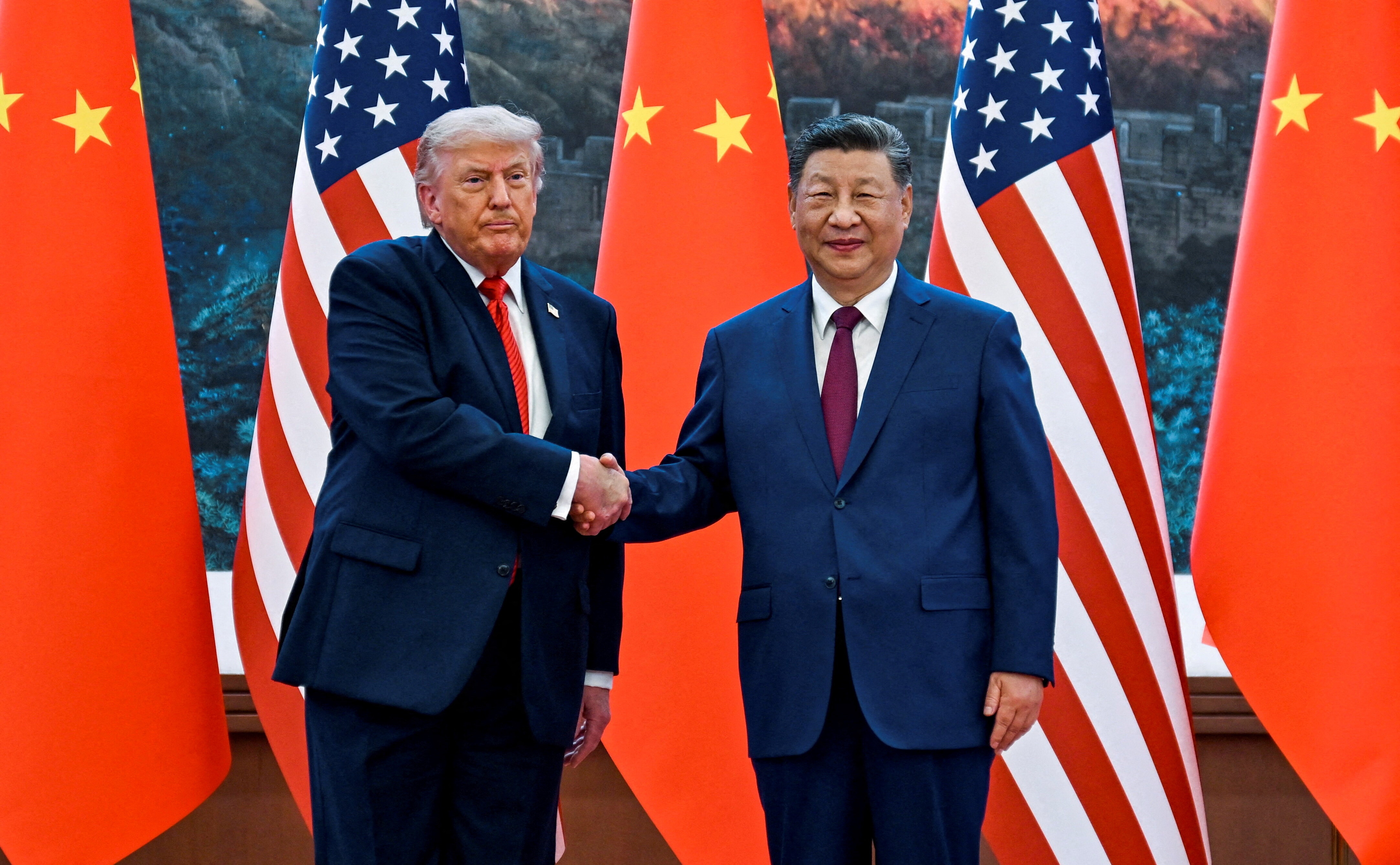
The summit between President Donald Trump and President Xi Jinping was held in Beijing in May. Image: Reuters/Kenny Holston
Weihuan Zhou
Professor; Co-Director, China International Business & Economic Law (CIBEL) Centre, Faculty of Law and Justice, University of New South Wales- The Trump-Xi summit in Beijing in May aimed to restabilize US-China trade relations amid a tense geopolitical backdrop.
- Yet there remains limited clarity over the future and stability of the world's most consequential bilateral relationship after the summit.
- Looking forward, China’s trade policy will be implemented in line with its main economic strategies, with four trends likely to emerge.
The Trump-Xi summit held in Beijing on 14-15 May was supposed to be a critical step to restabilize US-China trade relations amid a particularly tense geopolitical backdrop as the war in the Middle East continued to disrupt global energy markets and trade.
Yet, the outcome of the summit offers only limited clarity regarding the future direction and stability of the world’s most consequential bilateral relationship.
Looking ahead to 2030, China’s trade policy will continue to serve its own economic strategies and priorities envisaged in the Fifteenth Five-Year Plan (2026-2030), which was formally adopted in March.
What did the Trump-Xi Summit deliver?
US President Donald Trump and Chinese President Xi Jinping shared a new vision of building “a constructive relationship of strategic stability” to bring enhanced certainty and predictability for the global economy. While this consensus represents a major milestone in their effort to reset bilateral relations, uncertainties and tensions are likely to persist.
The agreed approach to restore stability is “managed trade” through the creation of a board of trade to manage bilateral trade in non-sensitive goods, the reduction of tariff and non-tariff barriers in selective agricultural and non-agricultural sectors, and China’s commitments to purchase US aircraft and “address US concerns” about critical mineral supplies.
As the details of these arrangements are still subject to further negotiation, it is hard to ascertain whether a political compromise will materialize, and even if achieved, how long it will last.
Most of these matters have come up in the bilateral talks during Trump’s first term as US president during 2017-2021, but remained unresolved. The more comprehensive US-China Phase One Deal, concluded in January 2020, did not prevent further escalation of the bilateral trade war through tariffs and export controls in subsequent years.
More fundamentally, while “reciprocity” is vital to the bargain, the two sides hold divergent views on what it means and entails. For the US administration, reciprocity has largely focused on trade deficits.
In contrast, China views reciprocity more broadly in maintaining an overall balance in trade commitments commensurate to a country’s level of development. Disagreements on such fundamental concepts do not bode well for the negotiation or implementation of any agreed outcomes.
Equally importantly, concerns about unfair competition or trade practices will remain an enduring and systemic challenge. The summit has again avoided core “fairness” issues related to state-owned enterprises, industrial policy and subsidies.
The intensified US-China strategic competition requires flexibility for both sides to take necessary action to advance their own economic and security interests. The summit provides no assurance for a ceasefire in the bilateral trade in sensitive areas. Instead, new tit-for-tat restrictions or even strategic decoupling in select industries remain possible in the foreseeable future.
What’s next for China’s trade policy?
Despite China’s pivot towards domestic circulation, international trade remains crucial due to the country’s reliance on global markets for imports and exports. Going forward, China’s trade policy will be designed and implemented in alignment with its overarching economic strategies. Four major trends are likely to emerge.
Selective liberalization
China will continuously open its market in selective areas that serve its economic priorities, including satisfying domestic demand for high-quality foreign goods and services, boosting domestic consumption, enhancing market competition and efficiency, and promoting technological advancement.
As evidenced by China’s recent policy announcements, selective opening will span various sectors and stages of supply chain, such as research and development centres for future/frontier technologies, imports of foreign medicine and advanced medical equipment, foreign investment in advanced manufacturing, and international cooperation in the services industry in general. Pilot programmes will be trialled via free trade zones before a nationwide roll-out.
Regional cooperation
While generally supporting the World Trade Organization (WTO) and the broader rules-based global trading system, China’s trade policy will shift more to regional cooperation. This shift is crucial for China to shape next-generation trade norms and standards, build external trust on its economic policies, and create a more stable and predictable environment for trade.
Thus, while China remains active in WTO reform talks, it has continued to pursue accession to more advanced trade agreements such as the Comprehensive and Progressive Agreement for Trans-Pacific Partnership (CPTPP).
Meanwhile, the China-ASEAN Free Trade Area 3.0 Upgrade, concluded in October 2025, is one of China’s latest accomplishments in deepening regional trade and expanding cooperation on contemporary trade-related matters including digitalization, green economy and supply chain connectivity. Cooperation with regional partners will also offer a strategic defence against rising US bilateral deals in Asia and elsewhere.
Growing diversification
To avert geopolitical risks and enhance supply chain resilience, China will strive to diversify the sources of imports and the destinations of its exports.
China will do so via established and emerging mechanisms – particularly free trade agreements (such as the Regional Comprehensive Economic Partnership (RCEP)), the Belt and Road Initiative, and the so-called “China Plus One” strategy – in which firms diversify supply chains across different regions such as Southeast Asia, Latin America and Africa rather than concentrating production exclusively in China.
Such diversification will likely lead to increased transshipment, greater outward investment by Chinese firms in non-US markets, and other actions necessary to circumvent US-imposed trade and investment barriers.
Institutionalized countermeasures
China’s approach in responding to foreign trade restrictions will become more systematic and institutionalized.
Since the outbreak of the US-China trade war, China has introduced and applied a growing set of regulatory instruments to address foreign sanctions, “discrimination”, barriers to trade or investment, foreign governments’ extraterritorial regulatory measures, and any measures perceived to harm China’s supply chain safety.
These instruments expand China’s traditional policy toolkit beyond tariffs and export controls, enabling more coordinated and timely deployment of countermeasures against foreign actions targeting China.
As US bilateral and regional agreements increasingly incorporate provisions aimed at discouraging or limiting third countries’ economic engagement with China (the so-called “poison pill” clauses), Beijing may use this new framework to respond when such arrangements result in new trade barriers or supply chain disruptions affecting China.
No shortcuts to lasting stability on bilateral relations
The Trump–Xi summit might temporarily de-escalate bilateral tensions, and the shared goal of stabilizing relations offers some hope in that direction.
However, deep-seated divergences over fundamental and systemic issues between the US and China, underpinned by persistent geopolitical and strategic self-interests, are unlikely to disappear on their own.
Simply by-passing these issues will not produce lasting stability. Meaningful progress will instead require genuine and sustained consultation, engagement and careful management of differences on both sides.
Don't miss any update on this topic
Create a free account and access your personalized content collection with our latest publications and analyses.
License and Republishing
World Economic Forum articles may be republished in accordance with the Creative Commons Attribution-NonCommercial-NoDerivatives 4.0 International Public License, and in accordance with our Terms of Use.
The views expressed in this article are those of the author alone and not the World Economic Forum.
Stay up to date:
Trade and Investment
Related topics:


Forum Stories newsletter
Bringing you weekly curated insights and analysis on the global issues that matter.
More on Geo-Economics and PoliticsSee all

Charlotte Edmond
August 28, 2026


