Opinion
Armed groups have penetrated global supply chains. Here's what businesses must do
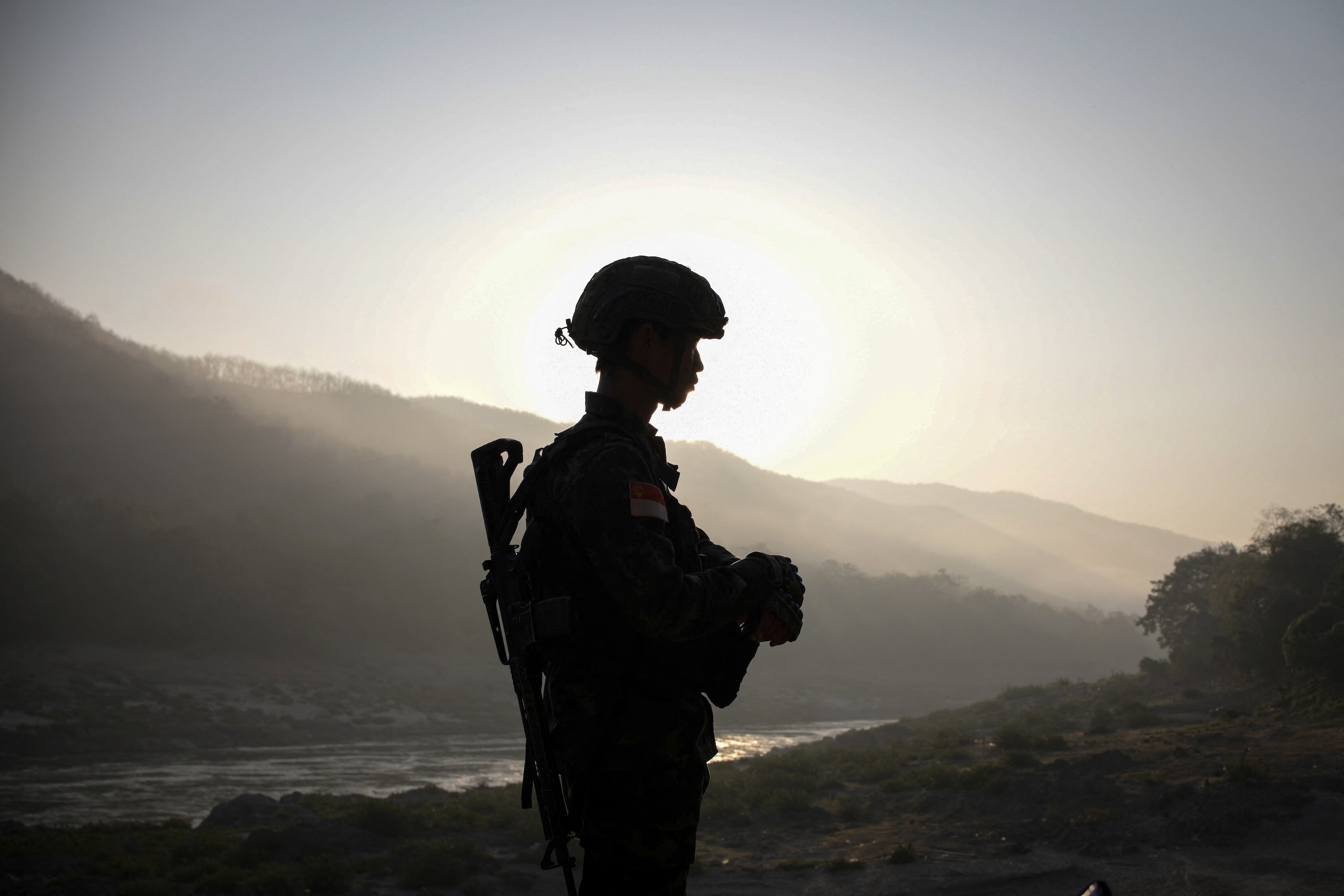
While geographically disparate, Asia, Sub-Saharan Africa and Latin America face similar challenges from the penetration of armed groups in their supply chains. Image: REUTERS
- Tariff increases have disrupted over $400 billion in trade flows, but a deeper threat to global supply chains is going largely unaddressed.
- From rare earth mining in Myanmar to agricultural exports in Ecuador, upstream security vulnerabilities are compromising global value chains.
- New approaches to supply chain visibility, coalition-building and long-term foresight are essential to address risks that sit beyond conventional buyer-supplier governance.
Global value chains are now facing significant structural volatility. Tariff increases have disrupted over $400 billion in trade flows, and container shipping costs rose by 40% in 2025. Business leaders, policymakers and supply chain experts now view risk and resilience as equally important as efficiency in maintaining competitiveness.
Most discussions on supply chain risks focus on visible disruptions – tariffs, sanctions or shipping lane closures. Less attention has been paid to a quieter threat: the worsening security situation in emerging economies, which are the starting, processing or transit points for many global value chains.
Since these regions host significant mineral deposits, agricultural land and labour-intensive production, reshoring, nearshoring or friendshoring alone cannot resolve the exposure. Traditional frameworks also find it difficult to recognise this threat because it exists several tiers upstream and involves actors outside the usual supply chain governance channels.
How and where are armed groups affecting global supply chains?
While geographically disparate, Sub-Saharan Africa, Latin America and South East Asia all face challenges from the volatility in global value chains.
In sub-Saharan Africa, security issues are increasingly affecting food and energy supply chains. Nigeria has experienced a three-decade decline in stability, with an insurgency starting in 2009 and displacing 2.4 million people by 2018. Armed banditry has spread across the North West, while farmer-pastoralist conflicts have moved southward from the Middle Belt. Over 2.2 million people are displaced, and 33.1 million suffer from severe food insecurity. Meanwhile, cocoa shortages in Côte d'Ivoire and Ghana have pushed global chocolate prices to record highs. In Mozambique, an insurgency in Cabo Delgado led TotalEnergies to declare force majeure on its $20 billion LNG project in 2021. Construction halted for over four years before resuming in late 2025, with 4,000 Rwandan and Southern African Development Community troops providing security, while Japan temporarily turned to Nigerian LNG. A single insurgency has altered Europe's energy diversification plans.
In Latin America, illicit actors have deeply penetrated legitimate trade, subtly contaminating global supply chains. Throughout the Andean Amazon, illegal gold mining has increased significantly, with illicit gold exports now exceeding cocaine exports in Peru and Colombia. By 2022, Colombia's comptroller estimated that 85% of the country's gold exports were illegally sourced. In 2024, the US imported $1.43 billion worth of Colombian gold, and a New York Times investigation linked US Mint components to Colombian criminal networks. Ecuador exemplifies how quickly such illegal activities can affect legitimate exports, as it supplies roughly 30% of the world's bananas and is the world's largest shrimp exporter. As Ecuador became a major cocaine transit route, traffickers infiltrated its banana, shrimp and cacao industries, resulting in 63 workers killed by criminal groups in 2022 alone. That year also saw a 400% increase in container contamination, and exporters now spend over $100 million annually on private security.
Armed groups in Southeast Asia are now embedded within the clean energy supply chains. Myanmar produces up to two-thirds of the world's heavy rare earth supply, which is refined in China and then used in magnets for electric vehicles (EV), wind turbines and defence systems. Since the 2021 coup, the number of mining sites in Kachin State has grown from about 130 to over 370. In October 2024, the Kachin Independence Army captured key mining towns and now imposes a 20% export tax on rare earth concentrates. Similarly, in the Philippines, the second-largest nickel producer globally, investigations link nickel ore from Mindanao to the supply chains of many of the world’s top car brands through Chinese traders. These mines face pressure from local insurgents which extort millions annually, and from militias defending resource extraction sites. A December 2025 Global Witness investigation found that nickel from these mining regions is likely entering the supply chains of the world's most recognizable car brands.
The collaborative spirit required to counteract the impact of security risks on global supply chains will be tested not in the usual meetings between buyers and sellers, but through efforts to include the key players shaping the security landscape of emerging economies.
Upstream security is the blind spot in current risk thinking
Supply chain risk management has evolved from focusing on lean efficiency in the 1990s to addressing supplier concentration issues after the 2011 Tōhoku earthquake and tsunami, then shifting to pandemic resilience and finally to reshoring in response to political risks. Each phase considers risk at the node, within the buyer-supplier relationship, or based on geographic factors. However, security risks in emerging economies exhibit two distinct yet mutually reinforcing behaviours.
A configurational understanding: the risk begins several tiers upstream, where the focal firm has no direct supplier or contractual control, and spreads through multi-tier networks whose participants typically see only their immediate counterparties. It is also polycentric, shaped by multiple overlapping centres of authority: insurgents, cartels, traditional authorities, informal traders and irregular militias, who operate through governance regimes that sit outside the formal systems usually overseeing supply chains. Many of these regimes are embedded in the vast informal economies of emerging markets, which is part of why these networks remain opaque to conventional frameworks.
A German car manufacturer might be unaware that the dysprosium in its motors passes through territory controlled by an armed group. Similarly, a US jewellery company may not realise its gold was laundered via Colombian middlemen. Meanwhile, a European chocolate producer might not be aware that the displacement of farmers in northern Nigeria is tightening cocoa supplies across the Gulf of Guinea. When companies are aware, they often consider the responsibility to lie elsewhere. Ultimately, this exposure is embedded within the very structure of global production.
4 ways firms, networks and institutions can respond
1. Visibility
While mapping direct suppliers is standard practice, it is now overdue to formalize partnerships with field intermediaries, such as regional researchers, humanitarian agencies and investigative journalists. Additionally, source protection should be tested against scenarios involving armed-actor capture, not just financial, modern slavery, forced labour or weather risks.
2. Coalitions
Risk mitigation strategies cannot simply be imposed by buyers through contracts in regions where armed groups control parts of the corridor. Such situations require participatory and relationship-based governance, in which stakeholders such as buyers, intermediaries, producers and local actors develop shared accountability. The Regional Cooperation Agreement on Combating Piracy in Asia demonstrates that sharing intelligence among states, shippers and insurers helps lower maritime risks. However, similar agreements for African food corridors, Andean mineral routes and Southeast Asian extraction zones are currently missing.
3. Legitimacy
Supply chain governance still treats buyers, sellers and host states as the primary legitimate actors. In practice, NGOs, customary authorities, regional security organizations such as Southern African Development Community , and in some cases non-state actors with effective territorial control, already shape these flows. The 2025 partnership between the AfCFTA Secretariat, the African Development Bank and Africa50 and the end-of-cycle review of ASEAN's Master Plan on Connectivity 2025 are advancing corridor infrastructure under ESG-aligned criteria, but neither yet treats corridor-security performance as an explicit financing or tariff-preference condition. Building it into the next-generation frameworks under design is more practical than creating new ones.
4. Foresight
Foresight and effective risk mitigation involves understanding cases that develop over decades. Regular risk assessments and quarterly audits are insufficient to capture these long-term trends. Boards require stress tests covering five to ten-year periods, along with sovereign and quasi-sovereign risk insurance for upstream regions, and clear divestment strategies where exposure cannot be reduced.
The collaborative spirit required to counteract the impact of security risks on global supply chains will be tested not in the usual meetings between buyers and sellers, but through efforts to include the key players shaping the security landscape of emerging economies.
Don't miss any update on this topic
Create a free account and access your personalized content collection with our latest publications and analyses.
License and Republishing
World Economic Forum articles may be republished in accordance with the Creative Commons Attribution-NonCommercial-NoDerivatives 4.0 International Public License, and in accordance with our Terms of Use.
The views expressed in this article are those of the author alone and not the World Economic Forum.
Stay up to date:
Logistics


Forum Stories newsletter
Bringing you weekly curated insights and analysis on the global issues that matter.
More on Supply Chains and TransportationSee all

Stefan Koch, Renée van Heusden and Margi Van Gogh
July 21, 2026


