The hype is real for space-based data centres. So are the challenges
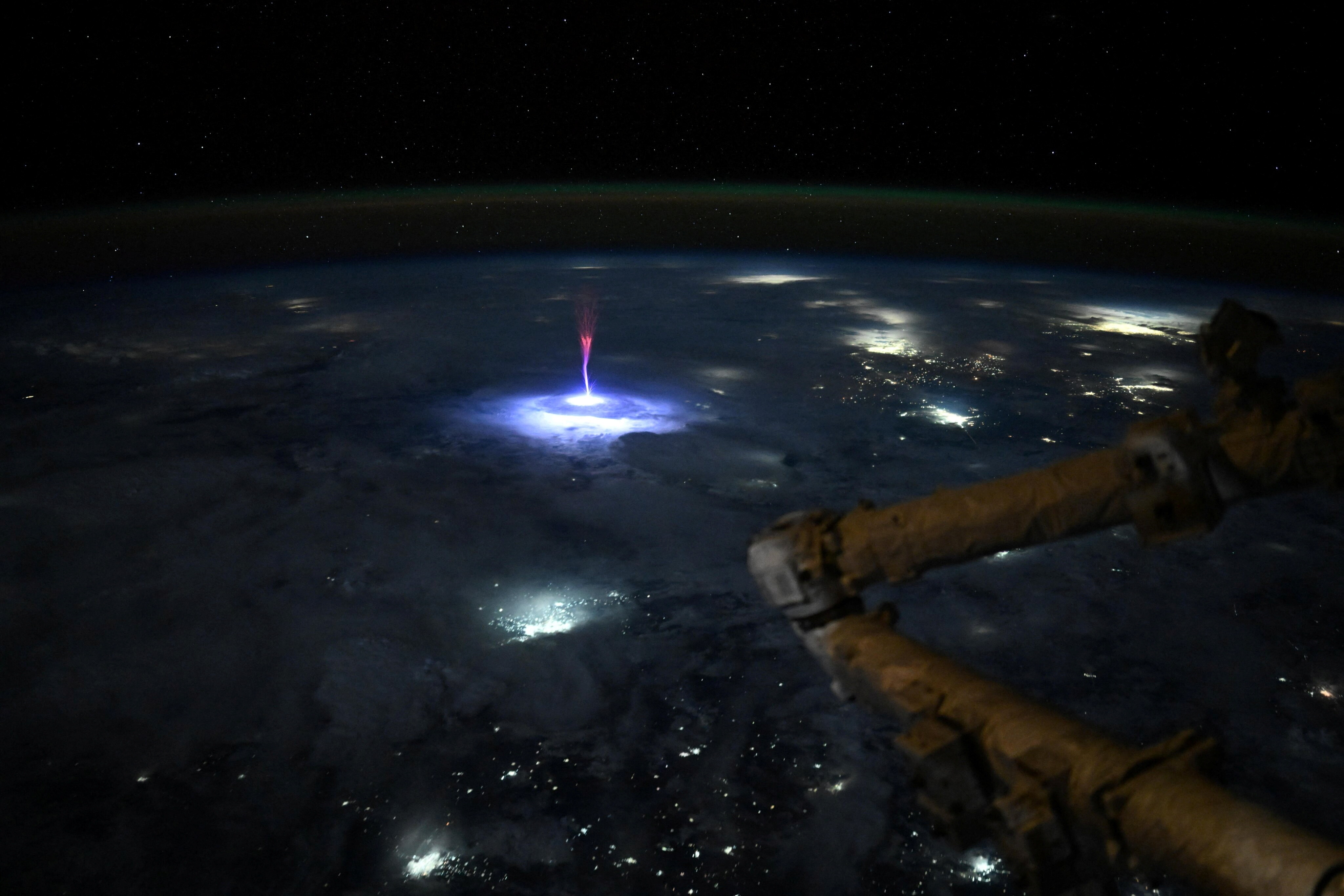
Space-based data centres are the AI industry's El Dorado – but they may be equally difficult to reach. Image: Reuters
- 70% of Americans now reportedly oppose building AI data centres in their local area, fuelling interest in space-based alternatives.
- The pitch for space-based data centres is compelling: falling launch costs, abundant solar energy, no grid queues and no zoning battles.
- But cooling in space is far harder than it sounds – and the physics may be the biggest obstacle the industry has yet to reckon with.
In places across the US and Europe, local opposition to data centres is rising. In fact, 70% of Americans now reportedly oppose building AI data centres in their local area. This widening opposition helps explain why space-based data centres are suddenly being recast from science fiction into AI real estate strategy.
Space-focused data centre company Starcloud has already launched a satellite carrying an NVIDIA H100 GPU. And the broader pitch we are now hearing from Musk & SpaceX, Google, Nvidia and Bezos & Blue Origin is seductive: falling launch costs, abundant solar energy, no grid queues, no water fights and no zoning boards.
But there is a catch that is not getting enough attention: heat.
Why is cooling a problem for space-based data centres?
We usually talk about AI in terms of chips, models and electricity. Yet nearly every watt a chip consumes becomes waste heat. That heat must be dissipated quickly, since chips start to fail if they’re too hot. All that water use people are protesting data centres for is for cooling chips. And when water is not available, we must blow air – hence the fans in standard PCs and laptops.
Promoters claim cooling will be easier in space, because space has an ambient temperature of -270 Celsius. That sounds intuitive, but it’s more complicated than it seems.
In the vacuum of space, waste heat has no material to move into. There is no atmosphere, no water. The only escape route is infrared radiation: the spacecraft must literally glow its heat away, at wavelengths so weak it’s invisible to our eyes.
The numbers are brutal. Starcloud’s own white paper estimates that a two-sided radiator held around 20°C would emit only about 633 watts per square meter, over 1,000 times slower than water cooling of AI chips on Earth. So, a puny 1-megawatt orbital data centre, 1,000 times smaller than the gigawatt scale of hyperscale data centres on Earth, would need about 1,600 square meters of radiator, an area roughly the size of a hockey rink.
One retort is: won't the satellite already have enormous solar arrays? Why not use the back side as the radiator? Tempting, but no dice. A photovoltaic array wants to face the Sun and absorb energy. A radiator wants an angle to minimize solar exposure, and a clear view of cold space. More importantly, heat still has to travel from the GPUs to the far reaches of the radiator, and that pushes for thick radiators to conduct more heat further – but that multiplies the weight. Unfortunately, rockets and chips want opposite things.
A reality check for space-based data centres
The International Space Station (ISS) is a reality check. It has separate solar panels, ammonia thermal-control loops, and rotating radiator wings. NASA's external active thermal control system rejects 70 kilowatts of waste heat through radiator wings weighing about 7 metric tons. Scale ISS-style hardware to the modest 1 megawatt data centre, and the mass is punishing: roughly 100 tons of radiators alone. By comparison, 1 megawatt of cutting-edge AI compute racks is on the order of 10 tons. That is the economic knife edge: the radiators alone could weigh close to ten times more than the compute hardware. Since launch cost scales with mass, cooling could impose an order-of-magnitude launch-cost penalty, before the first token is generated.
Could engineers simply run chips hotter and shrink the radiator? Radiating waste heat rises with the fourth power of temperature, which really helps. But semiconductor leakage and error rates rise exponentially as temperatures climb, which hurts even more. Elon Musk has talked about raising chip temperatures by 20% in degrees Kelvin to slash radiator mass by half – that means increasing the chip temperature by another +50-70°C, beyond what chips today can survive. Future chips may achieve this. But raising the chip operating temperature by the hundreds of Celsius needed to truly sidestep slow radiative cooling is not plausible for GPUs.
The real design trade-off has to consider even more constraints: cooling, data movement between GPUs and radiation tolerance. Put GPUs close together and you help latency and bandwidth between chips, plus share radiation shielding. But chip heat is concentrated and must travel long distances to large radiators, throttling dissipation. Conversely, spread GPUs across the radiating structure and cooling gets easier. But then high-bandwidth interconnects and synchronization get hard, and every GPU needs its own radiation shield, which ups weight. It’s death by a thousand cuts.
The problems do not stop there. Satellites in low Earth orbit cycle between sunlight and shadow roughly every 90 minutes, imposing repeated thermal expansion and contraction that kills reliability, while radiation and reactive ions add more abuse. Getting information down to Earth is low bandwidth relative to terrestrial fiber optics. Maintenance is harsher still. On Earth, AI hardware is refreshed every 3-5 years. In orbit, a dead or obsolete GPU is likely to stay that way.
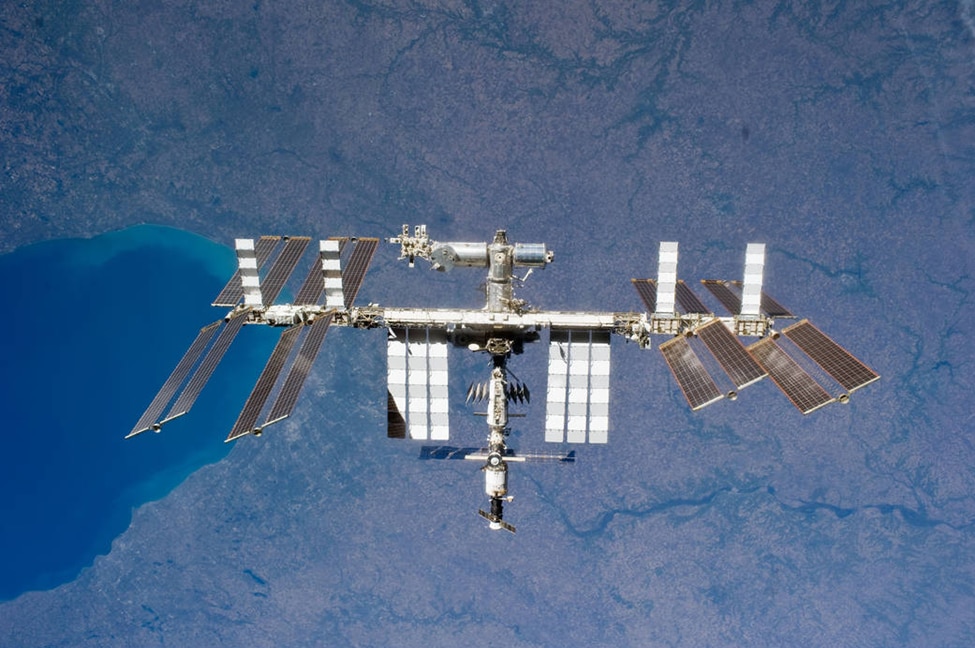
What could space-based data centres actually look like?
None of this is likely to kill enthusiasm for the moonshot. With optimists projecting AI computing demand could rise by another 100 times by the end of the decade, making space-based data centres work would be like finding El Dorado. And the industry’s desperation is real: scarce power, water, grid capacity and community permission will drive wild bets. But orbital AI will not work just because space is free, sunlight is abundant and space “is cold.” It will work only when engineers pull off miracles, building thermal & comms systems extraordinarily light & effective, orders of magnitude beyond anything that exists today.
And it may force a very different architecture: not a warehouse of servers launched into orbit, but modular computing fleets – many small satellites flying in close proximity, with chips close to radiators for cooling, and communicating through inter-satellite optical links that far exceed today's capabilities. If orbital AI takes off, the data centre of the future may look less like the ISS, and more like a swarm of silver dragonflies, wings spread for cooling, eyes locked by hundreds of laser links.
Don't miss any update on this topic
Create a free account and access your personalized content collection with our latest publications and analyses.
License and Republishing
World Economic Forum articles may be republished in accordance with the Creative Commons Attribution-NonCommercial-NoDerivatives 4.0 International Public License, and in accordance with our Terms of Use.
The views expressed in this article are those of the author alone and not the World Economic Forum.
Stay up to date:
Space


Forum Stories newsletter
Bringing you weekly curated insights and analysis on the global issues that matter.
More on Artificial IntelligenceSee all

Etay Maor
October 15, 2026


