Why Syria’s economic reintegration matters for the Middle East
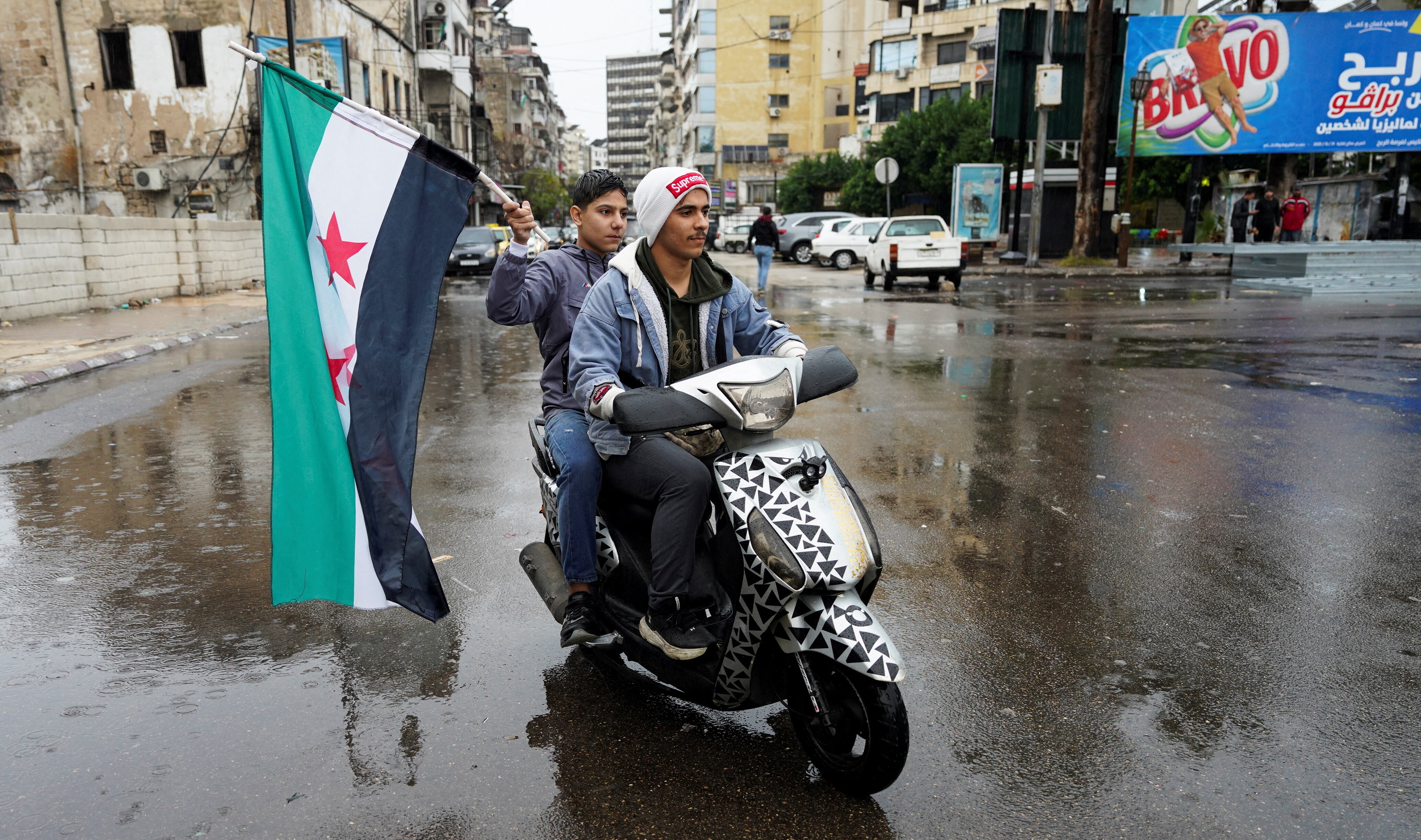
Syria's economic reintegration is crucial for Syrian people, but also a marker of a quickly changing economic landscape in the Middle East. Image: REUTERS/Karam al-Masri
- After a decade of conflict, Syria is emerging as an important regional meeting point for the Middle East’s economy.
- The country has seen billions of dollars’ worth of infrastructure investments proposed from its neighbours.
- Syria’s reconstruction is part of a wider regional economic shift underway that is seeing large-scale investment in the digital economy.
For more than a decade, Syria was largely absent from the Middle East’s economic map. Today, that is beginning to change.
Gulf investors are returning to Damascus. Regional airlines are restoring connectivity. International energy companies are reassessing opportunities tied to Syria’s Mediterranean coast. In recent months alone, Saudi Arabia and the UAE have announced major investment discussions spanning infrastructure, telecommunications, aviation, logistics and real estate.
While significant challenges remain, Syria is gradually re-entering the region’s economic conversation at a moment when the Middle East itself is becoming more economically interconnected through new trade corridors, infrastructure partnerships and regional connectivity initiatives linking the Gulf, Turkey, the Levant and Europe.
Why Syria's economic reawakening matters
For businesses across the region, this shift matters for three reasons.
First, Syria sits at the centre of several emerging trade and connectivity corridors linking the Gulf, Turkey, the Levant and the Mediterranean. Second, the scale of reconstruction and modernization needs could create long-term opportunities across infrastructure, logistics, energy, telecommunications, aviation and financial services. Third, regional economies themselves are evolving, becoming increasingly investment-driven, interconnected and focused on economic resilience amid growing global fragmentation.
Taken together, Syria’s gradual reintegration is becoming part of a much broader story about the future of economic integration in the Middle East.
This shift is unfolding against the backdrop of major economic transformation across the region. Across the Gulf, governments are accelerating investments in logistics, aviation, industrial development, AI, digital infrastructure and energy transition as part of broader diversification strategies designed to position the region as a global hub connecting Asia, Africa and Europe. Saudi Arabia attracted $31.7 billion in foreign direct investment in 2024, while the UAE attracted approximately $45 billion, according to PwC’s 2026 Middle East CEO Survey.
Syria is part of the Middle East's changing economy
At the same time, regional economic cooperation is accelerating. Trade ties between the Gulf and Turkey have expanded significantly in recent years. Cross-border infrastructure discussions are increasing. Regional airlines are rebuilding connectivity across the Middle East. Turkish Airlines recently resumed flights to Damascus after a 13-year suspension, while regional logistics and transport firms are increasingly assessing Syria’s role within future trade corridors.
Within this broader transformation, Syria’s geographic position becomes increasingly difficult to overlook.
Historically, Syria functioned as one of the region’s key commercial crossroads. Before the country’s civil war started, major trade and transport routes crossing Syrian territory connected ports, manufacturing hubs and supply chains across multiple parts of the Middle East.
The scale of economic opportunity is also substantial.
Earlier this year, Saudi Arabia announced a major investment package worth approximately $2 billion spanning aviation, telecommunications, infrastructure and water projects. Agreements included the launch of a joint airline, investments into Aleppo airport redevelopment and an $800 million fibre-optic infrastructure initiative. Saudi energy and water companies also signed memorandums tied to desalination and infrastructure cooperation.
UAE announced that non-oil trade with Syria had reached approximately $1.4 billion in 2025, more than doubling year-on-year. Preliminary agreements and discussions reportedly included projects tied to free zones, transport connectivity and large-scale real estate development.
Momentum is also beginning to emerge across logistics and maritime infrastructure. In May, Syria signed agreements with French shipping company CMA CGM to operate dry ports near Damascus and Aleppo and relaunch freight rail connectivity linking Latakia port to inland trade hubs after a 14-year interruption
Earlier agreements involving DP World focused on developing Tartous port and surrounding industrial and free trade zones.
For regional companies operating across construction, infrastructure, logistics, telecommunications, energy and financial services, Syria could gradually emerge as one of the Middle East’s most significant frontier growth markets.
Importantly, Syria’s reintegration is not only about reconstruction. It is also about resilience.
Businesses today operate in an environment shaped by geopolitical uncertainty, supply chain disruption and growing competition over trade routes, energy security and industrial capacity. Across the Middle East, governments are increasingly recognizing that economic connectivity has moved beyond a development tactic into the realm of strategic necessity.
From crisis zone to growth enabler
This partly explains why conversations around Syria are evolving. Increasingly, the discussion is shifting from whether Syria will eventually reintegrate economically towards how regional actors can responsibly participate in ways that support long-term growth, connectivity and economic stability.
Naturally, significant challenges remain. While investment discussions are accelerating, many of the foundations of commercial activity still require rebuilding. Financial connectivity is only beginning to return following recent steps to reconnect Syria to international payment systems and banking networks. Transport and logistics infrastructure also continues to require significant modernization, despite recent agreements linked to ports, freight rail and airport redevelopment. Digital infrastructure presents a similar challenge, with new investments in fibre-optic networks and telecommunications reflecting the scale of the opportunity as well as the work that remains. How quickly these constraints are addressed will play an important role in determining how rapidly economic interest can translate into sustained growth and regional integration.
Syria’s reconstruction is becoming about more than rebuilding one economy.
It is becoming part of a wider regional transformation, one where connectivity, investment and economic integration are increasingly shaping the future of the Middle East. For businesses looking at the region’s next decade of growth, Syria may gradually evolve from being viewed primarily as a crisis zone towards being recognized as one of the region’s most consequential long-term economic opportunities.
Don't miss any update on this topic
Create a free account and access your personalized content collection with our latest publications and analyses.
License and Republishing
World Economic Forum articles may be republished in accordance with the Creative Commons Attribution-NonCommercial-NoDerivatives 4.0 International Public License, and in accordance with our Terms of Use.
The views expressed in this article are those of the author alone and not the World Economic Forum.
Stay up to date:
Middle East and North Africa


Forum Stories newsletter
Bringing you weekly curated insights and analysis on the global issues that matter.
More on Geographies in DepthSee all

Nii Simmonds
August 10, 2026


