How ports can become catalysts for the blue economy
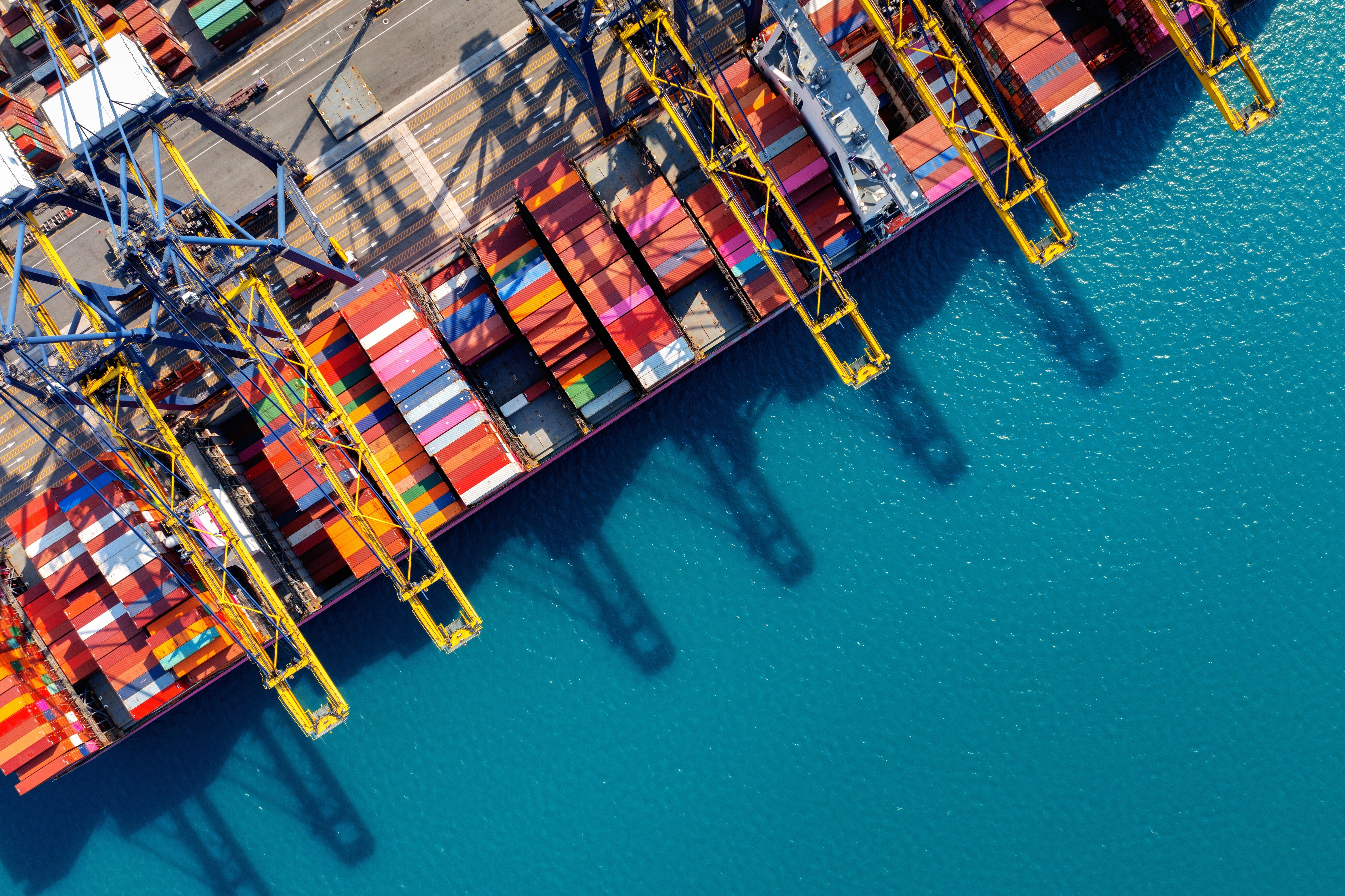
The global port infrastructure market is projected to grow by nearly 70% by 2032. Image: tawatchai07/Magnific
- The ocean supports billions of livelihoods and carries 80% of global trade by volume, yet increasingly faces climate hazards and operational disruption.
- With the global port infrastructure market forecast to grow by nearly 70% by 2032, port ecosystems are well placed to help mitigate climate risks.
- Ports can help shape a responsible maritime transition by considering nature and people, with the potential of unlocking $54 billion in business value.
Valued at between $2.6 and $5.1 trillion, the ocean economy supports billions of livelihoods and carries more than 80% of global trade by volume. However, its continued expansion will increasingly intersect with natural ecosystems and local communities.
The global port infrastructure market is forecast to grow by nearly 70%, from $164.5 billion in 2023 to $278.3 billion by 2032.
Asia-Pacific dominates the market, capturing an impressive 45% share. This dominance can be attributed to the presence of major global manufacturing hubs, and ports in developing Asian economies handled 60% of global container port traffic in 2024.
Have you read?
India alone in just 10 years has almost doubled the number of containers passing through its ports, and its strategic Sagarmala project, dating back to the beginning of this growth, provides a strong foundation to support continued expansion of the port ecosystem.
So how can we leverage these trade hubs to become key enablers of the "blue economy"?
How global risks like climate change impact ports
As highlighted in the World Economic Forum’s Global Risks Report 2026, long-term risks to Earth systems, society and the economy are dominated by the impact of climate change, with extreme weather events, biodiversity loss and ecosystem collapse, and critical change to Earth systems ranked among the most severe.
These risks are already playing out in ports, which face a series of climate and nature hazards and growing exposure to operational disruptions. In Europe, port operational challenges linked to climate change rose from 41% in 2018 to 69% in 2025, while in Asia, many major ports are highly exposed to sea-level rise, storms and flooding.
Maritime decarbonization, both on land and at sea, can help mitigate the impact of risks such as climate change by lowering emissions – the first driver of nature loss.
There are economic benefits too – future-proofing ports to support this transition could unlock more than $54 billion in cumulative value by 2030. But this transition requires action and sustained investment.
Ports face dual challenge of decarbonization and resilience
The decarbonization of the maritime industry is being driven in large part by the International Maritime Organization’s (IMO) target to reach net zero greenhouse gas emissions by 2050. This planned transition to alternative fuels such as green methanol, green ammonia and synthetic e-fuels will require significant infrastructure development and upgrades.
As of 2025, global retrofit capacity was estimated at roughly 465 vessels annually, against a projected peak need of more than 1,000 conversions per year. So new and retrofitted bunkering facilities will be needed, transition-ready vessels must be built and existing fleets upgraded, while shipyard capacity, particularly for retrofits, will need to scale rapidly.
The scale of investment required to meet the IMO 2050 target is estimated at $1-1.4 trillion, with about 87% of that investment directed to land-side infrastructure and 13% to ships.
Nature and people as strategic assets for resilience
A daunting figure but with new fuels come new skills – those needed to handle them safely at sea and ashore, from the ship’s tanks to the terminals that serve them. The transition requires creating safer, more resilient and inclusive jobs and communities, and developing the skills needed to strengthen transition capacity while placing health and safety at the heart of strategy and operations.
The maritime sector already directly employs 30 million people and indirectly benefits 90 million jobs, and the shift to scalable zero emission marine fuels could create up to 4 million jobs across the energy supply chain by 2050.
Ports are key as, onshore, they provide the infrastructure needed to produce, store and bunker alternative fuels, build and retrofit vessels and enable green corridors, while, at sea, their transformation is essential for vessels to access the future fuel mix.
Maritime decarbonization also presents an opportunity to responsibly deploy infrastructure and transform business models by positioning nature, water and people as strategic assets for resilience, while recognizing nature as cost-effective protective infrastructure when incorporated with nature-based solutions, nature-inclusive design, and secure and circular water and waste systems.
Shaping the blue future of maritime hubs
Given the long lifespan of port and energy infrastructure, responsible decisions made today will shape the resilience and competitiveness of maritime hubs for decades.
The maritime fuel transition offers an opportunity to upgrade existing infrastructure and develop new greenfield projects using this investment cycle responsibly, while incorporating nature and people as critical infrastructure and factor of resilience across the port ecosystem.
At the same time, organizations will also need to better integrate their nature-positive and net zero strategies as tackling carbon emissions and nature loss are interdependent imperatives. Such considerations will need to be embedded into long-term strategy, day-to-day operations and investment decisions.
WEF's Regenerative Blue Economy: Pathways to Prosperity report shows that many organizations are already beginning this shift, but scaling it will depend on demonstrating commercial viability, strengthening the business case and moving from individual projects and pilots to more systemic adoption.
The port ecosystem as a strategic platform
Scaling decarbonization efforts will also depend on how much companies will be able to collaborate with other stakeholders.
The port ecosystem is highly interdependent, but often institutionally fragmented. As a result, risks can be recognized but not fully owned, investments delayed or duplicated, incentives misaligned, and resilience measures implemented only partially rather than systemically.
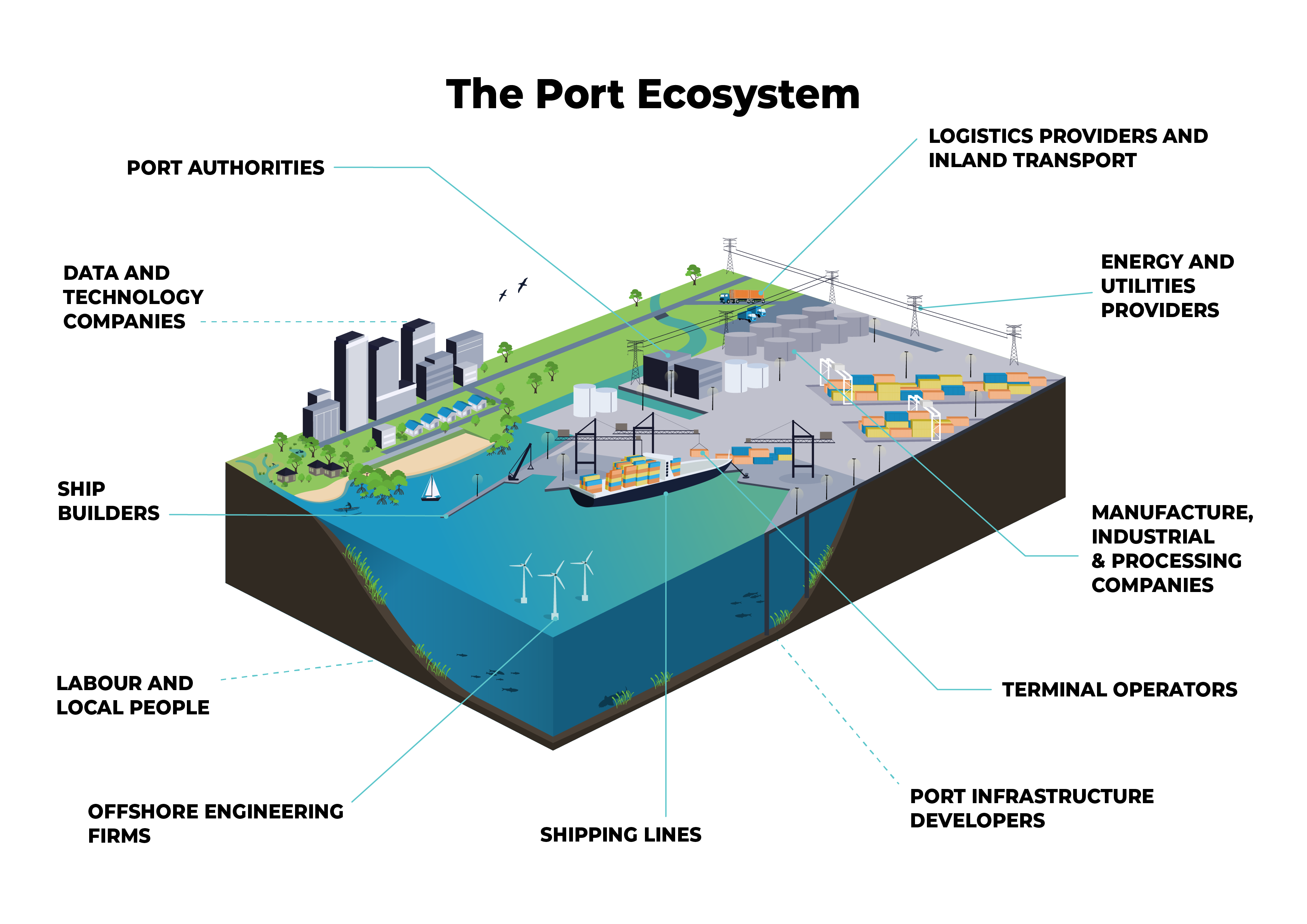
Addressing these challenges requires a collaborative, system-wide effort.
Over five years, the Transitioning Industrial Clusters (TIC) initiative has brought together 40-plus active industrial clusters with the aim of developing a shared vision and strengthening collaboration among organizations located in the same industrial area.
Meanwhile, the Accelerating Critical Transformation for the Ocean (ACT Ocean) initiative works across sectors to advance solutions for a healthy ocean and thriving economy and help shape the future of the ocean as a strategic business issue. Accelerating Critical Transformation for Ports (ACT Ports) is the port workstream under these two initiatives.
Together, these World Economic Forum initiatives help drive shared economic growth and job creation, while reducing emissions and supporting environmental stewardship.
They also seek to catalyse collaboration between co-located companies to accelerate new technology deployment, enhance competitiveness and drive sustainable long-term growth, thereby unlocking benefits for nature, people and the economy.
How Asia can lead on the maritime transition
The benefits of maritime decarbonization are multi-fold but the opportunity is particularly significant in Asia, where the scale and pace of port and industrial growth mean that decisions taken today will shape maritime infrastructure for decades.
Embedding nature, people are resilient and responsible investments decisions from the outset to turn these trade hubs into gateways to the blue economy.
If done successfully, the region will be well placed to lead the next generation of competitive, resilient and sustainable maritime ecosystems – for the benefit of all.
Don't miss any update on this topic
Create a free account and access your personalized content collection with our latest publications and analyses.
License and Republishing
World Economic Forum articles may be republished in accordance with the Creative Commons Attribution-NonCommercial-NoDerivatives 4.0 International Public License, and in accordance with our Terms of Use.
The views expressed in this article are those of the author alone and not the World Economic Forum.
Stay up to date:
Ocean


Forum Stories newsletter
Bringing you weekly curated insights and analysis on the global issues that matter.
More on Climate Action and Waste Reduction See all

Shivam Parashar and Poonam Upadhyay
October 7, 2026


