Extreme heat is putting 2.4 billion workers at risk. Here's how 4 companies are responding
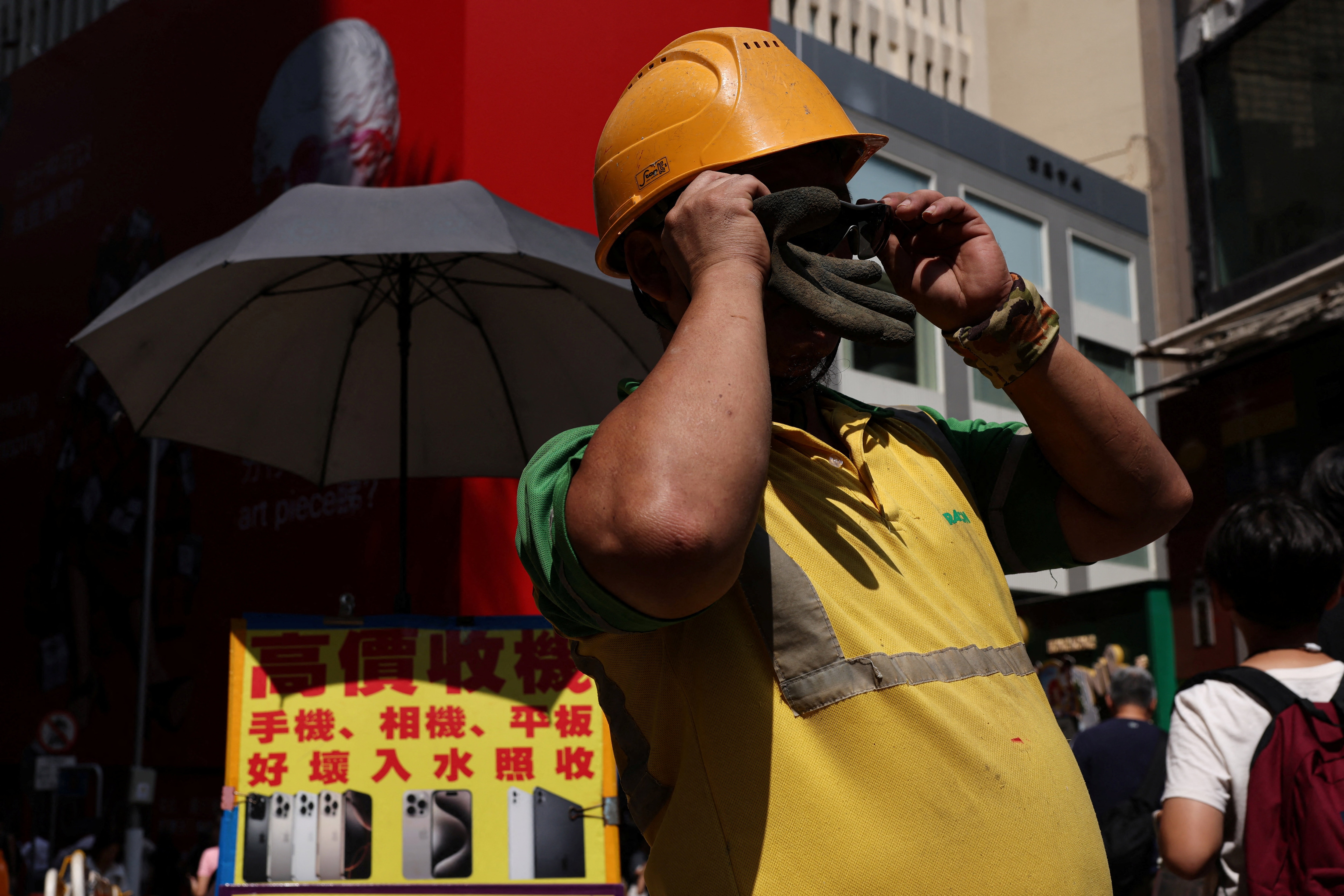
Extreme heat is increasingly affecting workers around the globe. Image: REUTERS/Tyrone Siu
- Extreme heat already affects over 2.4 billion workers globally and is projected to cost $2.4 trillion in lost productivity by 2030, according to the International Labour Organization.
- But while 80% of businesses acknowledge the threat, half are still struggling to translate awareness into action due to measurement, ownership and financial hurdles, finds a new Forum report.
- Accelerating Workforce Heat Resilience: An Actionable Framework to Close the Execution Gap highlights four companies that have taken tangible steps to design extreme heat interventions tailored to their workforce's needs.
- Organizations that invest in resilience and adaptation today can help shape what resilient workforces will look like in the years to come.
More than 2.4 billion workers, or over 70% of the global working population, are exposed to excessive heat at work. These are estimates from the International Labour Organization (ILO) in 2024.
Now, with 2026 on track to be the hottest year on record, more and more people face dangerous conditions that go beyond loss of concentration and productivity. The same ILO report links excessive heat to almost 19,000 worker deaths and nearly 23 million injuries a year.
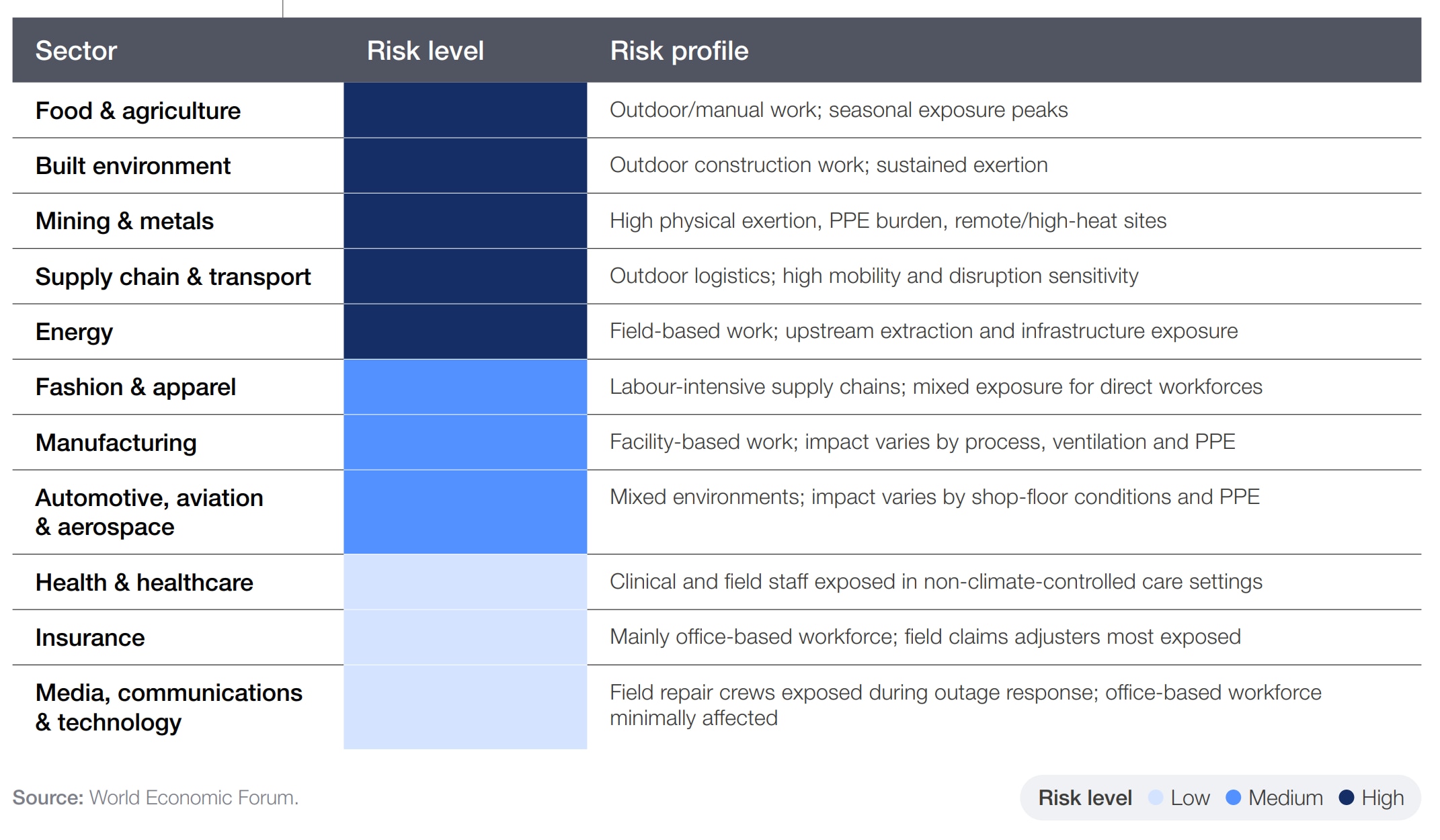
Workers in sectors characterized by outdoor environments – such as construction, agriculture, logistics and mining – are most exposed, but even office workers face extreme heat on their commute or at home, where broken sleep piles on the stress of the day.
Economically, extreme heat is projected to cause $2.4 trillion in annual productivity losses by 2030. Yet while 80% of companies surveyed by Boston Consulting Group for the World Economic Forum recognize extreme heat as a business threat, implementation lags due to practical hurdles. These include difficulty quantifying financial impacts, unclear cross-functional ownership and technical or resource constraints.
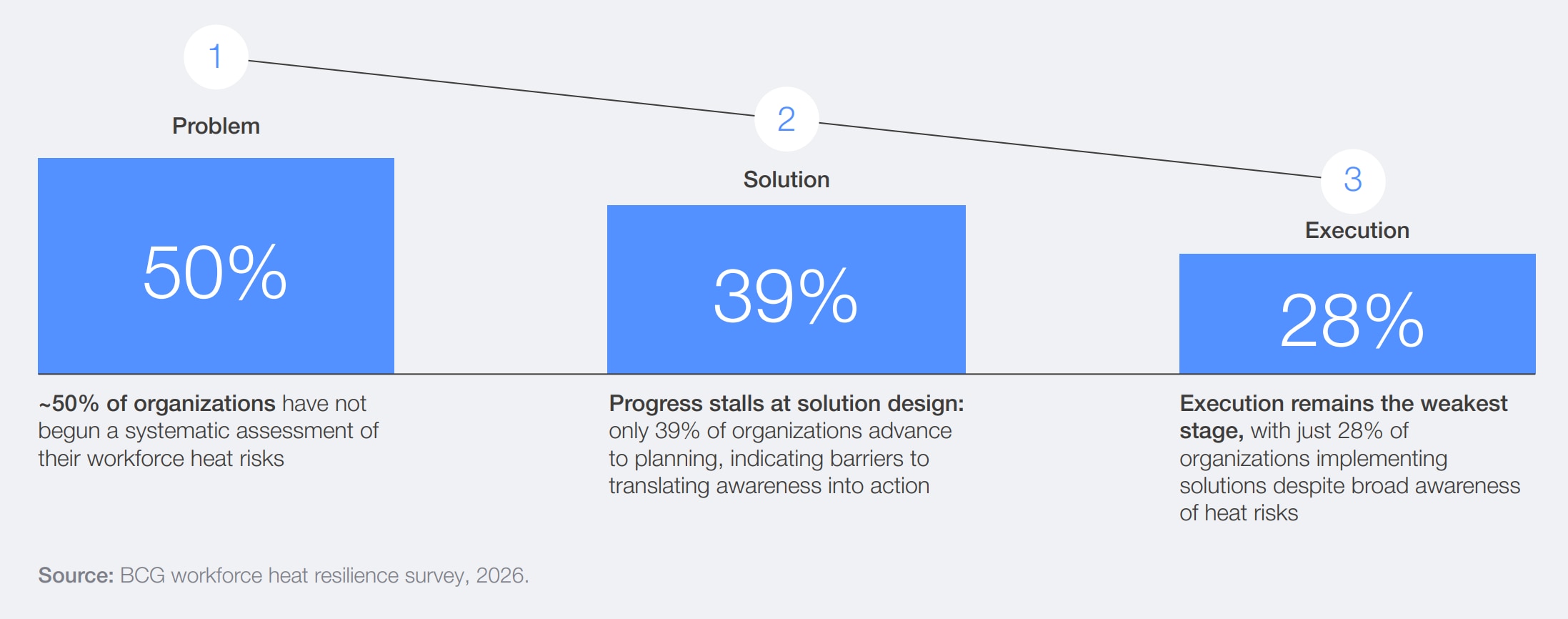
Consequently, about 50% of companies across all major geographies and sectors have yet to begin a systematic assessment of their workforce and value chain, and only 28% have piloted interventions, finds Accelerating Workforce Heat Resilience: An Actionable Framework to Close the Execution Gap.
There are, however, some common themes among those taking action. Here are four examples highlighted in the report.
Mahindra, India – identifying worker risk profiles
Indian multinational Mahindra Group has embedded climate adaptation into its core business strategy. It employs 320,000+ workers across more than 100 countries and recognizes that extreme heat solutions must be tailored to different situations, given varying working conditions and exposure times.
It has identified three main worker groups:
- Outdoor workers – such as farmers, security guards and delivery workers, who have the highest exposure.
- Indoor workers – who are exposed when working in non-air-conditioned or enclosed environments.
- Mobile field workers – such as those in construction or logistics, who face variable exposure as they move between indoor and outdoor settings throughout the day.
Based on interviews with workers and stakeholders across functions and sites, Mahindra is developing a clearer understanding of each group's experiences and needs. Using this, it is creating a multi-layered approach that includes governance, heat action plans, audits and protective solutions.
Alongside physical upgrades – such as reflective coatings, rooftop insulation and enhanced ventilation – sites are piloting natural solutions like tree canopy cover and water features.
Workers' shift times have been altered to fit around the temperatures, and mobile hydration stations have been introduced. Where relevant, workers have also been given protective clothing and equipment.
JINGDONG Logistics, China – protecting frontline workers
JINGDONG Logistics tailored its interventions to match the specific ways heat affects its frontline workers.
At delivery stations, sorting centres and other outdoor work sites, the company stocks ice popsicles, cold drinks and other heat-prevention items. Additionally, "cooling packs" containing cooling sleeves, sun hats, and essential rehydration and first-aid supplies are provided to drivers and couriers.
Health and safety training, including group counselling sessions, helps employees manage working in high temperatures, recognize heat stress early and trigger emergency response procedures for severe conditions like heat stroke.
The company has also invested RMB 100 million (~$15 million) in a summer protection plan for delivery drivers. This includes a variable heat subsidy running from April to October, with amounts set dynamically based on regional temperature. During extreme weather, deliveries are suspended, and safeguards are put in place to balance driver safety and income stability.
Turner Construction, US – interventions that work in context
Turner Construction, one of the largest construction firms in the US, teamed up with nonprofit La Isla Network to better understand how heat affects construction workers and what they could do about it.
During a pilot study, which tracked the core body temperatures of workers who spent at least a quarter of their day out of climate-controlled settings, they discovered that two-fifths experienced core body temperatures greater than 38°C, and many arrived at work dehydrated.
The team is now using wearables to monitor the effectiveness of a range of interventions, such as pop-up shade tents, air-conditioned cooling stations, lunch tents and electrolyte popsicles. Operational practices are also being adapted. This includes adjusting work schedules to avoid peak heat, promoting hydration and reinforcing workers' heat-stress awareness.
Bayer, Global – extending protection to downstream value chains
Global life sciences firm Bayer takes a systematic approach to managing heat risks across its direct operations and broader value chain. At more than 300 active sites worldwide, standardized heat-risk management has reduced heat-related incidents in North America by 20%, saving an estimated $3,000 in avoided medical and lost-time costs per prevented claim.
Beyond its direct workforce, Bayer is one of the first multinationals to address heat impacts on downstream workforces. Focusing on smallholder farmers in India – a critical segment of its agricultural value chain who face rising climate risks – Bayer is extending its proven heat resilience protocols to smallholders. By protecting farmer health and productivity during peak temperatures, the initiative safeguards agricultural continuity while building long-term trust in vital supply chains.
Looking ahead in an ever warming world
As the impacts of extreme heat become increasingly apparent, the human and business imperative to invest in workforce resilience and adaptation is becoming more pressing.
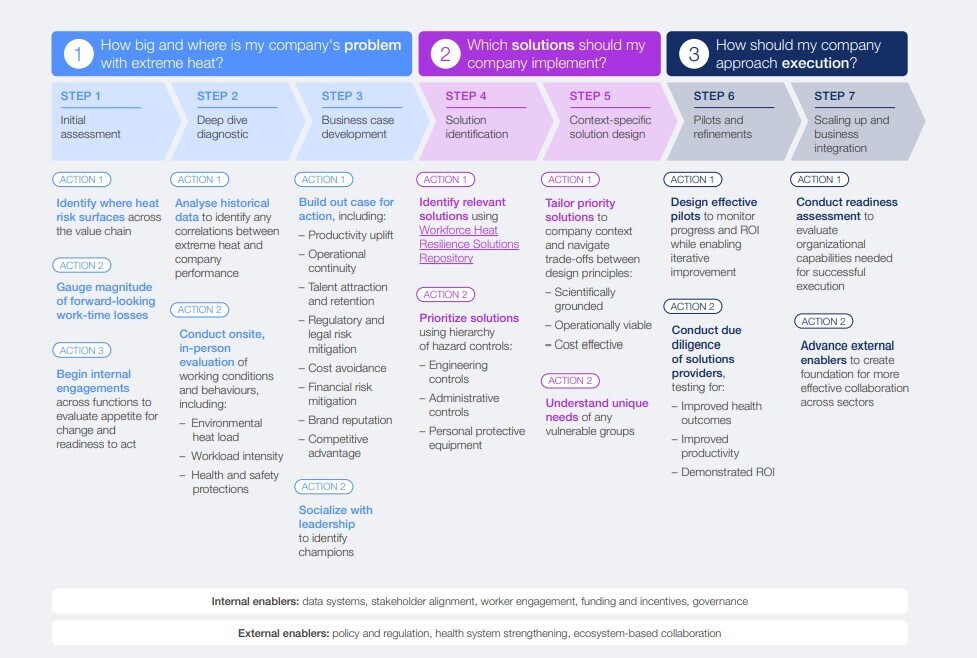
To help organizations move beyond generic commitments, the report introduces the Workforce Heat Resilience Roadmap – a practical, seven-step framework designed to close the execution gap. Providing a structured path for leaders, the roadmap guides them through rigorous risk diagnostics across value chains, context-specific solution design, and the capability-building needed to test, scale and embed resilience into daily operations.
Such efforts aren't just essential to protecting workforces and economies, they can help shape what resilient workforces look like in an ever warming world.
License and Republishing
World Economic Forum articles may be republished in accordance with the Creative Commons Attribution-NonCommercial-NoDerivatives 4.0 International Public License, and in accordance with our Terms of Use.
The views expressed in this article are those of the author alone and not the World Economic Forum.
Related topics:

Forum Stories newsletter
Bringing you weekly curated insights and analysis on the global issues that matter.
More on Climate Action and Waste Reduction See all

Denise Rotondo
September 22, 2026


