Europe’s gas stocks could hit 15-year low, and more top energy stories
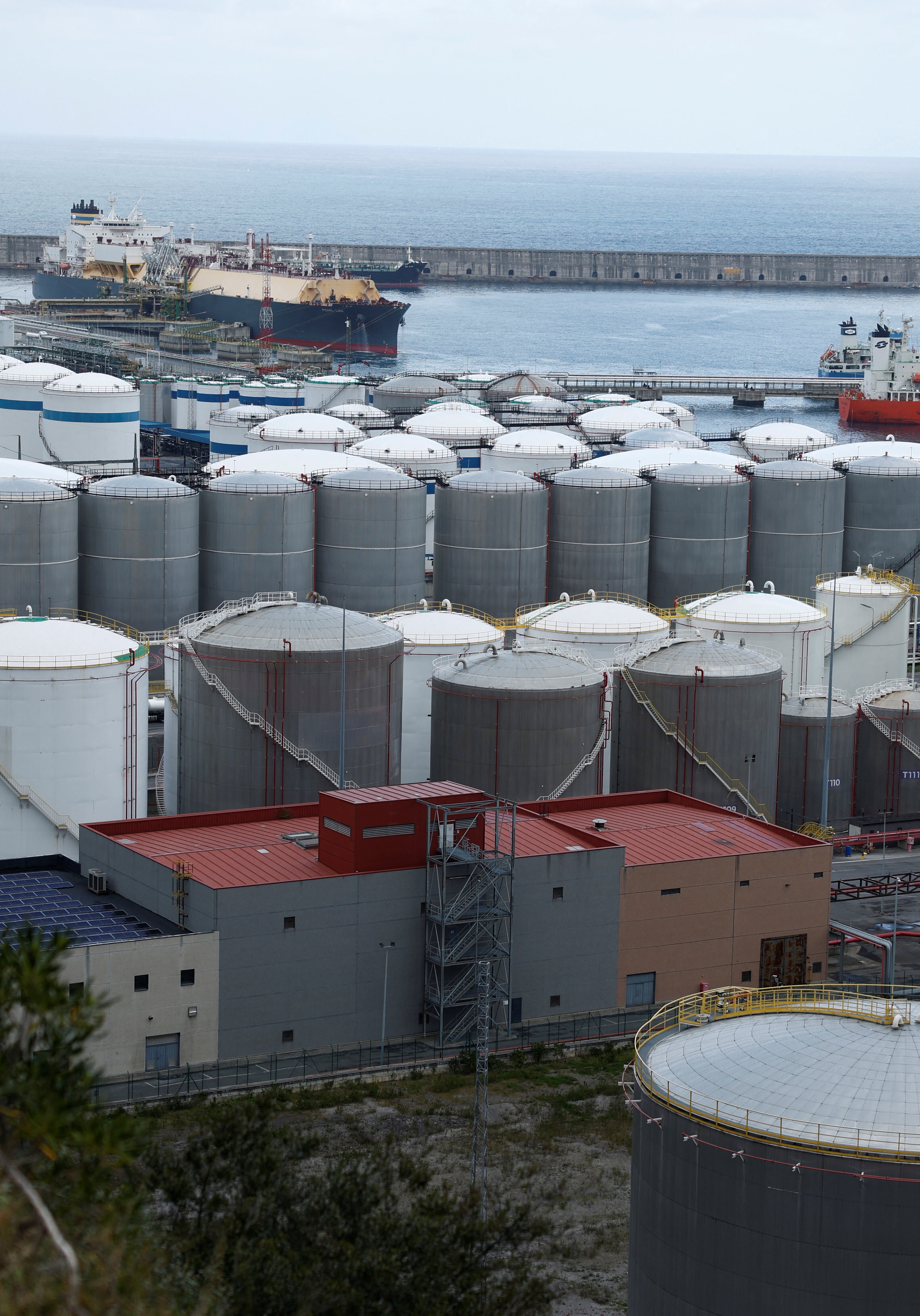
Europe is struggling to fill its gas stocks due to disruption in the Middle East. Image: REUTERS/Vincent West
- This round-up brings you the key stories from the energy sector over recent weeks.
- Top energy news: Europe’s gas stocks heading for 15-year low; Lessons from China’s industrial transformation; Nations act on energy security.
- For more on the World Economic Forum’s work in the energy space, visit the Centre for Energy and Materials.
1. Europe’s gas stocks heading for 15-year low
With storage facilities not being refilled quickly enough ahead of the colder months due to the Middle East crisis, Europe – which imports most of its natural gas – risks starting winter with its gas stocks at a 15-year low, the Financial Times reports.
These facilities are forecast to end the gas restocking season, which usually runs between April and October, at just 76% full, according to analyst Wood Mackenzie.
This could force higher prices for businesses and households in the winter months.
Europe has been exploring energy security alternatives after the impact the Iran war has had on global fuel prices.
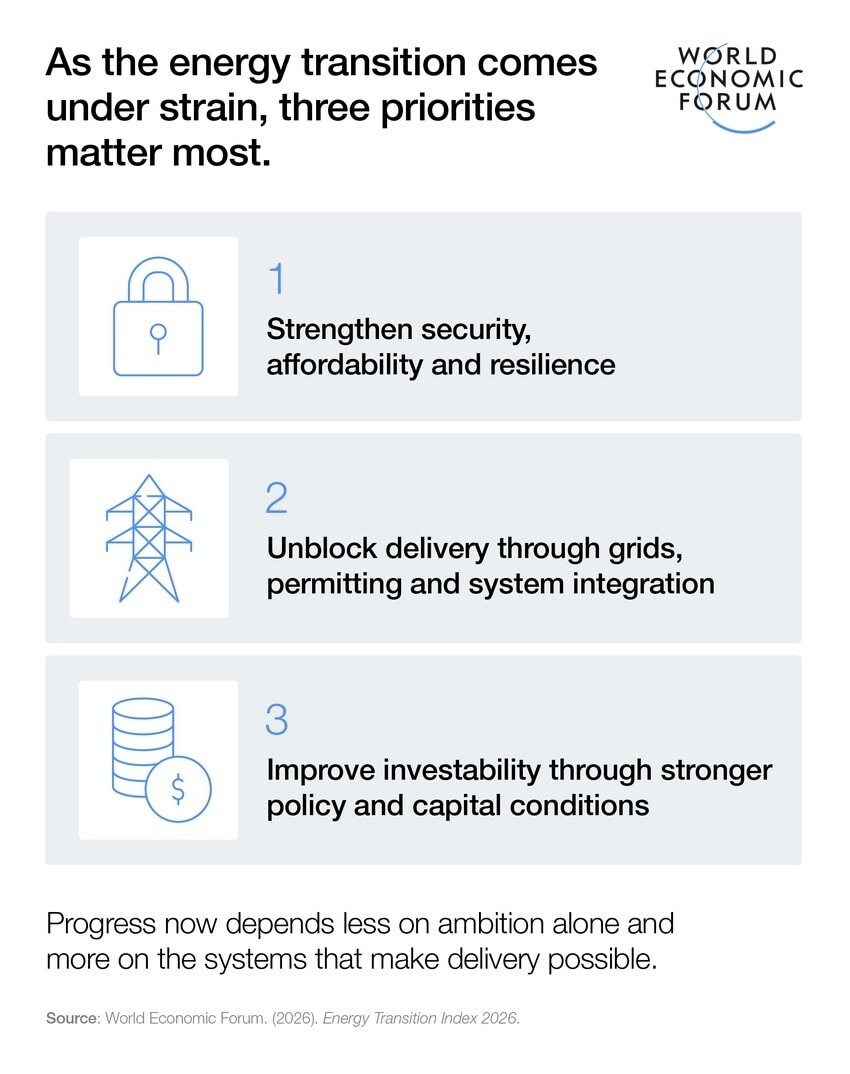
Energy security is an issue that has emerged as a defining force and a source of competitive advantage in the global energy landscape, according to the World Economic Forum’s Energy Transition Index 2026.
And according to the report, this issue extends beyond just fuels. Increasingly, it reflects the complex and interconnected nature of energy systems, with security depending on grids, infrastructure, critical minerals and more.
Factors including rising energy demand, intensifying geopolitical fragmentation and infrastructure bottlenecks are putting the energy transition under system pressure, widening the gap between ambition and delivery.
Countries that align short-term stability with long-term resilience will shape the pace of the transition, the report says.
2. Energy lessons from China’s industrial transformation
China has put industrial clusters at the heart of its industrial and green transition efforts, positioning them as ecosystems in which to pilot integrated solutions - including technology development and accelerating clean power.
A new white paper, Inside China’s Industrial Transformation: Policy, Practice and the Path to Scale, co-authored by the Forum and China Southern Power Grid, examines how China has translated this industrial ambition into action.
Through five industrial park case studies, the report highlights how industrial clusters can be engines of transformation, taking advantage of shared infrastructure and a multi-tiered policy framework to test, deploy and scale new solutions, from distributed renewables to energy storage, smart microgrids and more.
The Forum’s Transitioning Industrial Clusters initiative is working to support more clusters to join international knowledge-sharing communities and connect Chinese practices with global peers.
3. News in brief: More energy stories from around the world
Iran war-related disruption to oil and gas supplies continues to dominate the headlines around the world, with many countries moving to ensure energy security and reduce reliance on imports.
Sweden has agreed on the details of a first financing package to build new nuclear power reactors as it focuses on energy security alongside achieving net zero emissions by 2045. The move comes after the country’s parliament last year passed legislation to finance a new generation of reactors, which would be the first to be built there for more than four decades.
Great Britain has given the green light to its first new major hydropower projects in over 40 years as it plans to reduce its reliance on energy imports. The three new pumped storage hydroelectric power stations are set to be built in northern Scotland.
In the Philippines, people are rushing to install rooftop solar power as electricity prices rise, making the country the world’s biggest spender on solar panels since the conflict in the Middle East started.
UN Secretary-General António Guterres urged a rapid, fair shift from fossil fuels to clean energy in a London Climate Action Week speech, warning that climate change and energy shocks share the same root cause. He also pressed AI companies to disclose data centre emissions, water use and land impact.
One country seeing longer-term success in moving quickly away from fossil fuels is Pakistan, according to a new report from energy think tank Ember. A boom in distributed solar – where electricity is generated at or near where it will be used – has changed how businesses, farmers and households use energy, it says. In two years, 27 GW of distributed solar have been installed, helping to make Pakistan’s energy economy as electrified as the global average.
Türkiye, meanwhile, is emerging as a major clean energy market according to BloombergNEF, which says its wind and solar build-out positions the country for the next phase of its energy transition. The report highlights strong renewable growth, expanding battery storage and support from utility-scale projects.
In the US, the AI boom is powering a record surge in deals in the power and utility sector, according to the Financial Times.
4. More on energy from Forum Stories
Malaysia’s transition away from coal is moving forward decisively, driven by clear policy commitments and a well-established direction of travel. The challenge that lies ahead is ensuring this transition is delivered in a way that simultaneously ensures affordability, strengthens energy security, creates jobs and stimulates economic growth. A new insight paper from the World Economic Forum and Malaysia’s Ministry of Energy Transition and Water Transformation, developed in collaboration with KPMG, examines this challenge. Beyond Coal: Building a Flexible, Resilient and Clean Power System for Malaysia brings together public and private-sector perspectives from across energy, infrastructure, technology and finance to support decision-makers and stakeholders plot practical pathways to manage the country’s coal phase-down.
A series of quickly escalating geopolitical shifts has left many governments, industries and consumers facing rising energy costs. In response, countries are attempting to diversify their supply options and global energy investment is set to reach $3.4 trillion this year. Faster permitting times and stable policies are needed to ensure these investments boost energy security while cutting costs.
Security is increasingly shaping the energy transition, according to the Forum’s Energy Transition Index 2026, which was launched at the recent Annual Meeting of the New Champions in China. The disruption in the Strait of Hormuz has intensified existing pressures, reinforcing how exposed energy systems remain to geopolitical shocks. But it has also underlined the advantage held by countries that have already built out renewable energy capacity, raising the question of whether energy security and sustainability are treated as competing priorities or mutually reinforcing goals.
Watch the Summer Davos sessions:
To learn more about the work of the Centre for Energy and Materials, contact Ella Yutong Lin: ellayutong.lin@weforum.org
License and Republishing
World Economic Forum articles may be republished in accordance with the Creative Commons Attribution-NonCommercial-NoDerivatives 4.0 International Public License, and in accordance with our Terms of Use.
The views expressed in this article are those of the author alone and not the World Economic Forum.

Forum Stories newsletter
Bringing you weekly curated insights and analysis on the global issues that matter.
More on Energy TransitionSee all

Anders Johannes Enghild, Juan Llobell and Pelayo Gonzalez Escalada Mena
October 7, 2026


