Why does West Africa’s power market moment matter now?
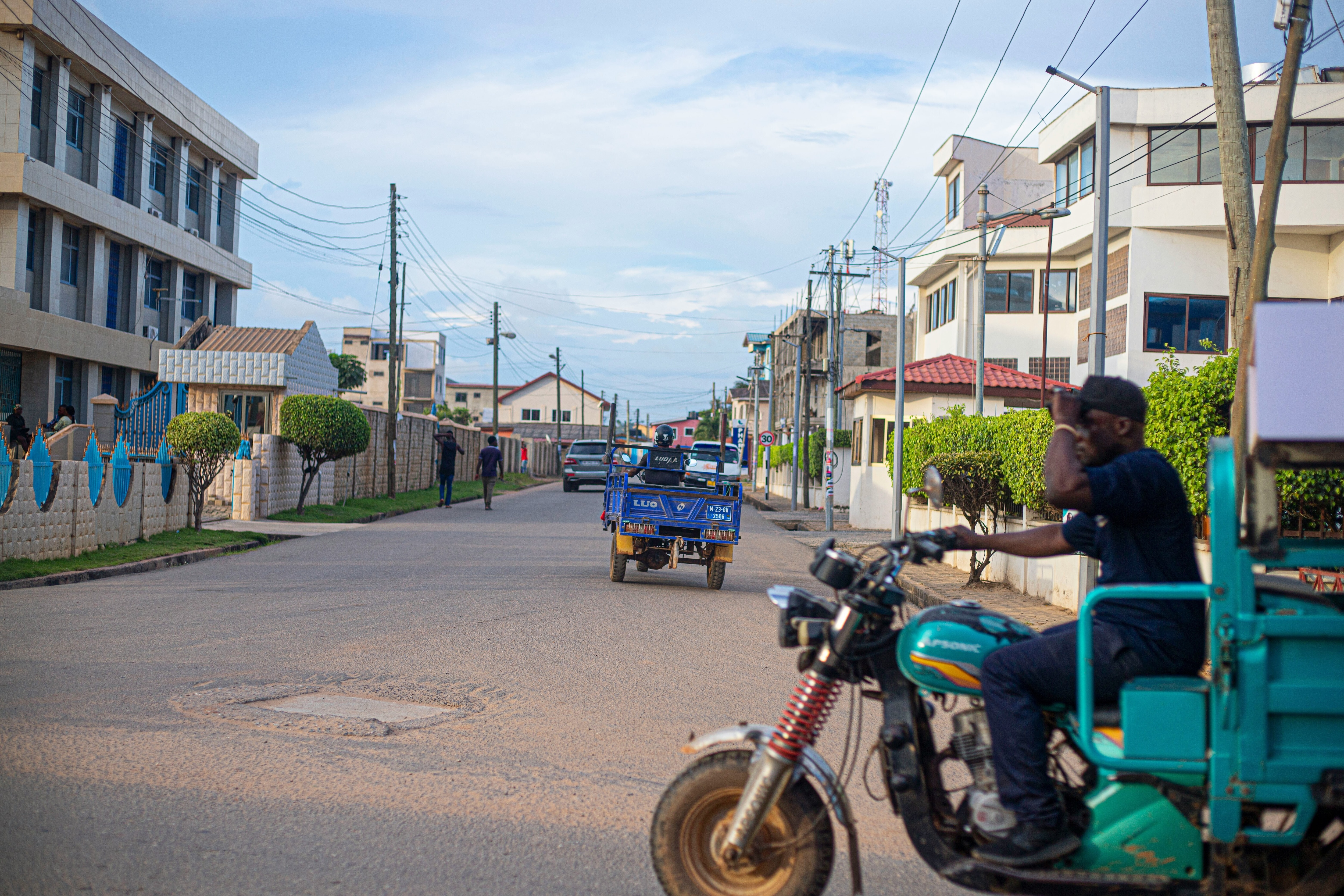
West Africa is undergoing a quiet energy revolution Image: Photo by Ato Aikins on Unsplash
Rakesh Bohra
Project Fellow, Mobilizing Investment for Clean Energy in Africa, World Economic Forum Geneva- West Africa is undergoing a quiet energy revolution.
- Reforms are focused on expanding infrastructure and on developing a more reliable and attractive regional electricity system.
- If the West African Power Pool continues to translate technical progress into commercial confidence, West Africa’s power market could become one of the continent’s most important regional infrastructure stories.
At a time when the global energy system is under pressure from affordability concerns, supply volatility and rising demand, regional energy security is becoming an increasingly important pillar of economic resilience. Meanwhile, a quiet revolution is taking shape in West Africa’s power market that deserves attention. Current reforms focus on expanding infrastructure and on developing a more reliable and attractive regional electricity system. This approach aims to reduce countries’ vulnerability to disruptions in global oil and gas markets, while improving regional power trade and energy access throughout West Africa.
At the centre of this shift is the West African Power Pool, a specialized agency of the Economic Community of West African States (ECOWAS) created over 25 years ago to integrate national electricity systems into a unified regional market. Its overall mission is to improve cross-border power flows across 14 West African countries. In practical terms, that means moving beyond fragmented national systems towards a platform where power can be exchanged more efficiently, improving resilience and helping countries use the region’s resource mix more effectively.
The scale of the opportunity is substantial, but it will only materialize if financing starts paying attention. The West African Power Pool's regional master plan identifies 75 priority projects requiring approximately US$36.39 billion, including 28 transmission projects covering roughly 22,932 km and 47 generation projects totalling about 15.49 GW. The same plan notes that electricity demand across the ECOWAS region is expected to grow by more than 8% annually, making regional integration not just desirable, but increasingly necessary.
A story of market design
What makes this a significant moment is that the West African Power Pool story is no longer only about generation additions and transmission lines. It is truly about designing market rules that will inspire investor confidence. This shift is already visible. In November 2025, the West African Power Pool announced a historic four-hour synchronization test in which West African grids operated together within a single synchronous network for the first time.
The West African Power Pool described the test as a major milestone towards a regional electricity market, with permanent synchronization being targeted by mid-2026. For investors, that matters because it signals technical readiness for a more integrated and disciplined market environment, where electricity trades are a stable remuneration to infrastructure investments. But, the decisive stroke to the West African Power Pool's full integration as a regional market is probably the introduction of the day-ahead market, helping bring greater transparency and efficiency to power trading by enabling advanced scheduling through competitive auctions. Once in place, the day-ahead market will support better grid coordination and provide clear price signals, helping systems, like the West African Power Pool, integrate diverse energy sources more effectively.
Efforts are also underway to establish a more standardized approach to transmission cost recovery, including the application of the Average Participation Method to improve transparency and predictability. This is being complemented by the development of liquidity mechanisms to strengthen bilateral power trade, as well as early steps towards clearing and settlement bank arrangements supporting the day-ahead market.
Taken together, these developments point to a system that is becoming more structured and commercially viable, gradually transforming a regional power vision into a more credible and investable platform.
A growing project pipeline
Equally important is the growing pipeline of commercially investable opportunities in the power sector. A recent investor dialogue hosted by the World Economic Forum spotlighted two especially critical transmission projects: from a 1550km transmission line linking Nigeria–Benin–Togo–Ghana–Côte d’Ivoire, to the reinforcement of the Coastal Transmission Backbone between Nigeria and Benin. Together, these projects are expected to enhance power reliability and facilitate cross-border electricity trade, while lowering energy costs significantly.
The region is also home to substantial clean power generation projects, as exemplified by the large hydropower opportunity unfolding in Nigeria, Guinea, Sierra Leone and Côte d’Ivoire. West Africa benefits from 28 transboundary river basins, with significant untapped potential projected to support around 12–13 GW of hydropower capacity by 2033 under the ECOWAS master plan, reinforcing its role as a backbone for flexible and low-cost baseload power.
Solar potential is even more compelling. West Africa lies within the global solar belt, with irradiation levels typically ranging between 5–7 kWh/m² per day, among the highest globally. A strong pipeline of scalable utility-scale projects is expected to unfold, as exemplified by the Soma Solar and Battery project adding ~150MW of generation capacity in Gambia.
Whether in the transmission or generation space, the advanced level of preparation of these projects positions them well for blended finance approaches that combine development finance support, guarantees and private capital. These opportunities are being developed within clear, government-backed contractual frameworks, with long-term power purchase agreements – often supported by sovereign commitments – providing investors with crucial revenue visibility and structured risk mitigation.
Taken together, market design evolutions and the growing project pipeline reflect a maturing investment landscape in West Africa, where project preparedness, improving regulatory frameworks and clearer de-risking mechanisms are aligning to create timely opportunities for long-term infrastructure capital. If the West African Power Pool can continue to translate technical progress into commercial confidence, West Africa’s power market could become one of the continent’s most important regional infrastructure stories.
Don't miss any update on this topic
Create a free account and access your personalized content collection with our latest publications and analyses.
License and Republishing
World Economic Forum articles may be republished in accordance with the Creative Commons Attribution-NonCommercial-NoDerivatives 4.0 International Public License, and in accordance with our Terms of Use.
The views expressed in this article are those of the author alone and not the World Economic Forum.
Stay up to date:
Energy Transition Index


Forum Stories newsletter
Bringing you weekly curated insights and analysis on the global issues that matter.


