'AI boom' insulates global growth from shocks, and other finance news to know

A trader works on the floor at the New York Stock Exchange this week. Image: REUTERS/Brendan McDermid
- Catch up on the key stories and developments shaping the financial world.
- Top stories: Markets continue to defy geopolitical gravity; Financing Europe’s defence ramp-up; and Japan's pension pivot lifts yen.
- For more on the World Economic Forum's work in finance, visit the Centre for Financial and Monetary Systems.
1. 'AI boom' insulates global growth from Middle East shocks
Global stocks remain near record levels, despite the war in the Middle East, rising oil prices and renewed risks to shipping through the Strait of Hormuz, which continue to elevate geopolitical stress.
Recent market analysis highlights how gains in large technology and AI‑linked stocks have done the heavy lifting in supporting major equity indices. While Bloomberg market tracking details the massive scale of this tech-driven surge, Reuters analysis highlights how it has left global equities largely unaffected by the conflict over several weeks, as AI optimism continually outweighs geopolitical concerns.
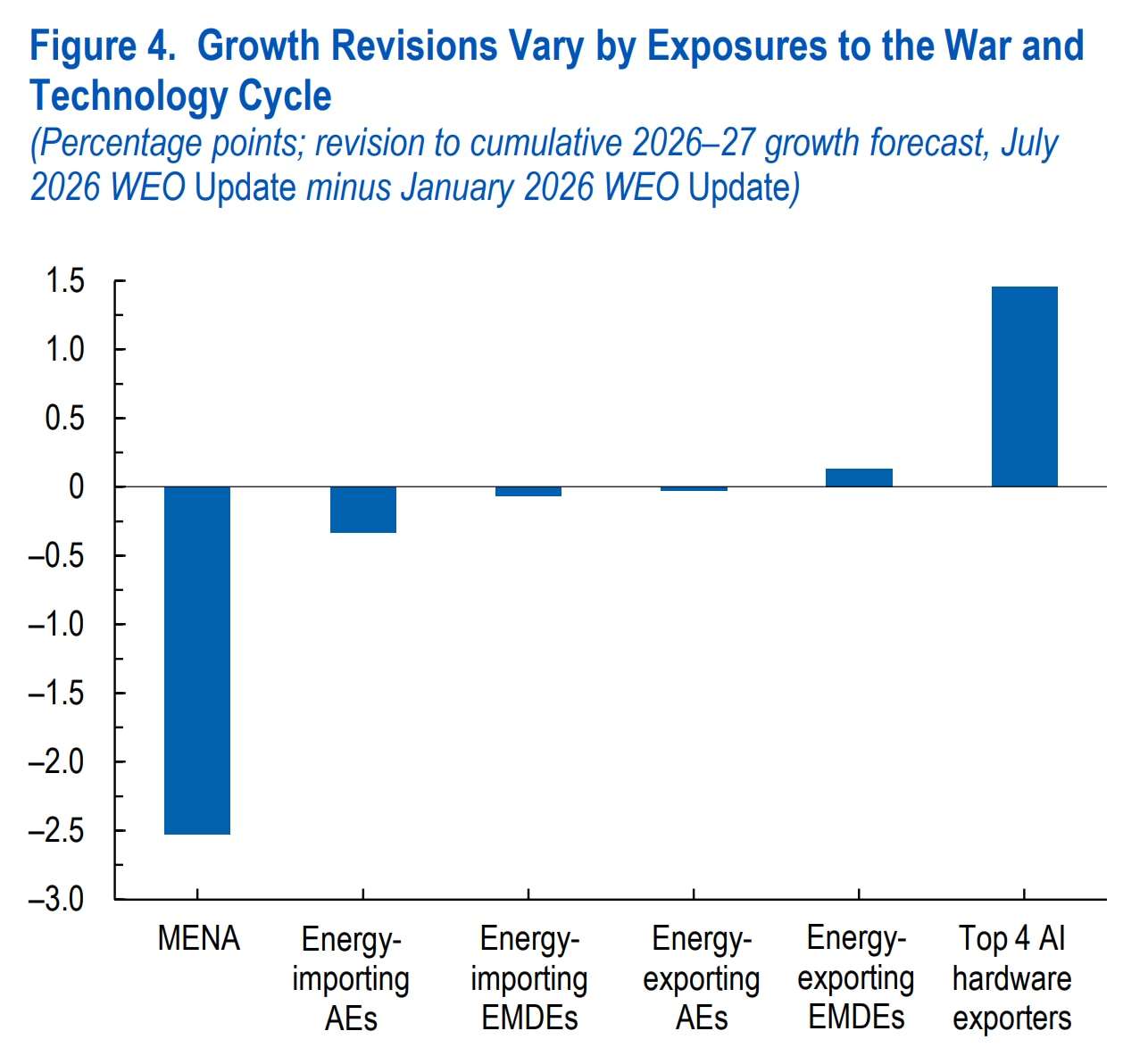
The International Monetary Fund’s (IMF) latest World Economic Outlook update describes the global economy as being pulled between a war‑related energy shock and a powerful technology‑investment cycle, trimming its 2026 global growth forecast only slightly to about 3% and projecting a mid‑3% range for 2027.
The IMF, however, stresses that this apparent resilience rests on a short‑lived war baseline, and warns that a deeper energy shock or a reset in AI optimism would tilt an already fragile outlook sharply to the downside.
Meanwhile, the World Economic Forum’s May 2026 Chief Economists’ Outlook strikes a similar note, with nearly nine in ten respondents expecting weaker global growth and almost all expecting higher inflation - even as financial markets continue to hold their nerve.
2. NATO’s 'Call to Action' draws private capital into defence
The traditional boundaries of private asset allocation are undergoing a significant shift. With long-term NATO defence investment guidelines already straining state budgets across Europe, according to Reuters, manufacturers are hesitant to fund massive industrial scaling entirely on their own balance sheets.
To bridge this fiscal gap, NATO used its inaugural Defence Industry Forum at the Alliance's annual summit in Ankara, Türkiye, on 7 July to launch a direct “Call to Action” targeting global financial institutions. The objective is to supplement public funding with deeper pools of commercial capital.
Here is how the financial mechanics of this rollout break down:
- The capital call: NATO Secretary General Mark Rutte explicitly urged leading commercial banks, private equity firms and asset managers to increase capital flows into the defence sector to support faster production and innovation. The initiative has been welcomed by a coalition of global and regional financial institutions, which together have already mobilized $217 billion in private capital.
- The transparency pivot: To help de-risk these ventures for private capital, NATO introduced new frameworks - including a first-of-its-kind public "demand signal" - designed to give institutional investors clear, long-term visibility into allied procurement pipelines.
While governments are clearing the runway for rapid private credit expansion into these heavy industrial sectors, monetary regulators are keeping a close eye on the market's underlying plumbing.
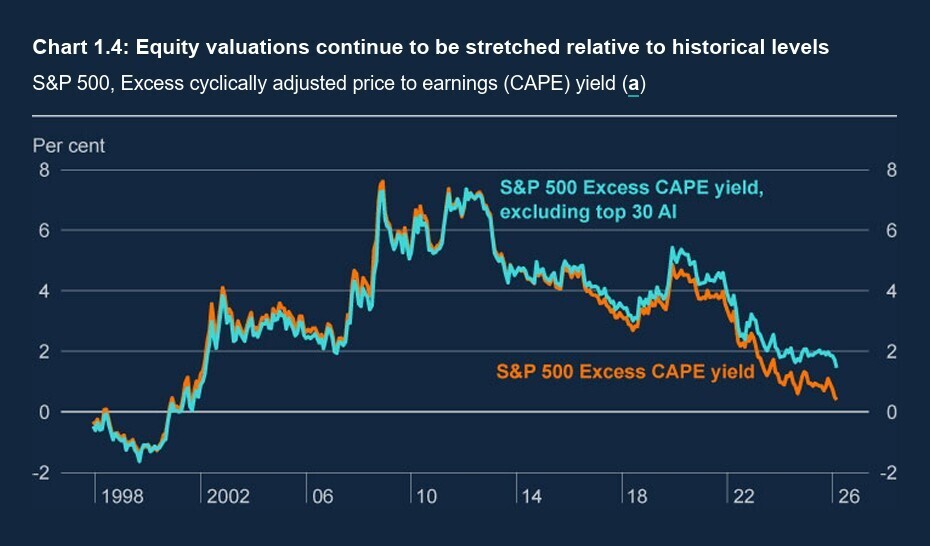
In its recent Financial Stability Report, the Bank of England issued a direct warning that a significant rise in global equity market leverage and vulnerabilities in private credit have intensified over the first half of the year. For institutional lenders, this means the race to bankroll new industrial pipelines will run into tighter supervisory oversight, as regulators focus more closely on the leverage underpinning returns.
3. More finance news to know
Japan’s finance minister said the government wants state pension funds to “substantially” lift investments in domestic assets. The move pushed the yen higher and drove gains in Japanese government bonds as investors priced in stronger structural demand for local markets. It comes after a weak yen pushed up import prices and helped drive wholesale inflation to its fastest pace in more than three years in June.
The IMF has named former Bank of England policymaker Silvana Tenreyro as its next Chief Economist to lead its global research agenda. Managing Director Kristalina Georgieva praised her as “an exceptional leader and communicator”, the FT reports, saying she would become a key voice on the global outlook. The appointment comes as policymakers grapple with the balance between persistent inflation risks and slowing growth.
UniCredit has secured a 47.6% holding in Commerzbank, moving the Italian lender closer to gaining effective control of Germany’s second-largest bank. The stake falls short of the 50% threshold for full control, with regulatory approval and talks with German stakeholders still to come.
Fraud cases involving stolen money in the UK rose to more than 4 million last year, with criminals increasingly using AI, fake online identities and romance scams to target victims, according to UK Finance. Losses reached almost $1.7 billion, as banks warned fraud had become a national security threat and called for greater action from technology platforms to prevent scams.
The US derivatives regulator is set to block CME Group’s plans for a round-the-clock oil futures contract, citing concerns that energy markets may not be ready to handle a surge in trading volumes. CME argues the smaller contract would help investors manage risk whenever major events move oil prices, as demand grows for continuous access to markets.
4. Read more on Forum Stories
Recent advancements in generative and agentic AI are reshaping financial services at an intense pace. As institutions move from experimentation to scaled deployment, the central challenge is integrating AI with both urgency and discipline. A new report, The AI Playbook for Financial Services, developed in collaboration with Accenture, offers practical guidance for organizations at every stage of their AI journey.
Low-tech interventions could save the world’s healthcare systems more than $5.8 trillion and unlock another $645 billion in productivity by 2040, according to a new insight report, The Longevity Dividend: The Business Case for Linking Health and Wealth. These include fall-proofing homes, increasing levels of physical activity and expanding the use of hearing aids, all of which are affordable and simple examples that produce considerable returns when they are understood in the wider context of the longevity economy.
The global investment race is accelerating, driven by AI, semiconductors, clean energy and critical technologies. But without broader access, it risks creating a new divide between economies that attract strategic investment and those left behind. This article explores how developing countries can build realistic pathways into future value chains through skills, infrastructure, partnerships and smarter investment policies.
License and Republishing
World Economic Forum articles may be republished in accordance with the Creative Commons Attribution-NonCommercial-NoDerivatives 4.0 International Public License, and in accordance with our Terms of Use.
The views expressed in this article are those of the author alone and not the World Economic Forum.

Forum Stories newsletter
Bringing you weekly curated insights and analysis on the global issues that matter.
More on Financial and Monetary SystemsSee all

Tobias Lindström Battle and Isabela Bartczak
October 13, 2026


