How Bangladesh is shifting its health care approach to noncommunicable diseases
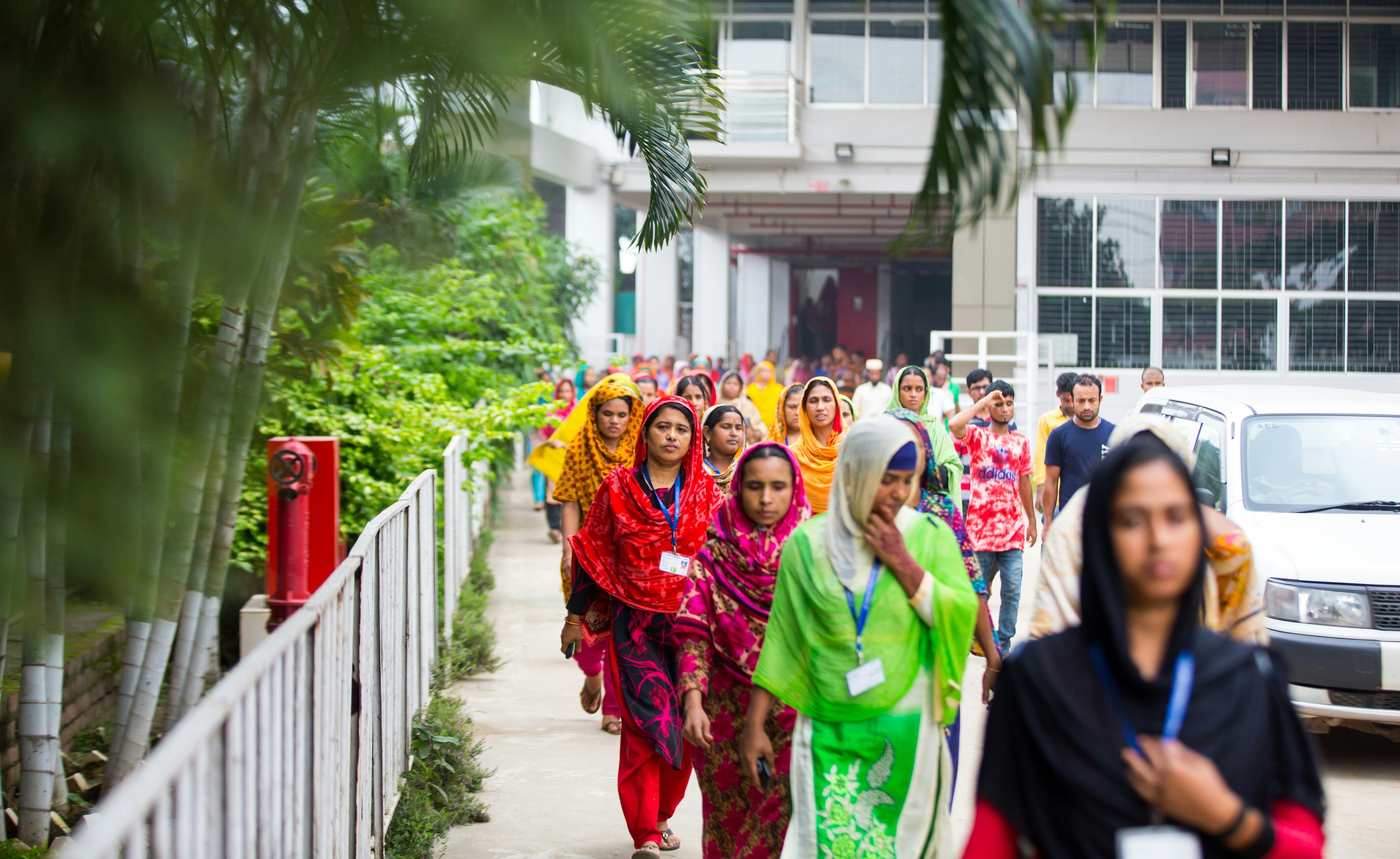
Noncommunicable diseases in Bangladesh can be tackled through coordinated primary health care. Image: Unsplash/Shanjir H | Photo4life AU
- Noncommunicable diseases cause about 70% of deaths in Bangladesh, yet many people don’t know they have them until serious complications occur.
- Community-based screening plus digital follow-up is showing promising results.
- The Bangladesh government plans to strengthen its workforce, medicine supply and national digital health records to boost care.
Bangladesh may have a Ministry of Health and Family Welfare but some may say it is more akin to a “Ministry of Hospitals,” with more emphasis on treatment infrastructure than on preventive healthcare. This imbalance is not unique to Bangladesh.
Noncommunicable diseases (NCDs) now cause almost two-thirds of all deaths in the World Health Organization (WHO) South-East Asia Region, with nearly half of them premature, between the ages of 30 and 69.
Yet health systems worldwide devote only around 3-5% of their spending to prevention, while straining under the cost of treating complications.
In Bangladesh, noncommunicable diseases cause 70% of all deaths. Some 14 million adults live with diabetes, the world's seventh-largest diabetes population and the most recent national health survey found nearly one in four women and one in six men with high blood pressure.
However, 43% of women and 51% of men with raised blood pressure are unaware, as are roughly seven in 10 of those with high blood sugar. Only about one in five adults with high blood pressure knows about their condition, takes the appropriate medication and keeps it under control; for diabetes, closer to one in 20 have their blood sugar under control.
Most learn about their health following a complication, such as a stroke, heart attack or kidney failure. When this happens, the costs fall on households.
Ordinary Bangladeshis end up paying roughly three-quarters of the country's health bill out of pocket, among the highest proportions in the world, with almost no insurance to cushion it.
A study published this year in Health Economics Review found that a family living with a noncommunicable disease spends around $69 more a year on care than a comparable family without one – three-quarters of it on medicines.
It also found that among the poorest households, a noncommunicable disease raises the risk of falling into poverty by almost four percentage points.
A chronic illness in Bangladesh is therefore not only of medical consequence but also one of the most direct routes into poverty and a quiet drain on development gains the country has spent decades building.
Implementing reforms to tackle mortality rates
We are implementing substantial reforms to change this trajectory. In our National Health Compact, we have committed to cut premature mortality from noncommunicable diseases from 24.6% to 15% by 2030 and to make primary health care free.
Behind those targets sit three commitments:
- An additional 100,000 community health workers.
- A fully functional and adequately staffed prevention-focused primary healthcare unit in every union and urban ward.
- A national digital ecosystem anchored by an e-health card for every citizen by 2028, linked to a shared health record any facility can access.
Funding has followed: this year's budget nearly doubled the health allocation to around 1% of gross domestic product from 0.58%. The question we must answer is how these commitments manifest in a rural household.
Applying 3 years of lessons from testing
Since 2023, the government's National NCD Control Programme has worked with the non-government network BRAC, whose community health workers serve over 20 million households, and Medtronic LABS, which builds digital health platforms for primary care.
Together we have built a single, connected pathway that follows an individual from the first knock on their door through to long-term treatment. Screening itself is not new but until now it has largely been opportunistic – whoever arrived at a clinic or an episodic community campaign.
What we deployed is systematic screening of whole communities.
Patients are referred to a facility that matches the urgency of their case; those who need closer attention receive frequent follow-up tele-counselling calls and stable patients collect medicine, with community clinics monitoring them closer to home.
A single digital record opens at the first household visit and follows that person through their health journey; health workers can see that chain, from screening to outcome, in real time.
Community health workers systematically screened over 470,000 adults; a third of whom had elevated blood pressure or blood sugar, with 20% of those readings at life-threatening levels.
More than 142,000 patients enrolled in the programme. Among those whose readings were repeated at six months, the share with blood pressure within a safe range rose 17 percentage points, to 52%.
For blood sugar, the share rose by 11 points to 34% – while this represents an improvement, it still lags behind blood pressure. However, these progressions have potentially averted strokes, heart attacks and kidney failures: a sustained 10-point drop in blood pressure reduces the risk of a heart attack or stroke by about a fifth.
Identifying and addressing remaining gaps in health care
The data also reveals fundamental system challenges. Only 22% of referred patients could be tracked into government facilities and roughly half of enrolled patients have a documented six-month reading.
An independent evaluation by BRAC James P Grant School of Public Health found that many referred patients turn to private providers, often when medication becomes unavailable locally and nutrition, tobacco and exercise advice – which matters as much as medication – is still rarely given in routine care.
As well as a genuine gap, the dearth in data is also accounted for by invisibility. Patients move between primary care centres, public hospitals, private providers and pharmacies, so recorded linkage and follow-up may understate the care they received.
Measuring any continuity is progress but as it stops at the public system, only a shared record – the e-health card and the connected digital ecosystem around it – can follow patients across that journey and ensure referrals are completed, so providers act on a full, not partial, history.
Systemizing a proven concept
The task now is to standardize and scale this and similar programmes nationally, moving from projects to a system and making community-based prevention and screening a routine part of primary care.
Doing so requires giving health workers the tools to make one visit cover a household's full needs, rather than separate protocols and proformas for every disease. AI could help prioritize households, ease documentation and tailor counselling.
None of this works without the basics we are already investing in: enough trained health workers and a reliable, affordable supply of essential medicines.
Global frameworks such as WHO's HEARTS technical package for cardiovascular disease management and Package of Essential Noncommunicable (PEN) Disease Interventions point to the same approach; Bangladesh's contribution is to test them at national scale, with new technology behind them.
Across South Asia and much of Africa, the same elements are converging: large community health workforces, national digital identity systems and governments under fiscal pressure to prevent disease rather than treat it late. In such conditions, shared digital records and systematic screening can work in the same way.
Becoming a Ministry of Health rather than a Ministry of Hospitals comes down to whether prevention and care are within reach and affordable for ordinary households.
Tracking the patient journey and measuring the outcomes to inform ongoing programming, moving beyond single projects, can help us get there and that is the standard we intend to be judged against.
Don't miss any update on this topic
Create a free account and access your personalized content collection with our latest publications and analyses.
License and Republishing
World Economic Forum articles may be republished in accordance with the Creative Commons Attribution-NonCommercial-NoDerivatives 4.0 International Public License, and in accordance with our Terms of Use.
The views expressed in this article are those of the author alone and not the World Economic Forum.
Stay up to date:
Global Health


Forum Stories newsletter
Bringing you weekly curated insights and analysis on the global issues that matter.
More on Health and Healthcare SystemsSee all

Daniel Mora Brito and Lora du Moulin
September 21, 2026