From silk roads to supply chains: How strategic narratives shape economic strategy in Asia
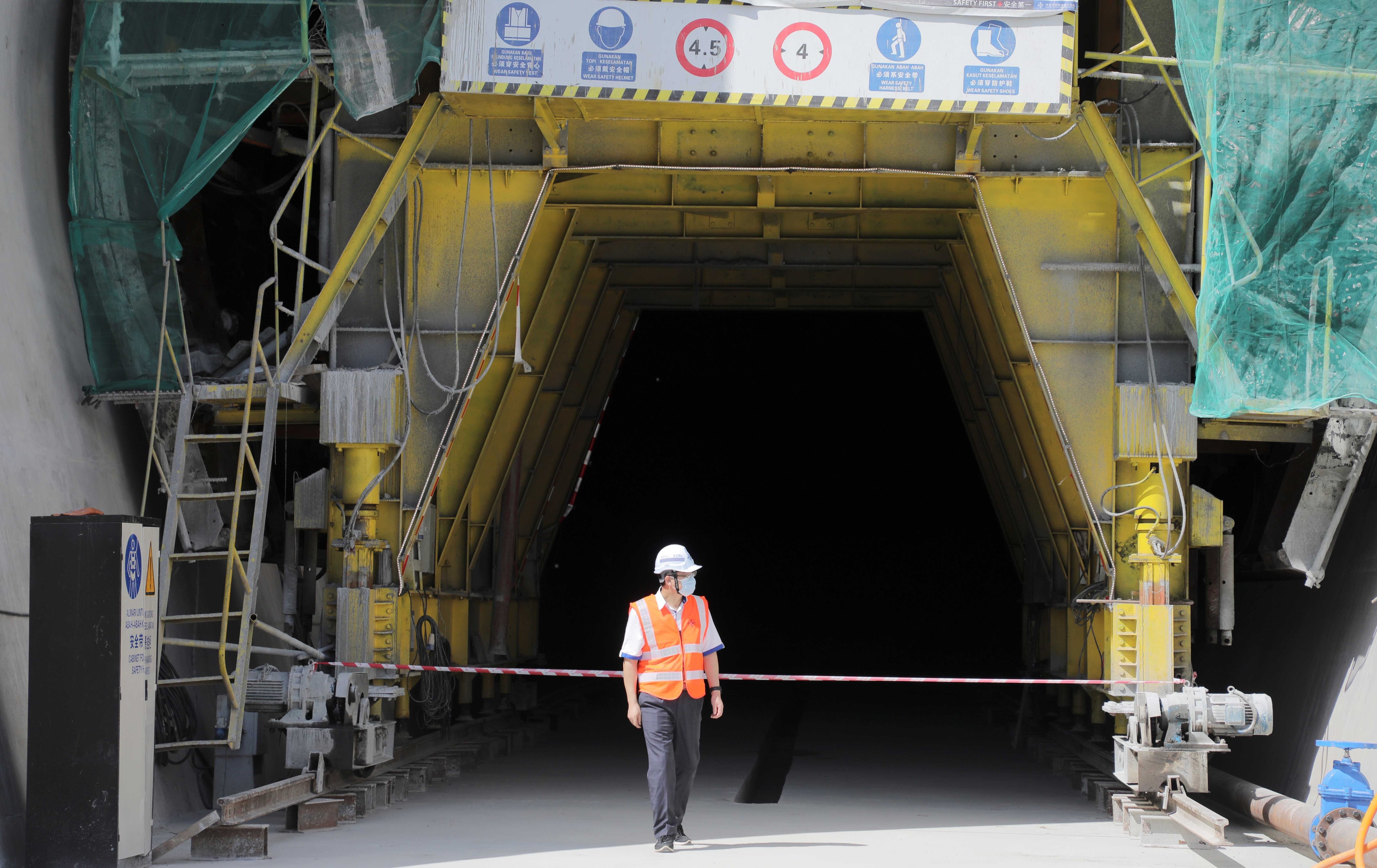
China's Belt and Road Initiative draws on Silk Road imagery to frame contemporary connectivity. Image: Reuters/Hasnoor Hussain
- Businesses have long been building supply chains on the basis that Asia would become increasingly integrated, but that assumption is now under pressure.
- Increasing focus on economic security and geopolitics means that the location where firms operate depends not just on market fundamentals, but also on narratives shaping policy.
- The challenge for business leaders is to understand how changing narratives are reshaping the Asia's future.
For decades, businesses have built supply chains on the assumption that Asia would become ever more integrated. But that assumption is now under pressure.
As governments place greater emphasis on economic security and seek to reduce strategic vulnerabilities, decisions about where companies operate have come to depend as much on the narratives shaping policy as on market fundamentals.
As a child in the 1980s, I watched NHK's documentary The Silk Road and became fascinated by its vision of a region connected by trade, culture and exchange. Its portrayal of ancient trade routes suggested that Asia’s connections were natural and enduring. Today, understanding how such narratives shape perceptions of integration may be just as important as understanding trade flows themselves..
From caravans to supply chains
The Asia depicted in that documentary was far less integrated than it is today.
Since the 1980s, Asia has become one of the most integrated economic regions in the world. According to the United Nations Economic and Social Commission for Asia and the Pacific (ESCAP), intra-Asian trade has risen from roughly one-third of the region's total trade in the 1980s to nearly 60% today. Agreements such as the Regional Comprehensive Economic Partnership (RCEP), the world's largest free trade agreement, reflect the depth of these economic connections.
Production now spans multiple countries. Electronics assembled in Viet Nam may rely on components from China and technology developed in South Korea, while drawing on capital from Japan or Singapore.
The concentration of critical industries highlights the scale of this interdependence. East Asia accounts for the vast majority of global advanced semiconductor manufacturing capacity, making disruptions in the region particularly consequential for global supply chains. Improved logistics and digital infrastructure have accelerated cross-border exchange across the region.
Financial integration has deepened alongside trade. As China became central to regional manufacturing networks and Southeast Asia emerged as both a production hub and consumer market, many came to view cross-border networks as a permanent feature of Asia's economy – rather than a contingent historical outcome.
Strategic narratives and Asian Integration
Strategic narratives are stories that shape how governments, businesses and societies interpret change. The Silk Road narrative has become particularly influential, because it portrays regional connectivity as enduring and historically grounded.
This framing is evident in China's Belt and Road Initiative, which draws on Silk Road imagery to legitimize contemporary connectivity. More broadly, references to historical connectivity in diplomacy and popular culture frame integration as a return to a regional norm, rather than a product of specific political and economic conditions.
Strategic narratives matter, because they influence how governments and businesses assess risk and opportunity. When regional connectivity is framed as a natural extension of Asia's historical development, governments are more likely to invest in cross-border links and firms are more likely to assume that cross-border interdependence will continue to deepen. Conversely, an emphasis on resilience encourages states and companies to diversify supply chains.
Yet, such narratives can create analytical blind spots. By portraying economic interconnectedness as historically inevitable, they can obscure its dependence on political stability and institutional cooperation.
The remarkable expansion of Asian supply chains was not inevitable. It emerged during a period marked by economic liberalization and relative geopolitical stability.
Fault lines beneath the networks
Growing geopolitical competition between the United States and China is challenging assumptions that deeper interdependence promotes stability and prosperity. Concerns about economic security are reshaping both industrial policy and corporate strategy. The result is a shift away from the assumption that efficiency alone should determine how production networks are organized.
The biotechnology sector illustrates how these broader pressures are reshaping strategic industries. Pharmaceutical spending is projected to exceed $2 trillion by the end of the decade, while governments worldwide are directing billions of dollars towards domestic manufacturing and health-security capabilities.
Since COVID-19, concerns about supply-chain resilience have spurred domestic investment in pharmaceutical manufacturing and critical health technologies. National security considerations now shape where firms conduct research and manufacture medicines.
Demographic pressures in Japan, South Korea and China may further constrain the growth that helped sustain regional integration.
The result is a paradox. Asia remains deeply interconnected, but interdependence no longer guarantees stability. Networks that once symbolized economic momentum now reveal geopolitical vulnerabilities that received little attention during the era of rapid globalization.
Lessons from the Silk Road
NHK’s The Silk Road endures, because it portrays connections that spanned vast distances and centuries. Yet the deeper historical lesson is not one of uninterrupted integration.
The ancient Silk Road was never a stable or unified system. Routes shifted, political tensions disrupted commerce, and empires rose and fell. Connectivity endured because networks adapted to changing circumstances, not because exchange was inevitable.
The same lesson applies to modern Asia. Today's supply chains may appear deeply embedded, but they remain vulnerable to changing political and strategic conditions. The life sciences sector illustrates this shift particularly well.
Governments are now investing heavily in vaccine platforms and biologics manufacturing. For biotech and pharmaceutical firms, success depends as much on navigating geopolitics as on scientific innovation. Economic networks are viewed as sources of both opportunity and vulnerability.
Geopolitical analysis has become central to supply chain strategy. Decisions about investment and production depend on how governments interpret economic interdependence and strategic risk. Success depends on understanding how Asia's integration is being reshaped by geopolitical competition and industrial policy.
The lesson of both the ancient Silk Road and modern Asia is that connectivity is not inevitable. For business leaders, the challenge is to understand how changing narratives about integration and economic security are reshaping the region's future. In an era of heightened geopolitical competition, firms must navigate rival visions of economic order as well as the markets in which they operate.
Don't miss any update on this topic
Create a free account and access your personalized content collection with our latest publications and analyses.
License and Republishing
World Economic Forum articles may be republished in accordance with the Creative Commons Attribution-NonCommercial-NoDerivatives 4.0 International Public License, and in accordance with our Terms of Use.
The views expressed in this article are those of the author alone and not the World Economic Forum.
Related topics:

Forum Stories newsletter
Bringing you weekly curated insights and analysis on the global issues that matter.
More on Trade and InvestmentSee all

Axel Van Amersfoort and Morgenie Pillay
July 24, 2026


