Opinion
Europe’s defence build-up is a climate gamble – here’s how it can course correct
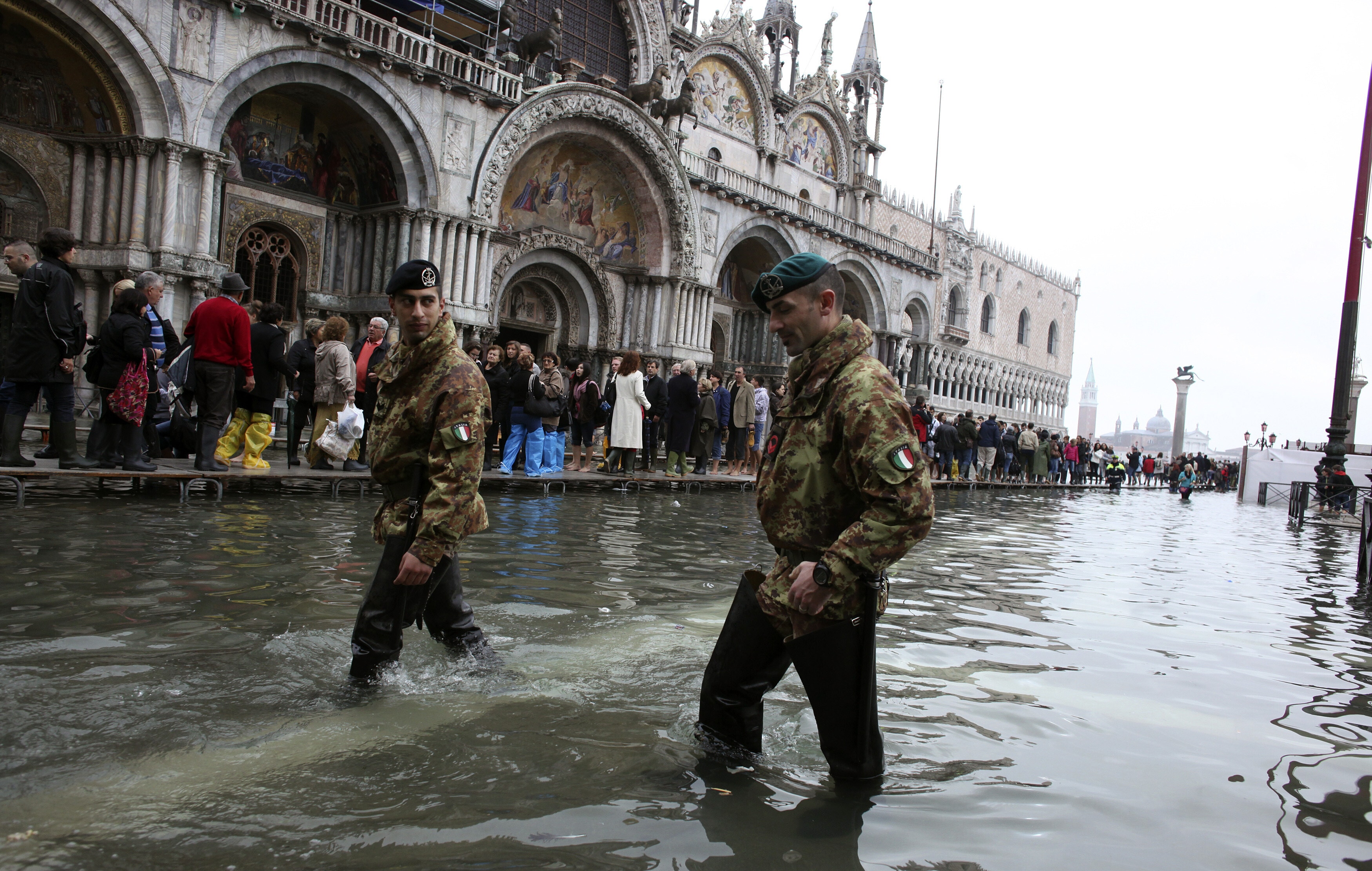
European defence capabilities should include climate-responsive dual-use technologies. Image: REUTERS/Manuel Silvestri
- Climate-related disasters are already stretching European military resources, degrading infrastructure and compromising readiness.
- While NATO and the EU ramp up military spending, the narrow focus on conventional threats overlooks climate change.
- Efforts must include use of dual-use climate and military application technologies.
Just as NATO adopts an ambitious defence spending target of 5% of gross domestic product, Spain is charting a distinct course.
While securing an exemption from NATO's new benchmark, the Spanish government has earmarked €1.75 billion of its growing military budget for climate-responsive dual-use capabilities, explicitly designed to tackle climate-related emergencies.
This is not a diversion from defence priorities; it is a clear-eyed understanding of the complex security realities of the 21st century.
As NATO and Europe embark on an unprecedented surge in military investment in response to Russian aggression, their leaders risk a strategic blunder of catastrophic proportions.
In the rush to build “hard” security – total military spending in the European Union rose by 16% between 2023 and 2024 to $358 billion and over 26% since 2022, according to the Stockholm International Peace Research Institute – European leaders are ignoring a threat that is already undermining both military effectiveness and societal stability: climate change.
To focus new defence investments solely on traditional threats is to build a modern defence apparatus on quicksand.
Climate change is already impacting militaries
Climate change is a present-day national security issue. When extreme floods, wildfires and mudslides tear through communities, they destroy lives, livelihoods and critical infrastructure.
The sheer scale of these climate-driven events increasingly overwhelms civilian capacity to respond, forcing the diversion of military forces to disaster response. In 2024 alone, major floods in Spain and Poland tied up tens of thousands of troops, straining military readiness for core defence tasks.
Beyond disaster relief, climate change directly degrades military assets. More frequent storms, coastal floods and wildfires directly threaten critical inland and coastal infrastructure, which impacts both military bases that are part of NATO’s defence posture.
Across Europe, rising sea levels and extreme weather threaten to flood or cut off military bases, disrupting operations and incurring massive adaptation needs and costs.
The US Department of Defence’s 2024-2027 Climate Adaptation Plan outlines extensive adaptation needs by rebuilding billions of dollars' worth of critical infrastructure damaged by extreme weather.
In addition, NATO itself has warned that changing ocean temperatures and salinity are affecting the acoustic environment, already complicating vital naval operations such as anti-submarine warfare – an important cornerstone of NATO’s defence posture towards Russia.
What use are state-of-the-art aircraft if their bases are routinely flooded? How effective is our deterrence if domestic climate emergencies chronically overstretch our forces?
A role for dual-use technologies
This challenge is compounded by a false conflict: the perception that we must choose between defence modernization and the green transition.
In Sweden, for instance, critical windfarm projects have been paused over concerns they interfere with military radar.
At the same time, the race for rare earth minerals and magnets, essential for green technologies and advanced weaponry, is a critical vulnerability to NATO’s military readiness, as it exposes important supply chains to geopolitical shifts.
Rising military spending should serve as a catalyst for green innovation, driving research into dual-use technologies that enhance European military capabilities and societal resilience.
A climate-resilient Europe is a more stable and secure Europe. The current drive to bolster defence spending to the new NATO target of 5% of GDP must coincide with an effort to simultaneously “future-proof” our forces and infrastructure against escalating climate impacts while drastically reducing emissions.
European leaders must develop an urgent addendum to the European Defence Agency’s Joint White Paper for European Defence Readiness 2030: a roadmap for climate-proofing European security.
This plan must ensure all new defence investments are assessed for climate vulnerability, their capacity to boost societal resilience and their alignment with emissions-reduction targets – including NATO’s own. This would ensure that measures that enhance Europe’s security in the short term are also sustainable.
To do otherwise is to plan for yesterday’s world. Meanwhile, the strategic landscape itself is being relentlessly reshaped by climate breakdown, fatally weakening Europe’s long-term position and ability to protect citizens from the challenges of a radically altered world.
Don't miss any update on this topic
Create a free account and access your personalized content collection with our latest publications and analyses.
License and Republishing
World Economic Forum articles may be republished in accordance with the Creative Commons Attribution-NonCommercial-NoDerivatives 4.0 International Public License, and in accordance with our Terms of Use.
The views expressed in this article are those of the author alone and not the World Economic Forum.
Stay up to date:
European Union


Forum Stories newsletter
Bringing you weekly curated insights and analysis on the global issues that matter.
More on Resilience, Peace and SecuritySee all

Ali Mammadov and Kanan Mammadov
February 6, 2026


