Why a global plastics treaty needs to move beyond negotiations to inclusive action
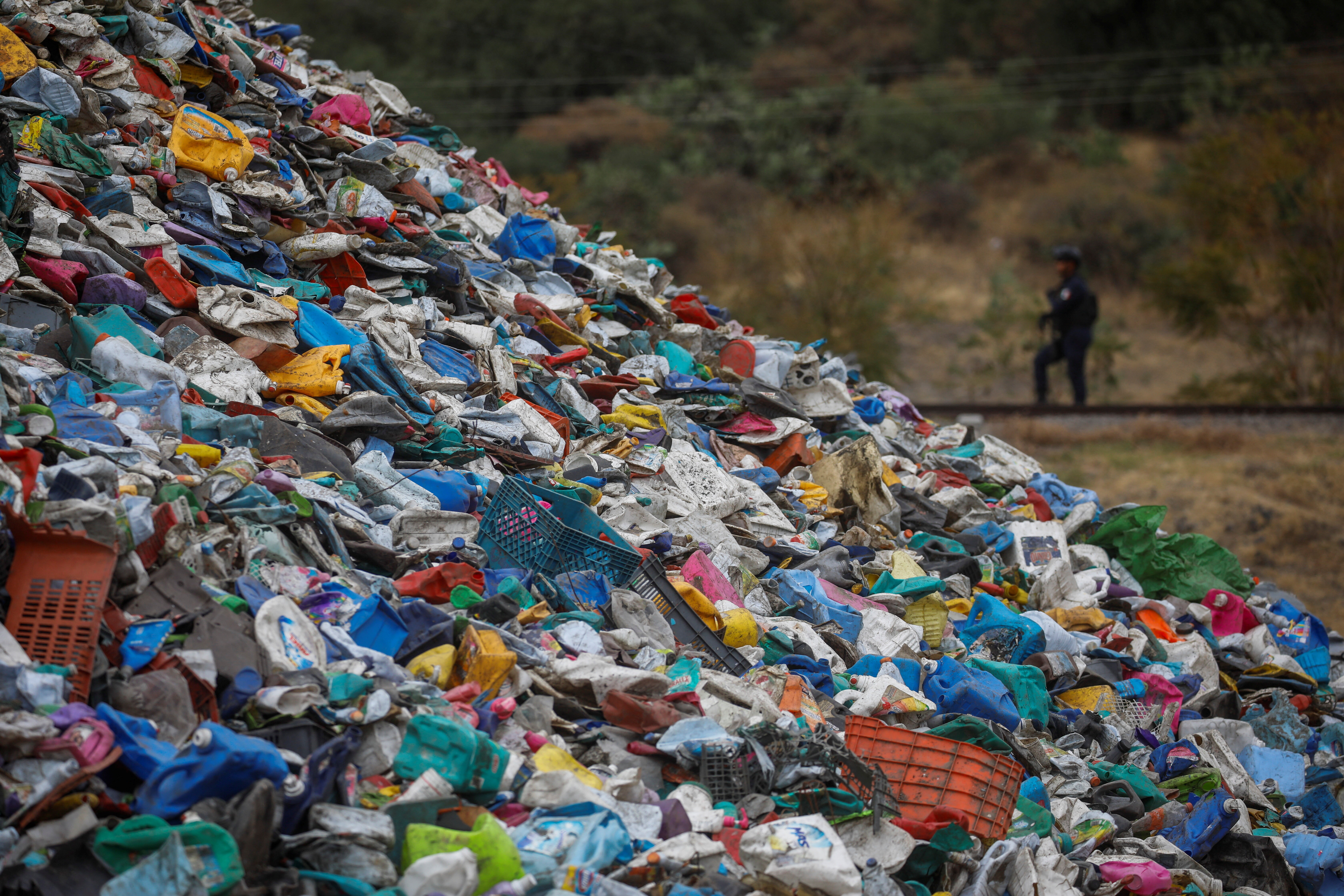
A plastic recycling dump in Valle de Chalco, Mexico. Image: Reuters/Raquel Cunha
- This month's global plastic treaty negotiations must be matched by real-world impact – including the necessary partnerships.
- Inclusive policy should be influenced by the experiences of those most affected by plastic pollution.
- Switzerland's historic brokering role makes it a key actor in the fight to achieve a circular economy.
In August, the world will convene in Geneva, Switzerland, for the second part of the fifth session of the Intergovernmental Negotiating Committee (known as INC-5.2) to conclude a historic global treaty to end plastic pollution. This process, launched by the United Nations Environment Assembly (UNEA), seeks to craft an international legally binding instrument covering the full life cycle of plastic, from production and design to recycling and disposal. Such a treaty would mark a major turning point, with the potential to reshape how the world creates, uses and manages plastics in the decades to come.
But the path is not simple. Disagreements over financial support, national responsibilities, chemicals of concern, sustainable production and consumption, and timelines reflect both the depth and the diversity of the challenges to agreeing on a global plastics treaty.
From negotiation halls to real-world impact
Solving plastic pollution requires not only skilled negotiators, but also robust partnerships to translate commitments into impact. The Global Plastic Action Partnership (GPAP), hosted by the World Economic Forum since 2018, exemplifies this approach. As the world’s largest initiative tackling plastic pollution, it operates across 25 countries, convening national governments, industry leaders, civil society and technical experts. Its goal: turning global ambition into national action to eliminate plastic pollution.
Through its country platforms and technical working groups, GPAP helps governments develop practical roadmaps – tailored plans rooted in local evidence – to reduce plastic waste, improve livelihoods and create jobs. Recent collaborations, such as a landmark Insights Paper co-developed with partners including Common Seas, the World Bank, IUCN, Global Plastics Policy Centre, WRAP, Eunomia Consulting and the Plastics Pact Network, synthesize lessons from more than 60 countries.
These shared resources don’t favour one policy pathway, but highlight the nuanced, context-specific nature of solutions – valuable both for negotiators and those working to combat plastic pollution on the ground. Importantly, through informal gatherings in the sidelines, GPAP brings these real-world experiences and evidence to the negotiations themselves, helping to ensure that discussions are informed by the practical realities and diverse needs of communities worldwide.
Why inclusion matters in plastic
Plastic pollution isn’t just a matter of waste management; it is bound to questions of equity, opportunity and inclusion. Many of those most affected by plastic pollution – informal waste workers, community recyclers and marginalized groups – are rarely visible in global policy debates. GPAP’s Inclusive Plastic Action Programme, supported by the UK government, channels investment and recognition to local innovators, many led by women and youth. The 10 award-winning projects being announced this summer are testament to the creativity and commitment found at the grassroots level. By integrating gender equality and social inclusion (GESI) principles into all its work, GPAP aims to help ensure the plastics transition is truly just and broadly shared.
Switzerland’s contribution
The upcoming INC-5.2 meetings in Geneva highlight Switzerland’s unique role. Its diplomatic tradition of neutrality and bridge-building has long made the city a centre for international treaty-making and technical collaboration. Switzerland is a committed champion of pragmatic, evidence-based multilateralism, not only as a host of negotiations, but as an active contributor to global solutions.
Globally, Switzerland works to elevate action on plastics and the circular economy on the international environmental agenda. It has played a central role in shaping the plastics treaty negotiation process, advocating for a treaty that prevents plastic pollution and protects human health and the environment, and which takes account of the full life cycle of plastics, from production to disposal. The country has emphasized measures at all stages, including reducing the production and use of new plastics to a sustainable level, the gradual elimination of the plastics that cause the most damage such as single-use products, products that are difficult to recycle and those containing hazardous chemicals. It has also discussed the need for a financing mechanism that will enable all countries, including those with limited resources, to implement treaty obligations equitably and effectively.
Switzerland also supports global cooperation through technical assistance, capacity-building and South-South knowledge exchange. Working with partners like the World Economic Forum, Switzerland fosters collaboration well beyond the negotiation rooms, supporting side events, technical deep-dives, and peer learning opportunities highlighting circularity in action. It was the location for the Basel, Rotterdam and Stockholm Conventions’ COP in 2025, where it partnered with GPAP to host a ministerial site visit, to illustrate how sustained investments into reuse can lead to profitable circular industrial facilities.
The plastics treaty has the potential to serve as a transformative framework to achieve sustainable production and consumption patterns and to end plastic pollution. A treaty with effective measures will help drive meaningful action. It would offer businesses greater predictability, trigger investment, and speed up innovation towards a more sustainable future.
”Foundations for lasting change
While the outcome of INC-5.2 remains to be seen, the experience of partnerships like GPAP delivers an important lesson. Progress requires multistakeholder collaboration, constant adaptation, trust-building and practical, locally owned solutions that reflect real-world conditions. The meaningful inclusion of diverse voices – especially those most affected by plastic pollution – is essential to lasting impact. The daily commitment of national and local actors, empowered by access to data, funding and peer learning, continue to shape the future of plastic pollution response.
History has taught us that treaties succeed when underpinned by determined actors, trusted partnerships, robust resources and enforcement frameworks and local adaptation. As the world follows the high-stakes deliberations in Geneva, it is equally important to recognize, and invest in, the networks, tools and inclusive solutions that will ultimately make the difference.
A treaty will set global direction and accelerate impact. Persistent collaboration on the ground will drive real change. With the support of the UK, Canada, Switzerland and many other dedicated partners, GPAP will keep bridging ambition and action, enabling the implementation of global commitments and helping countries in their transition to a circular plastics economy.
Don't miss any update on this topic
Create a free account and access your personalized content collection with our latest publications and analyses.
License and Republishing
World Economic Forum articles may be republished in accordance with the Creative Commons Attribution-NonCommercial-NoDerivatives 4.0 International Public License, and in accordance with our Terms of Use.
The views expressed in this article are those of the author alone and not the World Economic Forum.
Stay up to date:
Circular Economy
Related topics:


Forum Stories newsletter
Bringing you weekly curated insights and analysis on the global issues that matter.
More on Nature and BiodiversitySee all

Forum Stories
February 25, 2026


