How Japanese companies are adapting to rising heat risks in the workplace
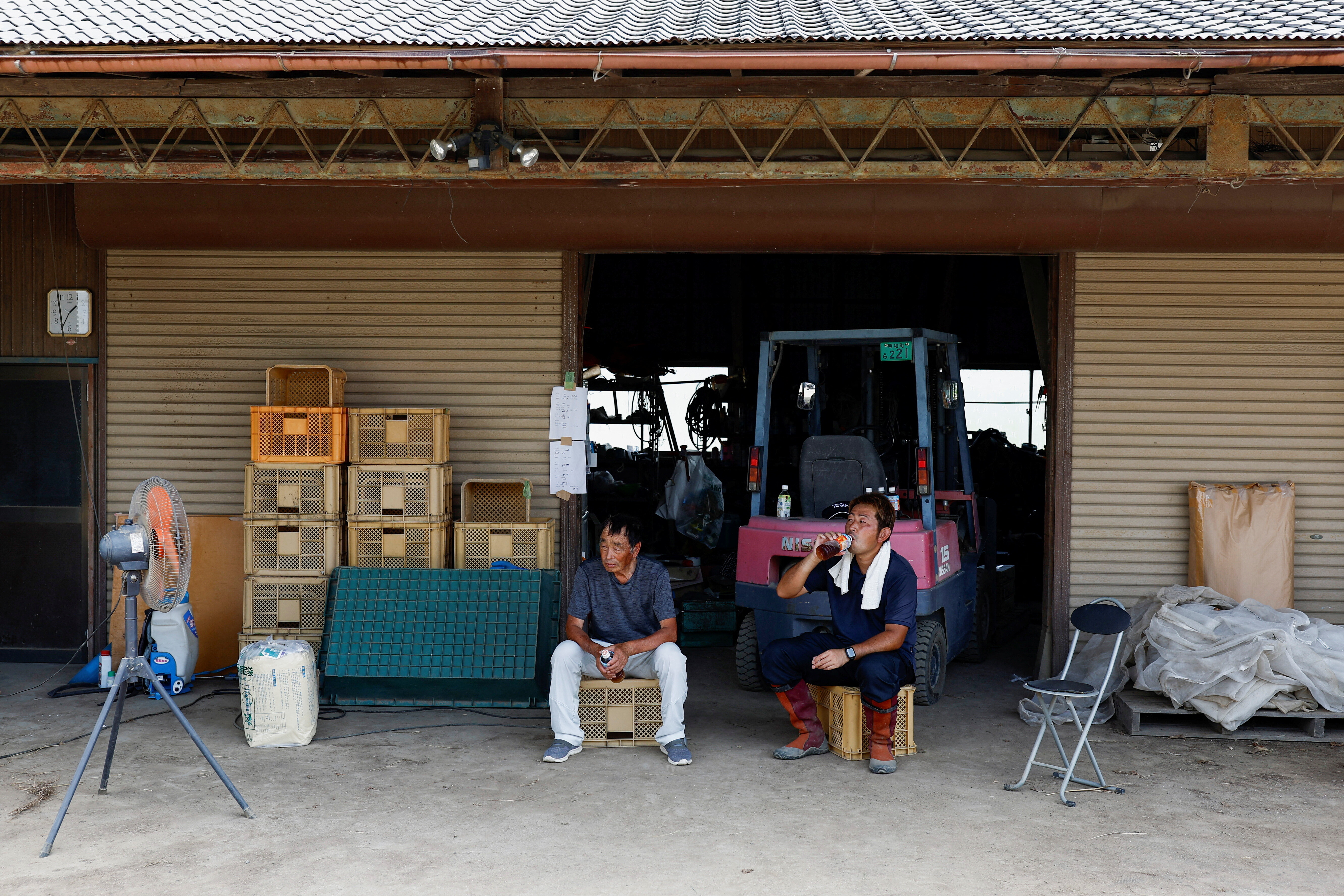
Two Japanese farmers rest as summer temperatures soared in Meiwa, Gunma Prefecture. Image: Reuters/Willy Kurniawan
- 2025 saw the third-hottest July on record, following the previous two record-breaking years.
- In Japan, one city in Gunma Prefecture reached an all-time high of 41.8ºC – with country-wide high temperatures expected to persist into October.
- Japanese policy-makers and employers are taking measures to combat heat risks to protect workers' health while sustaining business operations.
As extreme heat becomes more frequent and severe worldwide, companies face growing pressure to safeguard workers’ health and safety while maintaining productivity.
July 2025 was the third-hottest July on record, following 2023 and 2024, according to the World Meteorological Organization (WMO). In southern Europe, temperatures above 40℃ caused numerous fatalities, while at least 16 people lost their lives due to heat-related causes in South Korea.
The World Bank estimates that extreme heat could decrease annual GDP in heat-affected cities by 2.5% by 2050.
In Japan, Isesaki City in Gunma Prefecture, approximately 100km north of Tokyo, recorded an all-time high of 41.8°C, while Hokkaido, traditionally a summer retreat, saw temperatures approaching 40℃. Hot temperatures in Japan are now expected to persist beyond September and well into October when temperatures used to cool down.
Heat a major challenge in workplaces
Extreme heat poses major challenges in workplaces. In industries that involve outdoor labour, including agriculture and construction, protecting worker health is key to maintaining both individual wellbeing and productivity.
Workplace heatstroke casualties reached a record 1,257 in Japan last year, with fatalities exceeding 30 for the third consecutive year. Many cases were linked to missed warning signs and delayed responses.
In response, Japan amended the Ordinance on Industrial Safety and Health on 1 June, 2025. The revision mandates heatstroke prevention measures when employees work for extended periods in environments above 31°C or with a wet bulb globe temperature of 28°C or higher. Noncompliance may result in penalties for employers.
To support implementation, the Ministry of Health, Labour and Welfare issued Strengthening Heatstroke Countermeasures in the Workplace guidance, which detailed how to manage work environments, monitor employee health, educate workers and respond swiftly to early signs of heatstroke.
Improving work environments and leveraging tech to combat heat
More than 300 Japanese companies introduced heat countermeasures during the summer of 2025, according to CrossWork, a recruitment platform for non-office industries.
These include providing free beverages and cooling jackets, as well as offering financial support during extreme heat. Backed by government and local subsidies, these efforts help safeguard worker health while sustaining productivity.
Wearable monitoring devices are also becoming more common for outdoor and high-temperature factory workers. Such tools track body temperature and heart rate in real time and issue alerts when heat risks rise, helping prevent heatstroke and include:
- Wristband devices: Products including Biodata Bank’s Canaria Plus, Ubitec’s Work Mate and Mitsufuji’s hamon band S track vital signs, detect early symptoms and include fall detection and emergency call functions.
- Helmet and clothing devices: Starlite’s Me-mamo and Mitsufuji’s hamon offer options tailored to different work environments.
- Facial analysis: Cosmetics manufacturer POLA Chemical Industries developed Kaokara, a tablet using AI to assess heatstroke risk by analyzing facial expressions, perspiration and flushing.
Some organizations are improving the work environment through larger building-based measures. Major Japanese construction firm Obayashi Corporation, for example, has launched the “Ryojin” project, which uses ductwork intended for completed buildings to install temporary cooling system during construction.
It has also introduced cooling mist systems and “Shirokuma House (polar bear house)” container-type cooling rooms set at -5℃ to help workers lower body temperature quickly on-site.
Introducing flexible work arrangements
More companies now recommend remote work on days exceeding 35°C. In Tokyo metropolitan areas, where average daily commutes exceed 90 minutes, extreme heat significantly raises the risk of heatstroke during travel.
To address this, some IT companies, advertising agencies and foreign firms encourage work from home if forecasts at 6pm on the previous day predict 35°C or higher.
While limited to roles suitable for remote work, one IT company reported no productivity loss during five days of heat-related remote work in July 2025. Leaders emphasized that protecting employees’ health ultimately boosts productivity, while workers praised being able to work with fewer heat-related concerns.
How is the World Economic Forum promoting equity in the workplace?
Building a healthy workplace under extreme heat
With climate change advancing, extreme summer heat is becoming a persistent risk rather than a temporary anomaly.
The World Economic Forum’s Future of Jobs Report 2025 highlights the need to protect workers from extreme heat, making healthy working environments a permanent corporate responsibility.
Japan’s initiatives, from wearable monitoring devices to cooling workplaces and flexible work arrangements, highlight the need for a multifaceted approach.
These efforts offer a compelling model for companies worldwide striving to protect workers’ health while sustaining operations.
Don't miss any update on this topic
Create a free account and access your personalized content collection with our latest publications and analyses.
License and Republishing
World Economic Forum articles may be republished in accordance with the Creative Commons Attribution-NonCommercial-NoDerivatives 4.0 International Public License, and in accordance with our Terms of Use.
The views expressed in this article are those of the author alone and not the World Economic Forum.
Stay up to date:
Japan


Forum Stories newsletter
Bringing you weekly curated insights and analysis on the global issues that matter.
More on Climate Action and Waste Reduction See all

Temidayo Akenroye and Hushneara Begum
April 10, 2026


