How to create nature-positive urbanism beyond green spaces
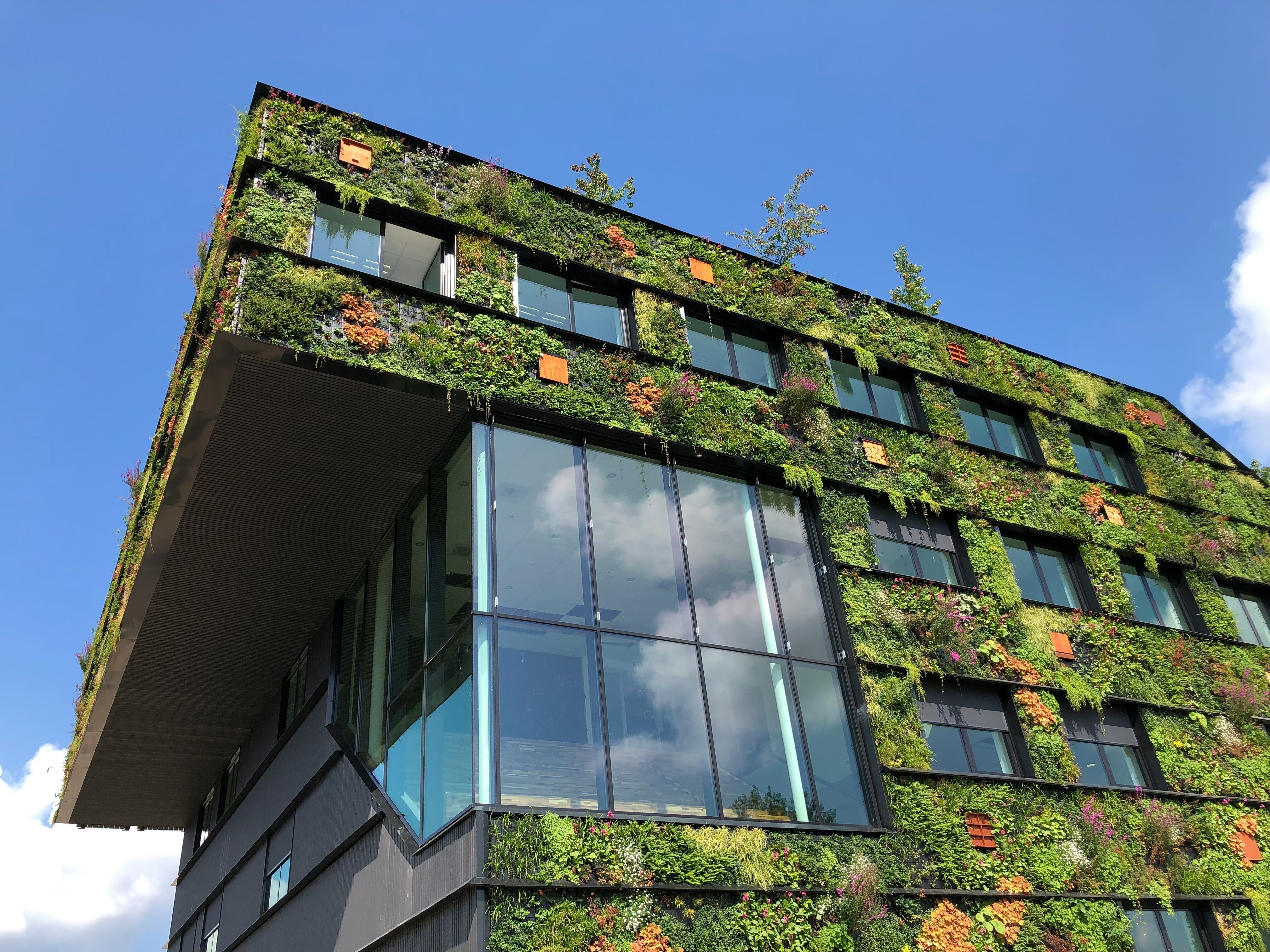
Making ecology central to urban planning can help create more biodiverse, resilient and vibrant cities. Image: Jw./Unsplash
- Much of the current global urban sustainability narrative tends to focus almost exclusively on gardens, parks and large green spaces.
- Nature-positive urbanism should be defined by how biodiversity and ecological resilience is intricately woven into our built environment.
- By making ecology central to urban planning, we can create vibrant, resilient habitats, brimming with biodiversity beyond the park gate.
While evaluating sustainability credentials, cities and urban areas with a plethora of expansive parks and open spaces are often celebrated the most. In fact, much of the global urban sustainability narrative has focused almost exclusively on gardens, parks and large green spaces.
However, nature-positive urbanism is defined by more than its manicured greens, but with the ingenuity with which biodiversity and ecological resilience are intricately woven into the very fabric of our built environment.
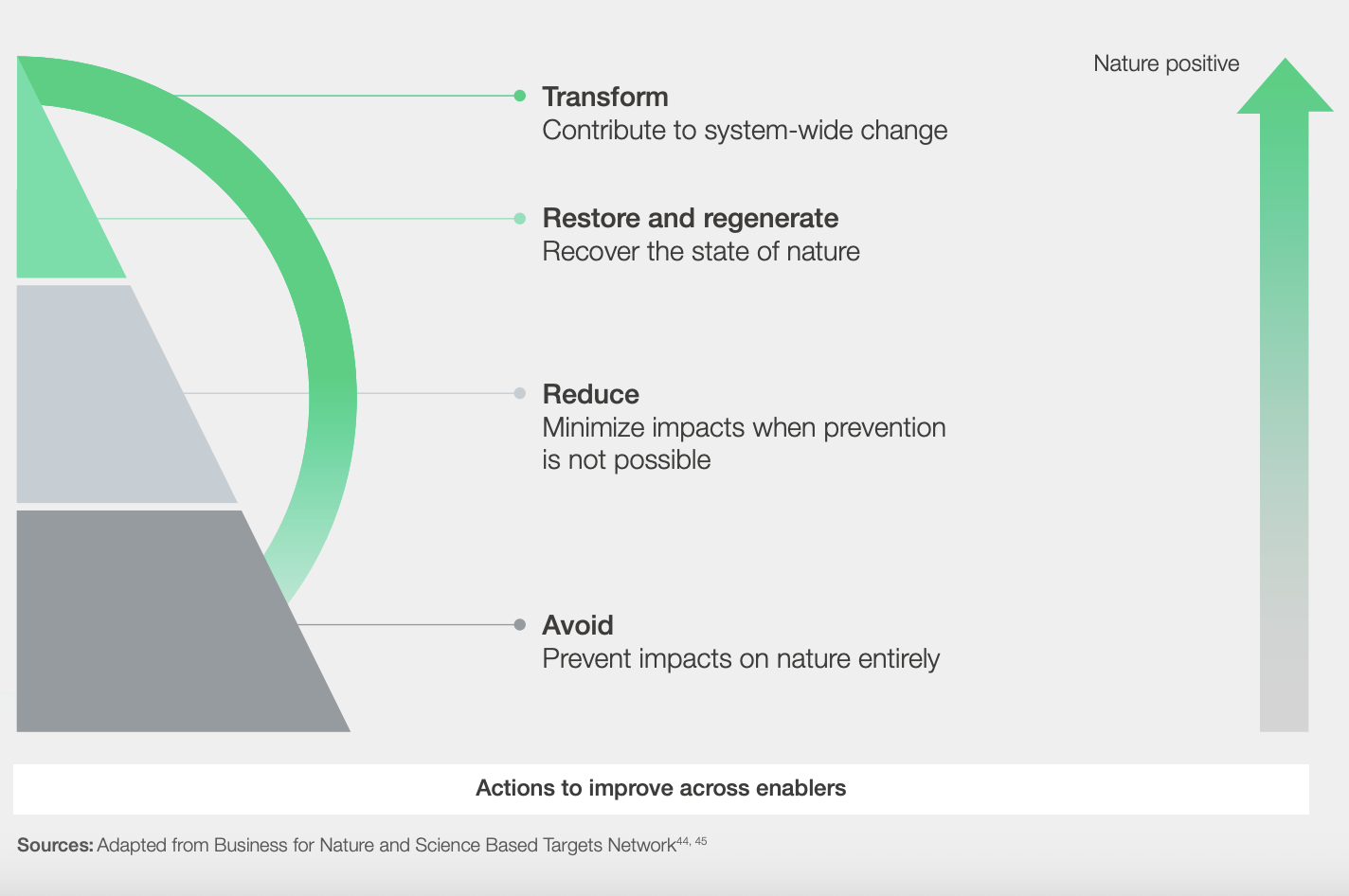
As the AR3T framework outlined in the World Economic Forum’s Nature Positive Guidelines for the Transition in Cities report suggests, nature-positive urbanism entails a systemic transformation, restoring and regenerating nature, while reducing impacts on nature.
This framework has been developed to inform private-sector transitions to nature-positive business around the following actions: avoid, reduce, restore and regenerate, and transform.
Parks not enough to counteract biodiversity loss
While spaces such as parks and open spaces are vital, their presence is not sufficient to counteract the alarming biodiversity loss that threatens our planetary thresholds, along with urban heat island effects or rising greenhouse gas emissions. For future-proofing a city with thriving biodiversity, nature must become a central design element, embedded deeply within buildings, infrastructure and the operating framework of a city itself.
By championing creative, innovative approaches and drawing inspiration from leading examples worldwide, the planners and architects of today hold the power to redefine the meaning of urban sustainability.
Here are three ways how a new era of nature-positive urbanism can be ushered in, beyond the traditional boundaries of city parks:
1. Integrating biodiversity into building design
Picture this: a city where rooftops are blanketed with vibrant succulents, where hummingbirds are darting around between vertical gardens and where pollinator-friendly landscaping is the norm. Transforming sterile facades and rooftops of city buildings into burgeoning mini-ecosystems can be a step in the right direction towards biodiversity integration into city landscapes.
An example of this is Singapore’s Oasia Hotel, renowned globally for its ‘living’ architecture. With lush vertical gardens meticulously designed to naturally cool the buildings, thereby also cutting air conditioning emissions, they also provide sanctuaries for urban wildlife such as birds, butterflies and even small mammals.
Oasia’s efforts are more than just about aesthetic greenery, they also represent an ambitious bid to physically reconnect urban dwellers with nature, while support pollinators and mitigating both urban heat and ecological fragmentation which plagues most cities.
Studies have even shown that green buildings and green architectures (especially green roofs) can reduce temperatures by 2°C or more, they can help improve species richness, and even positively influence the health and well-being of residents. With rising temperatures and biodiversity loss crippling cities worldwide, design innovations that prioritize nature can be transformative.
2. Retrofitting infrastructure for urban wildlife
Cities are more than just buildings. Nature-positive urbanism implies a creative re-imagination of the city’s infrastructure itself. Whether it is roads, bridges, or underpasses, these are more than just routes for vehicles to use; they are potential lifelines for migratory species and crucial ecological corridors within dense cityscapes.
Cities in Canada are a compelling example for how urban infrastructure can be reclaimed for wildlife. With dedicated “eco-passages” constructed in Toronto, and existing highways and underpasses retrofitted in places further afield, these metropolises have reconnected fragmented habitats, allowing various mammals and amphibians to safely traverse through urban obstacles.
This leads to boosting local biodiversity and a reduction in wildlife casualties, demonstrating that helping nature thrive doesn’t necessarily require cities to just grow more greenery outside their boundaries, but to rethink what is possible within the confines of urban dwellings where people live.
Researchers from Canadian conservation organizations have confirmed that such retrofits can help reverse urban wildlife habitat fragmentation and enable endangered species to travel, forage and breed across city boundaries. Therefore, integrating safe ‘eco-passages’ into city planning can be a game-changer for urban ecology globally.
3. Leveraging biomimicry in urban planning
The wisdom of nature, which has honed efficient systems for millions of years, can guide the cities of tomorrow. Biomimicry, which aims to take inspiration from natural selection solutions adopted by nature and translate the principles to human engineering, can encourage urban planners to borrow design cues from nature itself and apply time-tested principles to everything, whether it is water management or energy systems.
In Harare, Zimbabwe, the Eastgate Centre is a prime paradigm-shifting example of biomimicry. Modelled after the ingenious ventilation system of termite mounds, this building uses natural convection to regulate cooling and heating, which dramatically reduces its energy use and carbon footprint.
Simultaneously, the building’s innovative nature-inspired design supports local temperatures and humidity conditions, which benefits both native insects and plants. Such innovative approaches go beyond mere aesthetics – they deliver practical solutions, increasing resiliency in urban infrastructure that work with, and not against, nature.
Biomimicry in forms like constructing wetlands that naturally filter urban runoff, or city cooling systems inspired by local flora and fauna, can unlock possibilities for cities to conserve resources and foster ecological biodiversity, while at the same time creating a more livable, sustainable environment for people.
A biodiverse future necessitates redefining urban sustainability
Innovative strategies like integrating biodiversity into building design, retrofitting infrastructure for urban wildlife, and applying biomimicry can redefine urban sustainability away from the usual “green spaces” and “parks” quotas and towards holistic solutions.
These approaches embed the thread of nature into the very fabric of cities. It is about making nature a core element of urban areas, not just a decorative afterthought, by embedding ecological thinking into every level of urban development.
What is the World Economic Forum doing to promote sustainable urban development?
By making ecology central to urban planning, we can create vibrant, resilient habitats, brimming with biodiversity beyond the park gate. As urbanization accelerates, planners, policy-makers and citizens must embrace nature-positive thinking.
True sustainability means viewing cities as living, breathing ecosystems, not just human spaces, where ecological health shapes daily life. This shift enables future-ready cities that are resilient to climate shocks, rich in biodiversity, and alive with ecological possibility.
Don't miss any update on this topic
Create a free account and access your personalized content collection with our latest publications and analyses.
License and Republishing
World Economic Forum articles may be republished in accordance with the Creative Commons Attribution-NonCommercial-NoDerivatives 4.0 International Public License, and in accordance with our Terms of Use.
The views expressed in this article are those of the author alone and not the World Economic Forum.
Stay up to date:
Nature-Based Solutions


Forum Stories newsletter
Bringing you weekly curated insights and analysis on the global issues that matter.
More on Nature and BiodiversitySee all

Forum Stories
February 25, 2026


