Why we must reframe climate change as a human problem, not a planetary one
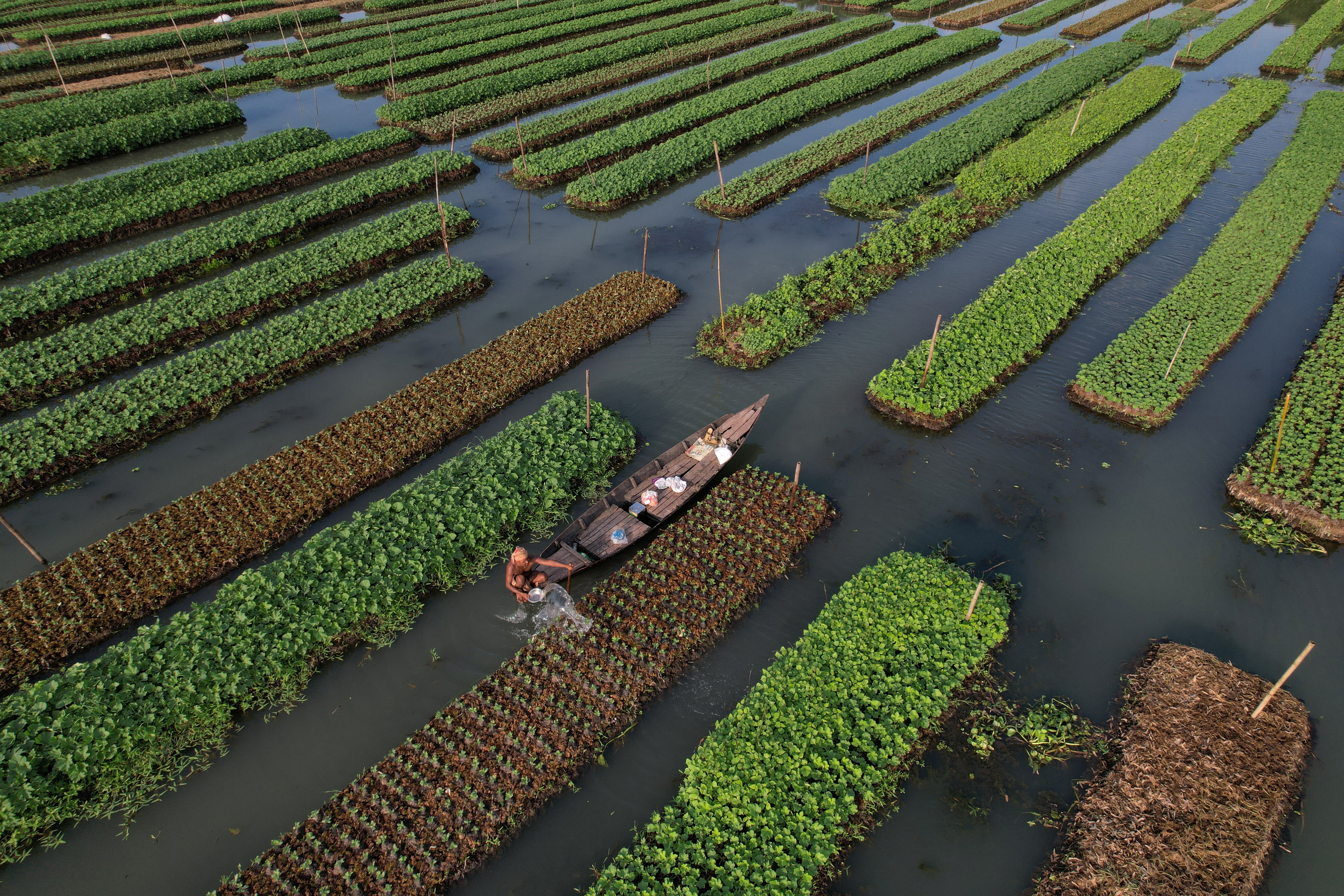
Communities are combatting the human impacts of climate change Image: REUTERS/Mohammad Ponir Hossain
- The Earth has survived past catastrophes but our interconnected systems – food, health, economies and social stability – are fragile.
- When people connect climate impacts to their health, livelihoods and children, they are more motivated to act.
- Already, human-first solutions are creating change – from Bangladesh’s floating farms to community-driven waste management in India.
Climate change is commonly portrayed as a looming catastrophe for our planet. The planet itself will endure but life as we know it is at risk. The planet has withstood ice ages, asteroid strikes and mass extinctions. What’s endangered now is human civilization, our health, economies, food systems and social stability.
Equally at risk are biodiversity, ecosystems and countless other species that sustain the delicate balance of life on which we depend.
To truly address climate change, we must reframe the narrative from saving the Earth to saving ourselves. My journey as a climate advocate, along with global data and real-world solutions, shows why this human-centred lens is vital.
The planet will survive – humans may not
Earth has endured five mass extinctions in its 4.5-billion-year history. The most devastating, the Permian-Triassic extinction, 252 million years ago, wiped out nearly 96% of marine species. Yet, over millennia, the Earth regenerated its ecosystems.
Humans, however, do not have that luxury.
We have built fragile, interdependent systems – cities, food chains, economies – that are deeply vulnerable to disruption. According to the Intergovernmental Panel on Climate Change, global warming is likely to exceed 1.5 degrees Celsius in the next two decades unless drastic reductions in emissions occur.
This warming will accelerate extreme heatwaves, sea-level rise and the collapse of biodiversity that supports human food and water systems.
- The World Health Organization estimates that over 250,000 people already die each year due to climate change impacts such as malnutrition, heat stress and vector-borne diseases.
- In India alone, 2023 saw over 100 heat-related deaths in just one summer month and crop losses surged due to erratic rainfall and floods.
- UNICEF reports that 1 billion children globally are at “extremely high risk” due to climate-related threats such as flooding, drought and air pollution.
Climate change is not about the end of the world; it’s about the end of our way of life.
Personalizing climate change drives action
Global warming often feels abstract. Melting glaciers or rising oceans sound distant. However, when we connect climate impacts to people’s daily lives, the issue becomes urgent and real:
- The Swiss Re Institute projects that unchecked climate change could slash global gross domestic product by up to 18% by 2050, with countries in South Asia and sub-Saharan Africa hit hardest.
- Pakistan’s 2022 floods, driven by intensified monsoon rains, reportedly affected 33 million people, destroyed crops and displaced entire communities, underscoring how climate disruptions threaten food, housing and public health systems.
- The Internal Displacement Monitoring Centre reported that 32.6 million people were displaced in 2022 by weather-related disasters, more than from conflict and violence combined.
When people see that climate change threatens their home, job, health or children, they act.
Human-centred solutions are already working
Communities worldwide are not waiting around. They are innovating human-first solutions that protect people and preserve the environment.
Bangladesh: Adapting through innovation
Faced with rising floods, Bangladeshi farmers have developed floating farms, growing vegetables on rafts made from water hyacinths. This adaptation ensures food security despite increasing climate disruptions.

Denmark: Sustainable cities for better lives
Copenhagen has pioneered bike-first city planning and green roofs, aiming to become carbon-neutral by 2025. These urban innovations improve not only climate resilience but also citizens’ quality of life with less traffic, cleaner air and better health.

India: Waste, community and climate
In Rajasthan, through Trash Company, we’ve led waste management initiatives grounded in storytelling and community engagement. We’ve also partnered with one of the Indian Premier League franchises to manage stadium waste during the cricket season, transforming high-footfall events into models of sustainability.
By framing waste as a matter of public health, dignity and pride, we saw powerful shifts in behaviour. From stadium staff to fans, everyone began to take ownership, much like the women in rural villages who embraced plastic waste management when they saw the direct benefits for their families and communities.
During my TEDx talk, I emphasized how local narratives, rather than top-down mandates, fuel meaningful action. Whether it’s a youth group organizing a clean-up drive or a slum innovating with compost toilets, when people see themselves in the climate story, they become climate actors.
Climate change policy must reflect human realities
Governments and institutions must go beyond carbon metrics and design policies rooted in human experience and there are already some promising initiatives:
- Local energy cooperatives in Germany empower citizens to invest in renewable energy by offering participation models such as community solar and wind projects, ensuring local benefits.
- The African Union’s Great Green Wall initiative has restored over 20 million hectares of land and created hundreds of thousands of jobs by the end of 2018.
- The World Economic Forum’s Net-Zero Challenge fosters public-private partnerships to decarbonize heavy industry while ensuring social equity.
Such models show that human-centred climate action isn’t just possible, it’s scalable.
When we highlight the ways climate change threatens our health, safety, food, jobs and homes and elevate real people solving real problems – we create a story that inspires.
Let’s stop trying to “save the Earth” and instead start saving ourselves.
Don't miss any update on this topic
Create a free account and access your personalized content collection with our latest publications and analyses.
License and Republishing
World Economic Forum articles may be republished in accordance with the Creative Commons Attribution-NonCommercial-NoDerivatives 4.0 International Public License, and in accordance with our Terms of Use.
The views expressed in this article are those of the author alone and not the World Economic Forum.
Stay up to date:
Climate Crisis


Forum Stories newsletter
Bringing you weekly curated insights and analysis on the global issues that matter.
More on Climate Action and Waste Reduction See all

Steve Rochlin and Judith Ketelslegers
March 26, 2026


