How strategic foresight can future-proof the Gulf’s energy transition
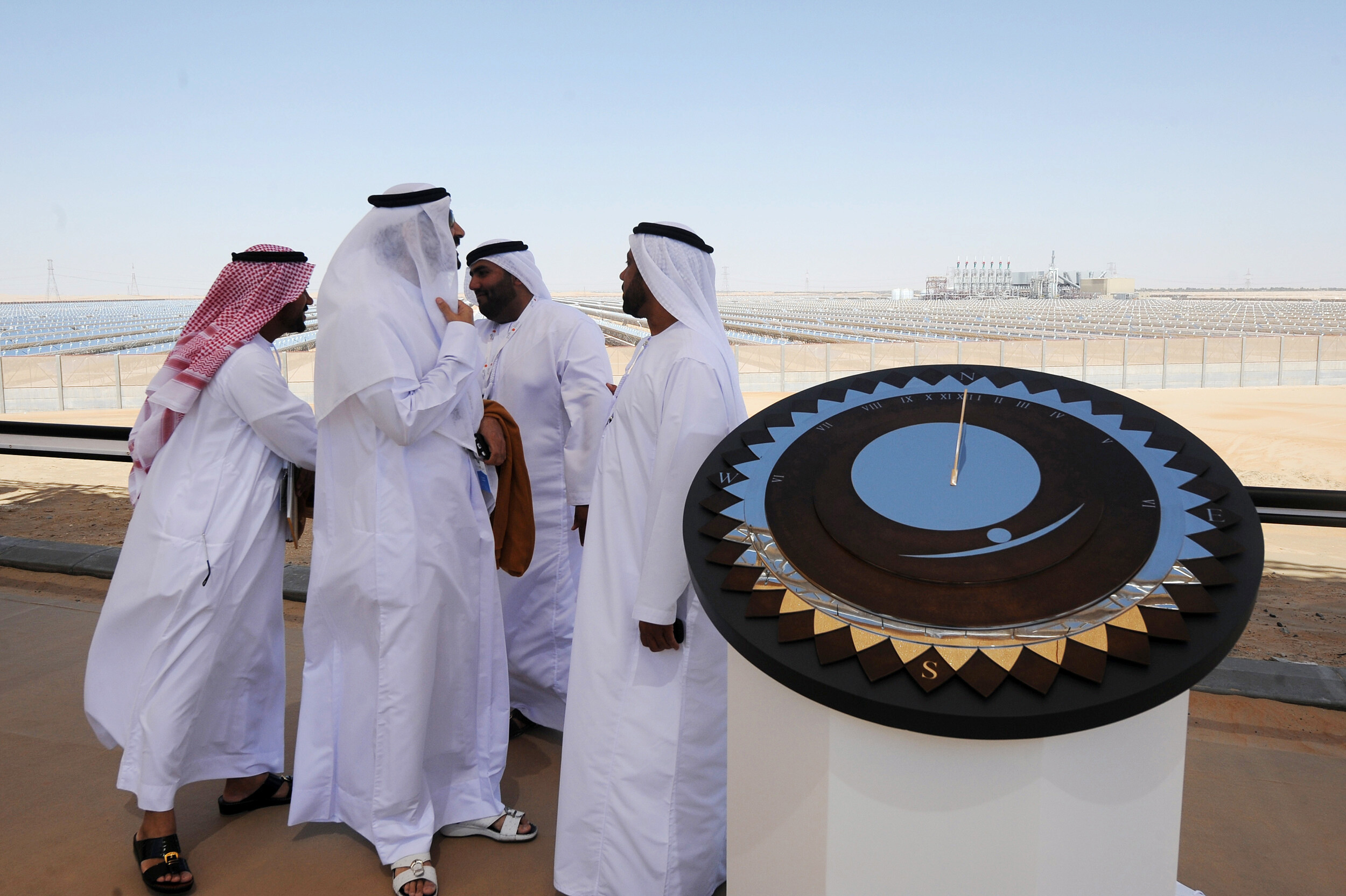
Strategic foresight is essential for the resilience of GCC states highly dependent on energy exports Image: REUTERS/Ben Job
- Strategic foresight is essential for the resilience of Gulf Cooperation Council states, which are highly dependent on energy exports.
- Various projects underway show how foresight-led innovation can bridge the carbon-intensive systems of today to a low-carbon future.
- Institutional foresight can drive transformation, such as by embedding foresight units within energy ministries, which can help the GCC shift from reacting to global change to shaping it.
The Gulf Cooperation Council (GCC) states – Saudi Arabia, the UAE, Qatar, Kuwait, Bahrain and Oman – are at the heart of one of the most complex transitions of the 21st century.
For decades, the region’s prosperity has been underpinned by oil and gas exports that fueled rapid urbanization, world-class infrastructure and generous social welfare systems. In places such as Bahrain, state fossil fuel revenue has nearly doubled as a portion of gross domestic product (GDP) since 2000.
However, as the global energy system evolves, GCC states are generally experiencing declines in oil and gas exports. At the same time, the GCC is already one of the hottest and driest places on Earth – Abu Dhabi in the UAE, for instance, reached 51.8 degrees Celsius in 2021.
In the Saudi capital Riyadh, heatwaves are projected to appear nearly 20 times per year, lasting around 10 days each, by 2040-2060.
Therefore, for the GCC, the global energy transition is not only an economic imperative but a matter of climate and societal resilience.
Anticipating change before it happens
An impactful way to cohere this complex challenge is through strategic foresight methodologies – a structured exploration of possible futures to inform today’s decisions.
By applying foresight methods such as the “Futures Triangle” and the “Three Horizons” frameworks, policymakers can navigate complexity in a world that is increasingly less linear.
It helps reconcile near-term economic realities with long-term sustainability ambitions, assisting governments to identify where to invest and how to manage systemic risks and anticipate shifts in technology and global demand.
The Futures Triangle
The Futures Triangle, developed by futurist Sohail Inayatullah, helps leaders map three forces shaping the future:
- The pushes of the present (insight): Current trends and insights necessitating change across the GCC, recognizing that the global energy economy is changing, which impacts the region’s economic and fiscal positioning. For example, hydrocarbons accounted for 72.7% of total government revenues in the GCC in 2013 but this share had fallen to 64% by 2023. Likewise, in 2023, the GCC’s crude oil exports fell by 8.2% compared to 2022.
- The pulls from the future (foresight): The visions and aspirations that draw society forward. These include Saudi Arabia’s aim to have 44 million tonnes per annum of CCUS by 2035, leading to projects such as the Jubail Carbon Capture Storage (CCS) Hub. Other examples of this pull include the UAE’s Net Zero 2050 Strategy and Kuwait’s ambitious $3.27 billion Al-Zour North Power Plant. In Oman, Google and Energy Dome are collaborating on a major energy storage project, which will help stabilize the grid for renewable energy installations.
- The weight of the past (hindsight): The legacies and constraints holding back transformation. These include dependence on fossil fuel revenues and high per-capita energy consumption. For example, 34% of Qatar’s GDP is derived from fossil fuel exports.
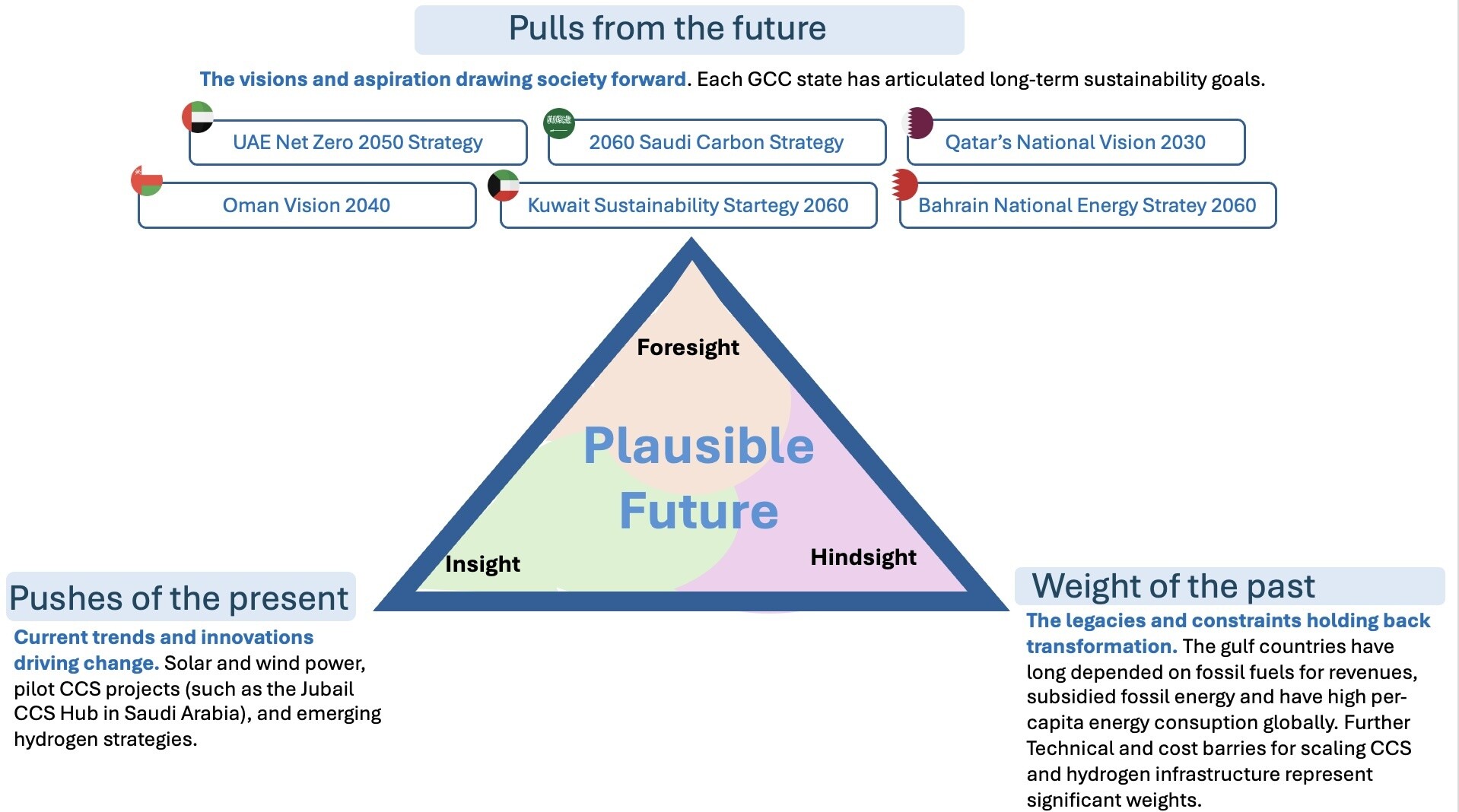
By visualizing these forces, policymakers can identify leverage points and see how overcoming the past can determine the future. GCC countries can identify where emerging technologies or social innovations can reduce the weight of legacy systems while amplifying the pull of a sustainable future.
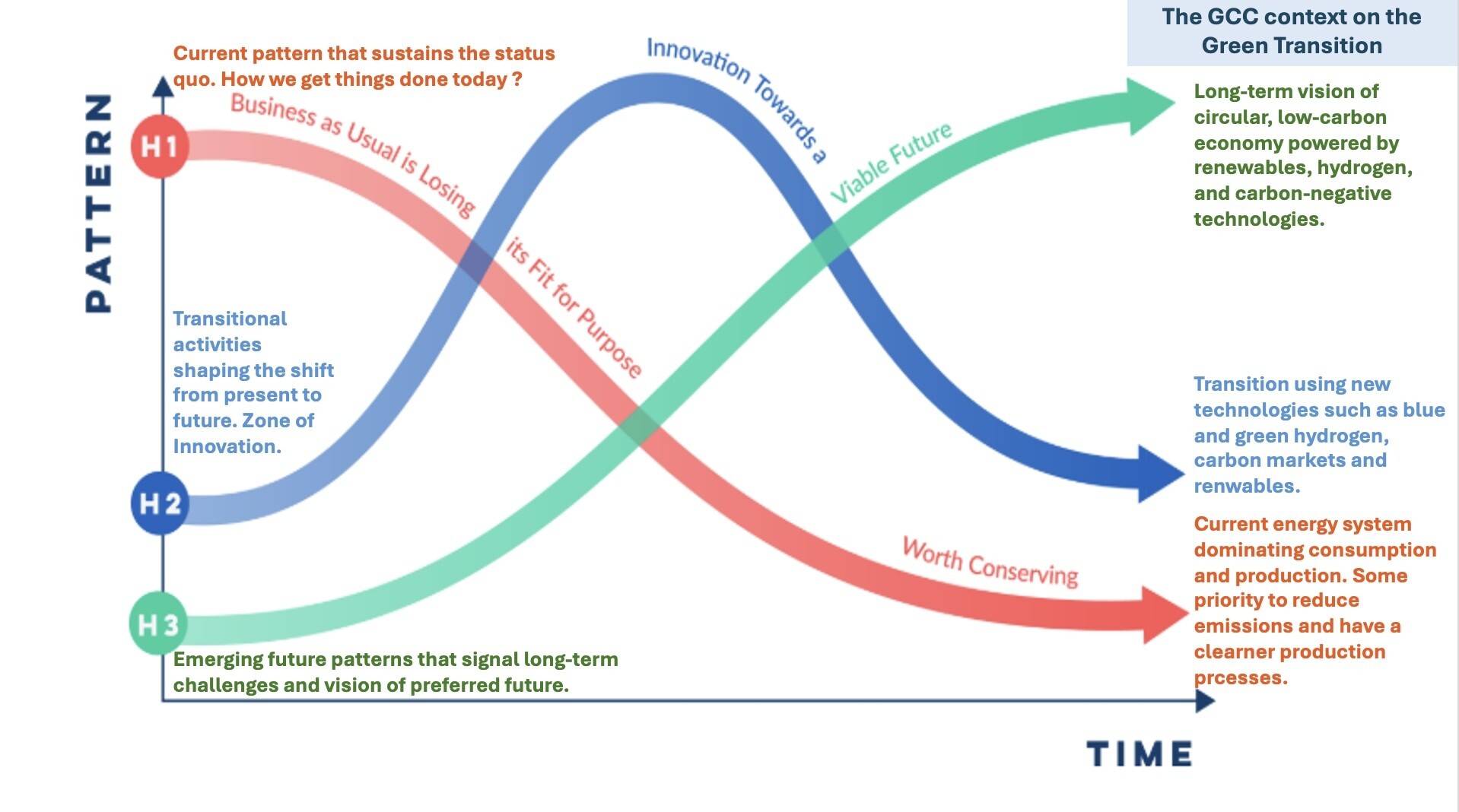
The Three Horizons framework
While the Futures Triangle clarifies what is shaping the future, the Three Horizons framework helps manage the transition between timeframes. It is a tool that helps leaders navigate uncertainty by exploring immediate, transitional and long-term changes.
Horizon 1 presents how we accomplish things today, Horizon 2 is the transitional space that utilizes innovation to reach Horizon 3, which is the long-term vision.
- Horizon 1: The current energy system, dominated by oil and gas but increasingly efficient and technologically advanced. The immediate priority is to reduce emissions intensity through CCS, methane abatement and cleaner production processes.
- Horizon 2: The transition space where new models and technologies emerge. This includes scaling blue hydrogen (from gas with CCS), developing green hydrogen and building infrastructure for hydrogen transport, carbon markets and renewables.
- Horizon 3: The long-term vision of a circular, low-carbon economy powered by renewables, hydrogen and carbon-negative technologies. In this future, energy exports may consist of clean molecules and low-carbon industrial goods, while Gulf cities are climate-adaptive and water-secure.
Case Study: Saudi Arabia’s Jubail CCS Hub
Saudi Arabia’s Jubail CCS Hub provides a strong example of how foresight frameworks can guide complex energy transitions, with a target to capture up to 9 million metric tons of carbon dioxide annually by 2027 across industrial clusters, thereby helping to enable the national petroleum company Aramco’s goal of net-zero Scope 1 and 2 emissions by 2050.
Applying the Futures Triangle to this case:
- The push of the present includes the falling costs of renewables, growing global demand for low-carbon hydrogen and reducing demand for GCC hydrocarbons.
- The pull of the future reflects Saudi Arabia’s ambition to become a global clean hydrogen exporter, integrate circular carbon systems and deliver its Vision 2030 and Net Zero 2060 targets, in addition to Aramco’s 2050 emissions target.
- The weight of the past includes economic dependence on oil exports, industrial path dependency and uncertainty over hydrogen pricing and demand.
In the Three Horizons view, Jubail serves as a bridge between the carbon-intensive present (Horizon 1) and a diversified, low-carbon future (Horizon 3). The infrastructure, skills and governance developed through (Horizon 2) CCS hubs, hydrogen corridors and policy reform are essential stepping stones to achieving systemic transformation.
Case Study: Qatar’s Al Kharsaah solar power plant
Qatar’s Al Kharsaah Solar Power Plant exemplifies a “pull from the future” by actively shaping Qatar’s energy transition and decarbonization trajectory.
The solar plant helps counter decades of dependence on gas-fired power and fossil-fuel infrastructure i.e. the “weight of the past,” which locked the country into carbon-intensive patterns and high energy subsidies.
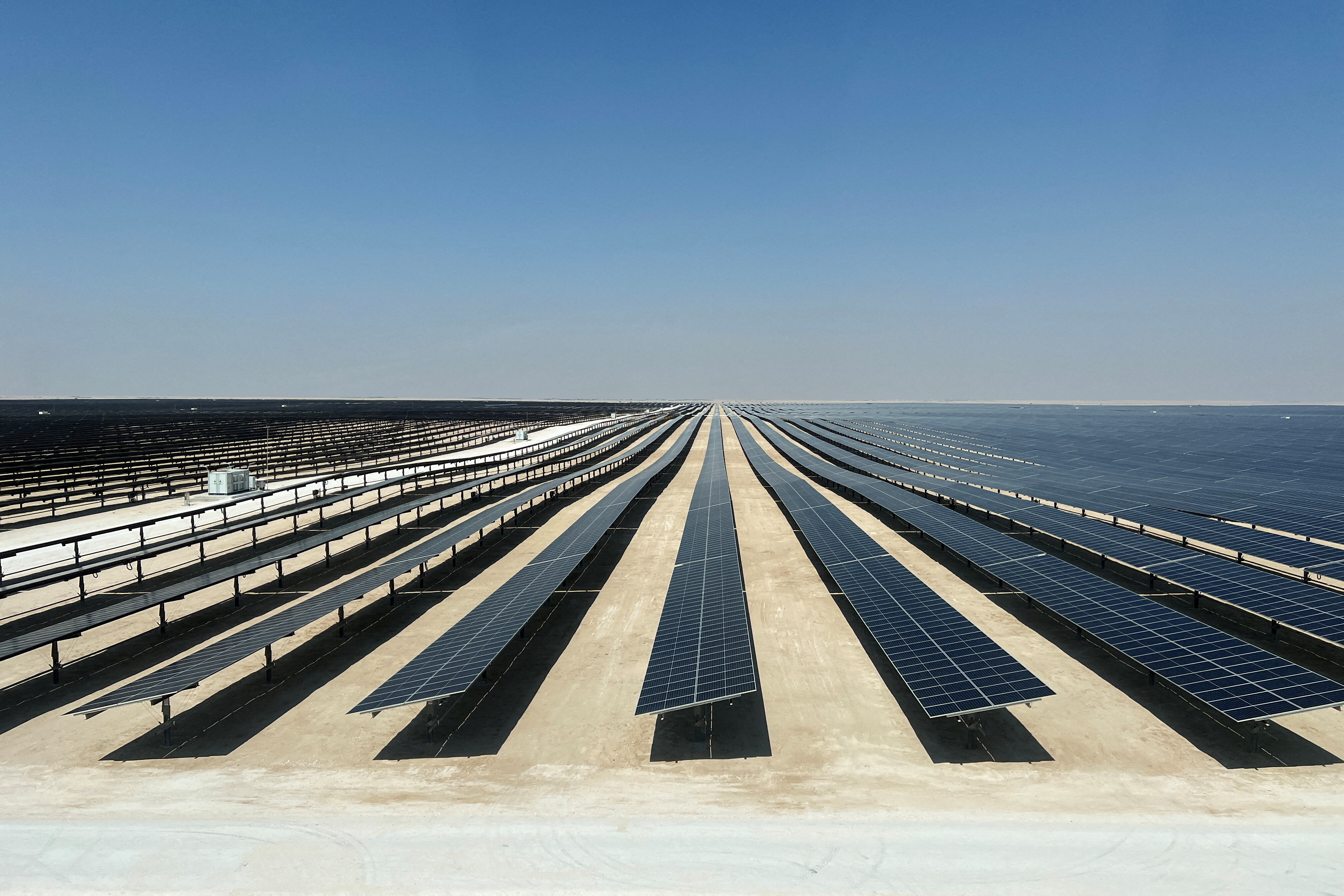
Therefore, from a Three Horizons standpoint, this solar plant represents a critical Horizon 2 project, providing energy infrastructure that bridges to the Horizon 3 future.
Policy takeaway
To future-proof the Gulf’s energy and climate resilience, foresight must become as integral to policymaking as fiscal planning or engineering design. The tension between the future, past and present can create panic and concern but if diligently applied, can cohere what are otherwise disparate and incoherent signals.
By embedding foresight offices in GCC energy authorities and ministries, the Gulf can transform from a region that is reactive to global trends into one that actively shapes them, thereby changing the narrative from “oil in the desert” to one of visionary and adaptive leadership in the age of decarbonization.
Rafia Al-Jassim is a Global Shaper for the Doha hub and a World Economic Forum Future 50 Leader.
Don't miss any update on this topic
Create a free account and access your personalized content collection with our latest publications and analyses.
License and Republishing
World Economic Forum articles may be republished in accordance with the Creative Commons Attribution-NonCommercial-NoDerivatives 4.0 International Public License, and in accordance with our Terms of Use.
The views expressed in this article are those of the author alone and not the World Economic Forum.
Stay up to date:
Strategic Foresight
Related topics:


Forum Stories newsletter
Bringing you weekly curated insights and analysis on the global issues that matter.
More on Energy TransitionSee all

Guy Grainger
March 3, 2026


