US Fed lowers rates but tempers rate-cut outlook, and other finance news to know
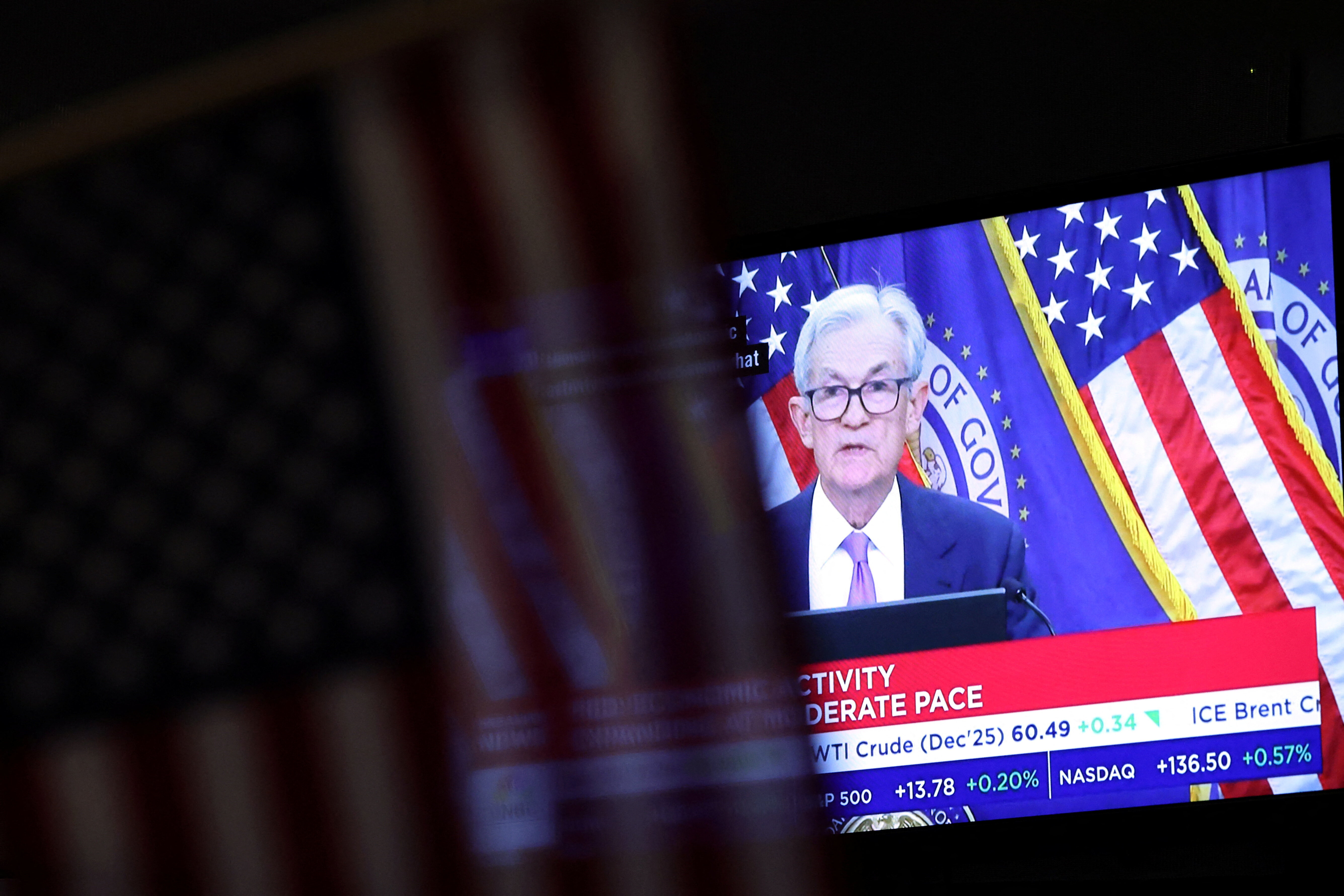
Federal Reserve eases policy with quarter-point cut, while leaving future steps uncertain. Image: REUTERS/Brendan McDermid
- Catch up on the key stories and developments shaping the financial world.
- Top stories: Fed lowers rates but tempers rate-cut outlook; BoE sounds alarm on AI and quantum risks; China's property slump continues.
- For more on the World Economic Forum's work in finance, visit the Centre for Financial and Monetary Systems.
1. US Fed cuts rates by .25%
On Wednesday, the US Federal Reserve cut its key interest rate by 25 basis points to a range of 3.75%–4%. The move marked the second straight rate cut and came as the US economy continues to face a weakening job market.
While the .25% cut was widely expected, Fed Chair Jerome Powell warned that further easing is “not a foregone conclusion”, highlighting internal divisions, continued concerns about inflation and reduced data visibility due to the US government shutdown.
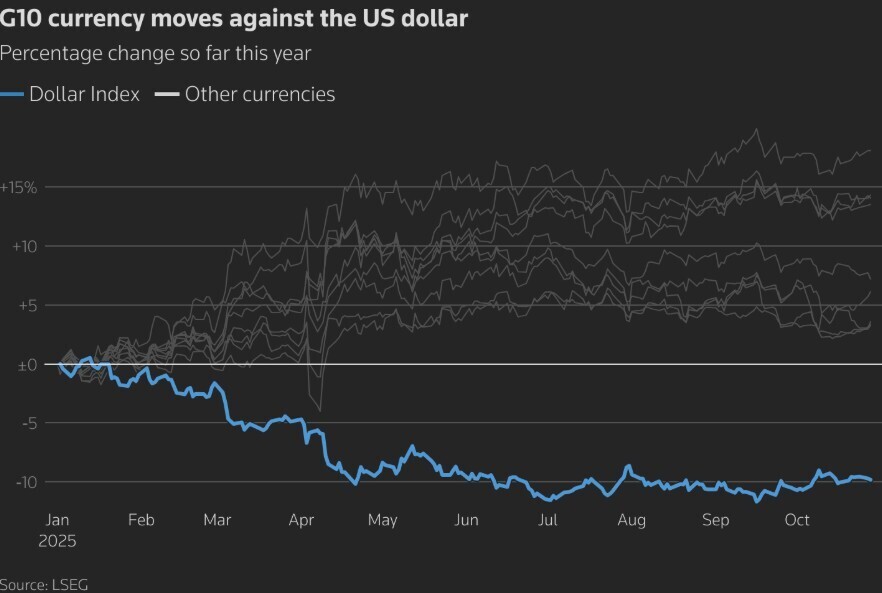
The market reaction was immediate. Equities pared gains, the dollar strengthened and investors cut bets on a December reduction, with the odds of another rate cut falling from 85% to 62%.
The Fed's caution, however, stands in contrast to recent dealmaking momentum.
The Financial Times reported over $80 billion in US M&A announcements on "Merger Monday" (27 October), a trend highlighted by the Forum in August. Separately, Bloomberg noted that crypto-focused M&A reached a record $10 billion in the third quarter, reflecting growing institutional participation and a more pragmatic regulatory climate for digital assets.
2. BoE flags AI and quantum risks to financial stability
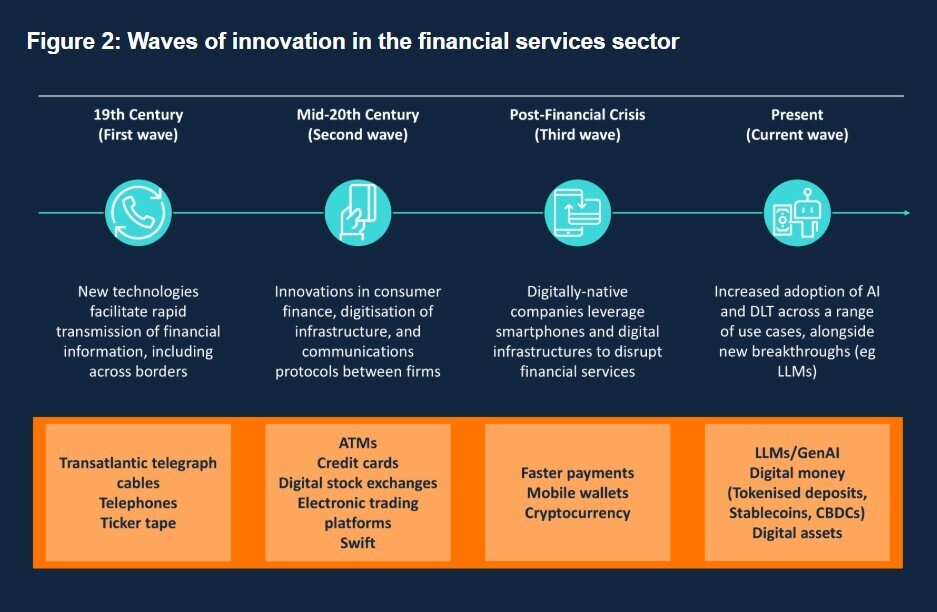
While global markets are focused on US political risk, financial regulators are turning their attention to a new set of long-term technological threats. The Bank of England (BoE) has published a new paper on emerging technologies, warning that the rapid adoption of AI and the development of quantum computing could create new, systemic risks.
The BoE's most stark warning was on quantum computing, which it stated could "render obsolete" the asymmetric cryptography that underpins the entire financial system. The bank is concerned about 'harvest now, decrypt later' attacks - where encrypted data is stolen today to be decrypted by a future quantum computer - making this a clear and present threat.
The paper also addressed the more immediate risks from AI. Regulators are now focused on two key systemic vulnerabilities:
- Concentration risk: The entire financial sector's growing reliance on a small number of third-party tech firms for core AI models and cloud infrastructure.
- Herding risk: The potential for widely used AI trading models to react to a market shock in the same way, creating correlated outcomes that could amplify a crash.
The BoE's message to firms is that they must start assessing and building resilience to these profound technological risks now, as the migration to post-quantum cryptography is a complex, long-term challenge that requires "sustained effort and planning".
Deputy Governor for Financial Stability, Sarah Breeden, stated the bank's job is "not to slow this innovation, but to shape it". The strategy will focus on developing new monitoring frameworks for AI risks and urgently engaging with firms to assess their "quantum readiness".
3. More finance news to know
China’s property market faces continued risks: Fitch Ratings says new home sales are expected to fall in 2025, with medium-term risks remaining high. While top-tier cities like Shanghai see strong demand for luxury properties, lower-tier cities face weak sales and heavy price discounts. Structural challenges such as low housing affordability, high unsold inventory, and demographic shifts could keep the market polarized, leaving banks’ exposure to property-related bad loans elevated.
US rating downgrade: On 24 October, the European rating agency Scope Ratings downgraded the US credit rating from AA to AA-. The agency cited the "sustained deterioration of public finances" due to large federal deficits and rising interest costs. Scope Ratings also pointed to a weakening of governance standards as a factor behind the decision.
UK opens crypto funds to retail investors: The Financial Conduct Authority has lifted its ban on retail access to cryptocurrency exchange-traded notes (ETNs), sparking a fee war, writes the FT. Bitcoin-linked products can now cost as little as 0.05%, compared with up to 2.5% previously, making regulated crypto funds cheaper than most equity and bond funds.
Eurozone growth edges up in Q3: Eurostat data show the 20-nation bloc expanded 0.2% in July-September, slightly above forecasts, led by France and Spain. The stronger-than-expected performance eases pressure on the ECB to cut interest rates further, while Germany and Italy’s stagnation keeps investors cautious, says Reuters. Unemployment remains near record lows at 6.3%, and business surveys suggest a modest pick-up in activity as tariff uncertainty eases.
Tech giants ramp up AI spending: Meta, Alphabet and Microsoft are accelerating capital expenditures to capture AI-driven growth, sending stocks to record highs, reports the BBC.
- Meta: expected 2025 capex $70-72bn, up from previous estimate $66-72bn; 2026 spending expected to rise further. CEO Mark Zuckerberg cites AI-driven product and ad opportunities.
- Alphabet: expected 2025 capex $91-93bn, up from an outlook of $85bn in the summer and nearly double 2024’s level.
- Microsoft: Q3 capex $34.9bn, vs $24bn the previous quarter, focused on Azure and AI products; CEO Satya Nadella highlights real-world impact.
- Market reaction: Investor optimism fuelled by AI investments; firms outperform the S&P 500. Analysts note AI spending remains a key driver of US GDP growth.
US government shutdown could shave up to 2% off Q4 GDP: The nonpartisan Congressional Budget Office estimates the ongoing federal shutdown may cost the economy $7-14 billion due to delayed spending on employee salaries, goods and services, as well as food stamp benefits. The partial shutdown entered its 29th day on 29 October, with negotiations between Senate Republicans and Democrats ongoing.
4. Read more on Forum Stories
Banks turn to privacy tech to fight rising fraud: Fraud losses in the US topped $12.5 billion in 2024, up 25% from the previous year, highlighting the limits of banks acting alone. Privacy-enhancing technologies (PETs) allow institutions to share insights and detect fraud patterns collectively while keeping customer data private, offering a way to combat cross-bank fraud without breaching privacy laws.
Can AI help close the MENA sustainability funding gap? Analysts say AI-driven tools could mobilize an additional $200 billion in sustainable capital by 2030, potentially covering up to 30% of the region’s $675 billion funding shortfall. Rapidly growing AI applications are set to transform business operations, offering a multiplier effect for sustainability initiatives in financing, energy, resource management and decarbonization.
Bridging the SME financing gap in ASEAN: Small and medium-sized enterprises make up the majority of the private sector in ASEAN, but face a persistent funding shortfall, limiting growth. Moving from isolated programmes to coordinated coalitions that deliver connected capital could unlock inclusive growth for this “missing middle”. Read this article to find out how tailored financing solutions can meet SMEs where they are and scale what works.
License and Republishing
World Economic Forum articles may be republished in accordance with the Creative Commons Attribution-NonCommercial-NoDerivatives 4.0 International Public License, and in accordance with our Terms of Use.
The views expressed in this article are those of the author alone and not the World Economic Forum.

Forum Stories newsletter
Bringing you weekly curated insights and analysis on the global issues that matter.
More on Financial and Monetary SystemsSee all

Rebecca Geldard
October 13, 2026


