Ahead of COP30, a new era of forest restoration and resilience is taking root
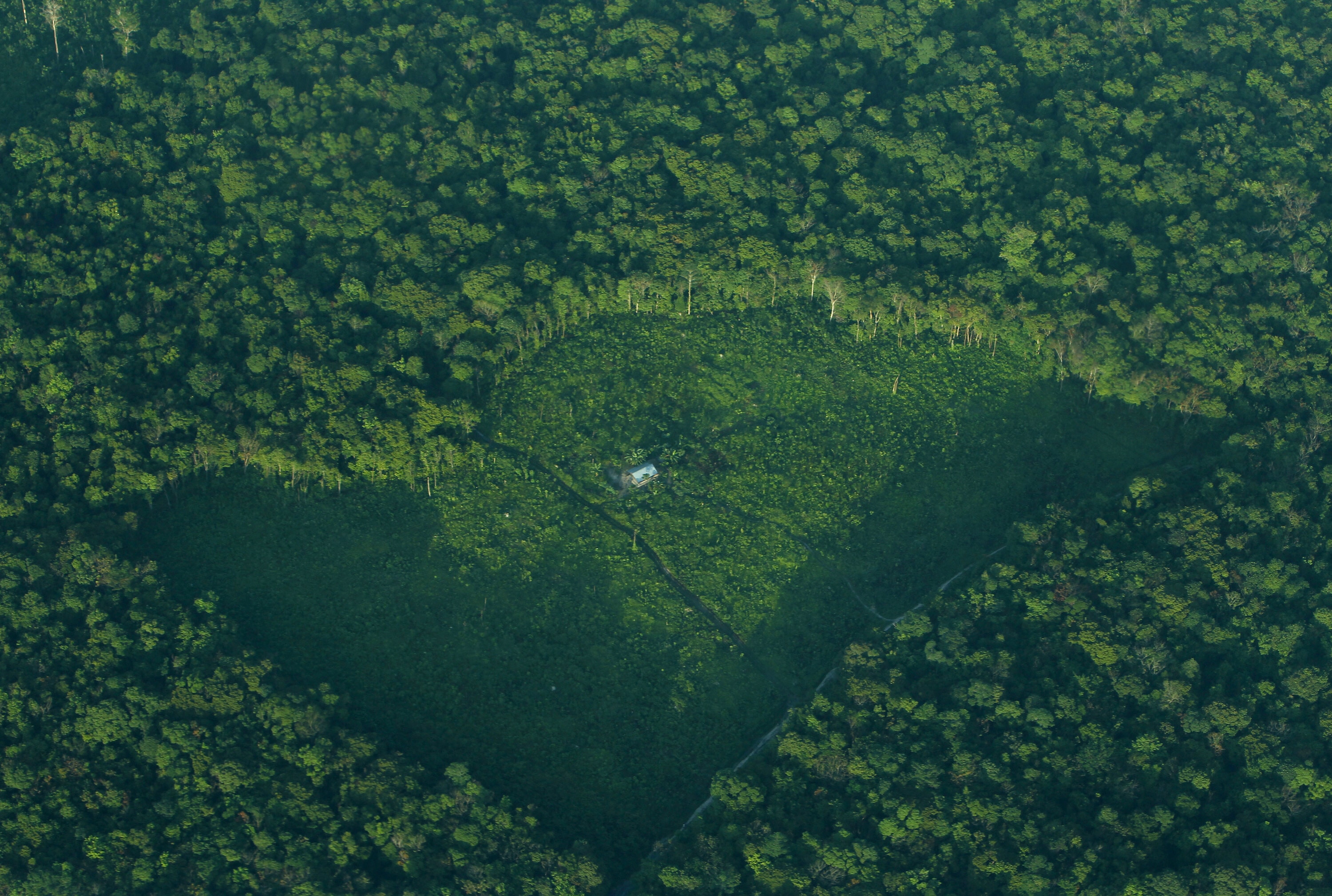
Positive conversations around forest restoration has occurred recently Image: REUTERS/Beawiharta
- Encouraging progress was seen at the Sustainable Development Impact Meetings and UN General Assembly in New York this year, showing traction for forest-positive approaches.
- Two positive signs from climate and nature discussions include Brazil’s $1 billion commitment towards the Tropical Forests Forever Facility and Mexico’s plan to restore 30% of its degraded land.
- Planning is underway to prepare for the next climate conference, to enhance financing and collaboration among the public and private sectors, civil society, Indigenous peoples and local communities.
A more humid-than-usual September caused visitors to seek shade under the Sand Cherries in Bryant Park as they commuted between events at the Sustainable Development Impact Meetings (SDIM) 2025 and New York Climate Week.
Forum leaders, governments, partners and civil society met to share ideas and solutions on how to tackle one of the biggest challenges of the 21st century: halting and reversing deforestation while accelerating conservation, restoration and stewardship for healthier, more resilient and abundant forest landscapes.
Globally, forests generate economic revenues of $450 billion annually, provide essential ecosystem services and support 1.6 billion people. They are also under threat.
Globally, deforestation is declining but countries are still significantly off track to meet global targets. In 2024, tropical primary forest disappeared at a rate of 18 football fields per minute, nearly double the rate in 2023.
This challenge lies at the heart of the UN Decade on Ecosystem Restoration, which aims to restore degraded landscapes globally by 2030 and aligns with commitments under the Forest Financing Roadmap.
On the road to Belém
There is growing recognition that forests are not just tools for carbon capture; work is underway to protect our critical infrastructure that supports climate and supply chain resilience, temperature and rainfall regulation, water and food security, enhanced livelihoods, biological diversity and human wellbeing.
With each $1 invested in restoration generating $7-$30 in measurable returns, natural infrastructure can serve as a hedge against systemic shocks and a driver of sustainable markets. Below, we highlight some concrete signs of progress emerging from the UN General Assembly and SDIM week.
Brazil’s leadership: Tropical Forests Forever Facility
At the Opening Session of the Tropical Forests Forever Facility on 23 September, President Luiz Inácio Lula da Silva announced that Brazil will contribute $1 billion to the initiative. The facility, which promotes a new financing model for conserving tropical forests, will be officially launched at the UN Climate Change Conference (COP30) this November in Belém, Brazil.
Lula called on international partners to make ambitious contributions, saying: “Brazil will lead by example and become the first country to commit one billion dollars to the facility.”
More than 70 developing countries with tropical forests may qualify for support, as the facility seeks to safeguard ecosystems vital for climate regulation and life on Earth. Thirty-four other countries have signed on in support of the facility.
Mexico’s national restoration plan
Mexico has made progress with its National Restoration Plan, which aims to tackle the challenge that 30% of Mexico’s land is degraded and then transform it into a restoration success story.
The plan was co-developed with over 100 stakeholders, including environmental authorities, Indigenous and Afro-Mexican communities, academia and the private sector.
The programme is framed as a tool for territorial justice and community regeneration as well as an ecological effort, serving as one of the leading comprehensive national roadmaps for restoration in Latin America.
Their reforestation goal is 200,000 hectares over the next three to four years and it has been designed in partnership with the private sector in Mexico to accelerate restoration and ensure shared accountability between the government and business.
Broad support for multistakeholder convening
Both 1t.org and the Tropical Forest Alliance (TFA) hosted well-attended sessions at SDG Impact and New York Climate Week, which continued to provide a space for sharing progress, challenges and successes.
Innovators and investors showcased the significant progress made on commitments in degraded landscapes and building resilience to emerging threats, outlining the tools, technologies and Indigenous wisdom traditions that have supported market progress.
1t.org’s successes also included the hosting of a wildfire workshop in partnership with PwC and The Nature Conservancy.
Forest finance and global cooperation
At COP30, additional sessions from 1t.org and TFA will focus on further ways to support tropical forests in achieving global climate and biodiversity goals, while maintaining food, water and energy security, and sustaining the livelihoods of Indigenous peoples and local communities.
These sessions will highlight the need for enhanced communication, coordination and cooperation among leaders in the public, corporate, financial and civil society sectors.
Objectives include improving understanding and endorsement of the Forest Finance Roadmap by the Forest & Climate Leaders’ Partnership, as well as increasing awareness of progress to date in applying and strengthening commitments to collaboration for the further development and deployment of solutions at the required scale and pace.
The business community remains engaged
We heard from chief sustainability officers and business leaders who face new challenges, including overly complex regulatory systems, corporate credibility gaps due to past lobbying and shallow commitments, boardroom disengagement from sustainability oversight and misinformation that can undermine long-term planning.
- Business leaders recognize that investment in natural infrastructure, such as forests, must be backed by commercial logic.
- Accenture outlined a new framework to challenge top-down command and control leadership models and instead examines the benefits of decentralized shared leadership that reflects the way ecosystems govern themselves.
- In China, Ant Group completed its pledge early: between 2016 and 2025, it planted 619 million trees across 4,366 square kilometres of land.
- The Ant Group also donated CNY 4.5 billion ($632 million) to local communities to maintain and plant the trees.
The next phase of forest action will depend on aligning financial innovation with credible delivery, strengthening public-private collaboration and ensuring local equity in global solutions.
Together, these efforts form the foundation of a new era of restoration and resilience – one defined not only by ambition but by tangible progress toward halting and reversing deforestation by 2030.
Don't miss any update on this topic
Create a free account and access your personalized content collection with our latest publications and analyses.
License and Republishing
World Economic Forum articles may be republished in accordance with the Creative Commons Attribution-NonCommercial-NoDerivatives 4.0 International Public License, and in accordance with our Terms of Use.
The views expressed in this article are those of the author alone and not the World Economic Forum.
Stay up to date:
Forests
Related topics:


Forum Stories newsletter
Bringing you weekly curated insights and analysis on the global issues that matter.
More on Nature and BiodiversitySee all

Forum Stories
February 25, 2026


