What happened at COP30 – and what comes next?
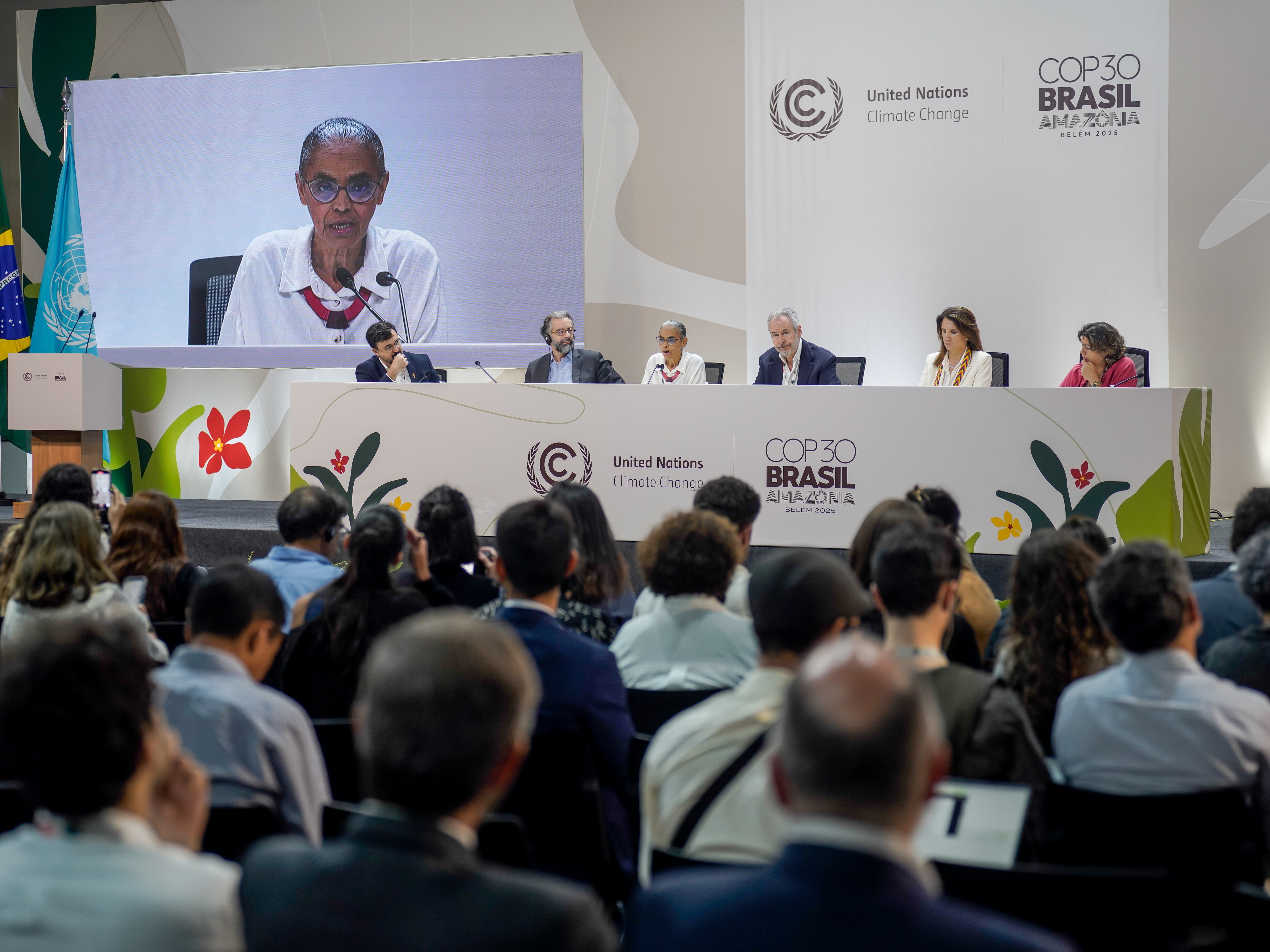
COP30 showed that despite an increasingly turbulent geopolitical landscape, multilateral climate cooperation continues. Image: Rafa Neddermeyer/COP30 Brasil Amazônia/PR
- COP30 was held this year in Belém -- a decade after the Paris agreement and against a turbulent geopolitical landscape.
- What did this year's summit move forward? While it delivered a negotiated outcome and sustained global climate collaboration, it fell short of unlocking major progress.
- Parties advanced on adaptation funding, indicators for a global goal on adaptation and a just transition, but no formal agreements were reached on fossil fuels and deforestation roadmaps.
- COP30 saw a breakthrough for the Climate Action Agenda, which rose from the margins to the forefront, now recognized as essential for catalyzing solutions for real economy transformation.
A decade after the Paris Agreement, and with scientists sounding climate-tipping-point alarm bells, did the 30th UN Climate Change Conference (COP30) in Brazil make meaningful progress?
The global climate summit concluded in Belém, the gateway to the Amazon forest, in November, with more than 56,000 world leaders, scientists, private-sector organizations, Indigenous Peoples and civil society members attending.
The hot, sweaty and sometimes chaotic Blue Zone provided an intense backdrop as the negotiations pushed into overtime. As the gavel finally struck, COP30 showed that while multilateral agreements are still possible, the deep cracks in global governance require new and innovative collaboration models. In this emerging picture, multi-stakeholder action is no longer a 'nice-to-have', but a critical part of achieving progress.
The summit also signalled a recognition of the importance of healthy ecosystems and land restoration for climate, and a breakthrough for Indigenous Peoples, with the largest gathering of Indigenous representatives at any COP conference.
COP30 was billed as the ‘Implementation COP’, with the overarching goal of putting existing commitments into action. So how did it do?
COP30 achievements
While this year´s conference fell short in many areas, there were some glimpses of light emerging from the negotiations and the voluntary action agenda:
Incremental progress on resilience and adaptation: COP30 concluded with an agreement to triple adaptation finance. The new target increases adaptation finance to $120 billion per year, as part of the broader $300 billion per year in climate finance (known as the new collective quantified goal, or NCQG, agreed at COP29). While an important political signal, the target did not include any baseline, and remains far below the needs of developing countries. This year's meeting also aimed to advance a global goal on adaptation, by adopting a set of indicators. A list of 59 indicators was adopted – however, with compromises that will make them more difficult to operationalize.
Decision on a just transition mechanism: Parties agreed to enhance technical assistance, capacity-building and knowledge sharing, via a new mechanism: the Belém Action Mechanism (BAM) for a Global Just Transition. The mechanism includes unprecedented references to labour, human and environmental rights. The World Economic Forum launched a framework for how to align climate action with positive socioeconomic outcomes as part of corporate approaches to support a just transition.
International trade enters the negotiations: For the first time, trade – including carbon trade measures such as the EU's Carbon Border Adjustment Mechanism (CBAM) – were discussed as part of formal negotiations. A first-ever workstream on trade was launched, signalling the growing importance of trade for the climate agenda.
Financing for nature and tropical forests: The Tropical Forest Forever Facility (TFFF) was launched at the World Leaders' Summit to protect tropical forests, endorsed by 34 tropical forest countries, along with pledges supporting Indigenous Peoples, local communities and land rights. Germany will contribute $1.16 billion to the TFFF fund, while Norway, Brazil, Indonesia, Portugal, France and the Netherlands committed to provide future financial support. The Tropical Forest Alliance (TFA) launched the Catalytic Capital for the Agriculture Transition (CCAT) fund to restore degraded land, with a $50 million founding commitment. The fund will provide financial tools to help farmers in Brazil transition to more productive and sustainable practices, while also addressing deforestation.
The Action Agenda rises: The voluntary thematic 'Climate Action Agenda' was recognized as the place for practical and ambitious action across sectors and regions, including by UNFCCC Executive Secretary Simon Stiell: “The Climate Action Agenda is not a nice-to-have on the side. It is mission-critical and a key part of the Paris Agreement”. Over 480 initiatives were activated to accelerate solutions across key areas – including energy and industry transition, forest, oceans and biodiversity, food and agriculture, cities and infrastructure, human and social development, financing and technology – demonstrating real-economy momentum and action.
Indigenous People took centre stage: Around 3,000 members of traditional communities took part in COP30 debates, the largest Indigenous participation in the history of the conference. Recognizing the importance of Indigenous culture and land to addressing the climate crisis, Brazil announced the creation of 10 new Indigenous territories during COP30, one of which encompasses over 78% of the Amazon National Park.
And what COP30 didn’t achieve…
Despite some progress at COP30, crucial goals were missed:
Lack of roadmaps to phase out fossil fuels and on deforestation: Despite more than 80 countries backing a roadmap to phase out fossil fuels, the final outcome made no reference to “fossil fuels” and leaders failed to agree on binding commitments. In light of this, the Governments of Colombia and the Netherlands announced they will co-host the First International Conference on the Just Transition Away from Fossil Fuels in 2026, opening for voluntary pathways. Negotiations also failed to agree on a binding agreement for a deforestation roadmap. However, Brazil announced that they would launch a voluntary process to develop a roadmap, to be presented at COP31 in Turkey.
Missed NDC3.0 opportunity: COP30 was intended to be an opportunity to significantly step up countries' ambitions by having parties present new and revised Nationally Determined Contributions (NDCs) for the next 10 years. Finally, only 121 countries submitted new NDCs, with 76 still missing targets, representing over a quarter (26%) of global emissions. For the first time, parties acknowledged the likelihood of overshooting 1.5C this century.
Carbon markets: Coming on the heels of COP29 where Article 6 on carbon markets was a core priority, this year´s summit only made incremental progress in operationalizing a transparent and high-integrity global carbon market, with little advancements on articles 6.2 and 6.4. Outside of negotiations, however, Brazil launched the “Open Coalition on Compliance Carbon Markets” supported by 17 countries and the EU to establish a shared standard and connect carbon credit trading systems to generate liquidity, predictability, and transparency, leveraging compliance carbon markets.
What now?
I'm not saying we're winning the climate fight. But we are undeniably still in it, and we are fighting back. —Simon Stiell, Executive Secretary, UNFCC
”COP30 showed that despite an increasingly turbulent geopolitical landscape, multilateral climate cooperation continues. “For the first time, 194 nations said in unison: ‘...the global transition to low greenhouse gas emissions and climate-resilience is irreversible and the trend of the future,’ said Simon Stiell in his closing speech. “194 nations agreed this word by word, because it is the truth, backed up by investment flows into renewables that now double fossil fuels. This is a political and market signal that cannot be ignored.”
However, the future of climate action cannot rely exclusively on consensus outcomes by formal negotiations, but increasingly of a combination of formal and voluntary action, as evidenced by the solutions, innovations and actions stemming from the Action Agenda.
On the road to Davos
January’s World Economic Forum Annual Meeting in Davos, Switzerland, will be the first major public-private forum post-COP30.
Under the theme ‘A Spirit of Dialogue’, it will be an opportunity for international delegates to address some of the wider issues raised at the UN climate talks, such as achieving cooperation in a contested world, investing in people and planet and deploying responsible innovation at scale.
Looking towards COP31
Australia and Turkey are set to co-host next year’s COP31, with Australia leading negotiations among governments and the talks themselves due to take place in the Mediterranean city of Antalya in November 2026.
Papua New Guinea has expressed frustration that Australia eventually conceded to Turkey to host the event, as the original plan was for South Pacific nations to be closely involved, to highlight how urgently they are impacted by rising seas and climate disasters.
License and Republishing
World Economic Forum articles may be republished in accordance with the Creative Commons Attribution-NonCommercial-NoDerivatives 4.0 International Public License, and in accordance with our Terms of Use.
The views expressed in this article are those of the author alone and not the World Economic Forum.
Related topics:

Forum Stories newsletter
Bringing you weekly curated insights and analysis on the global issues that matter.
More on Climate Action and Waste Reduction See all

Anurit Kanti
March 23, 2026


