Opinion
3 ways to unite talent and employers on the 'Great Workforce Adaptation'

72% of workers report a strong relationship with their manager – a key pillar of the Great Workforce Adaptation. Image: Getty Images/iStockphoto
- Workforce confidence and employer expectations are diverging in the face of economic and technological disruption, according to new research.
- A ‘Great Workforce Adaptation’ can bridge the divide, recentring workers through AI upskilling and portfolio careers.
- Managers emerge as the key to stability amid this economic uncertainty, maintaining individual confidence and connecting workplace generations.
As we enter 2026, the world of work is defined by a distinct contradiction. On one hand, business leaders are optimistic: 95% of employers believe they will grow over the next year. On the other, the workforce is wary: Only 51% of talent share that optimism.
This substantial confidence gap signals a workforce under pressure, driven by demographic shifts, geopolitical uncertainty and economic volatility, which puts growth at risk. Left unaddressed, this disconnect risks driving a wedge between organizational goals and workforce realities.
But more importantly, an opportunity lies in what we observe in the new research as the "Great Workforce Adaptation." Our latest Workmonitor research – based on insights from over 26,000 individuals, 1,225 employers and over 3 million job postings – reveals that businesses and talent can adapt together to unlock growth. Here are the three areas where adaptation must happen:
1. AI is the solution, not the threat
Artificial intelligence is a key solution in bringing talent and employers together, but currently it is too often seen as a source of disconnection.
There is a critical "blind spot" in how talent views the technology. While employers estimate that the vast majority of tasks will be impacted by AI and continue to race ahead in adopting the technology, there remains a concerning gap: one in five workers believe AI will have no impact on their work at all.
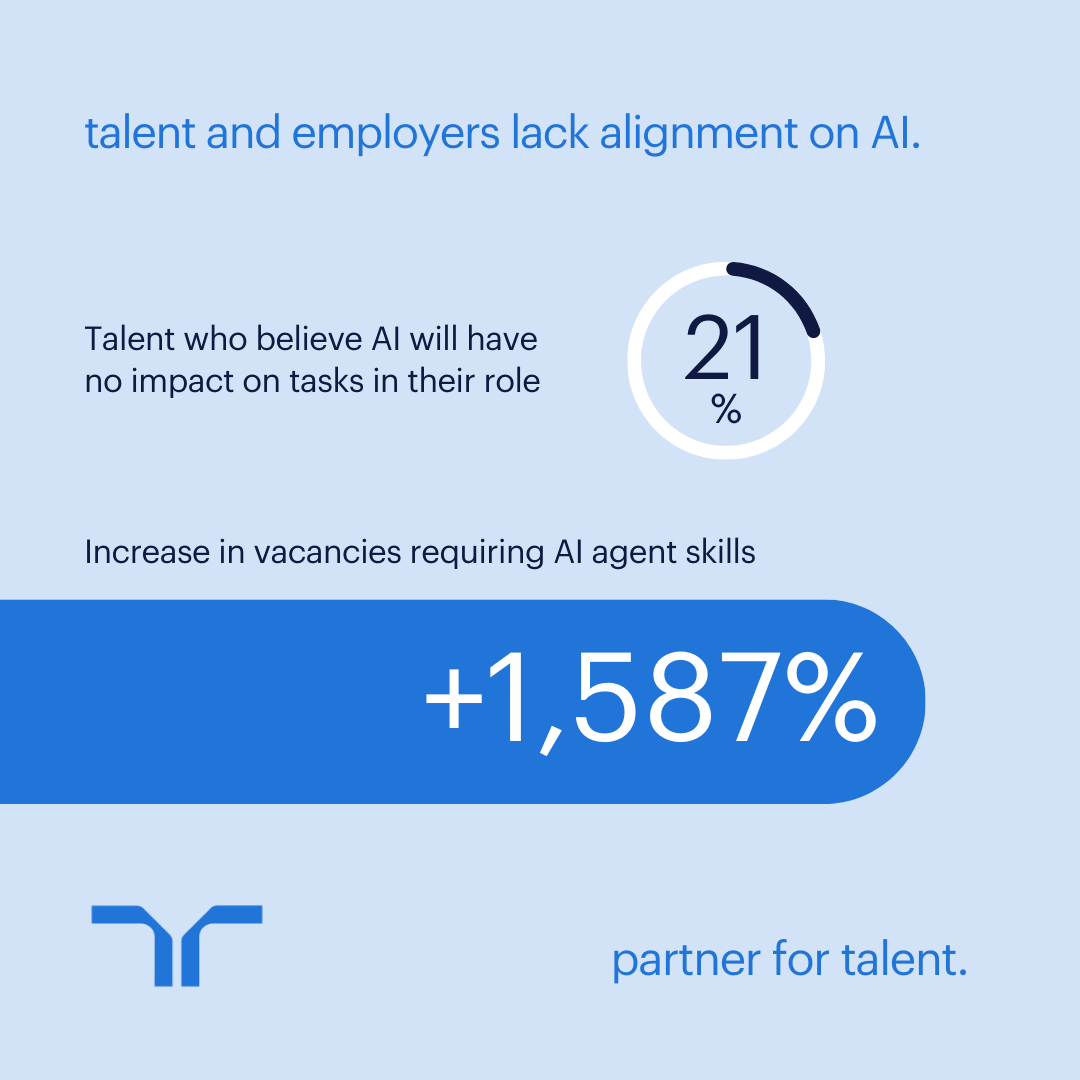
This underestimation leaves a significant proportion of talent vulnerable. We need to ensure that all workers are fully on board and understand the exceptional support AI brings in task augmentation. Without this, it won't prepare for it – despite the strong desire to upskill. To close this gap, we must move beyond the binary fear of job displacement and focus instead on the practical reality of task augmentation.
The demand is already there. Our data shows a mammoth 1,587% surge in demand for roles across sectors requiring "AI Agent" skills throughout 2025. We’ve also seen demand for "AI Trainers" skyrocket by over 240%, with such roles dedicated to human oversight of machine learning. This confirms that the future is humans teaching machines, not being replaced by them.
Employers must be transparent about this shift. It is not enough to simply invest in tools; they must help talent map AI specifically to their daily tasks, demonstrating how augmentation protects their long-term employability.
2. From linear to portfolio careers
The second area of the Great Workforce Adaptation is the structural shift in how we define a "career". The linear ladder – one company, regular promotions, steady climb – is fading. In fact, 72% of employers now explicitly call the corporate ladder "outdated".
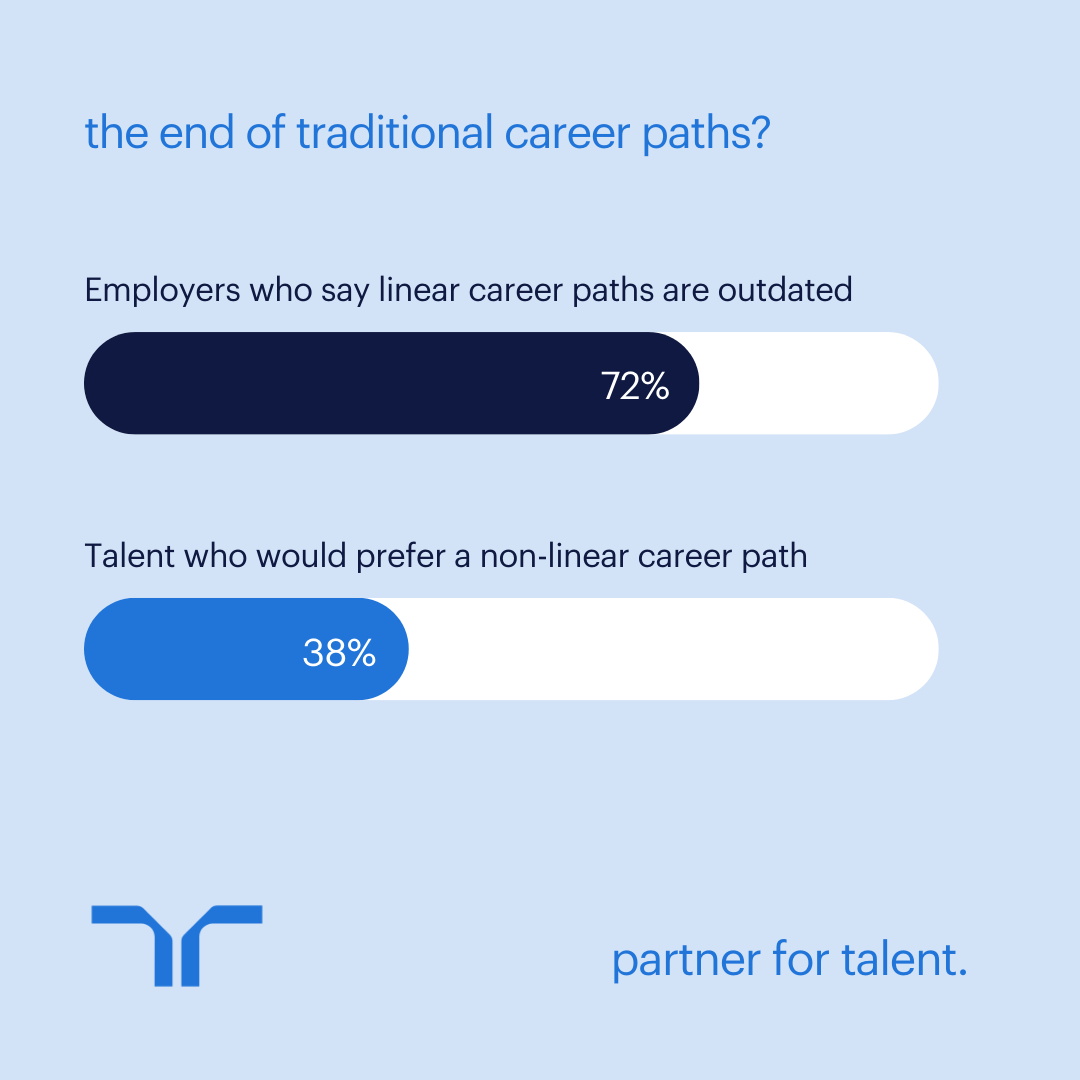
Talent agree. They are actively diversifying their risk by constructing "portfolio careers”. Rather than relying on a single employer for security, workers are building security through variety:
- Only 29% of workers now view a single full-time role as their preferred arrangement.
- Thirty-eight per cent explicitly want to work across different types of jobs and sectors throughout their lives.
- Nearly one in five prefer a mix of a full-time role, plus a "side hustle".
This is not a lack of loyalty; it is a strategy for resilience. In a volatile world, talent feels safer with a broad base of experiences. Employers who try to force talent back into rigid boxes stand to lose them. Those who adapt – by offering internal mobility, project-based work and flexible progression – will capture the most agile minds.
3. Managers as the key to stability
If AI provides the mechanism for productivity, and portfolio careers provide the flexibility, who holds it all together?
In a high-tech environment, the manager has become the most important piece of workplace technology. While trust in senior leadership has declined (dipping from 77% to 72% globally), the relationship between talent and their direct managers is strengthening. Seventy-two per cent of workers now report a strong relationship with their manager, up significantly from 64% last year.
Talent are looking to those closest to them for reassurance. This makes the manager the "trust architect" in this new era of work. However, these trust architects do not just provide individual reassurance; they support the working environment required for diverse teams to learn from one another. This is key to unlocking the multigenerational advantage that is vital for this adaptation.
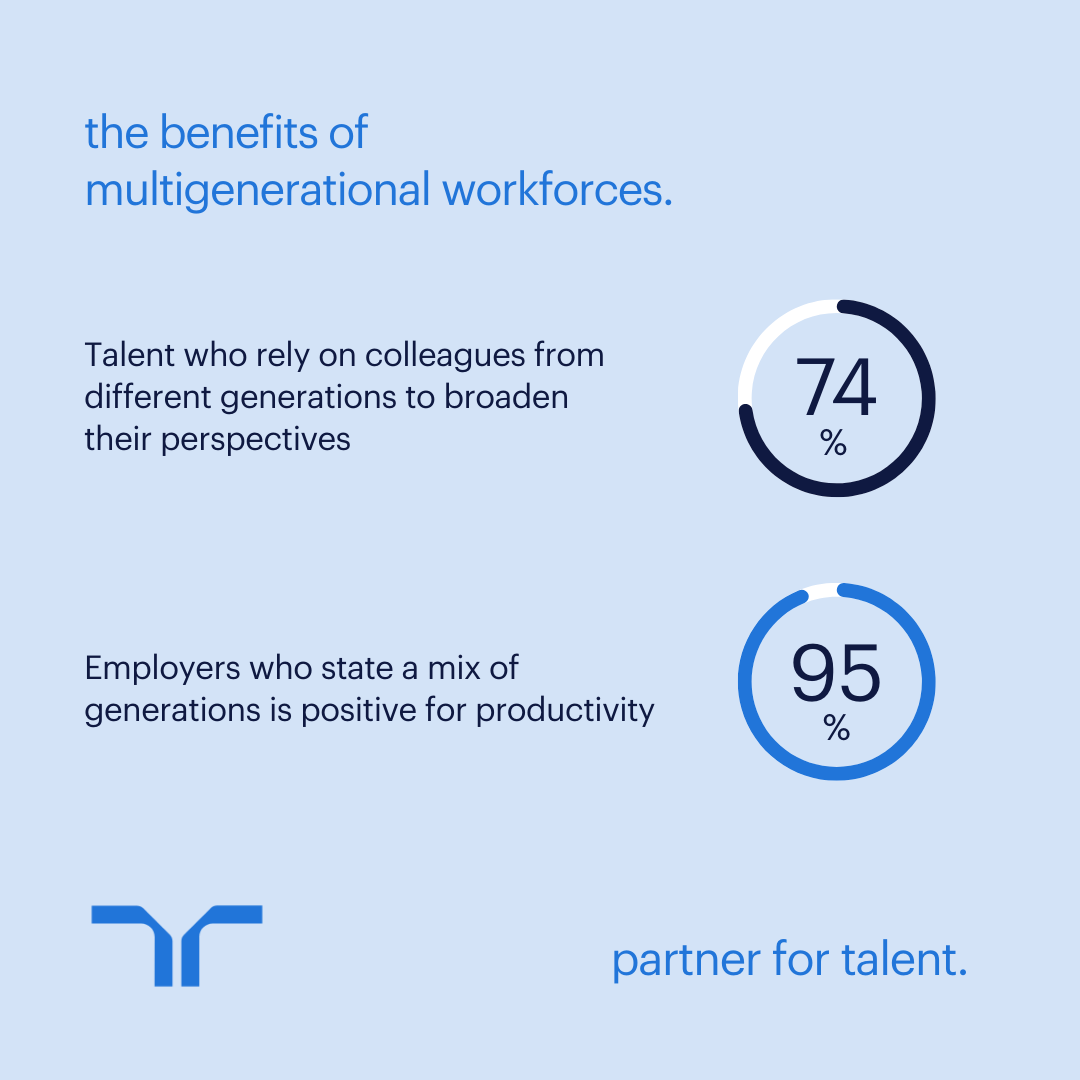
Meanwhile, 95% of employers believe a mix of generations drives productivity. It is the manager who facilitates this exchange, where 78% of talent learn soft skills from older colleagues, and 72% learn AI skills from younger peers. By acting as trust architects, managers bridge not just the confidence gap, but the generational divide, creating a resilient and upskilled team.
Collaborating on adaptation
The confidence gap between employer optimism and talent caution is real, but it is bridgeable. While employers and talent may view the landscape through different lenses, they share a fundamental drive to navigate this complexity successfully. Talent are seeking security through diversification, while employers are focused on sustainable growth. These are not opposing forces, but complementary goals waiting to be aligned.
How the Forum helps leaders navigate economic transformation for people and work
The only way to align these ambitions is through the Great Workforce Adaptation: embracing AI to augment tasks rather than replace roles, supporting the flexibility of portfolio careers, and empowering managers to act as the anchors who hold the organization together. By doing so, we build a world of work that works for everyone.
Don't miss any update on this topic
Create a free account and access your personalized content collection with our latest publications and analyses.
License and Republishing
World Economic Forum articles may be republished in accordance with the Creative Commons Attribution-NonCommercial-NoDerivatives 4.0 International Public License, and in accordance with our Terms of Use.
The views expressed in this article are those of the author alone and not the World Economic Forum.
Stay up to date:
Future of Work


Forum Stories newsletter
Bringing you weekly curated insights and analysis on the global issues that matter.
More on Jobs and the Future of WorkSee all

Neeti Mehta Shukla
February 27, 2026


