How Africa can lead the way on sustainable blue food production
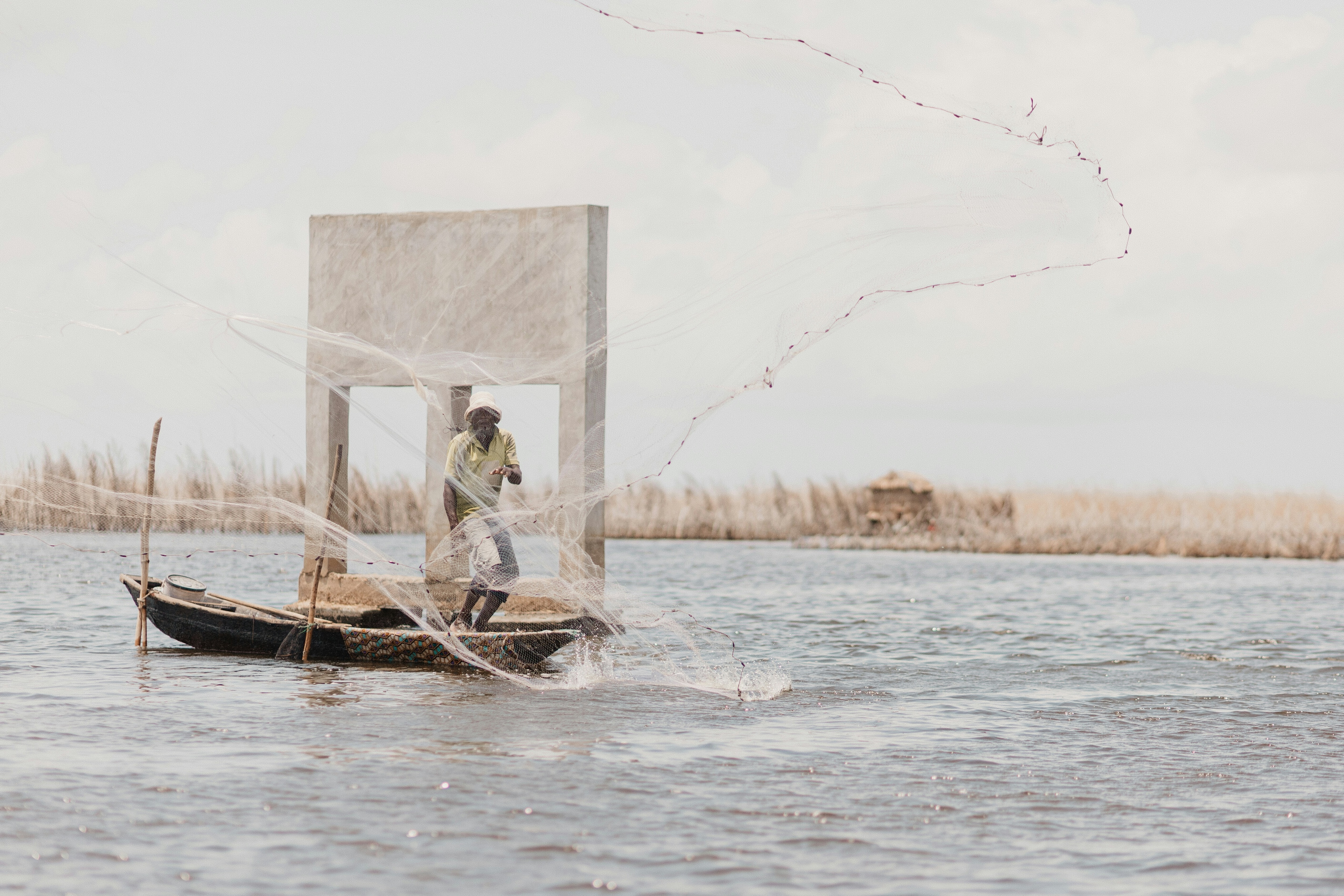
Africa is well placed to leverage blue food production to meet sustainable development goals. Image: Greg Keelen/Unsplash
Jim Leape
William and Eva Price Senior Fellow and Co-Director, Center for Ocean Solutions, Stanford University- Blue foods – animals and plants captured or farmed in the ocean or freshwater – can help create healthier and more sustainable food systems.
- Africa has untapped potential to use blue foods to meet sustainable development challenges and to expand production through aquaculture.
- The World Economic Forum's Investing in Blue Foods: Innovation and Partnerships for Impact white paper outlines how Africa can leverage the opportunities offered by blue foods.
Blue foods have potential to play a vital role in creating healthier, more sustainable food systems and countries across Africa look particularly well placed to benefit.
The are many advantages of blue foods – animals and plants that are captured or farmed in the ocean or in freshwater. They are extraordinarily diverse – while there is one species of chicken raised all over the world, there are more than 2,500 species of blue foods, offering options for different contexts, cultures and uses, and resilience to coming climate shocks.
They are also wildly nutritious – they are an excellent source of protein and most blue foods are much richer than beef, chicken, or other sources of protein in vitamins, minerals and other nutrients that are essential to healthy development. Blue food systems also offer much lower carbon footprints than beef and, in many cases, also lower than chicken.
There is vast untapped potential in Africa to make better use of blue foods to meet pressing sustainable development challenges and to expand production through aquaculture. Seizing this opportunity requires investing in understanding the sector, fostering innovation and mobilizing new collaborations to unlock finance at scale.
Invest in understanding to guide strategy on blue foods
To harness the power of blue foods to help build better food systems, governments must invest in a new understanding of the sector – the opportunities it offers for nutrition, livelihoods and sustainability; and the challenges that must be addressed to realize that potential.
Looking further afield to Indonesia, for example, the government has produced a Blue Food Assessment, published in August 2025, that details every species of blue foods produced and consumed in every one of the 500 districts across the country.
This illuminates the central role of diverse small-scale producers, including both men and women, and identifies the investments in cold chains, processing and supply chains required to ensure that healthy blue foods nutrition gets to those who need it.
The assessment provides vital information and a grounded strategy for implementation of the country’s national development plan and ambitious programmes to provide meals to schoolchildren, mothers and infants.
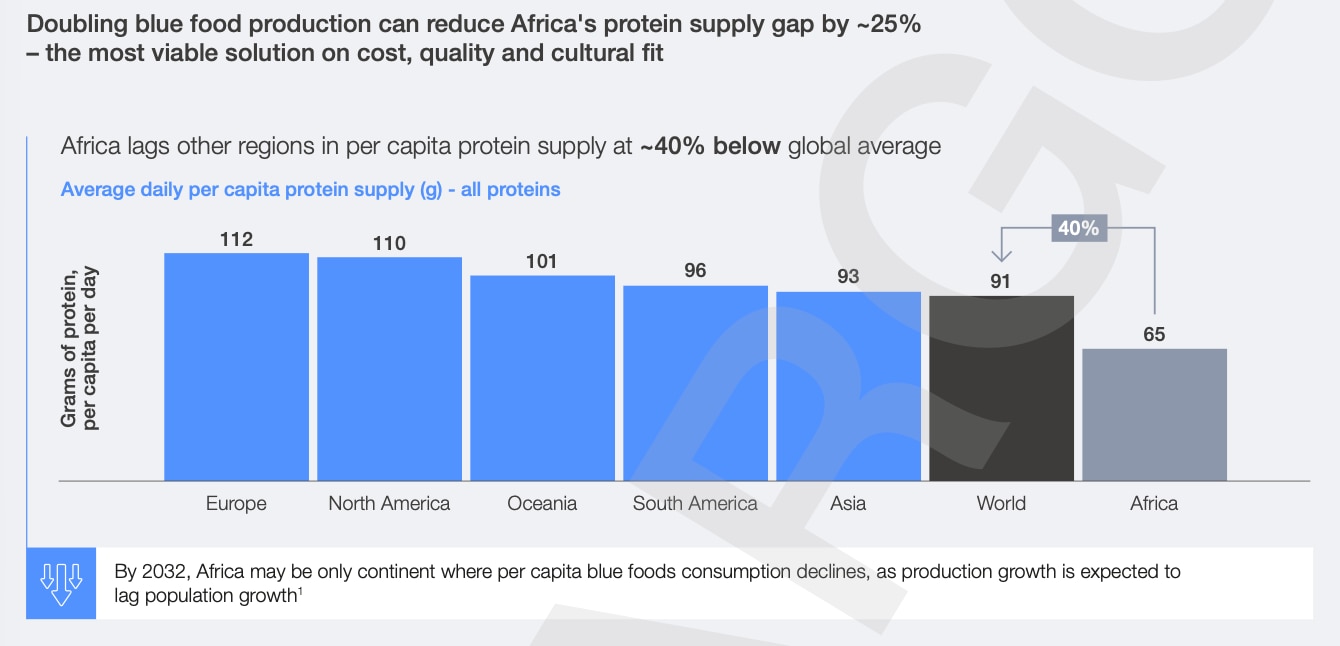
In Africa, the World Economic Forum is working with partners to assess the potential of the blue food sector for the continent. The Forum's Investing in Blue Foods: Innovation and Partnerships for Impact white paper, published in January 2026, found that doubling blue food production in Africa could reduce the per capita protein gap by about 25%, create 3 million new jobs and add about $17 billion to GDP.
Innovation key to scaling the blue foods sector
While blue foods present a great opportunity, there is an urgent need for innovation across the value chain. From making it cost-effective to reducing food waste and ensuring economic benefits are perceived by communities, innovation is required across all stages.
In Viet Nam, for example, a company called Entobel has created a solution for two challenges at once, using blue food waste to produce feed. It harvests the trimmings currently discarded by fish processors, which may hold more than half of the fish’s nutritional value, and feeds them to black soldier fly larvae. The result is insect protein that can be used in better feed for aquaculture
In many parts of Africa, communities preserve fish by drying them in the sun, but the fish often spoils. NutrifFish, a Ugandan company, has created a better way – offering inexpensive solar-powered dryers for small-scale processors that control airflow and temperature to produce safe, shelf-stable products. Fishermen are able to sell more of their product, and they get a better price.
In Namibia, the Namibia Ocean Cluster brings together government, industry, academia and local communities to drive sustainable growth in the blue economy. The cluster fosters innovation across fisheries, aquaculture, logistics and marine services, while ensuring environmental stewardship and inclusive job creation.
By coordinating investments in infrastructure, skills development and value-added processing, the cluster is unlocking new opportunities for coastal communities and positioning Namibia as a regional leader in sustainable ocean-based industries.
These innovations and many others offer exciting promise to build a thriving blue food sector, which contributes not only to food security, but also to jobs creation and social well-being.
Investors needed to mobilize concerted funding for aquaculture
To realize the full potential of aquaculture in Africa, it will be essential to tackle several challenges in tandem – to establish policy regimes that encourage development; to build basic infrastructure needed to enable production and connect it to markets; to build technical capacity; to develop supplies of high-quality seed and feed; and, as noted, to foster innovation.
No single investor is in a position to finance all of these dimensions. Many investors – multilateral development banks, bilateral development assistance agencies, foundations and private investors – have roles to play. The key will be to mobilize a concerted, coordinated effort on blue foods.
Momentum is building across Africa as countries and innovators seize new opportunities in the blue foods sector. Most investment is now focused on high-quality feed production (including insect- and methane-based proteins), hatchery and breeding programmes and cold chain infrastructure to reduce post-harvest losses.
For example, solar-powered cold rooms in Nigeria have significantly cut spoilage and insect-based feed in Ghana is lowering costs and empowering women. Digital tools for farm monitoring and logistics are also helping small producers access markets and finance, such as in the case of Abalobi, a South African startup empowering local communities in the blue foods space by removing intermediaries and connecting them to clients.
Several countries are leading by putting supportive policies and investment frameworks in place. Ghana has developed a five-year aquaculture strategy and is mobilizing resources for implementation. Nigeria is investing in cold chain and processing innovation, while Egypt is strengthening hatchery systems with international partners.
At a regional level, the African Union has established the development of blue foods as a core priority – the centerpiece of its regional Blue Economy Strategy. That priority has translated into action at the national level – in November, Ghana launched an Aquaculture Development Fund under the Fisheries and Aquaculture Act 2025 to boost fish production, create jobs and enhance food security.
Ghana will also benefit from the upcoming Blue Food Innovation Hub to be launched in partnership with the Chamber of Aquaculture Ghana in early 2026, which will open new pathways for collaboration and innovation – creating an environment where partners can help unlock the full potential of our blue food ecosystem.
Unlocking Africa's potential on blue foods
These are just a few examples of how countries in Africa, and elsewhere, are building and strengthening the blue foods sector through innovative solutions.
Now is the time for the international community – development partners, philanthropy, private investors – to respond.
By aligning efforts around common priorities – nutrition, livelihoods and sustainability – Africa can use blue foods as powerful levers for inclusive growth and ecosystem preservation, both terrestrial and marine.
Don't miss any update on this topic
Create a free account and access your personalized content collection with our latest publications and analyses.
License and Republishing
World Economic Forum articles may be republished in accordance with the Creative Commons Attribution-NonCommercial-NoDerivatives 4.0 International Public License, and in accordance with our Terms of Use.
The views expressed in this article are those of the author alone and not the World Economic Forum.
Stay up to date:
Africa
Related topics:


Forum Stories newsletter
Bringing you weekly curated insights and analysis on the global issues that matter.
More on Food, Water and Clean AirSee all

Moattar Samim
February 21, 2026


