How AI is enabling agricultural intelligence and revolutionizing farming
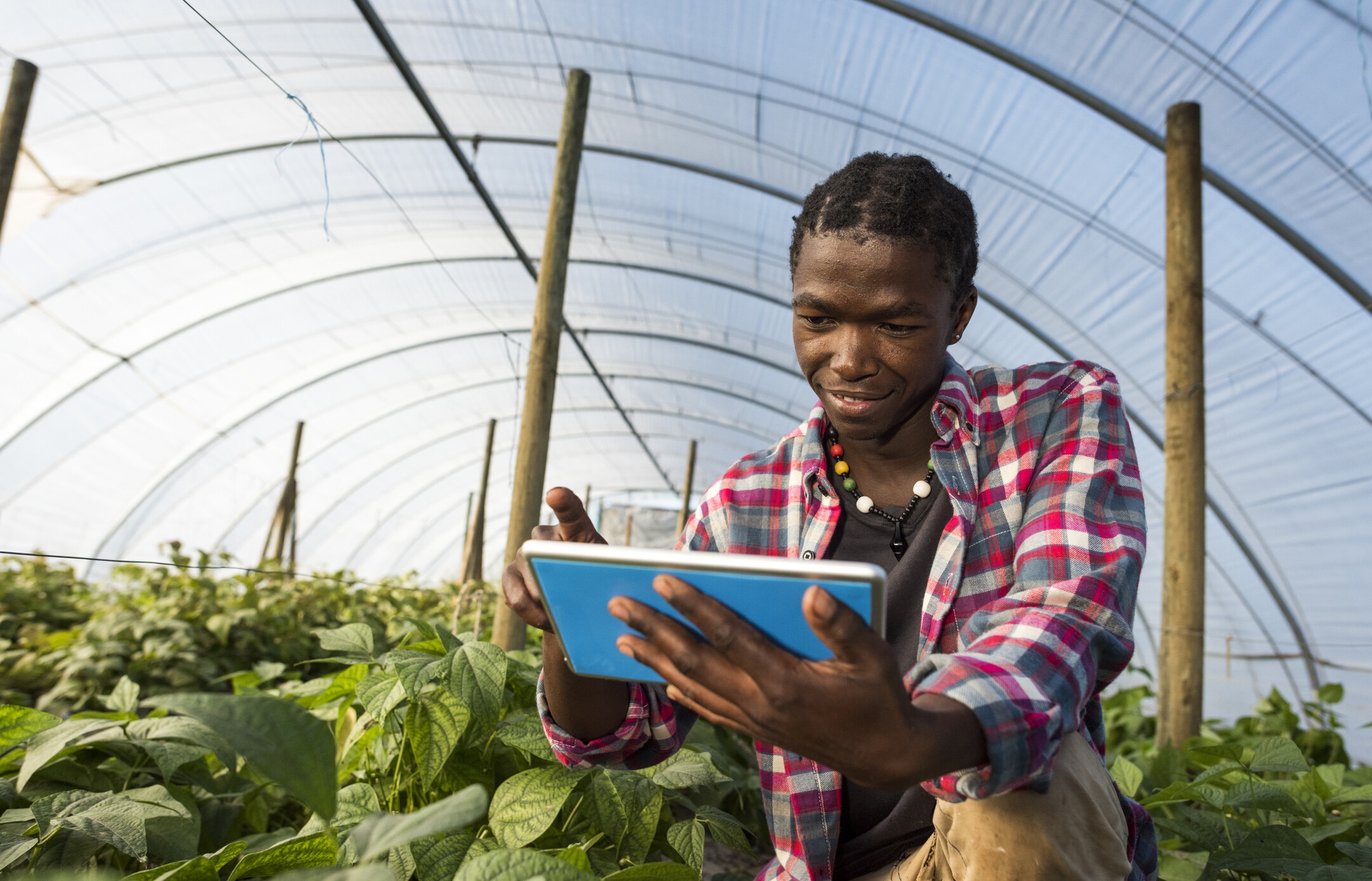
AI-enabled agricultural intelligence can revolutionize how we farm. Image: Getty Images
- The global population is forecast to reach nearly 10 billion by 2050, putting increasing pressure on farmers to feed more people.
- One of the key themes of the World Economic Forum's 2026 Annual Meeting is building prosperity within planetary boundaries.
- This will require revolutionizing how we farm the land through the transformative power of AI-enabled agricultural intelligence.
With the world's population projected to reach nearly 10 billion by 2050, the global agricultural sector faces a defining challenge that mirrors one of the central themes of the World Economic Forum Annual Meeting 2026 – building prosperity within planetary boundaries.
For agriculture, this means feeding more people without cultivating more acres. The answer lies not in expanding farmland, but in revolutionizing how we farm the land we already have by fusing decades of agronomic expertise with the transformative power of data and artificial intelligence (AI).
This challenge is compounded by shifting markets and geopolitical uncertainty. Farmers worldwide – from the wheat fields of Australia to the US corn belt, to the smallholder farms of India – are grappling with rising expenses, volatile markets, extreme weather and labour shortages.
Such challenges are forcing more and more farmers to sell up. In the US alone 160,000 farms have disappeared since 2017, an 8% fall. Simply put, farmers must do more with less to stay competitive in the global market.
Yet farming has always been synonymous with resilience and innovation. Both of which are needed, now more than ever. Luckily, they’re also in abundance.
The food and agriculture sector is big business, contributing hundreds of billions to global economies and employing millions of people whose livelihoods flow into rural communities worldwide. Yet despite its enormous importance, productivity growth in the global food chain has remained well below the levels we need to feed an ever-growing population.
But I believe technology can help to close this gap. Growing up on my family’s farm in the US, I’ve seen firsthand how innovations like the combine harvester transformed agriculture and productivity.
Today, many of those innovations are online. Cutting-edge digital tools, data analytics, AI and biotechnology are accelerating change and efficiency in ways previous generations could never have imagined.
How AI is enabling agricultural intelligence
In my career, I've seen only a few examples of an innovation that truly disrupted the agriculture industry. Biotechnology was one, and AI is now clearly the next one.
But in farming, AI alone isn’t enough. It needs to be combined with data and agricultural expertise to become truly useful and transformative. That’s agricultural intelligence – making precision farming more precise, making digital agriculture more intelligent, and making plant breeding and molecule discovery dramatically faster.
Unfortunately, going digital isn’t always easy. Recent research by Syngenta points to a growing digital divide between large scale operations who are embracing AI, and the smallholders unable to access these transformative opportunities.
Many farmers operate on thin margins, making the upfront cost of buying new tools a big hurdle. Access is another challenge – patchy broadband in rural areas means farmers may struggle to use AI-driven platforms and data analytics.
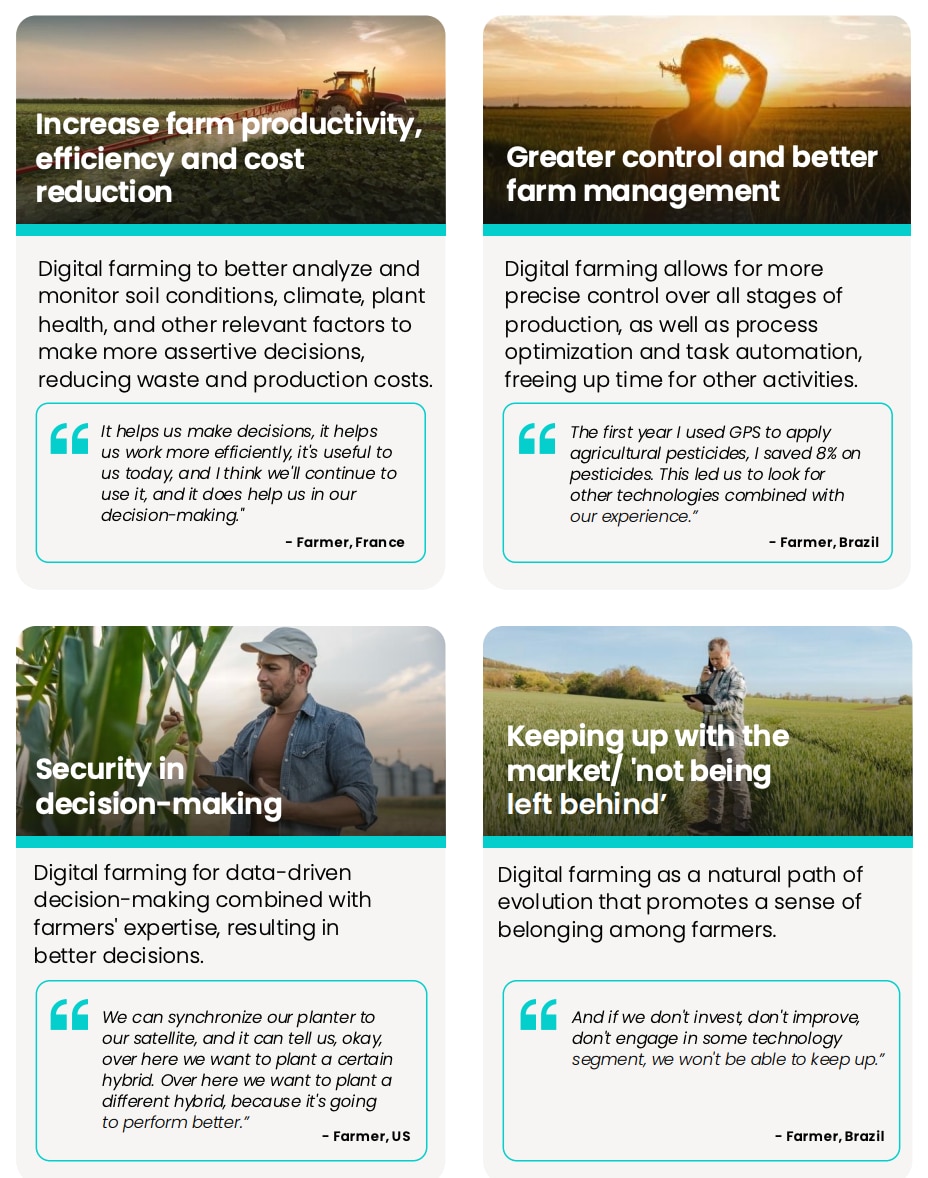
And for those who have spent generations farming traditionally, the steep learning curve of integrating digital tools into their livelihoods can feel overwhelming. Realizing these opportunities requires deploying innovation responsibly to ensure such technologies achieve their promise.
AI solutions should combine simplicity with clear, tangible benefits that work at a local level – every farm’s challenges are unique to their region and operation size. Farmers also need solutions that integrate with their existing machines and daily operations and can be easily operated remotely from a mobile phone.
Perhaps most important of all, farmers need assurance that their data won’t be misused, that they’ll retain ownership of their information and that AI systems will remain under their ultimate control.
Benefits of innovation to agriculture
Despite these challenges, the benefits of innovation are undeniable. Growers today are utilizing smart platforms to take a bird’s eye view of their crops and soil, quickly identifying a plant’s nutrient deficiencies or the earliest signs of disease and pest infestations.
GPS, machine learning models and satellite imagery enable the precise application of fertilizers or pest control down to the nearest metre, or even single plant, thereby reducing input costs and environmental impact while increasing efficiency.
Platforms like Syngenta's Cropwise are demonstrating how this can work at scale. In just five years, this AI-powered system that connects data, tools, and services has transformed digital farm management across over 70 million hectares in more than 30 countries.
Whether on large commercial operations or smallholder farms, agricultural intelligence is empowering farmers to use their deep expertise to make smarter decisions that increase crop yields, improve sustainability and drive profitability.
Analysing detailed data, such as weather patterns and soil conditions, simplifies key decisions like seed selection. What many don't realize is that farmers today can choose from hundreds of varieties within each crop – corn seed that withstands wind or drought better, varieties suited to different soil types, or hybrids optimized for specific climates. This precision ensures that each and every acre is used to its fullest potential.
Benefits of agricultural intelligence go far beyond the farm
When farmers thrive, so do their local communities. Every dollar spent on agricultural innovation trickles down, supporting businesses and bettering the opportunities for future generations.
Research from the World Economic Forum indicates that digital agriculture, significantly amplified by AI, has the potential to boost the agricultural GDP of low- and middle-income countries by more than $450 billion annually. This is an estimated 28% increase in agricultural GDP for these regions.
Agriculture has clearly entered a new era – one in which farmers are harnessing data and AI to make farming more productive and their businesses more sustainable.
Agricultural intelligence is having as transformational an effect on farming as the tractor once did, and with continued advances and support for innovation, farmers will not only endure today’s challenges but thrive for generations to come.
Jeff Rowe is a fifth-generation farmer from Illinois and CEO of Syngenta Group.
Don't miss any update on this topic
Create a free account and access your personalized content collection with our latest publications and analyses.
License and Republishing
World Economic Forum articles may be republished in accordance with the Creative Commons Attribution-NonCommercial-NoDerivatives 4.0 International Public License, and in accordance with our Terms of Use.
The views expressed in this article are those of the author alone and not the World Economic Forum.
Stay up to date:
Artificial Intelligence
Related topics:


Forum Stories newsletter
Bringing you weekly curated insights and analysis on the global issues that matter.
More on Food, Water and Clean AirSee all

Moattar Samim
February 21, 2026


