3 strategic pillars for scaling AI in global agriculture
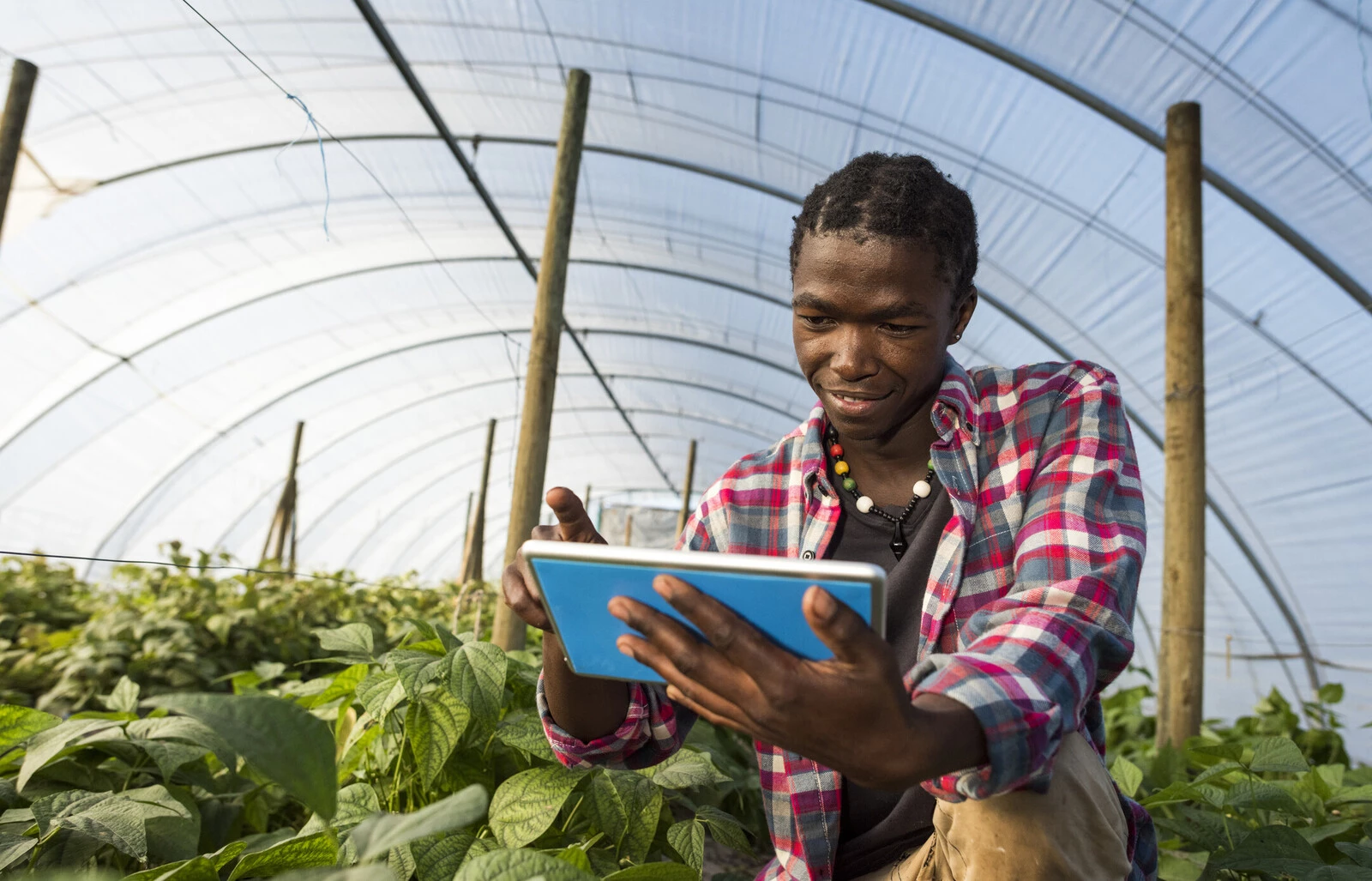
Modern agricultural technology must escape the “pilot trap”. Image: Getty Images
- Modern agricultural technology must escape the “pilot trap” by delivering immediate and measurable seasonal profit.
- Operational realism requires designing simple workflows that survive the harsh constraints of field labour.
- True scale occurs when AI becomes an invisible standard across the entire agricultural ecosystem.
In the past years, agriculture has become a stage for AI ambition. Drones, sensors and robotics all look impressive in demos. Yet the real-world impact is still uneven. Many initiatives shine in a pilot and then stall when they meet the realities of commercial production: tight unit economics, variable biology, fragmented operations and teams that cannot afford complexity.
This is the pilot trap: a cycle where innovation is repeatedly proven possible but not made operational. The barrier is rarely the algorithm. It is the workflow.
The year of operational realism
That is why 2026 needs to be the year of operational realism: building AI not as a standalone tool, but as an invisible, data-driven recipe embedded into how food is produced, repeatably and profitably. The timing matters. The agrifood tech funding peak of 2021 is behind us, and the market has moved decisively towards evidence of adoption and ROI rather than pilot excitement. At the same time, input-cost volatility keeps squeezing production economics, making “nice-to-have” tools easy to cut and “must-pay-back” tools the only ones that survive.
The pilot-to-scale problem is not unique to agriculture. Across industries, most organizations still struggle to translate AI experimentation into sustained value, often due to data readiness, integration and operating-model gaps. Agriculture is simply a harsher environment for these failures because it has less tolerance for downtime, ambiguity and added labour.
Three strategic pillars
Escaping the pilot trap requires three strategic pillars.
1. Economic alignment: AI must pay for itself, fast
A common pattern looks like this: a technology is subsidized, implemented by an unusually capable team, supported by consultants and designed around a handful of enthusiastic sites. Results are promising. Then the subsidy disappears, the internal champion moves on, the workflow drifts and adoption collapses.
To scale, AI needs a clear economic job-to-be-done tied to daily decisions that drive margin: when to scout, what to treat, what to harvest, what to discard, where to send labour next, how to reduce losses without increasing risk. In industrial agriculture, that means:
- Measurable value within a season, not a multi-year “data strategy” that requires patience the farm business does not have.
- A cost model that fits farm cash flow and procurement reality (including seasonal budgeting and enterprise approvals).
- Risk reduction, not just optimization, because producers get punished for experimenting when the downside is crop loss.
Operational realism also means designing for the real cost centre. For many farms and controlled-environment operations, the biggest cost is not “software.” It is the people time required to run it. An AI tool that adds steps, increases manual labelling, or requires constant tuning often loses out to a simpler workflow, even if the model accuracy is higher on paper.
The economic test is straightforward: if the technology is removed, do the farm’s KPIs visibly worsen within weeks, not quarters. Tools that pass this test scale. Tools that do not remain pilots.
2. Realistic execution: Design for the teams and constraints that actually run farms
Most growers do not reject technology because they dislike innovation. They reject it because innovation is often packaged for a world that does not exist: perfect connectivity, clean data, high digital literacy and abundant time.
Agriculture and rural-tech reports consistently point to adoption barriers like digital skills gaps, uneven connectivity, and insufficient advisory capacity.
Operational realism in execution means building for:
- Low-friction onboarding: Minimal configuration, fast time-to-first-value, and field-ready interfaces that match the context of workers on the ground.
- Transparency over mystery: Growers do not need to read the model, but they do need to understand what action to take next and how to validate it quickly.
- Training as part of the product: The “deployment unit” is not the app. It is the combination of software + workflow + training + accountability.
This is where the “black box” debate becomes practical. Trust is earned through repeatability at the decision level: “I understand why the system flagged this area, I can verify it in minutes, and it consistently improves outcomes.” When that loop is tight, adoption spreads across teams instead of depending on a single champion.
One more hard truth belongs here: the “pilot team” is often not the “scale team.” Pilots are run by motivated experts. Scaled deployments are run by busy managers and field staff with shifting priorities. A system that cannot survive imperfect behaviour will never survive commercial reality.
3. Cross-sector orchestration: Scale happens when ecosystems move, not when startups ship
Agriculture is a supply chain business. Farms operate inside networks of agronomists, input suppliers, equipment providers, off-takers, insurers, lenders and regulators. If AI optimizes one node while the rest stays unchanged, pilots remain isolated successes.
Scaling requires orchestration: shared incentives and shared data pathways across stakeholders. The World Economic Forum’s work on frontier technologies in agriculture emphasizes that value is unlocked when AI, sensors and operational systems are connected into end-to-end transformation, not deployed as isolated point solutions.
Orchestration involves two shifts:
- From insights to operational standards.
A detection, prediction or recommendation only scales when it becomes a standard output that multiple stakeholders can rely on. That typically requires clear definitions, consistent data capture and auditability so that decisions are explainable to farm managers, advisors and enterprise procurement. - From data collection to market mechanisms.
AI becomes dramatically more scalable when downstream partners can plug into standardized outputs. If a system can reliably quantify risk, performance or compliance, it can reduce friction across procurement, quality and contracting. That is how digital tools become infrastructure: they reduce transaction costs across the chain, not just optimize a single farm task.
This pillar is also where interoperability stops being a technical preference and becomes an adoption requirement. Tools that integrate cleanly with farm management systems, equipment workflows, quality systems and advisory networks have a compounding advantage. Tools that demand a parallel universe rarely survive.
The next agricultural revolution
The next agricultural revolution will not be won in a high-tech office. It will be won in the hard work of commercialization inside real biological systems – under real constraints – with workflows that survive staff turnover, connectivity gaps and unpredictable seasons.
Escaping the pilot trap is not about lowering ambition. It is about raising the standard: AI that is economically rational, operationally adoptable and ecosystem-ready. That is operational realism, and it is how we turn curiosity into resilient production infrastructure.
Don't miss any update on this topic
Create a free account and access your personalized content collection with our latest publications and analyses.
License and Republishing
World Economic Forum articles may be republished in accordance with the Creative Commons Attribution-NonCommercial-NoDerivatives 4.0 International Public License, and in accordance with our Terms of Use.
The views expressed in this article are those of the author alone and not the World Economic Forum.
Stay up to date:
Artificial Intelligence


Forum Stories newsletter
Bringing you weekly curated insights and analysis on the global issues that matter.