Why business must lead the next era of prosperity
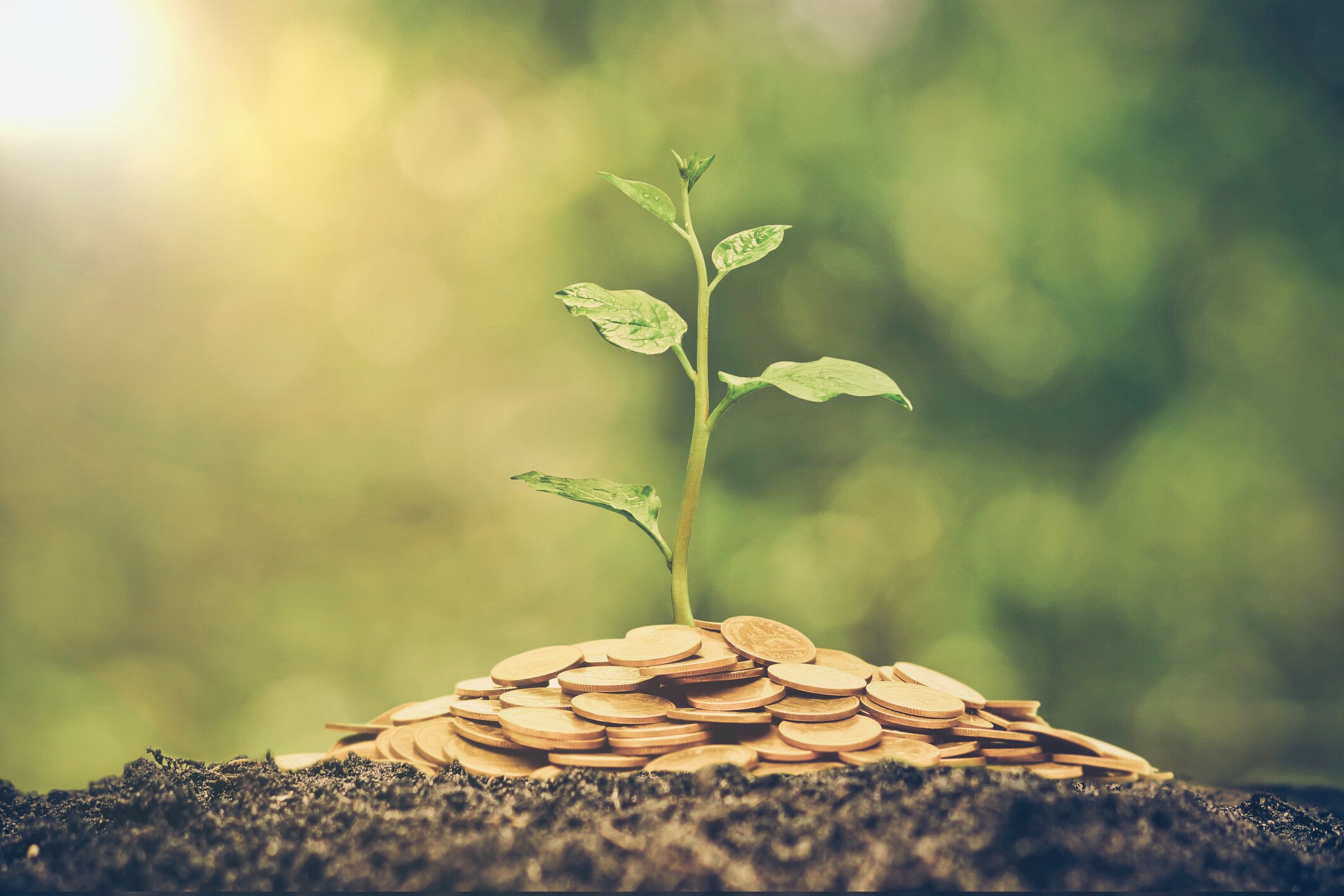
Business leads in driving employment and growth, driving decarbonization through innovation and scalable solutions. Image: Getty Images/iStockphoto
- The need for genuine leadership and restored trust has never been more important in an increasingly challenging world.
- Economic growth is critical for all societies, but it needs to be sustainable economic growth and not at any cost.
- Businesses can help drive the move towards ‘reimagined’ prosperity where economic growth and planet stewardship successfully coexist.
In a world where abundance, scarcity, collaboration, isolation and conflict seem to pull in their own directions, the need for genuine leadership and restored trust is more important than ever.
Time and again we hear about how we have trespassed the planet’s boundaries, and while we’ve made progress towards a healthier planet, efforts have not been bold enough or fast enough. Even now, some voices are questioning whether it’s possible to deliver growth while also taking care of the planet.
Economic growth is critical for all societies, but it needs to be sustainable economic growth and not at any cost. Too often growth is short-term, unequal and weighed toward solutions of the past. That doesn’t mean growth itself is the issue, instead the opposite.
There is no future without prosperity – and businesses can and should help drive the world towards ‘reimagined’ prosperity for people and the planet where economic growth and planet stewardship successfully coexist.
Business can lead the way to sustainable prosperity
We are living in a pivotal moment; a moment where leaders can shape a prosperous future while respecting planetary boundaries.
Business leads in driving employment and growth, driving decarbonization through innovation and scalable solutions.
Edelman’s 2025 Trust Barometer shows that business remains the most trusted institution globally. And there’s a clear demand for leadership from business to drive societal change. Among respondents with a high sense of grievances (defined by Edelman as a belief that government and business make lives harder, serve narrow interests, and unfairly benefit wealthy people) 76% believe CEOs are justified in addressing societal challenges, like climate.
At the same time, the business case for investing in solutions that enable prosperity has never been stronger. For example, on average, companies’ green revenues grew two times faster than their conventional revenues, according to the report Already a Multi-Trillion-Dollar Market: CEO Guide to Growth in the Green Economy.
Member companies of the World Economic Forum’s Alliance of the CEO Climate Leaders, representing $4 trillion in revenues and more than 12 million employees, have proven that “what’s good for the planet is good for business”.
The group of members have reduced total emissions by 12% while delivering 20% growth in the same period, showing that it’s possible to decouple profitable growth from carbon emissions.
These results highlight how sustainable, profitable growth and planet stewardship can successfully coexist, and the choices we make as business leaders now will shape everything – from policy to where investments are made.
Solutions to bring us into the future already exist – now we must scale
Solutions to accelerate the sustainable transition and build resilience already exist. According to the annual report for the Alliance of CEO Climate Leaders, the green economy is already a multi-trillion-dollar economy, and it would be possible to decarbonize more than half of total emissions using already existing cost-competitive solutions.
For example, China is already the world’s largest renewable energy producer and consumer providing 80% of global solar panels and 60% of wind power equipment, driving economic growth and generating more than 7 million jobs.
Have you read?
Biosolutions also provide valuable answers. Tiny microbes and enzymes – the building blocks of all living things – are enabling healthier lives and a healthier planet. Biosolutions enable sustainable farming practices, support resilient food systems, enable the shift to healthier sources of protein, contribute to cleaner energy and lower dependencies on fossil inputs. And Novonesis’ biosolutions already reach two billion people every day.
The Value of Biosolutions report shows that by 2035, the biosolutions industry could create more than 5 million new jobs and generate 877 billion euros in economic value globally. Serving as home-grown solutions, they boost local jobs and economic growth and increase country resilience.
For these solutions to reach their full potential and do it faster, businesses can’t do it alone.
Time for collaborative leaders – private and public – to build bridges
As global businesses, we have a responsibility to create shareholder value and that also comes with a responsibility to nurture hope and trust in our contributions to society at large. We need leaders – public and private – to come together to build bridges toward a prosperous future.
To accelerate the sound business cases, we must establish regulatory frameworks that are fit for future. Today, solutions are regulated based on frameworks designed for the answers of the past. But as innovation is developed, the regulation frameworks create unnecessary roadblocks and slow how quickly that innovation can be brought to scale.
New, streamlined pathways must also be created. To ensure this happens, business leaders have a responsibility to sit at the table with regulators and politicians to share the potential of the solutions of today.
The World Economic Forum’s Bioeconomy Initiative is a great example of the leadership needed. Here, companies come together to discuss with policy-makers fit-for-future regulation within the biosolutions sector and offer concrete business examples to build awareness, boost adoption and ensure accountability.
Working together is a prerequisite for success. And what better time and place to kick start our future than at the World Economic Forum’s Annual Meeting 2026 in Davos. Gathered in one place, discussing these very topics, businesses can continue building stable bridges toward the future.
We can show the world what reimagined prosperity looks like – rooted in responsible leadership, driven by innovation and built on a narrative of hope.
Don't miss any update on this topic
Create a free account and access your personalized content collection with our latest publications and analyses.
License and Republishing
World Economic Forum articles may be republished in accordance with the Creative Commons Attribution-NonCommercial-NoDerivatives 4.0 International Public License, and in accordance with our Terms of Use.
The views expressed in this article are those of the author alone and not the World Economic Forum.
Stay up to date:
The Digital Transformation of Business


Forum Stories newsletter
Bringing you weekly curated insights and analysis on the global issues that matter.
More on Climate Action and Waste Reduction See all

Laetitia Gardé and Marc Delobelle
February 26, 2026


