How Europe can drive action in closing the nature finance gap
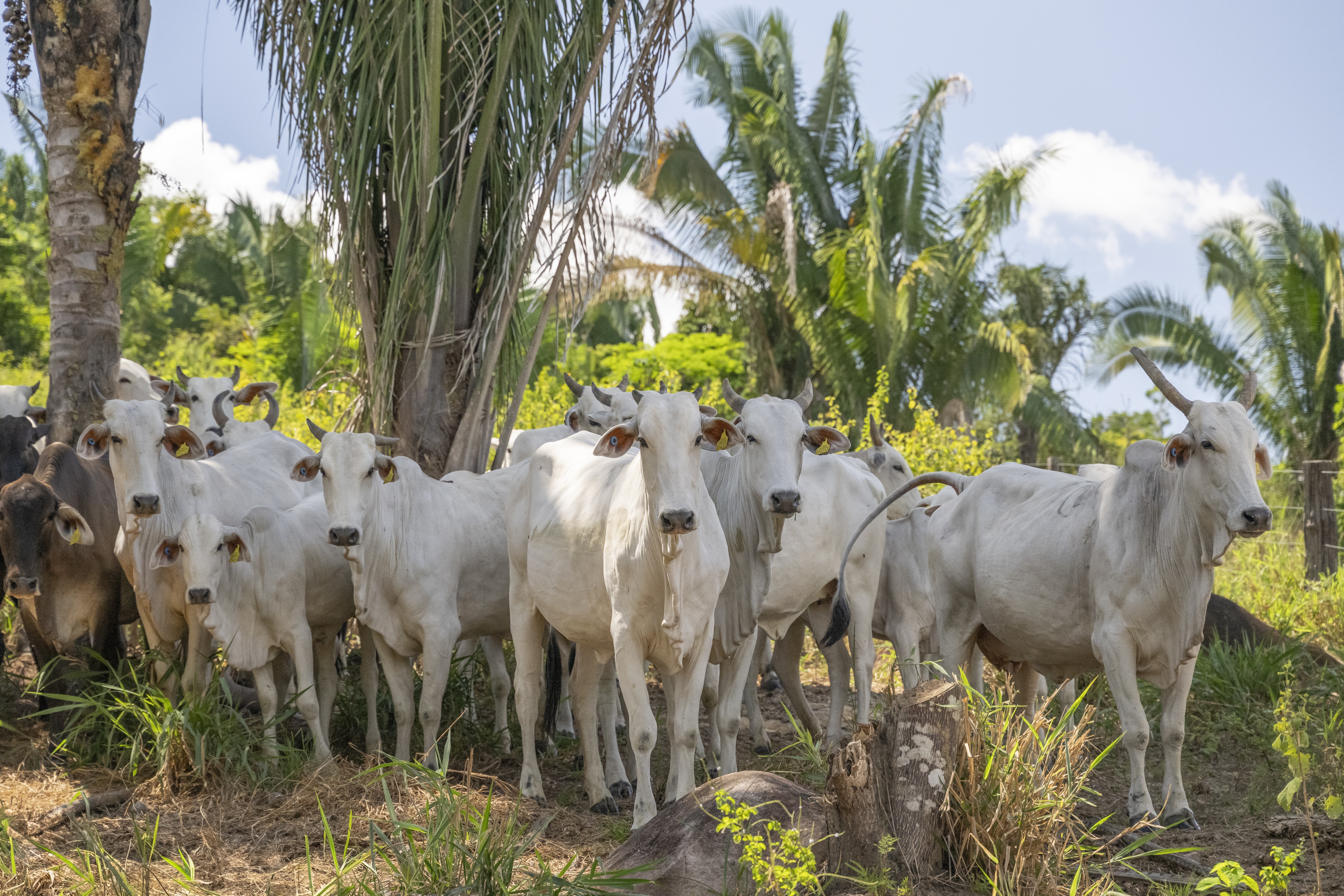
Nature-positive business and economic models can help tackle deforestation and climate change. Image: André Dib/The Nature Conservancy
- Half of global GDP is at risk from nature loss, yet at the same time, the global finance gap for biodiversity action has ballooned to $942 billion per year.
- Nature-positive business and economic models will be key to preventing lost forests, failed harvests and rising instability across the world.
- Europe can lead the transition away from deforestation practices by helping set global standards, driving innovation and convening partners.
In the heart of Pará, Brazil, as dawn breaks over the rainforest canopy, Manoel Cid Oliveira sees promise in change. Like thousands of family farmers across the Amazon, Manoel is preparing to embrace the state’s cattle traceability initiative – a system that will track every movement of his herd by the end of 2030.
Despite recent delays, Pará’s programme is designed to curb deforestation, enhance traceability and strengthen sustainable agriculture in one of the world’s most vital ecosystems.
For producers like Manoel, it also represents a massive economic opportunity – a recent study from The Nature Conservancy and Bain and Company estimates that up to $1 billion of value will be unlocked once traceability becomes mandatory in the state. This will be due to increased exports of traceable beef, growth in domestic demand and price, reduction in the informal market and an increase in productivity.
But that opportunity is still out of reach: an estimated 40,000 families in Pará need additional financial and technical support to meet the requirements of the programme.
Finance has a critical role to play in helping bridge the gap for producers who are changing their cattle ranching methods, ultimately enabling them to access this $1 billion of additional economic activity. The success of the Pará programme, the health of the world’s largest rainforest, and the economic livelihoods of thousands of ranchers all depend on it.
Catalytic Capital for the Agriculture Transition (CCAT) is designed to do just that – by investing catalytic capital in the agricultural transition, it aims to unlock four times as much in commercial opportunities for producers.
CCAT was announced at COP30 with a $20 million pledge from Norway and – with The Nature Conservancy (TNC) serving as environmental and social impact advisor – represents a watershed commitment to closing the nature finance gap.
Scale of the challenge in closing the nature financing gap
Manoel’s story is a reminder that Europe’s climate commitments are deeply connected to the fate of forests and farmers half a world away. Projects like cattle traceability in Brazil require more than political will – they demand capital, innovation and collaboration.
The global finance gap for biodiversity action has ballooned to $942 billion per year, with only $208 billion currently flowing to biodiversity. Half of global GDP is at risk from nature loss, and climate adaptation needs in developing countries alone exceed $310 billion annually. These numbers are not abstract: they represent livelihoods, food security and the stability of communities everywhere.
Without urgent action, the cost of inaction will be measured in lost forests, failed harvests and rising instability. The world is not on track to meet the Paris Agreement or the Kunming-Montreal Global Biodiversity Framework. The challenge is not just to raise more money, but to deploy it in durable ways that both protect nature and mitigate climate risks.
Norway’s catalytic commitments for climate and nature
Norway has long recognized that climate and nature are inseparable. As one of the world's largest funders of forests and climate, the country has supported this agenda by spending more than $300 million a year globally since 2008.
In addition to joining public and private donors to help launch the CCAT fund, at COP30 Norway also pledged $3 billion to the Brazil-led Tropical Forest Forever Facility (TFFF), a bold step to protect the world’s most vital carbon sinks and biodiversity hotspots.
Norway has also provided critical financial support for Pará’s broader forests and climate programme, helping the state become the first in Brazil to sign a $180 million agreement with the LEAF Coalition in September 2024 – the largest-ever subnational deal at $15 per tonne, well above the market floor.
By providing public funding grants to TNC, Norway has enabled the design and implementation of Pará’s jurisdictional REDD+ (JREDD+) system under ART/TREES, from robust monitoring, reporting and verification to benefit-sharing agreements, providing the legal and policy framework to meet important climate goals.
These commitments are not ends in themselves – they are catalysts that are intended to mobilize further public and private investment and to set new standards for transparency and accountability.
Blended finance for climate and nature
Public funding alone cannot close the nature finance gap. The good news is that private finance for nature is on the rise – from just $9.4 billion in 2020 to $102 billion in 2024.
Green and resilience bonds reached a cumulative issuance of $5.7 trillion in 2024, and blended finance models are unlocking investment at scale by combining public, private and philanthropic capital.
In Pará, the cattle traceability project is a case in point. By integrating blended finance with traceability and regularization efforts, and engaging producers through targeted approaches, the project aims to create a more inclusive, productive and sustainable cattle ranching industry.
Incentive packages are being developed to improve productivity and provide tangible benefits to farmers who comply with new standards in order to tackle climate change alongside social justice.
Europe’s role for global collaboration on climate and nature
At a time when political support for climate action is wavering around the world, Europe must persevere to drive global progress.
Europe is well positioned to lead the transition away from deforestation practices by helping set standards, drive innovation and convene partners – but only global cooperation, including major economies and the private sector, can deliver the scale of change required.
As some of the world’s biggest polluters hesitate or step back from international climate negotiations, Europe’s role as a convenor and standard setter becomes even more critical.
But leadership is not about going it alone. It is about building bridges – between North and South, public and private, local and global. It is about recognizing that the fate of a family farmer in Pará is linked to the choices made in European boardrooms and parliaments.
Realizing nature’s full value through catalytic capital
The world is now halfway through the defining decade for climate and nature.
As leaders gather in Davos for the World Economic Forum Annual Meeting 2026 under the theme ‘A Spirit of Dialogue’, the imperative is clear: we must champion nature-positive business and economic models, support catalytic capital for agriculture and forests, and commit to closing the nature finance gap through bold, collective action.
The transition to regenerative, inclusive, and resilient systems is not just a moral imperative – it is an economic opportunity, with nature-positive business models capable of unlocking $10 trillion in annual economic value by 2030. The question is not whether we can afford to act, but whether we can afford not to.
Don't miss any update on this topic
Create a free account and access your personalized content collection with our latest publications and analyses.
License and Republishing
World Economic Forum articles may be republished in accordance with the Creative Commons Attribution-NonCommercial-NoDerivatives 4.0 International Public License, and in accordance with our Terms of Use.
The views expressed in this article are those of the author alone and not the World Economic Forum.
Stay up to date:
Forests


Forum Stories newsletter
Bringing you weekly curated insights and analysis on the global issues that matter.
More on Nature and BiodiversitySee all

Forum Stories
February 25, 2026


