Global development is lost in the fog. But it can adopt a new compass
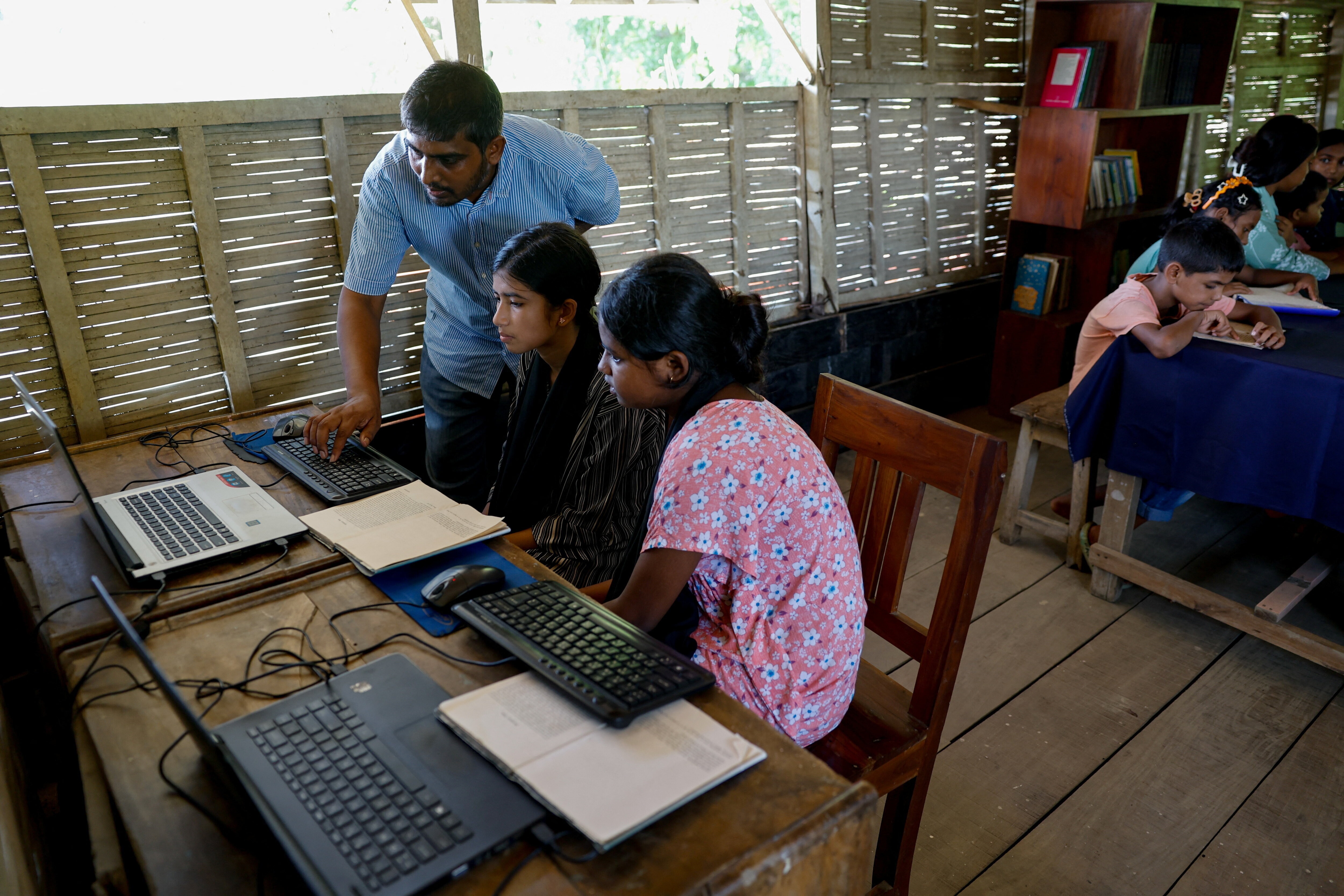
Pupils receive computer training on a floating school from Bangladeshi NGO Shidhulai Swanirvar Sangstha – the kind of local expertise that will be increasingly important in the new era of global development. Image: Reuters/Mohammad Ponir Hossain
- Traditional international aid models are running out of legitimacy and money.
- The development community must define a new compass of principles that can guide it in a fast-changing world.
- Four key 'enablers' can help the main development actors overhaul outdated structures and transform themselves.
None dispute that we stand at a precipice in the history of human cooperation. The post-war, post-colonial architecture of international aid is not merely cracking; in many places, it has already collapsed.
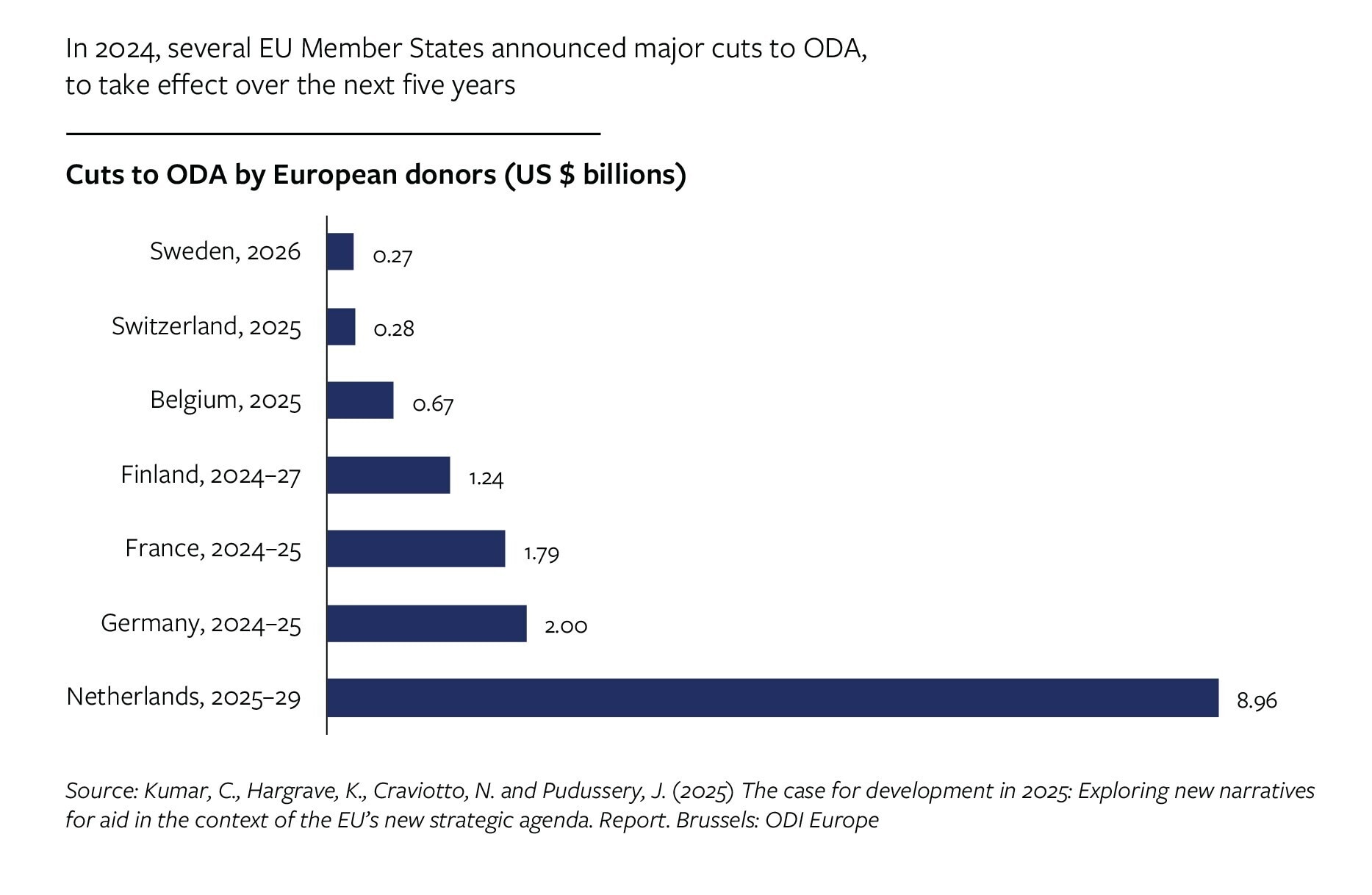
The signs are everywhere. Fiscal pressures in the Global North are leading to sharp, reactive retrenchments. In the Global South, the “projectized” model of aid – which fragments support into short-term, donor-driven interventions rather than investing in people, institutions and systems – is increasingly viewed as an artifact of a bygone era. It has been dismissed as transactional, sluggish and out of touch with the dignity of national ownership. We are witnessing a crisis of legitimacy matched only by a crisis of solvency. The “benevolent donor” model is running out of money just as it runs out of moral capital.
Yet, this breakdown is also a breaking-open. It is a rare, fluid moment where the rules of the game can be rewritten. The question facing the World Economic Forum’s Global Future Council (GFC) on Reimagining Aid is not how to patch the holes in the old, leaking ship, but how to navigate entirely new waters. Can we assemble a new set of principles and concepts for new, reimagined forms of international cooperation? Can we define a new compass to help guide us?
Lost in the fog
Navigating the current turbulence – marked by stagnating poverty reduction, mounting climate stress and geopolitical fragmentation – requires us to locate ourselves accurately. Our diagnosis suggests the development system is in retreat; its principal actors falling back into risk aversion, hoarding shrinking budgets while global challenges accelerate.
While for many involved in international cooperation the ambition is to restore lost resources, our ambition is to steer the global community towards a new north star: of more equal partnerships and a multiplicity of actors beyond the usual suspects.
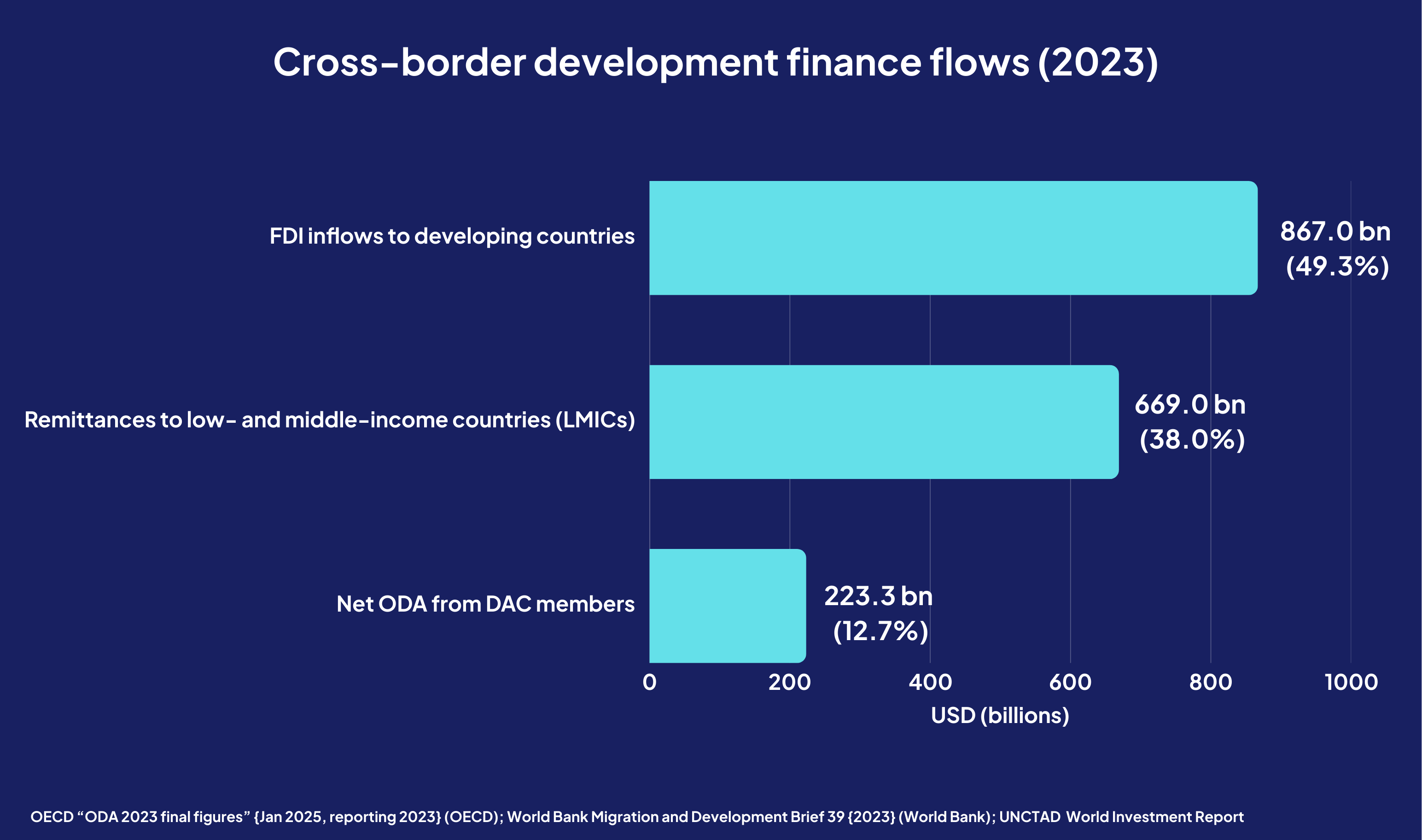
This is a future where the total volume of development finance expands (through private capital, domestic mobilization and creative instruments), and the nature of that system fundamentally transforms towards equity, speed and networked impact. Lest we forget, even today only 12% of cross-border developmental finance flows look anything like traditional aid.
But how do we get there? Currently, a lack of trust between different stakeholders in the aid system drives high transaction costs and heavy compliance, which prevents risk-taking. To unlock the system, to unstick the gears, we must reverse this: We need mechanisms that share risk to build trust.
Bearings of change
The work of the GFC has so far involved synthesizing decades of reform efforts, from the original Pearson vision reborn in the Paris Declaration, to the Addis Ababa Action Agenda and the Compromiso de Sevilla: understanding what they have delivered, and where they have failed and why.
The Council is not working in a vacuum. Many initiatives are putting thought into how to harness this moment of transformation for the aid industry. The World Economic Forum is collaborating with diverse actors engaged in this dialogue, including, but not limited to the Future of Development Cooperation Coalition, Build the Shared Future, the OECD Development Assistance Committee`s work on the future of Official Development Assistance, ODI Global’s Donors in a Post Aid World and the NEAR and ODI Global Advisory panel on the future of humanitarian action.
There is no single narrative uniting the decades of work and policy development that have underpinned international cooperation in the years since the creation of the Bretton Woods institutions. However, there are commonalities, and guiding principles that have endured. We have distilled 10 guiding principles to help frame a new vision for international cooperation.
These principles are not a checklist, or even worse a menu; they are a mechanism. You cannot have true Subsidiarity (country leadership) without Counterfactual Responsiveness (measuring what actually matters to people). You cannot have Adaptive Experimentation without Transparency.
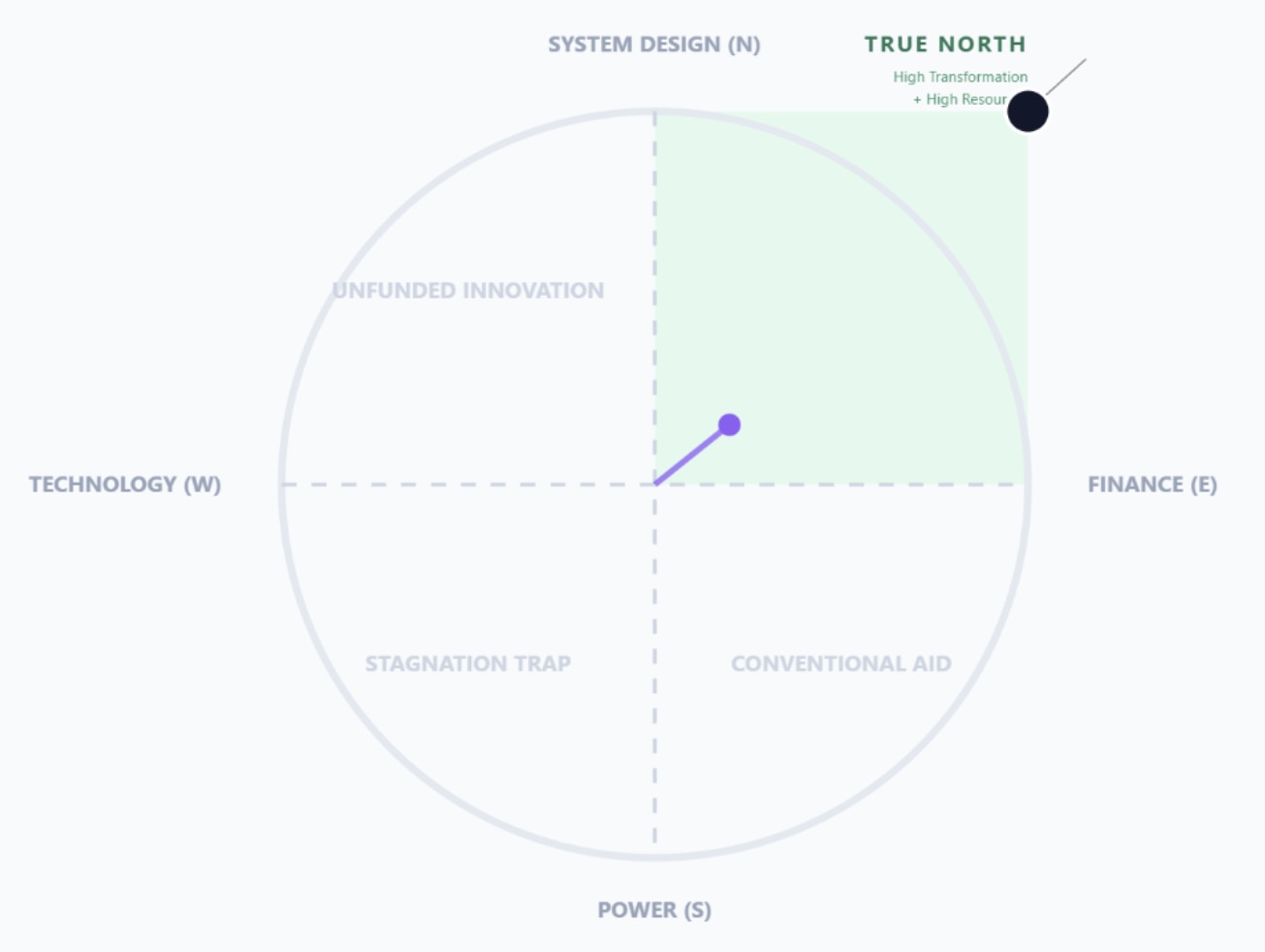
However, principles alone are not enough. We see four tangible “enablers” that will drive the shift we need:
Radical finance: Moving from grant dependency to diverse financial tools (guarantees, insurance, blended capital).
Human-centred technology: Leveraging AI and digital infrastructure to lower the cost of delivery and democratization by “rewiring the baseline” of performance.
System design: Shifting from rigid hierarchies to networked ecosystems.
People power: Institutional rebalancing that places Global South leaders in the driver’s seat.
Shifting archetypes
The most innovative aspect of our current inquiry is mapping the human element. Systems are made of actors, and current actors are trapped in outdated ways of working and thinking.
We have identified five key archetypes, analyzed their responses to the current crisis, and mapped how they need to change if we are to move to a new model of international cooperation.
1. The benevolent donor agency
Current state: Facing domestic budget cuts, donor agencies are chasing visibility, funding short-term, flag-waving projects to justify their existence to taxpayers.
The shift: Donors will have to transition into catalytic partners. Instead of retail delivery, they should use their capital to de-risk investments for others, focusing on global public goods where concessional finance is truly irreplaceable.
2. The project-led UN agency and NGO
Current state: Squeezed by overhead costs and restricted funding, many UN agencies, funds and programmes and international NGOs are suffering from mission drift, chasing whatever contracts are available to keep the lights on.
The shift: The new model is the networked intermediary. These actors would need to stop being the primary deliverers of services and start being the connectors: bridging knowledge silos, facilitating and complementing local advocacy, campaigning for fairer global policies and respect of international norms, and supporting indigenous organizations who lead the work.
3. The multilateral development bank (MDB)
Current state: Constrained by prudential risk frameworks and capital adequacy limits, MDBs often move too slowly for the modern world, tightening standards just when agility is needed.
The shift: MDBs must become risk mitigators. By leveraging their balance sheets more aggressively and utilizing callable capital (funds governments commit to make available if needed, but which only need to be paid in extreme circumstances), they can unlock the trillions needed for climate and infrastructure, moving from “lender of last resort” to “first mover in risk”.
4. The global philanthropic condenser
Current state: Often accused of “elite concentration”, focusing resources on niche interests with little transparency.
The shift: Philanthropy must become the system R&D lab. It has the unique freedom to take the high-risk, long-term bets that governments cannot, testing the moonshot innovations that, once proven, can be scaled by public finance.
5. The southern public development bank
Current state: Emerging powerhouses, but often facing regulatory burdens and foreign exchange exposure that limits their reach.
The shift: These institutions are the future global anchors. They are best positioned to mobilize domestic resources and deploy them with deep contextual knowledge, replacing the North-South transfer model with more equal models of cooperation.
A time for new entrants
The future is already taking shape in the gaps left by the retreat of the old guard. We see it in the rise of direct-cash transfer platforms for remittances, in the sovereignty of climate-vulnerable nations demanding insurance rather than handouts, in private citizens and companies working together to address critical needs during crises, and in the explosion of the rhetoric around impact investment, albeit with limited traction.
This is our call to action. We are looking for pioneers who are ready to abandon the safety of the old archetypes – pioneers constructing the enablers of the transformative shift of development 2.0. We need donors brave enough to cede control; UN agencies and NGOs humble enough to step back and support; and investors visionary enough to see the Global South not as a charity case, but as the world’s greatest growth opportunity.
The GFC’s work will not be buried in a report. It is meant to initiate a portfolio of shifts aimed at realizing this transformation – to map out a set of investable, scalable interventions and partnerships that demonstrate this new logic in action.
We invite you to look at your own compass. If the needle is pointing towards the past, it is time to recalibrate. The storm is here, but for those willing to navigate by new stars, the way through it is clear.
Don't miss any update on this topic
Create a free account and access your personalized content collection with our latest publications and analyses.
License and Republishing
World Economic Forum articles may be republished in accordance with the Creative Commons Attribution-NonCommercial-NoDerivatives 4.0 International Public License, and in accordance with our Terms of Use.
The views expressed in this article are those of the author alone and not the World Economic Forum.
Stay up to date:
Sustainable Development
Related topics:


Forum Stories newsletter
Bringing you weekly curated insights and analysis on the global issues that matter.
More on Global CooperationSee all

Shoko Noda
March 9, 2026


