Building the future: What are PPPs and how do they help drive economic growth?
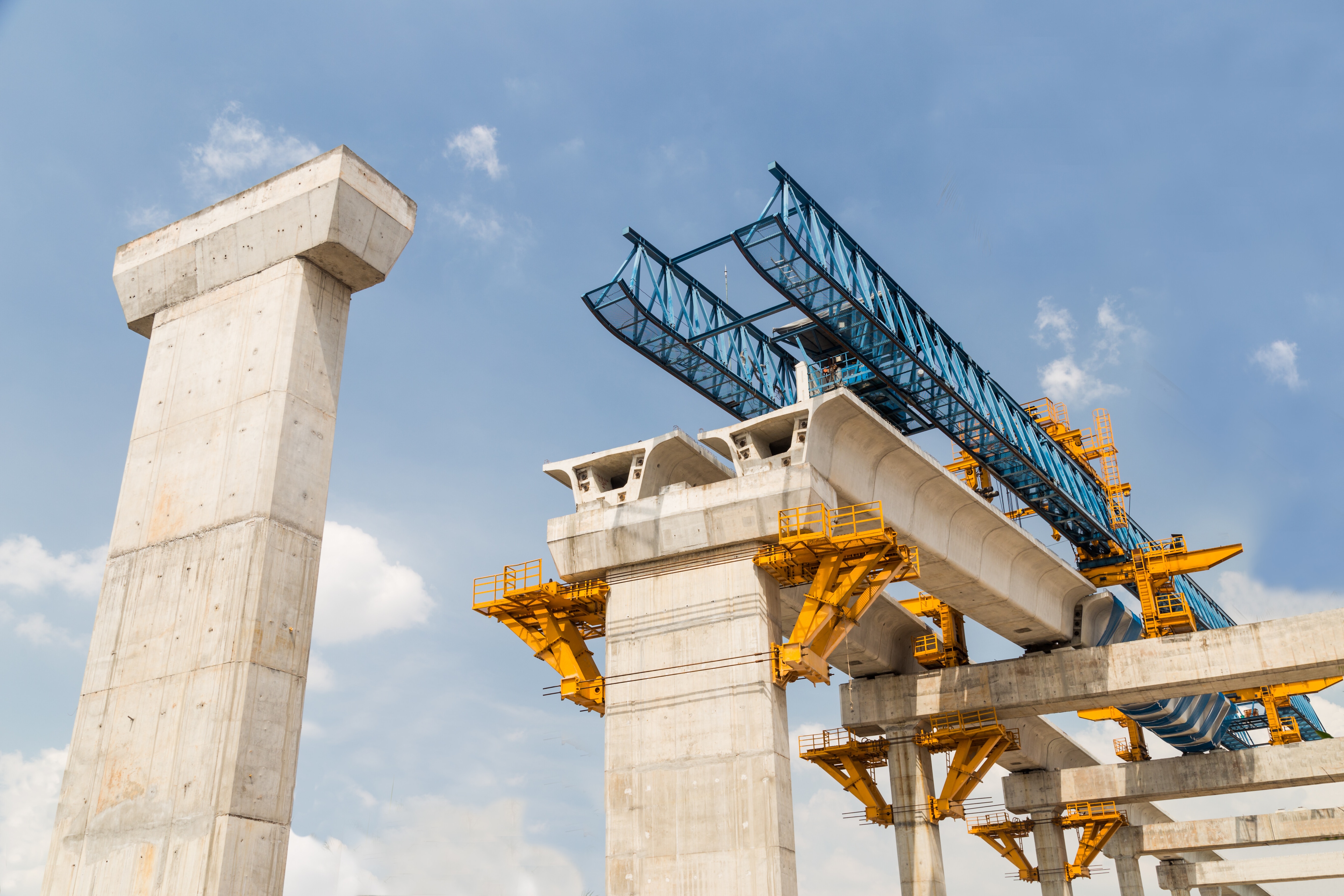
Public-private partnerships (PPPs) help governments and businesses work together to build vital infrastructure. Image: Getty Images/ThamKC
- Public-private partnerships (PPPs) are agreements that bring governments and businesses together to build vital infrastructure.
- By aligning public and private interests around a common purpose, PPPs help countries deliver services such as water and internet to their citizens.
- At the World Economic Forum Annual Meeting 2026, participants will examine the challenges and innovations that will drive future growth.
In every generation, societies experience some test of their resilience. Pressures today include social media, climate instability, rapid technological shifts, constrained resources, demographic change and public finances that are stretched to the limit.
The world has never been more interconnected, but it is also fragmented, tense and uncertain. So who should take responsibility for building the future?
No single actor can do it alone. Not governments. Not businesses. Not even global institutions. The problems are too large, complex and urgent. This is where public-private partnerships (PPPs) emerge as a proven and promising tool for national development of infrastructure such as water, energy, transport and digital systems.
PPPs are one of the most practical ways for societies to work together in a tense, fragmented world. Instead of treating government and business as rivals, PPPs encourage both sides to sit at the same table, share responsibility and co-design solutions that neither could deliver alone. This can enable countries to build essential infrastructure even when conditions are volatile.
By aligning national priorities with private sector innovation, PPPs become a stabilizing force, turning ambition into execution and uncertainty into opportunity.
Big challenges versus tight budgets
Governments everywhere are expected to do more with less. Citizens demand better transport, cleaner water, more reliable power, faster connectivity and safer digital infrastructure. But public budgets have not kept pace with such expectations.
Even when governments have a strong vision, implementation requires more than policy direction – it requires commitment from government, alongside technical depth, operational efficiency and an ability to manage complex assets over decades.
The private sector is full of innovation, talent and investment capacity, but it has its own limitations. Companies struggle in environments where regulations shift in an unpredictable way, or when long-term political support is uncertain. Sometimes, public trust in the private sector is limited.
Governments alone cannot scale. Businesses alone cannot govern. But governments can work with the private sector to solve societal challenges. For this to work, the government must be the enabler and the private sector must create the tools for implementation.
How do public-private partnerships work?
PPPs work by drawing the following elements together in structured, accountable ways:
- The government sets the mission. It defines the public goal, guarantees equity and protects the long-term interests of citizens.
- The private sector partner brings expertise. Whether in engineering, financing, project delivery, operations or risk management, these are the ingredients that transform a vision into working infrastructure.
- Both parties make a long-term commitment. They might agree on a contract spanning 10, 20, 30, or more years. This means neither party can afford to think only of the next election or short-term corporate performance pressures. Both must plan for durability, resilience and long-term performance.
- Global investors receive a clear signal. Instead of governments using taxes or their budget to spend on infrastructure, PPPs provide a concrete way to deploy investment in real infrastructure. Investors know that risks are shared and responsibilities are defined.
The result is a structure where public and private interests are aligned around a common purpose, where local and foreign investors can enhance a country’s infrastructure and where a service is delivered that works for people every day.
How can PPPs provide support in the intelligent age?
We are living in highly uncertain times and during a period of extreme change. The development of new technology, such as artificial intelligence (AI) and the related data transfer, storage and handling needs, presents a new opportunity to use PPPs.
Now, these contracts are not only useful for traditional critical infrastructure projects like airports, highways and power plants, they’re also starting to be used to address new infrastructure challenges in the following ways:
1. Building responsible AI infrastructure
As AI reshapes industries, the demand for data processing, storage and high-density power has significantly increased. To meet this challenge, more governments are partnering with the private sector to deliver large-scale, energy-efficient data centres that balance national data sovereignty with environmental responsibility.
In Saudi Arabia, for example, new PPP-driven government frameworks are attracting global interest while ensuring reliable cooling, secure energy supply and long-term sustainability. Other regions such as the Commonwealth of Independent States, as well as Singapore and Norway, use similar collaborative models.
2. Rolling out resilient water systems in a warming world
Rising temperatures are putting enormous pressure on water networks, especially in regions already vulnerable to scarcity. PPPs can enable countries to expand desalination capacity, build integrated treated water networks and introduce district cooling solutions that protect cities during extreme heat.
PPP operators are also looking for new ways to use less water in the cooling process. PPP-led desalination projects in Saudi Arabia, for example, now deliver some of the world’s lowest-cost, most energy-efficient water production.
3. Financing cleaner industry without leaving workers and communities behind
Heavy industries such as refining, petrochemicals and manufacturing face mounting pressure to decarbonize, but the required investments are substantial. PPPs allow governments and private operators to jointly finance environmental projects to upgrade facilities while maintaining industrial output and without affecting workers.
In Saudi Arabia, new emissions reduction programmes, including carbon capture capabilities, are helping large industrial complexes to meet future environmental standards without disrupting economic activity or local employment.
Building the future together through PPPs
The public and the private sector can both benefit from PPPs and, ultimately, so can the people as these partnerships align national priorities with private-sector capability. This ensures that essential services are delivered efficiently, sustainably and at the scale citizens need.
The government is able to access local and international investors to grow the economy while also delivering services to its citizens. The private sector can generate returns from its investments with bigger and more reliable outcomes. The result is often a stronger economy and better living standards.
In this evolving and complex world, the way ahead is through collaboration. A PPP encourages both sides to bring what they do best to a project, with citizens ultimately benefiting.
Whether it's AI infrastructure, water services, clean energy or the next generation of public services, the partnerships we build today will shape the world in which we live tomorrow. Progress is a team sport and PPPs are the playbooks that can help nations and companies work together to win.
Don't miss any update on this topic
Create a free account and access your personalized content collection with our latest publications and analyses.
License and Republishing
World Economic Forum articles may be republished in accordance with the Creative Commons Attribution-NonCommercial-NoDerivatives 4.0 International Public License, and in accordance with our Terms of Use.
The views expressed in this article are those of the author alone and not the World Economic Forum.
Stay up to date:
Infrastructure
Related topics:


Forum Stories newsletter
Bringing you weekly curated insights and analysis on the global issues that matter.
More on Built Environment and InfrastructureSee all

Jeff Merritt and Vivian Brady-Phillips
February 27, 2026


