Supply unchained: How to best enable the new era of supply chains
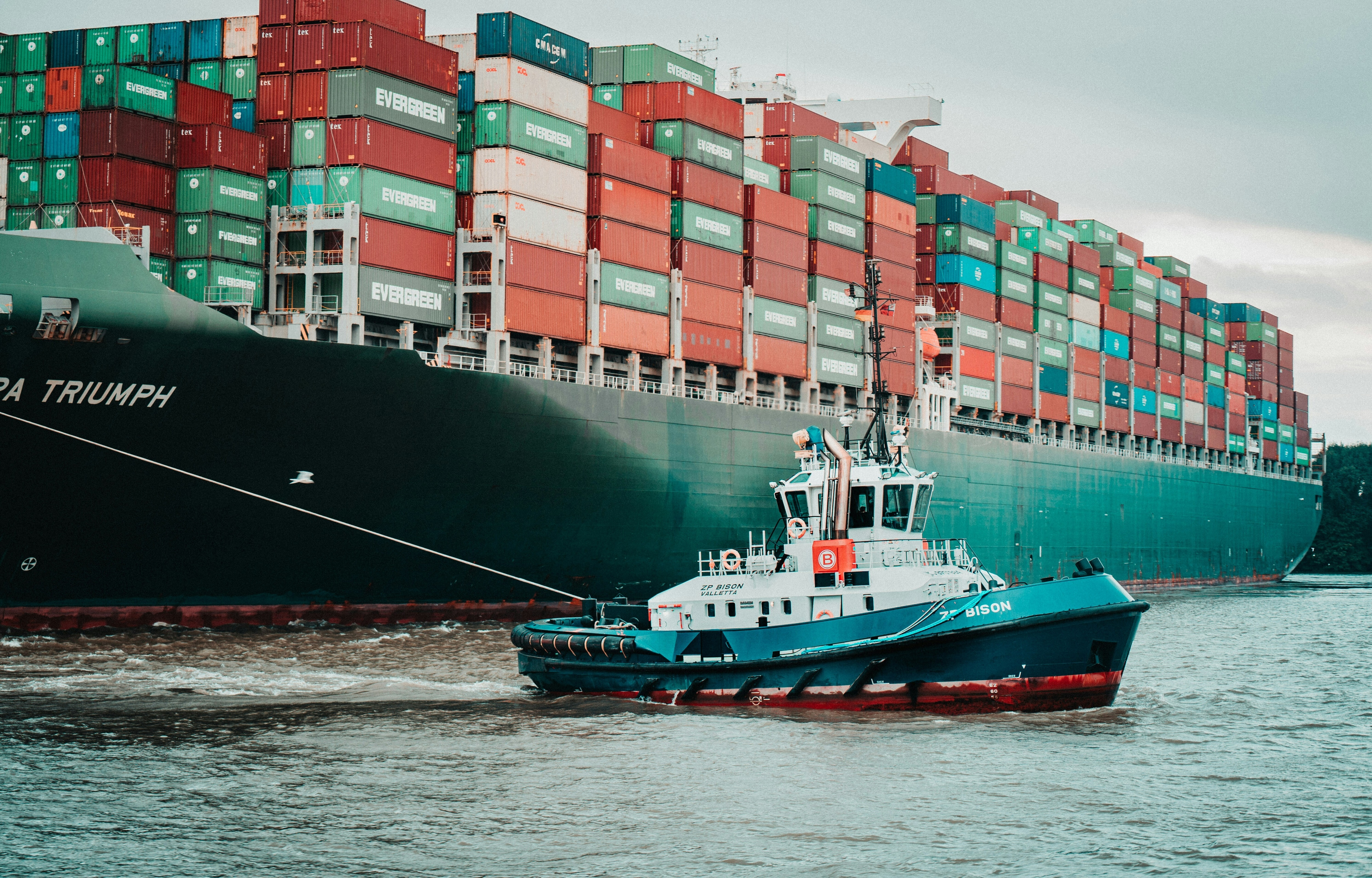
Supply chains need to be steered onto a new course Image: Photo by Mika Baumeister on Unsplash
- The era when materials flowed across borders, manufacturing was concentrated in areas with the lowest labour costs, and just-in-time inventory systems minimized waste no longer exists.
- The Global Value Chains Outlook 2026, produced by the World Economic Forum in collaboration with Kearney, examines how supply chains are evolving, with volatility becoming structural.
- The report provides a blueprint for the private and public sectors to ensure that the reconfiguration of global value chains becomes an engine of responsible growth and shared prosperity in a structurally volatile world.
Traditional supply chains are fundamentally obsolete. Historically, companies have optimized their operations around the principle of efficiency through predictability. Materials flowed across borders, manufacturing was concentrated where labour costs were lowest and just-in-time inventory systems minimized waste. That era no longer exists.
Everything we once knew has evolved. Decades of tradition built on stable institutions, safe and reliable networks and free, open trade have been replaced by uncertainty. Today's business leaders face a fundamentally different reality. Supply chains have become instruments of economic security where governments and companies are reassessing where critical goods are made, who controls key inputs and how resilience can be safeguarded in an increasingly global system.
The Global Value Chains Outlook 2026, produced by the World Economic Forum in collaboration with Kearney, examines how supply chains are evolving, first recognizing that volatility is no longer cyclical but structural. Upheaval has become a permanent feature, rather than a temporary disruption. But, despite the chaos, the good news is that this report identifies solutions for the public and private sectors. It details how to build and maintain agility now and for the future.
What are the factors reshaping supply chains?
Five structural forces are changing how businesses navigate the global landscape:
1. Subdued and uneven growth
Supply and demand no longer operate in parallel, due to slower growth, inflation and tightening capital markets. Companies must now design operations around constrained inputs, rather than projected sales, fundamentally reversing decades of strategic planning logic.
2. Fragmented networks
Tariffs, trade barriers, localization mandates and the resurgence of industrial policy are radically altering supply chains. Whereas companies previously created long supply chains optimized for cost efficiency, today they are being replaced by digitally enabled, regional-for-regional systems that prioritize resilience through nearshoring, dual sourcing, scenario modeling and AI-driven foresight.
3. Geopolitical instability
Conflicts around the globe are driving volatility throughout markets. To address this, companies must maintain optionality (the ability to quickly change logistics) across competing systems. Nowhere is this clearer than in critical minerals and energy inputs, where the concentration of supply, export controls and competing national strategies are forcing companies to rethink sourcing, substitution and regional diversification.
4. Technological acceleration
From AI and quantum computing to automation, advances in technology are reducing logistics costs, shortening lead times and lowering inventory levels. This is also shifting the power balance, with early adopters reaping benefits that are paying off significantly.
5. Trust as the new currency
Trust is now one of the most strategic assets a business can possess. Transparency, data sharing, and corporate accountability win the day, enabling better operational efficiency and often leading to strategic partnerships. Supply chain decision-makers are increasingly more involved in this strategy as supply helps define companies’ values.
How do supply chains meet demand amidst uncertainty?
Businesses can no longer plan for linear optimization, let alone a single predictable future. Uncertainty has become structural, forcing industrial companies to navigate multiple scenarios simultaneously. When the world can change in an instant – whether for the good (new technologies), the bad (growing conflicts) or somewhere in between (shifting policies) – resilient supply chains become the frontline of economic security and must be able to adapt.
This complexity renders traditional reactive planning obsolete. The central question for C-suite executives can’t be, 'How do we optimize our supply chain?' anymore. Instead, it’s, 'How do we meet demand during uncertain times?' The answer lies in structural agility: systems designed to pivot seamlessly. This may include using more readily available manufacturing materials or even prioritizing more stable markets. As a result, companies are discovering that every growth decision is fundamentally a supply decision. It’s a radical shift in thinking that is transforming supply chains into value creators, rather than back-office enablers.
What is the new leadership mandate?
The most profound transformation in supply chain management may be conceptual, moving from a focus on efficiency to agility and endurance.
The Global Value Chains Outlook 2026 shows that within just the last five years, 60% more business leaders have begun to view resilience and agility as core to their competitive advantage. When implemented properly, resilience fosters growth, turning foresight into financial gain.
Critically, no organization can achieve resilience in isolation. Success in this area is built on becoming a supply chain orchestrator rather than an operator. In other words, this means actively synchronizing capabilities across an ecosystem of suppliers, technology providers, logistics partners and contract manufacturers. Orchestration extends beyond immediate business networks to encompass elements companies can’t control but might help shape, such as public policy and industrial incentives, digital infrastructures and social expectations. In an environment where volatility is the baseline, orchestration – not control – becomes the defining capability of competitive advantage.
We cannot prepare for every single scenario lying in wait, but what we can do is even better: Prepare to move quickly irrespective of the scenario. Rather than preparing for an outlook, we prepare for agility. We capitalize on foresight into the future as a whole, rather than trying to forecast one singular dimension of demand and supply. This is the way to effectively orchestrate an ecosystem that is agile enough to move along with the rapidly changing global landscape.
All of this can be enabled by an AI-empowered digital nervous system that integrates real-time data from production, logistics and policy signals. AI is how businesses transform an onslaught of information into foresight.
What is the path forward for supply chains?
The new mandate for supply chains represents more than an operational upgrade for businesses. It depends on a fundamental reimagining of corporate strategy. Mastering permanent disruption requires acknowledging that the old supply chain equilibrium will not return. In its place, responsible, forward-looking companies can build agile, fast-responding systems that roll with every disruption.
All of this must be complemented by governments taking deliberate action, in partnership with the private sector, for adaptive supply chain ecosystems. Governments and corporations need to work hand-in-hand. The Global Value Chains Outlook 2026 outlines a dual blueprint for the private and public sector to ensure that the reconfiguration of global value chains becomes an engine of responsible growth and shared prosperity in a structurally volatile world.
To learn more, read the report here.
Don't miss any update on this topic
Create a free account and access your personalized content collection with our latest publications and analyses.
License and Republishing
World Economic Forum articles may be republished in accordance with the Creative Commons Attribution-NonCommercial-NoDerivatives 4.0 International Public License, and in accordance with our Terms of Use.
The views expressed in this article are those of the author alone and not the World Economic Forum.
Stay up to date:
Logistics


Forum Stories newsletter
Bringing you weekly curated insights and analysis on the global issues that matter.
More on Supply Chains and TransportationSee all

Deborah Dull, Phil Brown and Judith Ketelslegers
March 3, 2026


