How AI can elevate human potential, if the industry gets it right
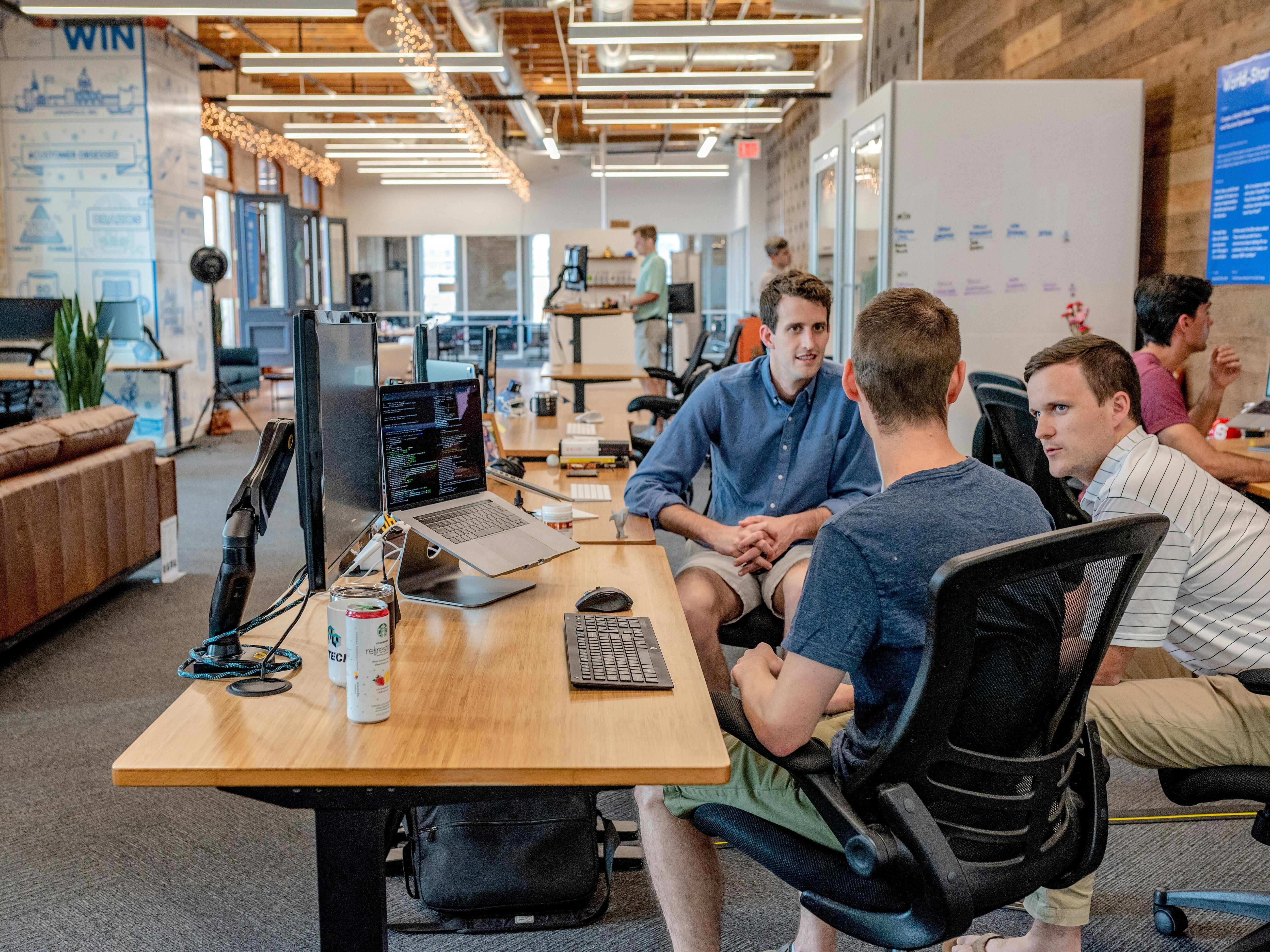
AI should be thought of as primarily an enabler for the workforce Image: Photo by Austin Distel on Unsplash
- As intelligent tools take on routine tasks and deliver clearer insights, they open room for creativity, better decisions and more rewarding work.
- AI’s true promise lies not in what it automates, but in what it enables people to do.
- Leaders are gathering at the World Economic Forum Annual Meeting 2026 to ensure that workforces worldwide remain resilient as the global economy undergoes significant change.
What if the real promise of generative AI is not efficiency, but the chance to make work more human?
As intelligent tools take on routine tasks and deliver clearer insights, they open room for creativity, better decisions and more rewarding work. Leaders play a pivotal role in shaping this transformation, helping to apply AI in a way that elevates human contributions, rather than narrows them. When leaders design and deploy AI with intention, they can amplify the parts of work that help people thrive, creating environments where individuals can engage with meaningful work and ultimately achieve greater success.
To understand what is at stake, it helps to look closely at how AI is already changing the structure of work.
How are we moving from automation to amplification?
Headlines about AI and the workforce often overlook the many factors shaping labour markets, including demographics, geography, industry and job design. A clearer view comes from examining how AI changes the structure of work. AI can automate tasks, such as coding or responding to routine inquiries, and it can augment work by giving people better data and sharper insights.
AI is reshaping career paths from the bottom up. With younger worker populations shrinking in many industrialized nations, employers cannot afford to lose early-career talent. The priority is equipping these employees to use AI at a higher level, building skills that complement intelligent systems, rather than duplicate them.
The future of work depends less on AI replacing people and more on people using AI to amplify the potential of humans and their contributions. As routine tasks fade, employees can focus on work that carries meaning. Intelligent tools spark ideas, support decisions and speed innovation. By moving effort to higher-value activities, AI strengthens the sense of purpose that keeps employees engaged.
How can we lead effectively in an AI-powered world?
These changes are redefining leadership. Managers once reacted to problems after they surfaced; now leaders are expected to anticipate risks, recognize emerging patterns and act before challenges escalate. AI supports this new role by enabling early insight. Agentic AI systems at my organization, ADP, for example, can detect payroll inconsistencies weeks in advance, giving managers time to take action.
That’s the technology side. On the human side, leaders must communicate clearly about the role of AI in their organizations and prepare their employees to use it effectively. These four strategies can guide that process:
1. Transparency
Set clear expectations about what AI can and cannot do, ground decisions in data, state each tool’s purpose and establish a strong governance framework.
2. Upskilling
As roles evolve, give employees new capabilities to pair their judgment and creativity with intelligent tools.
3. Reinforcement
Remind employees that AI exists to strengthen their work. Steady communication and thoughtful design can boost confidence and adoption. Leaders need to reinforce that humans still need to apply critical thinking in their roles.
4. Empathy
In the new world of AI, leaders need to demonstrate deeper empathy for their employees, give them time and space to learn, inspire them and be a role model by showing them how AI can help amplify their potential.
The cultural shift behind these strategies matters as much as the technology. Leaders must emphasize that AI is a collaborator that supports employees’ growth and purpose, not a replacement mechanism.
Why does human oversight remain essential in HR and payroll AI?
As AI becomes more deeply embedded in workforce systems, the need for disciplined human oversight grows more, not less. HR and payroll processes sit at the intersection of regulation and employee trust and even small errors can generate outsized consequences. When humans are not consistently involved in AI development, testing and decision pathways, the risks escalate quickly.
A common mistake in enterprise AI adoption is treating implementation as a technical rollout from the top. The people closest to the work understand pain points, exceptions and compliance risks far better than anyone else. Their insight is essential to designing purpose-built AI that solves real problems.
Rather than delivering finished tools for employees to adapt to, a better model helps organizations build roadmaps tailored to operational realities. An HR professional managing benefits enrollment, for example, could help define how AI agents navigate complex plan rules.
This collaborative approach turns users into contributors. Adoption grows because employees trust what they helped design and innovation expands because those closest to the work influence development. A payroll specialist might identify an overtime calculation that creates a compliance risk, making it an immediate priority for agent development.
The result is ownership. When employees feel ownership over AI, transformation becomes faster, more effective and more sustainable.
How can we build trust into every stage of AI development?
As AI becomes more involved in the workplace, trust is crucial. AI can provide important and timely insights on key decisions involving pay, scheduling, benefits and advancement. These decisions have direct consequences for people’s livelihoods and their sense of fairness at work. Ensuring that the information supplied by AI is trustworthy is foundational to creating a workplace where people feel valued, respected and supported.
Bias detection and mitigation must be built into the design process. ADP’s cross-functional AI governance team, for example, reviews every potential AI use case at the ideation phase; one crucial aspect of that review is to confirm that product development begins with ethical and explainable use of data.
When AI makes a decision that affects someone’s work life, that decision must be understandable and traceable.
Technical safeguards alone are not enough. Trust requires consideration during the design of AI tools, vast datasets to effectively train the software and continuous monitoring once systems are deployed. Bias can emerge as systems learn, so ongoing vigilance is essential to ensure AI serves different populations fairly.
How can we keep people at the centre?
To build a future of work that is both productive and human-centred, it's important to:
- Amplify potential by using AI to support decision-makers, rather than replace them.
- Build trust by ensuring ethical and privacy considerations are built into the development process of AI tools.
- Invest in people by equipping employees with the skills and systems needed for producing the best results.
AI’s true promise lies not in what it automates, but in what it enables people to do. In the age of intelligent tools, the most successful organizations will be those that build technology around people and ensure that every innovation strengthens the human experience at work.
Don't miss any update on this topic
Create a free account and access your personalized content collection with our latest publications and analyses.
License and Republishing
World Economic Forum articles may be republished in accordance with the Creative Commons Attribution-NonCommercial-NoDerivatives 4.0 International Public License, and in accordance with our Terms of Use.
The views expressed in this article are those of the author alone and not the World Economic Forum.
Stay up to date:
Artificial Intelligence


Forum Stories newsletter
Bringing you weekly curated insights and analysis on the global issues that matter.
More on Jobs and the Future of WorkSee all

Neeti Mehta Shukla
February 27, 2026


