Opinion
How state-owned enterprises can play a vital role in meeting global net zero targets
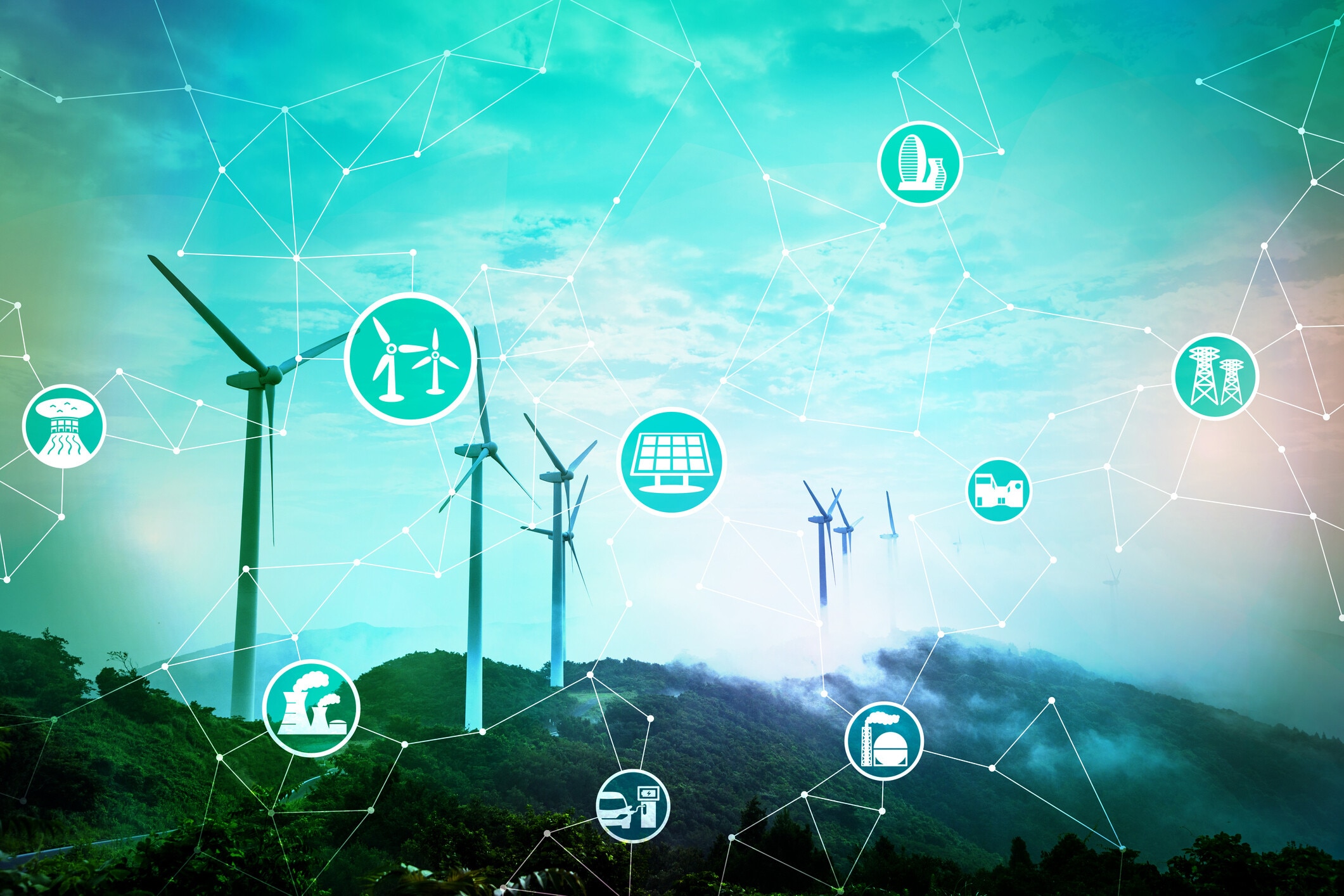
The global race to net zero is usually told as a story of green start-ups, private investors and bold climate pledges from multinational corporations. Image: Getty Images/iStockphoto
Sandeep Pai
Senior Lead, International Energy Transitions at the Nicholas Institute for Energy, Environment & Sustainability, Duke University- State-owned enterprises play an important role in the global energy system and are responsible for about half of the world's fossil fuel production.
- As a major source of emissions and a powerful policy instrument for national governments, they can play a vital role in the global net zero transition.
- Stakeholders should recognize that the future of large SOEs is intertwined with global climate ambitions and sustainable economic development.
The global race to net zero is usually told as a story of green start-ups, private investors and bold climate pledges from multinational corporations. But there is a missing protagonist and an overlooked powerhouse which is at the heart of global energy system as well as transition: state-owned enterprises (SOEs).
SOEs serve a dual mandate of ensuring commercial profitability and meeting broader social objectives including employment generation, regional development and delivery of public goods. They operate essential national infrastructure – ensuring energy security while providing employment in regions where private investment may be scarce.
Given their size, many of these companies constitute a sizable chunk of their national gross domestic product. These firms are not just commercial actors; they act as arms of the state and are central to national development strategies.
Vital role played by SOEs in national economies
SOEs play important roles in many economies, providing public goods and services in strategic sectors like energy, extractives, infrastructure and finance. From Chinese utilities to Saudi oil giants to India’s coal and power companies, state-owned enterprises are both the backbone of national economies and some of the largest greenhouse gas emitters.
State-owned enterprises dominate energy, mining, transport and finance in nearly all Global South countries, often managing critical infrastructure and entire value chains. In the energy sector, SOEs are responsible for about half of fossil fuel production.
Since SOEs are both a major source of emissions and a uniquely powerful policy instrument for national governments, they can be an essential part of the solution as well as part of the problem. Net zero goals cannot be achieved in isolation from SOEs, and their transformation is not merely an option, but a prerequisite for a successful global climate transition.
Many of these SOEs are national champions and often, other companies look to them for leadership and will follow their example. Between 2000 and 2023, the number of SOEs in the top 500 global companies by revenue increased by about four times, according to the Organisation for Economic Co-operation and Development (OECD).
Their actions strongly influence the feasibility, pace and fairness of national – and therefore global – net zero pathways. In short, the road to net zero runs through the boardrooms of the world’s state-owned giants.
Climate diplomacy has long ignored global SOE alliances and, at times, even demonized them. Now is the time to recognize them as both economic actors and instruments of statecraft. Climate diplomacy should thus expand beyond governments and private corporations to include these state-owned giants at the negotiating table.
Why state-owned enterprises transformation is complex but critical
By mid-century, state-owned enterprises will likely have little resemblance to today’s fossil fuel-dominant incumbents. Those that embark on a business diversification trajectory, can transform, survive and grow. Those who remain stuck in the technologies and business models of the past, will likely disappear.
Transformation of state-owned enterprises is hard amid challenges such as entrenched bureaucratic cultures, political interference and conflicting mandates that prioritize short-term revenue or employment over long-term sustainability. But there have been some excellent examples of trajectories for change.
Many SOEs also face weak governance structures and limited accountability to the public. In fossil fuel-heavy SOEs, powerful domestic lobbies often resist diversification, slowing investment in newer sectors. On top of this, financial constraints and legacy debt can limit their ability to pivot towards green infrastructure.
These structural challenges mean that without deliberate reforms, many SOEs risk becoming bottlenecks in the net zero transition rather than engines of it. While SOEs possess the size and capacity to accelerate the net zero transition, their governance structures and organizational culture could thwart this progress unless fundamentally reformed.
The first category of state-owned enterprises are those that completely transform from within. For example, China’s State Grid Corporation, the world’s largest utility, is investing heavily in smart grids, digitalization and storage – enabling the integration of 1,200 GW of renewable energy capacity by 2030.
Meanwhile, Norway’s Equinor, once Statoil, has rebranded as a broad energy company with massive offshore wind projects in the North Sea. This requires visionary board leadership and execution navigating the political economy of the country.
Meanwhile, the second category of SOEs involves strategic portfolio pivots rather than complete transformation. Singapore’s Temasek Holdings has shifted significant investments into climate tech and renewable start-ups, embedding sustainability into its investment philosophy.
The primary vehicles for these strategic shifts are often new joint ventures or new subsidiary companies. For example, India’s largest power utility NTPC Ltd has formed several companies to invest in renewable energy, nuclear energy and green hydrogen.
Integrating SOEs into climate diplomacy and finance
Given the strategic importance of SOEs for climate action and the net zero transition, multilateralism and foreign policy should integrate them as central actors for change by integrating them as part of climate diplomacy, aligning climate finance with SOE transformation and forming global SOE alliances.
In order to integrate state-owned organizations into climate diplomacy, bilateral and multilateral agreements must explicitly address SOEs. Climate forums – from the G20 to the Conference of the Parties process – should develop metrics for SOE decarbonization and governance.
For instance, a G20 commitment to transparent SOE reporting on emissions and investments would create peer pressure among the world’s largest state-owned polluters.
In order to align climate finance with transformation, development banks, sovereign wealth funds and credit agencies must make green conditionality the norm for SOE financing. Institutions like the European Investment Bank are already requiring climate risk assessments; this model should be replicated. Conditional finance is particularly powerful because SOEs depend heavily on concessional loans and guarantees.
Finally, a coalition of leading SOEs – from utilities like China’s State Grid and India’s Coal India EDF, to oil companies like Equinor and Petrobras – could coordinate investments in renewable energy hydrogen, offshore wind and smart grids.
Such alliances would not only accelerate technology diffusion but also create peer pressure for laggard state-owned enterprises to reform. Crucially, governments could leverage these platforms as diplomatic tools, aligning domestic industrial policy with international climate commitments.
State-owned enterprises such as Equinor, Enel, and Ørsted demonstrate that SOEs can lead the energy transition while remaining commercially viable. International forums should showcase these role models and provide technical assistance for replication. Governments can also create South-South knowledge exchanges, enabling SOEs from India, South Africa or Brazil to learn from pioneers.
State-owned enterprises as catalysts for a net zero future
In sum, large state-owned enterprises will play a pivotal role in the global journey toward net zero, but their survival and success hinge on their ability to transform fundamentally.
Those SOEs which continue to be rooted in carbon-intensive industries may diminish whereas new state-backed enterprises focused on renewable energy, green infrastructure and climate resilience could emerge to fill critical gaps.
By the time the world reaches net zero, large SOEs will have transformed into entities prioritizing sustainability at every level. Remember, state-owned enterprises possess unique advantages – the scale, government backing and strategic influence – that position them as catalysts for systemic change.
By operating across key sustainable sectors and adopting transparent, accountable practices, role model SOEs can inspire others worldwide to accelerate the shift to a net zero future.
Governments and stakeholders must therefore prioritize supporting these transformations, recognizing that the future of large state-owned enterprises is intertwined with global climate ambitions and sustainable economic development.
Don't miss any update on this topic
Create a free account and access your personalized content collection with our latest publications and analyses.
License and Republishing
World Economic Forum articles may be republished in accordance with the Creative Commons Attribution-NonCommercial-NoDerivatives 4.0 International Public License, and in accordance with our Terms of Use.
The views expressed in this article are those of the author alone and not the World Economic Forum.
Stay up to date:
The Net Zero Transition


Forum Stories newsletter
Bringing you weekly curated insights and analysis on the global issues that matter.
More on Energy TransitionSee all

Ifeanyi Chukwudi
April 3, 2026


