Electrification trend ‘unmistakeable’ – and more top energy stories
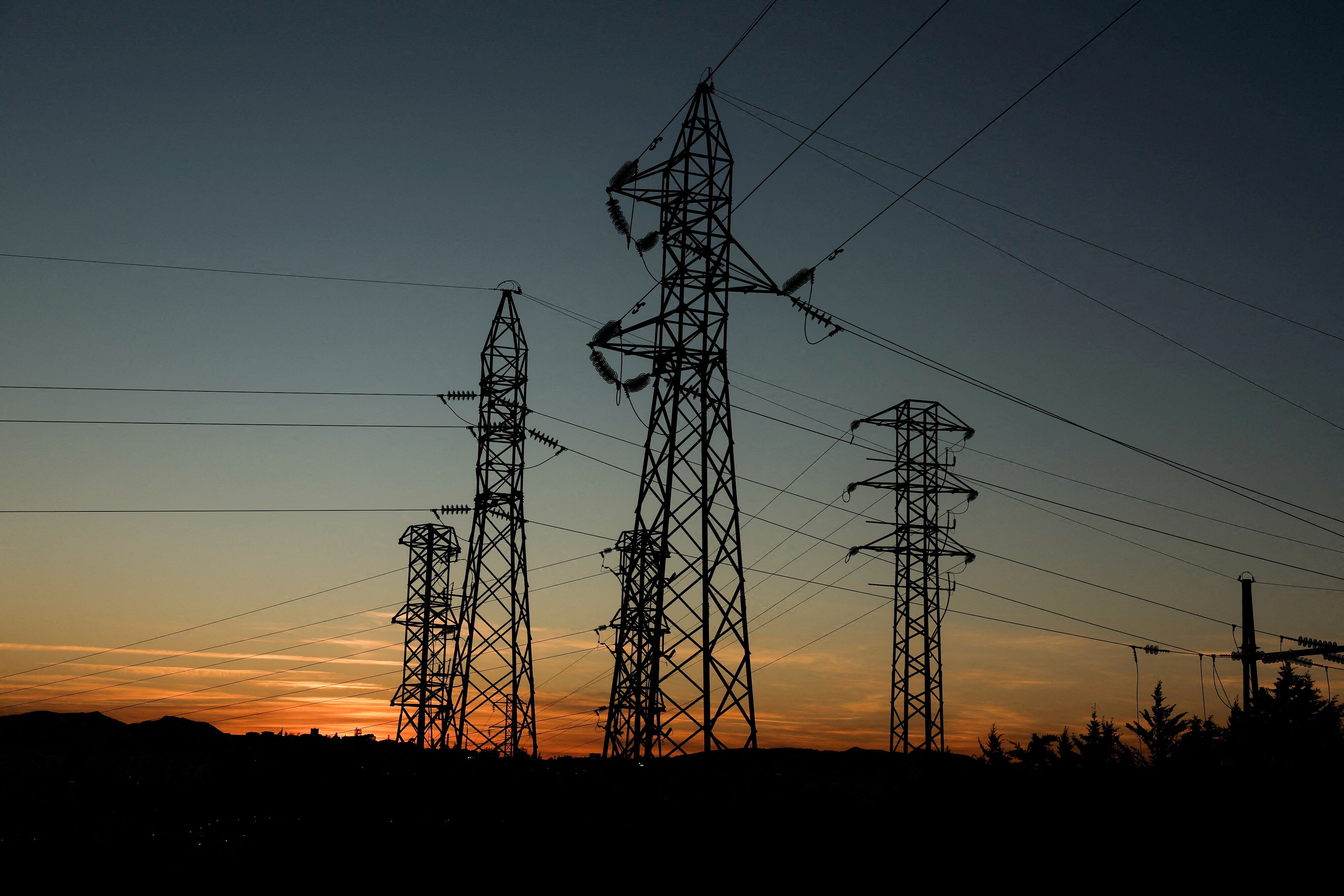
Global electricity demand increased by about 3% in 2025. Image: REUTERS/Jon Nazca/File Photo
Roberto Bocca
Head, Centre for Energy and Materials; Member of the Executive Committee, World Economic Forum- This round-up brings you the key stories from the energy sector over recent weeks.
- Top energy news: Electricity consumption growing faster than overall energy demand - WRI: Clean energy systems help absorb shocks; UAE quits OPEC.
- For more on the World Economic Forum’s work in the energy space, visit the Centre for Energy and Materials.
1. Electrification trend ‘unmistakeable’ – IEA
Electricity consumption is growing “much faster” than overall energy demand, according to a new report from the International Energy Agency (IEA), with solar PV becoming the largest contributor to growth in global energy supply.
The agency’s 2026 Global Energy Review indicates that overall energy demand growth slowed to 1.3% in 2025, down from 2.0% in 2024. Weaker economic growth, milder temperatures in some regions and the rapid uptake of more efficient technologies have all contributed.
At the same time, global electricity demand grew by about 3%, driven by multiple sectors across buildings and industry, as well as rising use of electric vehicles (EVs) and data centres.
While all major fuels and technologies expanded to meet this demand, solar PV is the largest single contributor to growth in the global energy supply, accounting for more than 25% of the increase.
“Global energy demand continued to increase in 2025 against a complex economic and geopolitical backdrop, with one trend unmistakeable: the expanding electrification of economies,” said IEA Executive Director Fatih Birol.
Countries that prioritize resilience and diversification will be best placed to manage volatility and ensure secure and affordable energy, he continued.
In a separate report, the IEA said global shocks have driven a surge in energy policymaking and government spending, which has doubled since 2019.
At the World Economic Forum Annual Meeting in Davos earlier this year, speakers, including the IEA’s Birol, discussed how countries can reduce exposure to energy shocks in the session Who is Winning on Energy Security?
2. Clean energy systems help absorb impact of shocks – WRI
Nations that have invested in clean energy systems find themselves in a better position to withstand the crisis caused by the conflict in the Middle East, according to the World Resources Institute (WRI).
While these investments haven’t fully shielded countries from the impacts of war, it says, nations such as Pakistan, which has rapidly scaled solar PV, and China, which has invested heavily in renewable power generation, are seeing economic and security advantages from clean energy systems.
The combination of security of domestic supply and stability of cost is what enables clean energy systems to meet moments of crisis, the WRI notes.
Experts say that framing the transition to clean energy as an economic and security opportunity is helping countries like China and South Korea advance their energy transition. Learn more in this video:
3. UAE quits OPEC – what now?
The United Arab Emirates (UAE) has quit the Organization of the Petroleum Exporting Countries (OPEC) after nearly 60 years of membership. The move is seen as a significant blow to the oil group, which oversees global oil production and influences oil prices.
The Gulf state said it had left OPEC to focus on “national interests” and to forge its own path, reports Al Jazeera. OPEC quotas limit the UAE's production capacity to a maximum of 3.5 million barrels per day (bpd), but the country plans to increase its output to 5 million bpd by 2027.
The exit comes after the US administration asked Saudi Arabia and other OPEC nations to "bring down the cost of oil" in January, threatening to impose tariffs, and in the wake of the US-Israel war with Iran, and the resulting blockade of the Strait of Hormuz.
While most observers think the organization will survive the setback, one analyst told the BBC it's "the beginning of the end of OPEC".
4. News in brief: More energy stories from around the world
China will further diversify its energy imports and boost reserves to help enhance its capacity to cope with “an emergency situation”, the country has said.
The Democratic Republic of Congo is to stockpile critical minerals, including cobalt and coltan, with new reserves as it moves to gain greater control over raw materials used for industries such as electronics and EVs.
After years of growth, EV sales in the US fell 4% in 2025 due to policy changes and investment pullbacks, according to the WRI.
The European Commission is to encourage remote working to cut fossil fuel use amid the energy crisis sparked by the conflict in the Middle East. It will ask businesses to ensure at least one day of remote working, and recommends that member states also subsidize public transport and reduce VAT on heat pumps and solar panels.
A record 165 GW of wind power capacity was added in 2025, led by China, according to a report from the Global Wind Energy Council. The rise was driven by strong demand for new onshore wind.
Italian energy company Eni has made a major Indonesian offshore gas discovery. Preliminary estimates indicate a volume of 5 trillion cubic feet of gas and 300 million barrels of condensate, Reuters reports.
5. More on energy from Forum Stories
A new Forum report presents the opportunities for cooperation amidst global materials systems being under rising strain from concentrated supply, geopolitical volatility and environmental pressures. With 92% of business leaders surveyed calling for stronger international cooperation on materials to strengthen resilience, productivity and sustainability.
As the Middle East conflict upturns energy markets, leaders convened by the Forum’s Chief Geopolitical Executives Community shared their insights on the new geopolitics of energy. Read more here.
World events have always impacted energy markets, and the chart below shows how oil prices shifted at key political and economic moments in recent history. Learn more in this article.
With energy systems facing growing pressure from rising demand, geopolitical uncertainty and increasingly complex operations, some traditional digital tools are being pushed to their limits. Classical computing, high-performance computing and AI will remain essential – but to model, optimize and secure some of the sector’s hardest problems, quantum technologies are attracting increasing attention.
To learn more about the work of the Centre for Energy and Materials, contact Ella Yutong Lin: ellayutong.lin@weforum.org
License and Republishing
World Economic Forum articles may be republished in accordance with the Creative Commons Attribution-NonCommercial-NoDerivatives 4.0 International Public License, and in accordance with our Terms of Use.
The views expressed in this article are those of the author alone and not the World Economic Forum.

Forum Stories newsletter
Bringing you weekly curated insights and analysis on the global issues that matter.
More on Energy TransitionSee all

Karikari Achireko
July 23, 2026


