The International Monetary Fund now says that even in a best-case scenario global economic growth will slip this year.
Here are four ways the Iran war’s economic impact may linger
Many of the things needed to keep the global economy running at full tilt have been produced, they’re just not flowing into the grids and tractors and factories where they’re needed.
Instead, they’re bobbing in the drink.
Hundreds of millions of barrels of oil languishing alongside millions of tonnes of liquefied gas and fertilizer, and a fleet of cryogenic containers full of helium steadily boiling off into a useless state. Not to mention the estimated 20,000 stranded sailors tasked with bringing all of it, presumably someday, through the currently besieged Strait of Hormuz.
A cease-fire remains in place, but the Iran war has already left a lasting imprint. Freeing all of that stranded energy and raw material tomorrow would still mean having to wait months for everything to start functioning anything like it was again, given all the damage that’s been done.
That’s created a gloomy backdrop for this week’s annual spring meetings of the IMF and the World Bank. “Our focus will be on how best to weather this latest shock and ease the pain,” IMF Managing Director Kristalina Georgieva said ahead of the event.
For now, it’s one blockade after another – in a waterway that normally funnels a quarter of the world’s seaborne oil trade and sees the passage of roughly a fifth of its natural gas.
A trickle of ships has still been getting through. According to one tally, a daily average of 6.5 crossings through the strait has been recorded since the conflict erupted, down from 133 daily in the three weeks prior.
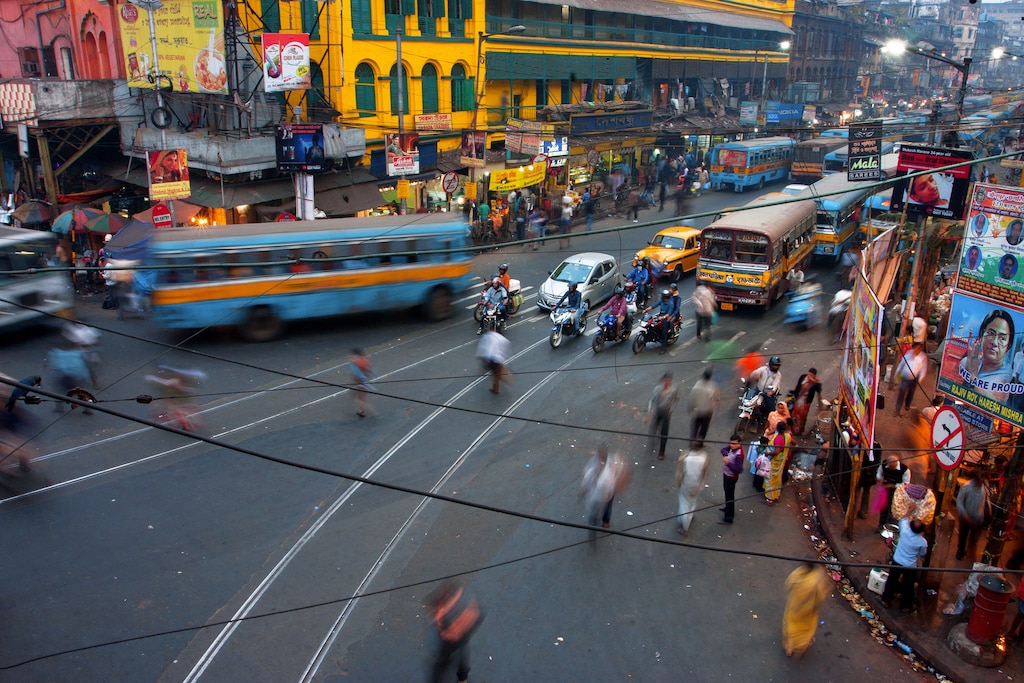
Meanwhile anecdotes about scarcity are piling up. A story about Slovakia charging foreigners more for petrol here, one about Myanmar restricting the use of a single vehicle to alternating days there. As uncertain peace talks proceed, and the IMF projects that even in a best-case scenario global growth will slip to 3.1% this year from 3.4% in 2025, it’s worth assessing four potentially lasting effects of this historic disruption.
An inflation reckoning
Most places have a target. In the euro zone, it’s 2%.
When inflation runs any higher there, central bankers are liable to start reaching for their tools. The bloc’s 2% target was breached last month amid a war-related surge in energy costs. Sure enough, expectations are mounting for interest-rate hikes.
That’s a scenario also likely to play out in other countries. Central bankers will determine how severely they can grind economies into a lower gear by tightening the money supply with higher rates – avoiding the worst effects like widespread job losses, while still managing to curb inflation.
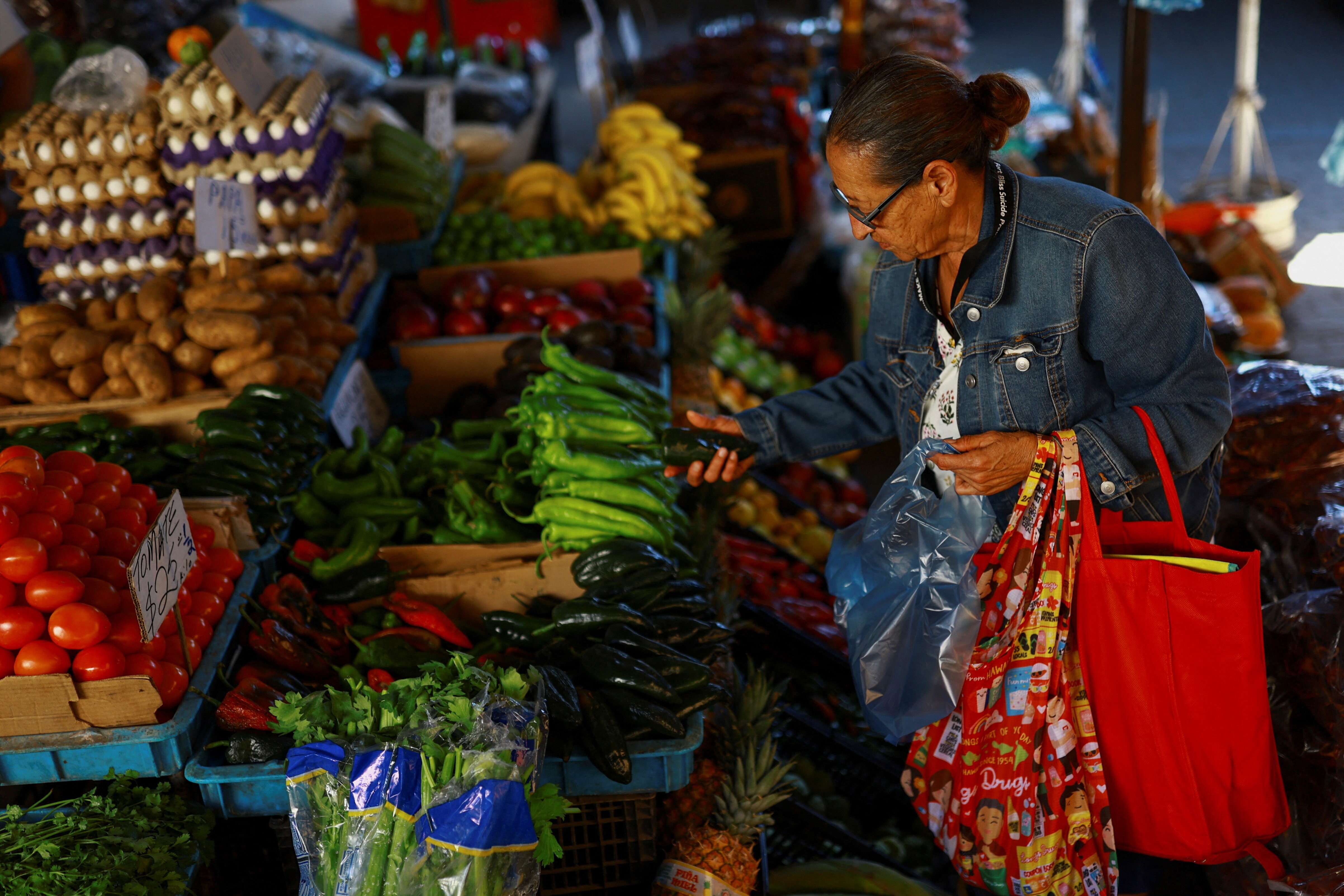
With so many people now paying interest on historic levels of household debt, higher rates could be particularly painful. And they’d be coupled, at least for a while, with whatever inflation has yet to rear its head. It’s not just energy; Americans seeking ground beef for their burgers are looking at prices that may be 18% higher this year than last.
Eventually, many of the people making policy will be aiming for the proverbial “soft landing.” That means minimal pain on the path back down to a targeted inflation rate. The good news is there’s a very recent precedent for that rare feat.
Consumer sentiment needs help
A properly humming modern economy needs people to buy all manner of stuff, and a lot of it.
But if they’re daunted by the cost of filling a car with petrol or heating their home, or even the prospects for continued employment in a down-shifting economy (see above), they’re less likely to splash out.
The University of Michigan’s benchmark US consumer-sentiment index recently registered its lowest monthly level since it began appearing more than 70 years ago. For a country that relies inordinately on big spenders, that’s a wake-up call.
Weakened consumer appetite in one economy can easily affect another. China, which (still) sells many of the things Americans buy, recently saw its exports slow due in part to hobbled demand.
And some of the same locales most directly impacted by the war, like Dubai, have traditionally been the fastest-growing markets for European luxury brands; sales in these places have recently slipped.
There are a few options available to governments that want to spur more buying, like incentives or trade-in programmes. Some are more successful than others.
One potential bright spot, at least for the climate: Americans do seem to want to buy electric cars again.
More helium, please
Much of the world’s helium is produced in just two countries. Qatar is one of them.
Qatar’s exports are also uniquely vulnerable to any hiccups in transit through the Strait of Hormuz. As a result, helium prices recently spiked and shortages have been reported.
That’s not good for the essential medical-imaging machines that require cooling helium to function, or for the semiconductor industry. Helium is an indispensable means of keeping chips cool and clean enough to be imbued with endless transistors. And the global economy has seemingly endless demand for chips – for everything from triggering an annoying sound when you don’t immediately put your seatbelt on to training AI models.
The US actually sold off the last of its national helium reserve not long ago, the culmination of a process that predated a full appreciation of the gas’s practical modern value beyond fuelling blimps. The country remains the world’s top producer.
Qatar isn’t that far behind. Though production there was recently halted at its massive Ras Laffan facility, when it was hit by missiles.
Helium is increasingly being turned out elsewhere, however. China, which still imports most of its helium, is ramping up capacity.
A questionable harvest
For farmers, it’s not just fertilizer that’s suddenly in shorter supply.
Fertilizer is of course a major concern – yet another embattled facility in Qatar, this one normally churning out the most commonly used type of nitrogen fertilizer, also had to halt operations last month.
Ships carrying finished fertilizer continue to amass in the Gulf. According to one estimate, only five of them managed to exit through the Strait of Hormuz last month.
The fuel needed to keep farms operating is also now alarmingly precious. In Australia, where the price of the diesel fuel widely favoured for farm equipment has soared, difficult choices are being made about which crops can be planted with minimal resources.
Farmers in the south of England faced with soaring costs have turned to bread from food banks and brewers’ waste to feed their animals, and a Canadian potato farmer recently called this “the most uncertain crop” since he’s been in the business.
“The clock is ticking for global food systems,” the UN has warned.
Food prices have not yet surged, it noted, but it may only be a matter of time. Countries have a tendency to restrict exports in situations like this, but the UN urged them to avoid that – and to focus on diversifying their sources of energy.