Opinion
Freedom of expression declined in 44 countries last year. How do we protect the media?
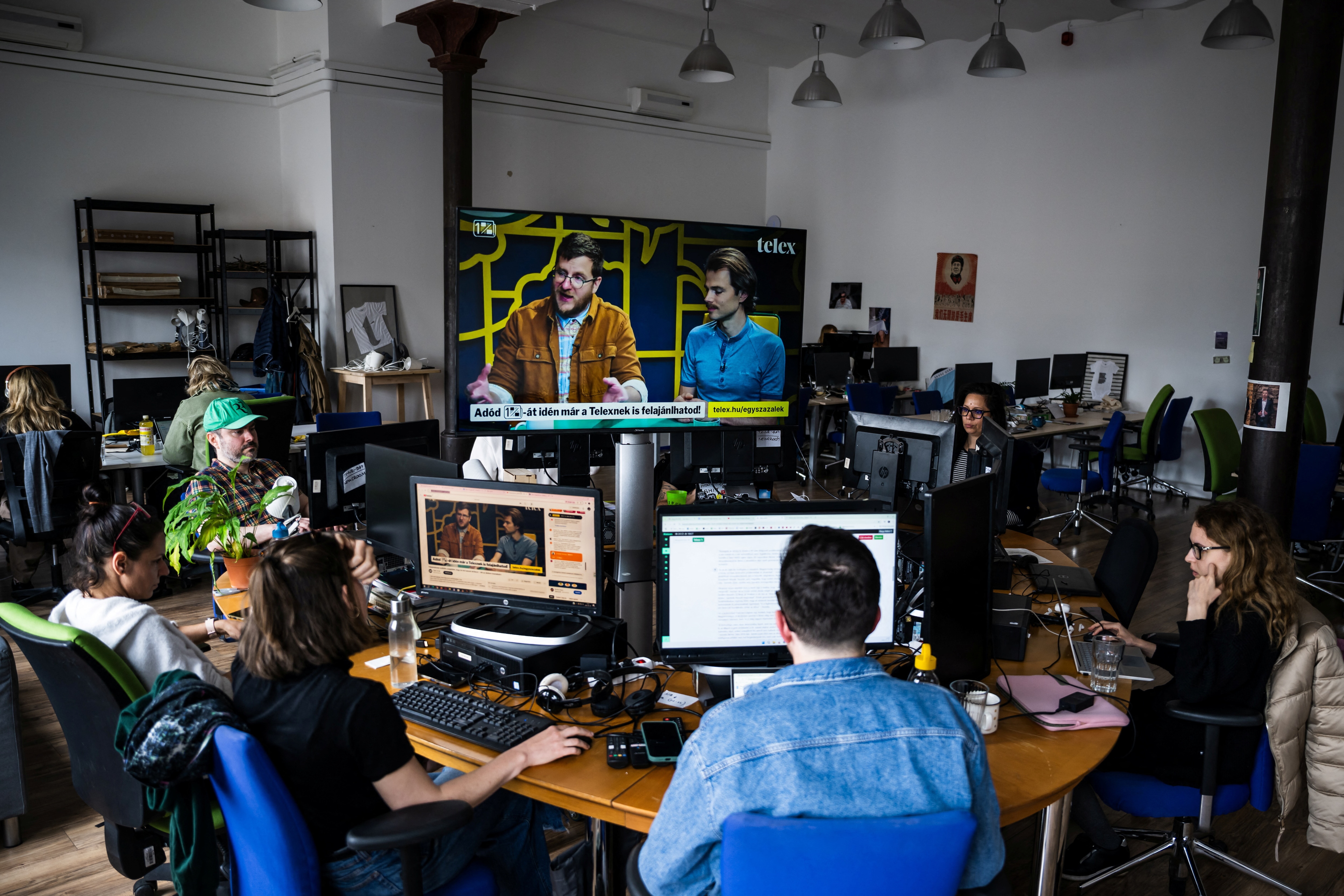
Research points to a troubling decline in global democracy and an urgent need to protect media independence. Image: REUTERS/Marton Monus
- New research reveals a decline in freedom of expression amid an increasingly autocratic-looking global landscape.
- In many places media organizations are subject to growing political pressure and journalists face personal harassment.
- A pluralistic and robust media landscape is needed in order to defend democracy and reduce vulnerability to demagoguery.
We are living in a challenging time, with the state of the world’s democracies deteriorating. In my 40 years as a journalist, I have never been as concerned as I am today. We need a broad debate in defence of democracy and the media freedom that is necessary for democracy to function.
The condition of global democracy has not been this poor in nearly 50 years. Across country after country, authoritarian leaders are gaining ground. Democracy is being pushed back, and freedom of expression can no longer be taken for granted in many places. The erosion often begins with restrictions on media freedom.
A few weeks ago, the V-Dem Institute at the University of Gothenburg presented its annual report mapping the state of democracy worldwide. It has not looked this bad since 1978. In just one year, freedom of expression has declined in 44 countries. There are 92 autocracies worldwide, and 87 democracies. Strikingly, 74% of the world’s population live in autocracies and only 7% live in liberal democracies.
Researchers in Gothenburg and their colleagues around the world are clear: The clock is being turned back at an alarming pace – including in Europe. Seven European Union countries are undergoing autocratization. The findings should spark outrage far beyond the usual circles. Yet there have been no major headlines, no sustained public debate. Gradually, we are witnessing the normalization of changes that would once have been unthinkable.
I have worked as a journalist in Sweden for four decades and spent much of that time within the European Broadcasting Union (EBU). Never before have I felt such deep concern. I regularly meet colleagues from across Europe and hear their accounts: Politicians seeking to interfere in editorial work, publicly mocking journalists, threatening to withdraw funding unless coverage aligns with their preferred narrative. I hear of new regulations designed to make it easier to remove media executives who refuse to fall in line. The list goes on.
Attacks on the media are a central component of the infrastructure of autocratization – both in Europe and globally. They often come early, as countries begin to drift away from liberal democracy. Media freedom is curtailed through direct attacks, through the use of political platforms, or by exerting influence over regulatory bodies. Developments in the United States deserve particular attention. Attacks on journalists and media institutions there stand out as deeply troubling. Commercial media face threats of heavy fines and revoked licences. Public service media are stripped of funding. Journalists are ridiculed and harassed.
According to V-Dem, the US has lost its status as a liberal democracy for the first time in more than half a century. The report concludes: “The speed with which American democracy is currently dismantled is unprecedented in modern history.”
After decades in journalism, I have never been more convinced of the importance of independent and free media. A pluralistic and robust media landscape – where strong public service media coexist with thriving commercial outlets – reduces vulnerability to demagoguery. It strengthens accountability and makes it easier to hold those in power to account.
The moment we, as citizens, stop sharing a common understanding of reality, meaningful public conversation becomes increasingly difficult. With parallel realities, truth becomes relative. It matters whether we believe it was Vladimir Putin or Volodymyr Zelenskyy who started the war in Ukraine, to take one example. By attacking independent media and tightening control over the flow of information, politicians seeking power can more easily shape – and dominate – the narrative.
We must also recognize that we are living in an era where producing false information has never been easier. State actors deliberately spread disinformation, often on social media, to sow division, undermine trust in institutions, and weaken societal resilience. Here, too, the presence of independent media with broad reach and strong credibility is essential. Without trusted sources that citizens rely on, society becomes more vulnerable in times of crisis. The war in Ukraine – and the extensive resources Russia devotes to distorting facts, spreading falsehoods and eroding resistance – offers a stark illustration.
History is clear: Democracy is never guaranteed. The V-Dem report clearly shows the figures reflecting global developments. Ignoring the trend would be a grave mistake.
To me, one of the most vital safeguards of democracy is the presence of free and independent media. We all share a responsibility to protect and defend those who are increasingly under attack. This is a struggle that must be fought every single day.
Don't miss any update on this topic
Create a free account and access your personalized content collection with our latest publications and analyses.
License and Republishing
World Economic Forum articles may be republished in accordance with the Creative Commons Attribution-NonCommercial-NoDerivatives 4.0 International Public License, and in accordance with our Terms of Use.
The views expressed in this article are those of the author alone and not the World Economic Forum.
Stay up to date:
Human Rights
Related topics:


Forum Stories newsletter
Bringing you weekly curated insights and analysis on the global issues that matter.
More on Global RisksSee all

Lucas Gobatti
September 4, 2026


