There is an 80% likelihood of an El Niño weather event in the coming months, with forecasts suggesting it will be at least moderate, if not stronger.
El Niño’s peak strength may be uncertain, but the direction of risk is not and the consequences of the climate pattern will likely be felt across the world.
Governments, companies and aid agencies alike must prepare for what could prove to be a major systemic shock in order to mitigate any potential impact.
El Niño is often treated merely as a weather story, but in 2026, that risks complacency. The latest outlook should be seen as an early warning to governments, companies and aid agencies to prepare for what could be a major systemic shock, as fallout can be mitigated if action is taken.
The World Meteorological Organization (WMO) predicts an 80% likelihood of an El Niño event between June and August 2026. And while uncertainty remains over the peak strength and timing of the natural climate pattern that tends to raise global temperatures and drive extreme weather, most forecast models suggest it will be at least moderate – and possibly stronger.
The WMO forecast comes as the US National Oceanic and Atmospheric Administration’s (NOAA) Climate Prediction Center estimates a more than 80% probability that El Niño will start between May and July 2026, and a 96% probability it will persist into early 2027.
El Niño’s peak strength may be uncertain, but the direction of risk is not. And its consequences will be far-reaching.
What is El Niño?
El Niño – “little boy” in Spanish – is the warming phase of a naturally occurring climate pattern called the El Niño-Southern Oscillation (ENSO).
The weather phenomenon, which reoccurs every few years, involves the abnormal warming of sea-surface temperatures in the central and eastern tropical Pacific, leading to warmer-than-average weather. El Niño impacts the equatorial eastern Pacific most strongly, but it also raises temperatures around the globe.
Should the 2026-27 event develop as forecast, it could strike a hotter planet already facing brittle food systems, fragile public finances, stressed energy markets and growing geopolitical instability. It will also likely test the resilience of institutions already operating close to their limits.
The 1877–78 El Niño was among the strongest ever on record, triggering simultaneous droughts across Asia, Africa and Latin America and contributing to the Global Famine of 1876-78, in which an estimated 50 million people died. This highlights how climate shocks can turn lethal when combined with hunger, weak governance and institutional neglect.
Ecological and human impacts of El Niño
El Niño’s initial risks are meteorological, as it shifts rainfall and temperature patterns across continents, raising the likelihood of drought in some regions and floods in others. Farmers, fishers and small-scale producers often absorb the first blow.
The impact varies according to geography. Southeast Asia and Australia often turn drier, while parts of East Africa and South America tend to face elevated flood risk. However, regional anomalies rarely stay regional for long in an interconnected global economy.
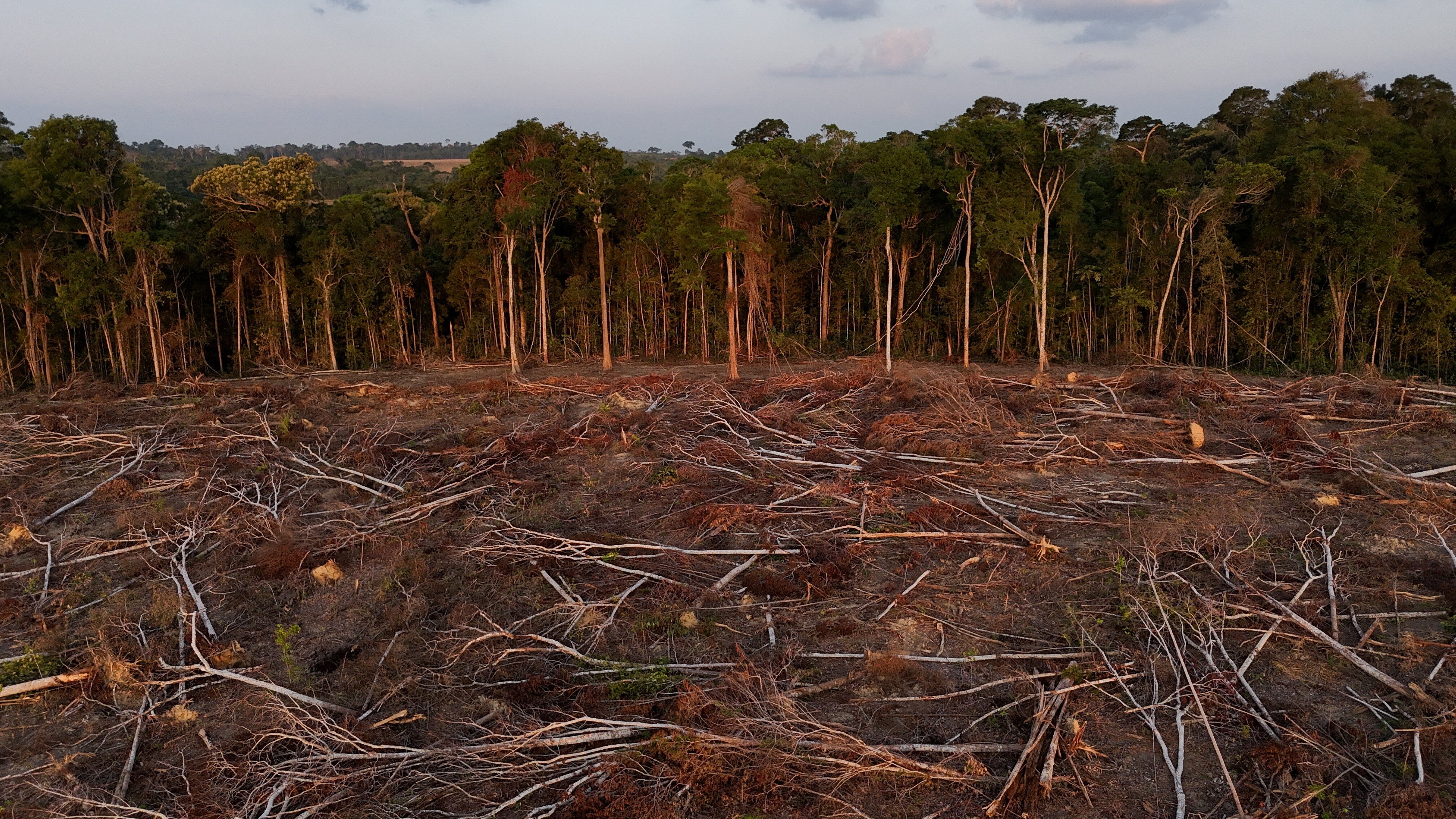
El Niño’s subsequent ecological impacts are well documented. Warmer ocean temperatures can intensify coral bleaching and disrupt fisheries, while floods destroy habitats and spread pollutants. Meanwhile, drought and heat can increase wildfire risk, damage forests and reduce river flows.
El Niño should be seen as much of a public-health threat as a climate hazard.
These losses affect livelihoods as well as biodiversity, with fisheries, tourism, agriculture and water systems all depending on functioning ecosystems. When nature degrades, economic resilience weakens with it.
The health implications are just as serious. The World Health Organization (WHO) warns that ENSO events are associated with heat stress, wildfire-smoke exposure, vector-borne diseases, drought-related health impacts and nutrition shocks – with the precise effects depending on intensity, season and local vulnerability.
In already hot regions, El Niño can push temperatures beyond safe thresholds for outdoor workers, older people, children and those with chronic illnesses. Heat also degrades sleep, productivity and learning, and strains health systems at the same moment they may be facing infectious disease outbreaks, smoke inhalation or malnutrition.
In this light, El Niño should be seen as much of a public-health threat as a climate hazard.
El Niño’s impact on food, fuel and supply chains
El Niño threatens to further disrupt commodity markets that are already showing the impact of economic risks, and the world must be prepared for a climate shock layered on to a cost-of-living shock.
Rice is an important bellwether because it is both a traded commodity and a daily necessity for billions of people. Even modest disruptions can raise prices, widen import bills and force low-income households to cut back on essentials.
Asian farmers have already reduced rice planting amid soaring energy and fertilizer costs due to the Iran War, and El Niño threatens supplies of the world’s most consumed staple.

Global supply chains also face disruption from El Niño as drought lowers river levels and impedes inland transport; floods damage roads, ports, warehouses and processing plants; and heat reduces labour productivity across sectors. Agriculture is especially exposed because input costs are rising just as climate risks intensify.
El Niño thus poses a systemic shock, threatening yields just as a prolonged crisis around the Strait of Hormuz raises farm costs, tightens food supplies and pushes up household bills.
It poses a technology risk too. Climate shocks can disrupt power grids, water systems, semiconductor production, logistics corridors and data centre operations on which chip manufacturing and data centres rely, threatening the wider AI economy that is increasingly integral to global systems.
How scarcity can turn political
History shows that food and water insecurity can quickly become social and political risks because when staple prices rise, it is poorer households that feel the effects immediately.
Such shortages often prompt governments to respond with export controls, subsidies, rationing or emergency imports and while these measures may be necessary, they can also distort markets and shift scarcity elsewhere. Food insecurity can also aggravate grievances and trigger protests, deepen rural distress and increase migration pressures.
UN agencies have already warned that Latin America and the Caribbean face increased food-insecurity risks from El Niño, including the possibility that drought in Central America’s Dry Corridor across El Salvador, Guatemala, Honduras and Nicaragua will push more families into vulnerability.
El Niño is forecast to arrive amid compounding geopolitical and geoeconomic pressures, including elevated global conflict levels, war-related fuel and fertilizer shortages and critical mineral restrictions. Climate shocks also threaten to deepen humanitarian need while reducing the capacity of states and relief agencies to respond, especially as aid budgets contract.
Investing in mitigation, adaptation and resilience
Crises no longer arrive neatly or sequentially – they overlap, compound and amplify one another. At the same time, political systems are expected to absorb all of this at once, often with diminishing slack.
The World Economic Forum’s Global Risks Report 2026 describes a turbulent risk landscape in which decision-makers must balance current crises against longer-term priorities. Meanwhile, the International AI Safety Report 2026 outlines the accelerating capabilities and risks of general-purpose AI systems. These warnings both highlight how severity of individual shocks matters, but so does the erosion of buffers between them.
The time to invest in resilience is now. El Niño belongs in enterprise risk management and national security assessments and boards should test their exposure to flood, heat, drought, water stress, input scarcity and energy insecurity.
El Niño belongs in enterprise risk management and national security assessments.
Governments need the same discipline. Food reserves, water systems, heat-health plans, electricity demand, social protection and emergency logistics should be stress-tested before the shock arrives.
Investors should scrutinize firms dependent on climate-sensitive commodities, fragile transport corridors, high-temperature workforces, water-intensive production or energy-hungry digital infrastructure.
Humanitarian agencies must move early, too. The Food and Agriculture Organization's anticipatory response to El Niño in 2023 and 2024 reached 1.7 million people across 24 countries with preventative support before hazards fully materialized.
Reducing exposure before climate shocks arrive
The near-term task is to cut exposure before shocks cascade. The Philippines, for example, has updated its national El Niño action plan across agriculture, energy, education, health and security. It is also integrating anticipatory action into disaster-risk management and social protection systems, including pre-arranged cash transfers before severe storms.
In Southern Africa, similar planning has combined cash transfers, drought-tolerant seeds and last-mile early-warning messages, while in Latin America and the Caribbean, international organizations are working with governments to strengthen early action, preparedness and food-security resilience.
Cities also need to move and many are. Singapore has invested in heat-mapping, urban greening and planning tools to manage the urban heat-island effect, while in Medellín, Colombia, green corridors show how nature-based infrastructure can lower temperatures while improving air quality and public space. Vegetation, reflective materials, and cooler urban design are practical ways for cities to reduce heat exposure.
Longer term, resilience requires adaptation at scale. Countries such as Malawi are building climate-smart agriculture into national development and agricultural policy, while Zambia’s 2024 El Niño drought exposed the need for crop diversification, stronger food reserves, resilient energy systems and better water management.
The Food and Agriculture Organization and the World Bank highlight how climate-smart agriculture can link food security, rural livelihoods and climate resilience, especially when paired with social protection that reaches smallholder farmers, informal workers and rural households.
Companies need to treat adaptation as strategy, not philanthropy. That means mapping supplier exposure, reducing water dependence, diversifying sourcing, securing backup logistics, stress-testing energy demand and pricing climate volatility into operations.
El Niño is a foreseeable systemic shock and societies must prepare for it. While its exact strength may be uncertain, its pathways are known. In a world already marked by conflict, technological competition and fragile markets, waiting for impacts of El Niño to materialize would be a failure of governance. The warning is clear and we must act now.