Asia-Pacific faces a defining decade as it accelerates decarbonization
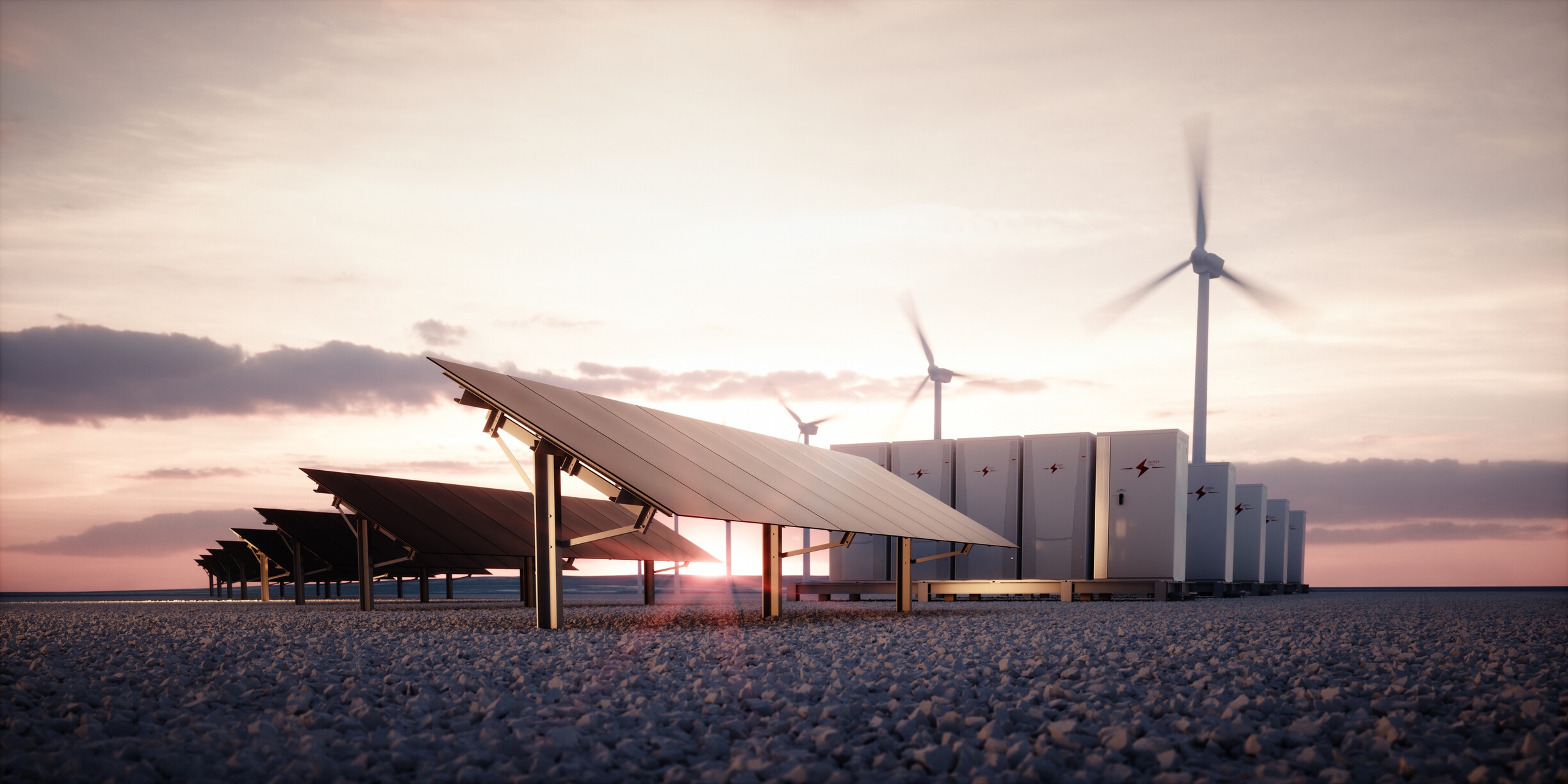
Batteries will play a key role in decarbonization, which could help to expand the APAC economy by nearly $50 trillion by 2070, according to Deloitte. Image: Getty Images/Petmal
- Solar and wind power have shifted the economics of energy production and now Asia Pacific (APAC) faces the 'next wave' of decarbonization.
- Achieving net-zero ambitions could expand the APAC economy by nearly $50 trillion by 2070, according to research from Deloitte.
- This next wave of decarbonization must focus on four critical pillars: future fuels, critical minerals, batteries and industrial transformation.
The urgency of the global climate transition has never been greater, and nowhere are the stakes higher than in the Asia-Pacific (APAC) region. While solar and wind power have already shifted the economics of energy production, becoming the lowest-cost sources of electricity, the hardest part of the net-zero journey – the "next wave of decarbonization" – is now upon the region.
Achieving net-zero ambitions could expand the APAC economy by nearly $50 trillion by 2070, unlocking a 7.5% increase in GDP, according to Deloitte’s Accelerating Net-Zero: Critical Opportunities in Asia Pacific’s Climate Policy report. This gain, equivalent to $47 trillion in net present value, surpasses the combined economies of Australia, India and Japan today. Conversely, a failure to act swiftly could result in APAC’s GDP shrinking by 5.5% ($3.4 trillion annually) by 2050, potentially leading to losses of $96 trillion in net present value by 2070.
Current momentum is insufficient, however. APAC accounts for 60% of global carbon emissions, according to the UN, and these emissions continue to rise. To meet net-zero commitments, Deloitte’s research shows that APAC must accelerate its efforts, requiring an astounding $79-89 trillion in investment by 2050. This necessitates tripling annual investment in low-carbon technologies from the 2023 record of $840 billion to around $2.3 trillion per year by 2030.
Accelerating decarbonization in APAC
The next wave of decarbonization must focus on four critical pillars: future fuels, critical minerals, batteries and industrial transformation. These areas present complex structural challenges and increasing interdependence for technology and resources. Shared standards and regional integration will be crucial for success.
Pillar 1: Powering hard-to-abate sectors with future fuels
Decarbonizing sectors where electrification is limited, such as aviation and industrial heating, depends on future fuels including clean hydrogen, synthetic fuels (ammonia, methanol) and biofuels.
APAC’s hydrogen demand is projected to reach 236 million tonnes by 2050, with the market valued at $632 billion annually. However, future fuels often cost three to ten times more than fossil fuels, and clean hydrogen accounts for less than 1% of global production, according to the International Energy Agency. Developing APAC’s hydrogen value chain alone will require $130 billion annually over the next 25 years.
Policy interventions must address cost barriers through clear national roadmaps, targeted research and development funding, tax incentives, concessional finance and market-making mechanisms like long-term offtake agreements. Infrastructure coordination is also critical, with regional hubs aligning research and development, production and demand.
Pillar 2: Securing supply chains with critical minerals
Critical minerals such as lithium, nickel, cobalt and rare earths are foundational for clean technologies. Lithium demand may rise nearly ninefold by 2050 and nickel by 226%, according to IEA figures. APAC’s EV fleet could reach 671 million vehicles by then.
But supply chains are fragile and highly concentrated, with China dominating most categories. This poses risks, including price volatility and geopolitical tension. Meeting net-zero mineral demand requires $360-450 billion in cumulative investment by 2050, with a likely shortfall of at least $140 billion.
Policy responses include forging stable trade partnerships that move beyond commodity transactions, shortening mine development cycles (which currently take about 15 years) and incentivizing recycling to meet up to 20% of mineral demand by 2030. Resource-rich countries like Indonesia and Malaysia are also restricting raw exports to develop domestic refining, aligning economic growth with clean energy goals.
Pillar 3: Charging the electrification engine with batteries
Batteries are central to grid stability and EV adoption. The global battery market could grow from $120 billion to $330-500 billion by 2030, driven primarily by EV sales, which are projected to reach 40% of new car sales globally. In China, EVs already comprise 48% of new sales, and APAC is expected to host 2.2 TW of storage capacity by 2040, according to Bloomberg NEF.
China controls around 83% of global battery manufacturing, but other APAC economies are building capacity through strategic partnerships and investments, such as Indonesia’s end-to-end battery value chain.
Policy support must address adoption barriers like range anxiety, as well as expanding charging infrastructure and offering incentives such as tax rebates and public fleet procurement. Grid regulation must be modernized for large-scale battery integration, as seen in Australia’s Capacity Investment Scheme. Ongoing research and development, alternative chemistries and technology niches (such as Australia’s leadership in vanadium flow batteries) are also crucial.
Pillar 4: Decarbonizing industry – the engine of growth
Industry is APAC’s economic backbone, with the region accounting for 74% of global steel, 77% of cement and 65% of chemical output. But industrial emissions comprise nearly 40% of the region’s total. Decarbonizing these sectors is challenging due to their reliance on energy-intensive, high-temperature processes. There are few scalable low-carbon alternatives and asset retrofits or replacements are costly.
Globally, decarbonizing heavy industry will require $54 billion in additional annual capital expenditure, plus $140 billion per year for supporting infrastructure.
Policy must focus on affordability and market creation by establishing clear industry roadmaps, aligning industrial and power policy, and supporting transition technologies from pilot to commercial scale. Market stimulation through clear definitions, procurement policies and long-term agreements is essential – as is scaling carbon capture, utilization and storage (CCUS) to address residual emissions.
Investment, pricing and regional cooperation
The underlying imperative across all four pillars is closing the massive investment gap and lowering the cost premium for clean solutions. Without government intervention, the transition will stall.
Carbon pricing is the most economically efficient decarbonization tool, but only seven APAC countries currently use it. Expanding carbon pricing is fundamental for industrial decarbonization, potentially generating up to $4 trillion in public revenues for reinvestment and helping APAC industries maintain market access amid tightening global standards, such as the EU’s Carbon Border Adjustment Mechanism.
To unlock the required $2.3 trillion in annual investment by 2030, robust policy-making is vital to reduce investor risk. This should include:
- Targeted policy frameworks: Clear, stable regulatory frameworks that signal a long-term commitment to industry and reduce risk for investors. Independent agencies, such as the Australian Renewable Energy Agency (ARENA), should be empowered to drive sector strategies, manage market mechanisms and accelerate execution.
- Public finance tools: Concessional debt, risk-sharing and grants, among other tools, can lower capital costs for high-risk, early-stage projects. Partnerships like the Just Energy Transition Partnerships in Indonesia and Viet Nam are already blending public and private funding to accelerate coal phase-out.
- Regional cooperation: To align standards, co-invest in trade infrastructure and shift trade from raw commodities to processed materials. This will foster resilience and shared prosperity.
A necessary, but complex shift
This next wave of the energy transition – across future fuels, critical minerals, batteries and industry – is going to be more difficult and disruptive than the first renewables wave. Policy-makers should anticipate volatility and political challenges as the true costs of transformation emerge. But the price of inaction is far greater.
APAC possesses the technology, capital, resources and human talent to lead a zero-carbon transformation. Success will depend on pragmatic, bold policy that accelerates innovation, mobilises private investment and prioritises regional integration.
By committing to clear policy, driving demand signals, managing price gaps and balancing national interests with regional collaboration, APAC can secure a prosperous, net-zero future and set the global trajectory for climate action.
Don't miss any update on this topic
Create a free account and access your personalized content collection with our latest publications and analyses.
License and Republishing
World Economic Forum articles may be republished in accordance with the Creative Commons Attribution-NonCommercial-NoDerivatives 4.0 International Public License, and in accordance with our Terms of Use.
The views expressed in this article are those of the author alone and not the World Economic Forum.
Stay up to date:
The Net Zero Transition
Related topics:


Forum Stories newsletter
Bringing you weekly curated insights and analysis on the global issues that matter.
More on Climate Action and Waste Reduction See all

Pim Valdre and Joy Shumake-Guillemot
September 17, 2026