4 ways heat action plans can protect women in South Asia
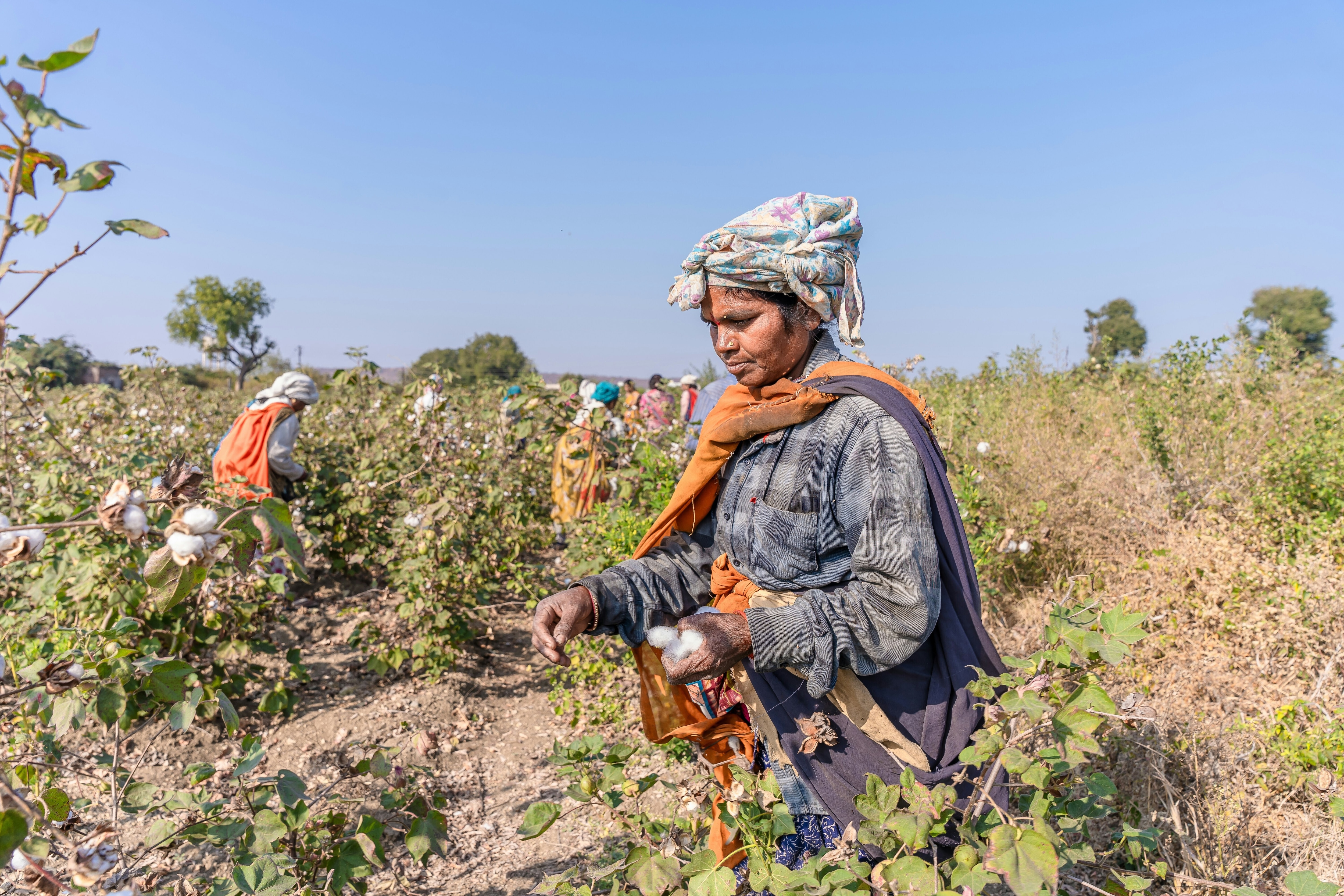
Heat action plans often define risk largely through temperature and geography, overlooking the social conditions that shape vulnerability. Image: Unsplash/EqualStock
- World Bank estimates show that 89% of South Asia’s population could be exposed to extreme heat risks by 2030.
- Heat action plans can help, but heat risk is shaped by inequalities that affect who can avoid exposure and who cannot.
- There are four steps to developing more equitable heat action plans that can protect women, who are often more exposed to heat risk in South Asia.
Extreme heat is exposing the limits of how climate risk has been understood and managed in South Asia.
In India and Pakistan, pre-monsoon temperatures regularly exceed 50°C, while parts of the region are approaching dangerous “wet-bulb” conditions. This is when heat and humidity can exceed the body’s ability to cool itself. Scientists identify a 35°C wet-bulb temperature as a critical threshold for human survivability and research suggests parts of the Indus and Ganges river basins could approach this limit later this century.
By 2030, nearly 1.8 billion people or 89% of South Asia’s population, are projected to be exposed to extreme heat risks, according to the World Bank. Governments are scaling up heat action plans as a cornerstone of adaptation.
But, as these plans expand, who – and what forms of vulnerability – are they designed to protect?
How does gender affect heat risk in South Asia?
Policy approaches still treat heat as a universal hazard, but as a risk, it is shaped by unequal social and economic conditions. Across South Asia, women are disproportionately concentrated in informal and climate-exposed work, carry unequal unpaid care burdens and face limited access to cooling and public services. These inequalities shape who can avoid exposure and who cannot.
For example, over 80% of women in non-agricultural jobs in South Asia are in informal employment, often without social protection or heat safeguards. Women also spend up to nine times more time on unpaid care work than men. And emerging evidence links rising temperatures to increased risks of preterm birth, highlighting heat’s gendered impacts.
Heat action plans often define risk largely through temperature and geography, overlooking the social conditions that shape vulnerability. This is not only a question of equity, but of whether adaptation can reach those most at risk.
There are four steps governments can take to make heat action plans more effective and better able to reach those most at risk:
1. Ensure early warnings reach women
Early warning systems are central to heat action plans because they enable those most at risk to prepare for extreme heat. World Bank analysis suggests that, when households receive early warnings, nearly 90% take preemptive action – so the challenge is often not whether warnings work, but who receives them. The effectiveness of early warning systems depends on whether these warnings reach those most at risk.
Heat alerts are often disseminated through digital platforms or formal workplaces, excluding many women in informal or home-based work. Women in South Asia are also 41% less likely than men to use mobile internet, limiting access to real-time alerts.
Ahmedabad, India’s Heat Action Plan was developed after a 2010 heatwave. It combines forecasting with outreach through health workers and neighbourhood networks, with colour-coded heat alerts and cooling centres in accessible public spaces such as temples and mosques. These measures help make warnings more actionable, particularly for vulnerable populations outside formal systems. Evaluations suggest the plan has helped reduce heat-related mortality.
A gender-responsive approach should build on such models by investing in trusted local networks and ensuring warnings are communicated in accessible forms, particularly for populations with limited literacy or digital access. Without this, even accurate forecasts may fail to reach those most at risk.
2. Invest in cooling spaces women can access
Access to cooling is increasingly central to heat adaptation, but who can benefit from it remains deeply unequal. Across South Asian cities, public cooling spaces are often constrained by safety concerns, social norms and other barriers that limit women’s access.
For many low-income households, staying indoors offers little relief. Poorly ventilated housing, unreliable electricity and uneven access to cooling technologies can deepen exposure, particularly for women whose unpaid care responsibilities keep them in and around the home.
Some interventions point to more inclusive pathways. In India, cool roof programmes in Ahmedabad and Hyderabad have reduced indoor temperatures by 2–5°C in low-income housing, helping make homes safer during peak heat. In Bangladesh, decentralized solar home systems deployed across millions of off-grid households can expand access to cooling where unreliable electricity intensifies women’s heat burdens.
Expanding cooling without addressing safety, proximity and affordability risks reproducing existing inequalities.
3. Protect women from heat-related income loss
For millions of workers across South Asia, extreme heat is not only a health risk, it’s a direct threat to income. Many women in informal and outdoor work cannot stop working during peak heat without losing daily wages, forcing a trade-off between health and survival.
Protecting workers means linking heat adaptation with labour and social protection. In India, initiatives supported by the Self-Employed Women’s Association have piloted parametric heat insurance for informal women workers, providing income support when temperatures exceed hazardous thresholds. Related climate risk insurance pilots are also being tested in Bangladesh.
Emerging work on occupational heat stress in Sri Lanka similarly points to the need to integrate worker protections into adaptation planning. This includes providing regulated work-rest cycles, hydration and shaded cooling places for exposed workers.
4. Include women in heat governance
Strengthening heat action plans is not only a question of better design, but of who shapes these strategies. Across South Asia, heat adaptation often remains technocratic and top-down, overlooking how risks are experienced in everyday life, particularly by women in low-income settlements and informal communities.
In Nepal, Local Adaptation Plans of Action have shown how decentralizing planning through village and district-level committees, and linking local priorities to adaptation finance, can give women and marginalized groups greater influence over resource allocation. In some cases, this has enabled communities to push for locally defined adaptation investments that respond directly to heat and care needs, including shaded communal spaces.
In Sri Lanka, gender-sensitive heat stress assessments and hotspot mapping in Colombo has created urban and occupational adaptation measures for those facing the highest exposure.
Effective governance also requires accountability – tracking who is reached by early warning systems, who can access cooling infrastructure and whose livelihoods are protected during extreme heat.
As South Asia confronts intensifying heat, the question is whose risks heat action plans are designed to address. In a hotter future, adaptation will be judged not by how widely it is adopted, but by whom it protects.
Don't miss any update on this topic
Create a free account and access your personalized content collection with our latest publications and analyses.
License and Republishing
World Economic Forum articles may be republished in accordance with the Creative Commons Attribution-NonCommercial-NoDerivatives 4.0 International Public License, and in accordance with our Terms of Use.
The views expressed in this article are those of the author alone and not the World Economic Forum.
Stay up to date:
Climate and Health
Related topics:


Forum Stories newsletter
Bringing you weekly curated insights and analysis on the global issues that matter.
More on Climate Action and Waste Reduction See all

Madeleine North
September 10, 2026


