Why the Iran war should change how we think about fertilizer
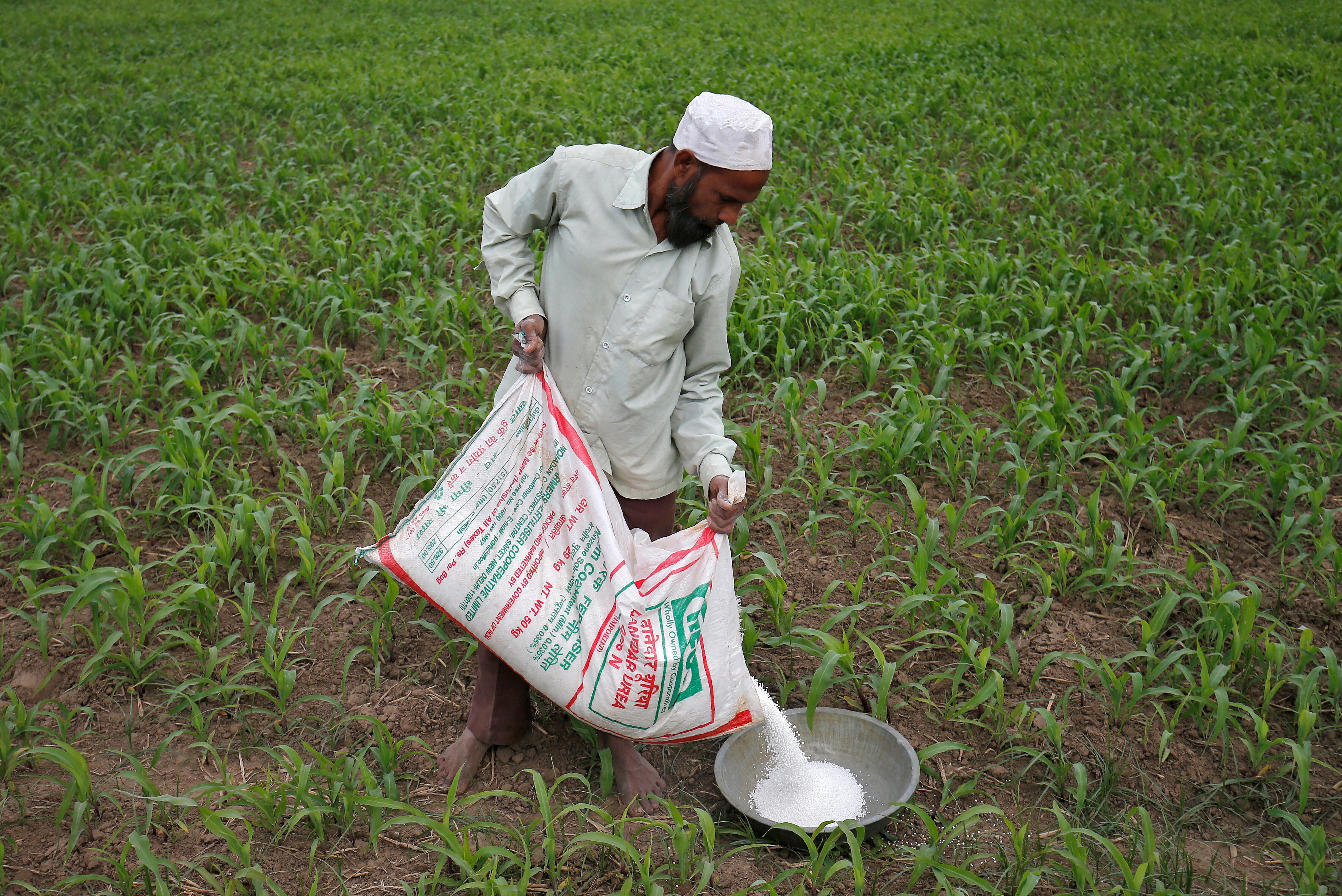
How do we stem fertilizer dependence? Image: REUTERS/Amit Dave
- The war in Iran has exposed a major vulnerability in global food production: half the world's crops depend on nitrogen fertilizer from natural gas and a third of fertilizer trade passes through a single chokepoint.
- Restoring fertilizer supply is not enough – the world must reduce how much it requires in the first place.
- Biochar can reduce synthetic fertilizer requirements by 20-40% but we need far more field trials to understand where it works and how to scale it.
When the war in Iran shut down the Strait of Hormuz in late February, the world's attention went to oil prices. However, equally consequential is how the crisis impacted the global fertilizer market, which will inevitably affect food prices, planting decisions and hunger for the rest of 2026 and beyond.
Roughly half of global food production depends on nitrogen fertilizer, the only nutrient that crops require every growing season. The supply chain behind it begins with natural gas. The Haber-Bosch process extracts hydrogen from methane and combines it with nitrogen from the air to produce ammonia, the foundation of urea and most other nitrogen fertilizers.
A third of its global trade passes through the Strait of Hormuz, cut off overnight when it closed, sending urea prices surging from around $490 to over $700 per tonne.
Major exporters, including China and Russia, then restricted exports to protect their domestic supply, further tightening the market. Fertilizer plants across South Asia, which depend on imported Gulf natural gas as their feedstock, also began shutting down.
The timing couldn't be worse, with the Northern Hemisphere's current spring planting season underway. The Food and Agriculture Organization of the United Nations has called this “a systemic shock affecting food systems globally,” and the UN World Food Programme estimates that sustained high energy prices could push an additional 45 million people into acute hunger.
We need to reduce the amount of synthetic fertilizer the world needs in the first place.
”Focus on fertilizer demand, not just supply
We need to be talking about this crisis differently. Instinctively, focus goes to restoring supply: reopen the Strait of Hormuz, find alternative shipping routes, expand domestic fertilizer capacity. However, the deeper problem is that we built a global agricultural system in which every energy shock is automatically a food shock.
Farmers in Iowa are paying more for fertilizer. Farmers in Maharashtra and São Paulo, who depend more heavily on imports from the Gulf, may not be able to get them at all.
The International Food Policy Research Institute’s (IFPRI) recent analysis confirms that new production capacity will remain concentrated in regions with cheap natural gas, meaning that adding more supply does not mitigate the risk of concentration. We need to reduce the amount of synthetic fertilizer the world needs in the first place.
Green ammonia, which uses renewable electricity to extract hydrogen from water instead of natural gas, is often cited as the long-term fix. It deserves investment but IRENA estimates it currently costs up to six times more than conventional ammonia and would require a 20-fold increase in global electrolyzer capacity to reach meaningful scale.
The demand side is where we can act now.
How biochar can reduce fertilizer dependence
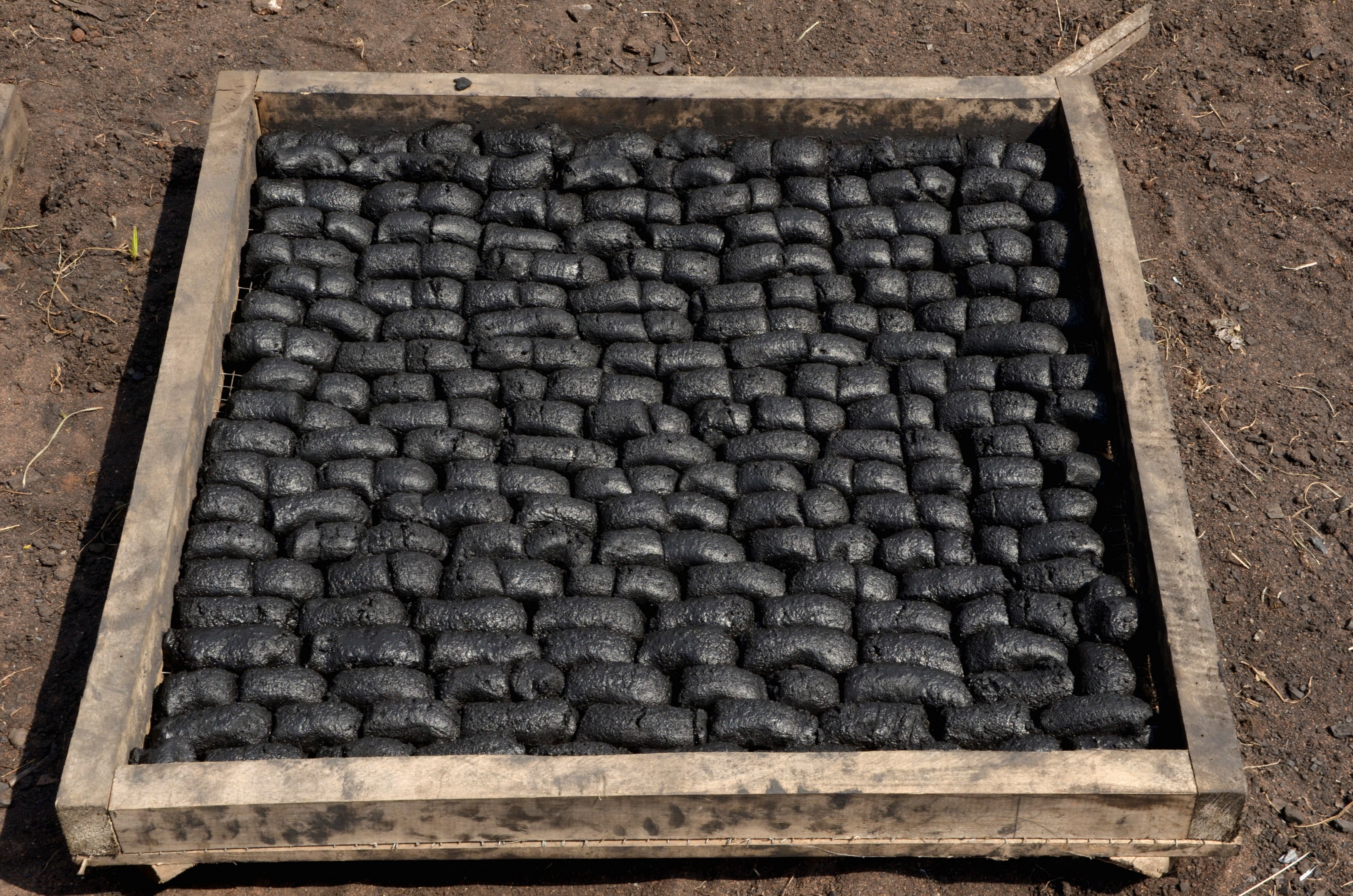
Biochar, a carbon-rich material produced by heating agricultural waste in the absence of oxygen, works on the other end of the fertilizer problem. When applied to soil, it improves nutrient retention so that less nitrogen leaches away and more reaches the plant.
A study published in Nature found a 20-40% reduction in synthetic fertilizer requirements for wheat and a PNAS study found that these benefits are sustained and even enhanced with repeated annual applications over periods of four to 12 years.
A 10-year field study published in Frontiers in Sustainable Food Systems earlier this year demonstrated persistent improvements in soil carbon and acidity following a single biochar application in dryland wheat systems.
At Supercritical, a carbon-removal company, we vet biochar projects for their capacity to sequester carbon. We typically consider soil benefits, including reduced fertilizer requirements, as positive but secondary to the carbon story.
This crisis has inverted that logic. If biochar can meaningfully reduce fertilizer dependence, that becomes a food security argument, not just a climate one and it amplifies the case for investing in biochar at scale.
Farmers facing already-thin margins may be wary of change but continued dependence on the current system is proving to be a riskier bet.
”How biochar works
Biochar offers a resilience advantage that other alternatives lack. It is produced locally from agricultural residues that would otherwise be burned or discarded, turning waste into a valuable soil amendment.
It uses existing pyrolysis technology with no new mega infrastructure or imported feedstocks required. That circularity makes it far less vulnerable to the kind of global supply chain shocks we are experiencing now.
Biochar isn't a complete solution, however and it's not a drop-in replacement. A review in Agronomy shows that results vary significantly across crops, soil types and regions and there is no consensus yet on exactly where biochar delivers these benefits most reliably.
That’s partly because research investment has been so limited. We need more field trials across a wider range of crops and geographies to understand where and how biochar can most effectively reduce fertilizer dependence.
Biochar is also not the only demand-side tool available. Precision agriculture can reduce overapplication by matching fertilizer rates to what the crop and soil actually require. Microbial fertilizers show promise, though cost and logistical constraints currently limit adoption.
Regenerative farming practices can rebuild soil fertility over time. Farmers facing already-thin margins may be wary of change but continued dependence on the current system is proving to be a riskier bet.
Where the money needs to go
The FAO now recommends investing in “sustainable, input-efficient agriculture” and treating food systems as strategic infrastructure. IFPRI lists organic fertilizers, slow-release products and microbial alternatives among the demand-side solutions that deserve urgent attention.
The Union of Concerned Scientists argues that farmers need practical off-ramps from fertilizer dependence.
Nobody is proposing that the world abandon synthetic nitrogen overnight but we can no longer assume that cheap synthetic nitrogen will always be available. Public investment in reducing fertilizer dependence remains a fraction of what flows toward expanding conventional production. The balance needs to shift.
The carbon removal market is already channelling significant private capital into biochar production through companies such as Microsoft, Google and JPMorgan Chase, building the supply chains and evidence base that the agricultural sector will need. That is a foundation to build on.
Governments, development institutions and the private sector should treat fertilizer dependence reduction with the same urgency they are bringing to restoring fertilizer supply. What we are missing is the will to fund these approaches at the scale that food security actually requires.
Don't miss any update on this topic
Create a free account and access your personalized content collection with our latest publications and analyses.
License and Republishing
World Economic Forum articles may be republished in accordance with the Creative Commons Attribution-NonCommercial-NoDerivatives 4.0 International Public License, and in accordance with our Terms of Use.
The views expressed in this article are those of the author alone and not the World Economic Forum.
Stay up to date:
The Net Zero Transition
Related topics:


Forum Stories newsletter
Bringing you weekly curated insights and analysis on the global issues that matter.
More on Food, Water and Clean AirSee all

François Bonnici, Maria Inés Martin and Adam Gavin
September 29, 2026


