Similar to the 2008 financial crash, short-term profiteering in marine resources without paying sufficient attention to the underlying assets is inviting disaster.
With blue assets degrading on multiple fronts, current environmental reporting standards do not reflect the scale of the crisis.
Transitioning to a sustainable blue economy is essential for ensuring the health of natural ecosystems on which an estimated $24 trillion depends.
In the lead-up to the 2008 financial crisis, millions of Americans were signing adjustable-rate mortgages with teaser rates – low introductory payments that disguised catastrophic asset-level risk. Lenders called it innovation. The market called it growth.
A handful of dissenting analysts who read the underlying data called it a time bomb. They were right.
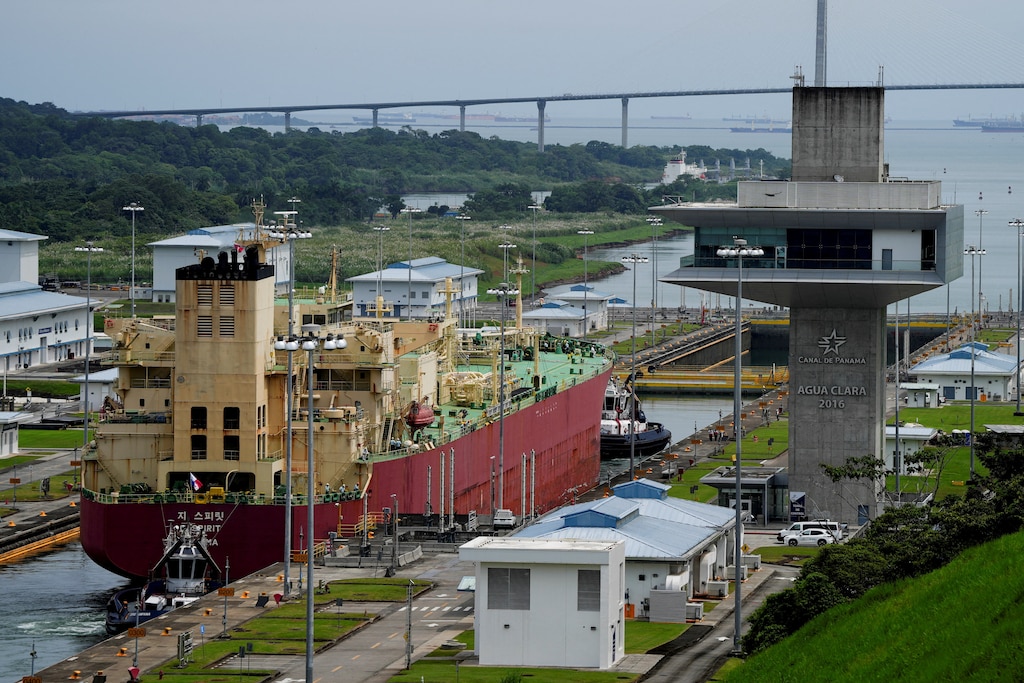
Now, the global ocean economy is running the same play. For decades, the seafood industry, maritime shipping and coastal developers have extracted and depleted marine and coastal resources faster than they can regenerate. The interest rate has always seemed free, while the underlying assets – fisheries, coral reefs, mangroves – have quietly deteriorated. Almost no one in finance has noticed, or asked.
Subprime blue investments
Before 2008, subprime mortgages became an investable asset class because investors ignored the risks for a quick return. A similar dynamic today gives us “subprime blue investments”: ocean-dependent businesses whose valuations depend on healthy ocean ecosystems, but account for none of the ecological risk they’re accumulating. The Michelin-starred restaurant whose premium menu depends on fisheries with depleted stocks. Or the hotel chain whose scuba excursions assume perpetual coral cover, yet whose operations reduce it. These and other investments are mispriced and deteriorating, yet continue to masquerade as sound.
Today’s capital markets are quietly dismantling the foundation they’re built on, and the numbers confirm it. In 2023, $7.3 trillion flowed into nature-negative activities, while just $220 billion supported nature-based solutions. Effectively, for every dollar spent protecting nature, $30 is spent undermining it. Because more than half of global GDP depends on nature and its services, this is economic suicide.
The underlying security: a (not so) healthy ocean
Every mortgage-backed security has underlying assets: the actual homes. When homeowners stopped making payments in 2008, cascading defaults followed. The ocean is also an underlying security, and an extraordinarily valuable one. The World Wildlife Fund (WWF) estimates its total asset value at over $24 trillion, encompassing fisheries and aquaculture, tourism, coastal and oceanic shipping, carbon sequestration, and biotechnology.
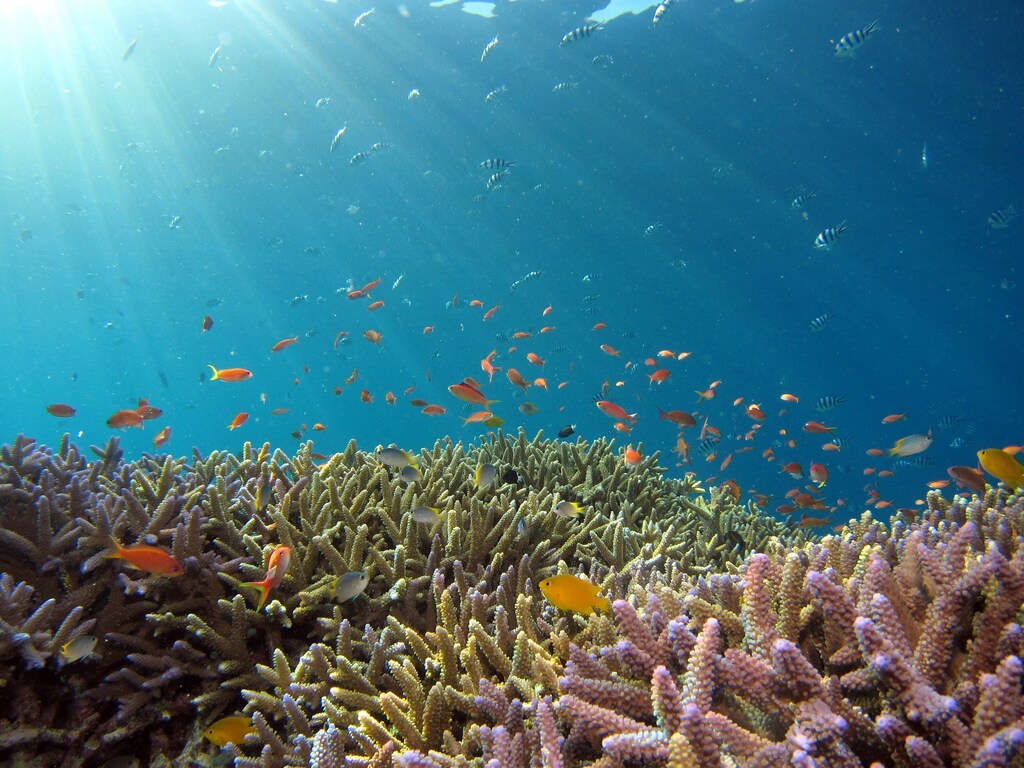
Those payments are already near a tipping point. Since 1970, the average size of monitored marine wildlife populations has declined by 56%, according to the 2024 Living Planet Report. Ocean acidification is accelerating. Coral bleaching events that once occurred once per decade now strike many reefs annually. Half of mangroves are at risk of collapse by 2050. These are not abstract environmental metrics. They are unrecorded credit events on our collective balance sheet – and unlike 2008, there is no Federal Reserve for the biosphere.
The ratings agencies are falling short again
In the lead-up to 2008, ratings agencies assigned AAA ratings to securities that were fundamentally unsound, ignoring the data in the loan files. Today’s environmental, social and governance (ESG) ratings – the non-financial metrics used to gauge a company’s sustainability – are doing something remarkably similar. Companies whose revenues run directly through depleted marine ecosystems often carry satisfactory ESG scores simply for acknowledging that risks might exist – even without a credible plan to address them. Our accounting systems treat the ocean as though it is not a depreciating asset. It is. We are simply not writing it down.
Newer reporting standards – like the Taskforce on Nature-related Financial Disclosures (TNFD), designed to help companies map their environmental impacts and dependencies – are vital steps forward. But they are still nascent and, as currently utilized, remain largely voluntary exercises in self-reporting; the corporate equivalent of a bank flagging its own subprime exposure.
Three actions to calm the waters
In The Big Short, Michael Lewis’s account of 2008, the real tragedy wasn’t that the risk was unknowable. It was that the data was available, hidden in plain sight in the loan tapes and delinquency rates, and almost no one in the mainstream took the time to read it. Marine scientists are in the same position today. Their assessments of fish stock declines and record ocean heat are the “loan tapes”, yet the market continues to price the seafood, coastal hospitality and marine infrastructure sectors as though the ocean is fine.
None of this is an argument against the ocean economy. It is an argument for building a fundamentally different one. The sustainable blue economy – one that restores, protects, and maintains productive marine ecosystems – is not a speculative niche. It includes well-managed aquaculture that enhances rather than depletes coastal systems, resilient ports driving the renewable transition, marine-protected areas that allow fisheries to recover while generating durable tourism revenue, and blue carbon markets that fund community-based ecosystem restoration. These are institutional-grade investments that offer the financially savvy the opportunity to grow alongside, rather than at the expense of, the collateral that underwrites everything else.
Shifting capital from extractive to regenerative models at scale requires three things: reformed accounting that treats ocean degradation as the material financial risk it is; redirected capital flows from nature-negative to nature-positive activities; and regulatory frameworks that close the gap between what the science shows and what the market prices. None of this is technically complicated. It is politically and institutionally inconvenient – precisely what was said about mortgage reform in 2006.
No bailout for the biosphere
When the financial system lurched towards collapse in September 2008, the response was ultimately mechanical: print money, recapitalize banks, guarantee deposits. The tools were crude, but the basic interventions worked. The system survived.
No equivalent option exists for the ocean. You cannot print tuna. You cannot refinance a collapsed fishery. You cannot bail out a coral reef. When the underlying asset fails, the losses will be borne first and most acutely by coastal communities, subsistence fishers and small island nations – but eventually by anyone who depends on a climate system regulated in part by a healthy ocean. Which is to say, everyone.
How the Forum helps leaders align climate action with nature-positive growth
The Centre for Nature and Climate helps leaders make sense of the interconnections between climate, nature and economic development. It provides a platform to explore pathways that support resilience and prosperity within planetary boundaries.
By enabling cooperation across sectors and regions, the Centre supports partners in translating shared understanding into practical climate and nature solutions.
We have built a global economy as though the natural systems beneath it are permanent – infinitely resilient, endlessly forgiving, always available for one more draw. They are not. The economy is a subset of the environment, not the other way around.
The short on marine health is already in. The question is whether the reform comes before the margin calls, or after.