What Africa’s social innovators can teach the world about the power of intentionality
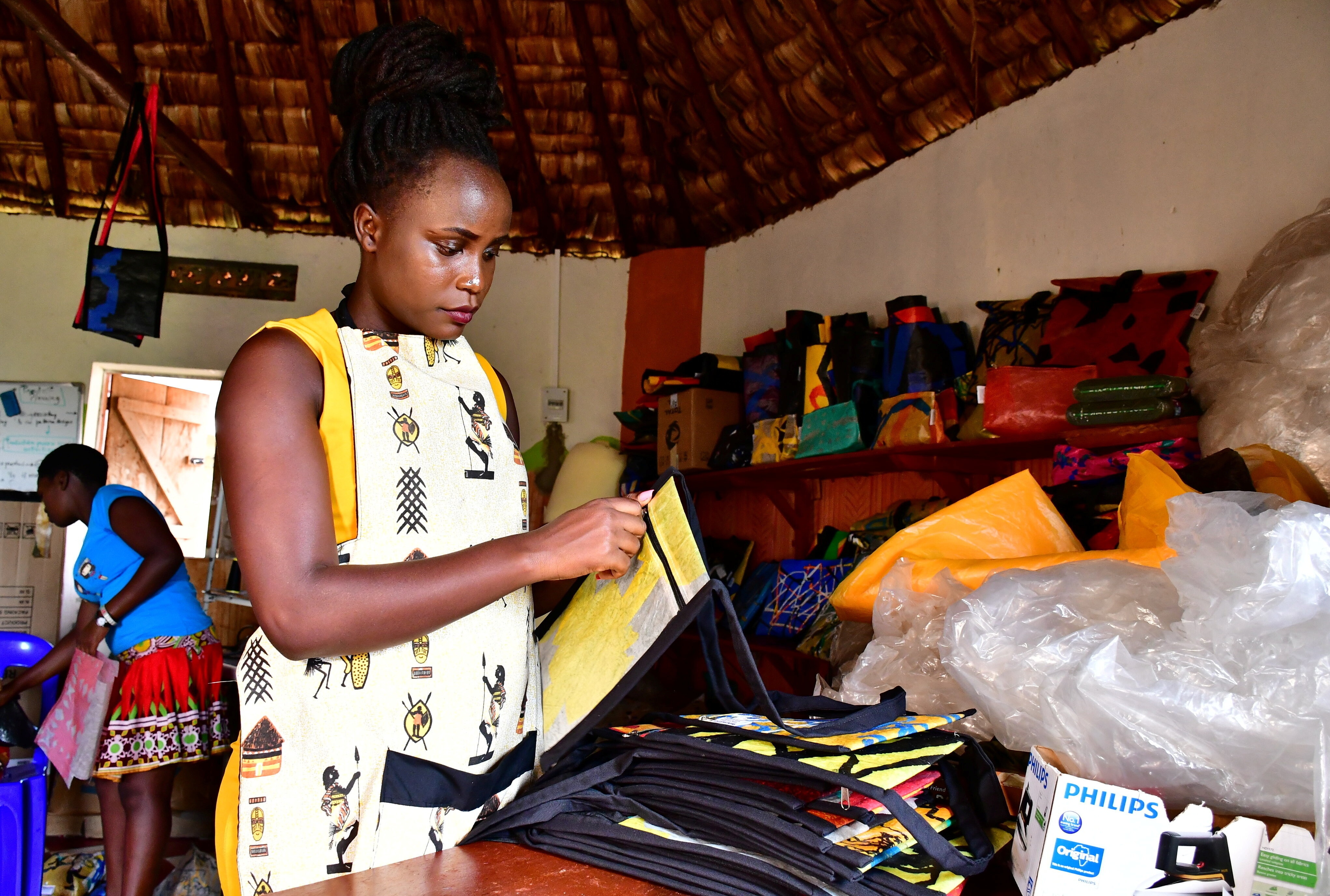
Intentionality and social entrepreneurship go hand in hand in Africa – and the world can learn from it. Image: REUTERS/Abubaker Lubowa
Shameen Prashantham
Professor, International Business and Strategy; Associate Dean (Africa), China Europe International Business School (CEIBS)- In parts of Africa, entrepreneurship navigates electricity shortages, limited finance and fragile infrastructure constraints.
- Two solar lighting case studies show how purpose, partnering and place function as core design factors.
- Intentionality spans each of these design approaches to focus efforts and speed momentum, all the while stitching together manufacturing strength, financial innovation and local market insight.
In Africa, entrepreneurship is a social enterprise. At first glance, this might sound like an overstatement. Entrepreneurship is typically understood only in commercial terms – identifying opportunities, building firms, and generating returns. Social entrepreneurship, by contrast, is often treated as a distinct category: mission-driven ventures that pursue impact alongside profit.
But in much of Africa, this distinction dissolves in multifaceted ways.
A case study of two companies, Azuri Technologies and Shenzhen Power Solution shows why this is the case – and they remind any team of the importance of intentional thinking and seeing constraints as a way to boost creative thinking and maximize limited budgets.
Azuri Technologies has connected hundreds of thousands of households to off-grid solar systems through a pay-as-you-go model. Shenzhen Power Solution (SPS) has provided affordable solar lighting and educational tools to millions, starting with a $5 lamp designed to replace kerosene. Both are commercial ventures. Both are scaling. And yet, both are unmistakably social – not because they claim to be, but because of the conditions in which they operate.
Their opportunities are not abstract market gaps. They are rooted in real-world, social constraints: lack of reliable electricity, limited access to finance and fragile infrastructure. And their success depends not only on what they build, but on how and where they build it.
The factors shaping African social entrepreneurs
Entrepreneurship in these contexts is social in three distinct but interconnected ways:
Purpose: It is shaped by pressing societal needs.
Partnering: It depends on collaboration across diverse actors.
Place: It draws on capabilities distributed across geographies.
Across all three, a common logic emerges: intentionality. Not just in products, but in how ventures are designed, organized and scaled.
Purpose: When social need becomes a design constraint
In many developed markets, purpose is often treated as an overlay – a mission statement layered onto a business model. In contrast, for ventures like Azuri Technologies and Shenzhen Power Solution, purpose is the starting point. It is not optional, but imposed by context.
Households without electricity are not simply underserved customers; they face daily constraints that shape how any solution must be designed. Income is irregular. Upfront payments are difficult. Products must be durable enough to withstand harsh conditions. In such environments, social need does not dilute commercial logic; rather, it sharpens it.
Azuri’s pay-as-you-go model is a case in point. Customers pay small amounts over time, eventually owning their solar systems. This is not a clever add-on; it is the only viable way to align with how customers earn and spend. Similarly, SPS’s ultra-low-cost solar lamps are engineered to meet a precise price point while maintaining functionality and durability. Every feature is scrutinized. Every cost matters.
This is where intentionality comes into focus. Research has long proven that limited resources -- from time, to staff, to money -- forces innovation and creative problem solving. In this case, social need becomes a binding condition that shapes what is built, how it is built, and for whom. Purpose becomes a design discipline.
Partnering: When collaboration becomes constitutive
If purpose defines what needs to be solved, partnering determines how solutions are delivered. Here, too, conventional assumptions fall short. In many business contexts, collaboration is a strategic choice entailing one option among many. But in environments characterized by institutional gaps, this choice disappears.
For ventures like Azuri Technologies and Shenzhen Power Solution, without networks of partners, the business cannot function. Azuri’s model depends on a complex ecosystem: distributors who reach last-mile customers, financiers who enable asset ownership, mobile money platforms that facilitate payments and service providers who maintain systems. The importance of partnerships led them to partner with Unilever. Shenzhen Power Solution, entering African markets from China, similarly relies on local distributors, community relationships, and global partners – including firms like TotalEnergies – to scale its reach.
These are not homogeneous networks. They are “heterophilous” coalitions, bringing together actors with different sizes, capabilities and institutional logics. This entails “dancing with gorillas” – smaller actors partnering with larger, more powerful ones. Managing such diversity is not easy, but it is essential.
This is where a second dimension of intentionality emerges. Instead of building fully integrated firms, these ventures leverage external resources: owning less, accessing more. Entrepreneurship entails assembling a coalition as an alternative to vertically integrated organizations.
Place: Innovation across geographies
Place is often overlooked, yet it is central to understanding how ventures innovate and scale. They are shaped by – and draw capabilities from – multiple geographies.
Consider Shenzhen, China, where Shenzhen Power Systems is rooted. Shenzhen’s manufacturing ecosystem is renowned for its ability to produce high-quality hardware at extremely low cost, with remarkable speed and flexibility. This capability makes ultra-affordable solar products viable at scale.
Now take Cambridge, UK, where Azuri’s model took shape. Cambridge’s ecosystem brings strengths in business model innovation, financing structures and entrepreneurial experimentation enabling approaches like pay-as-you-go and asset-backed financing.
These capabilities are then deployed in African markets, where the need is greatest and the constraints are most acute. Innovation emerges from connecting places with complementary strengths such as manufacturing efficiency in Shenzhen, financial and business model innovation in Cambridge, and market insight in Africa.
Here again, intentionality is the unifying thread. Cost efficiency, design precision and scalability are not generated in isolation. It is a mindset that, once applied, reinforces strategic values and helps build momentum for change.
While social entrepreneurship is often treated as a distinct category of ventures that explicitly pursue impact, the experiences of Azuri Technologies and Shenzhen Power Solution suggest that in contexts of scarcity, the social is not an add-on. It is the foundation – and adopting intentionality as a design approach and strategy is the way to deliver it.
Don't miss any update on this topic
Create a free account and access your personalized content collection with our latest publications and analyses.
License and Republishing
World Economic Forum articles may be republished in accordance with the Creative Commons Attribution-NonCommercial-NoDerivatives 4.0 International Public License, and in accordance with our Terms of Use.
The views expressed in this article are those of the author alone and not the World Economic Forum.
Stay up to date:
Social Innovation
Related topics:


Forum Stories newsletter
Bringing you weekly curated insights and analysis on the global issues that matter.
More on BusinessSee all

Eleanor Ross
October 13, 2026


