Supporting more sustainable growth in the travel and tourism sector

Many travel and tourism destinations grapple with rising tensions between residents and tourists, and mounting pressure on ecosystems, among other challenges of growth. Image: Getty Images / Subbotsky
- The travel and tourism sector is growing, but faces challenges like skills shortages and global disruption, its impact on nature and ecosystems.
- To scale innovative solutions, the sector needs to embrace a broader definition of success.
- The Beyond Tourism Impact Stars initiative highlights solutions that could help the wider sector face a new era of growth.
For decades, tourism’s success has largely been measured through growth – more visitors, higher spending and greater economic contribution.
By those measures, the sector’s future appears exceptionally strong. By 2034, travel and tourism is projected to contribute $16 trillion to global GDP and support approximately 30 billion tourist visits annually. This will reinforce its role as a major engine of opportunity, employment and cultural exchange.
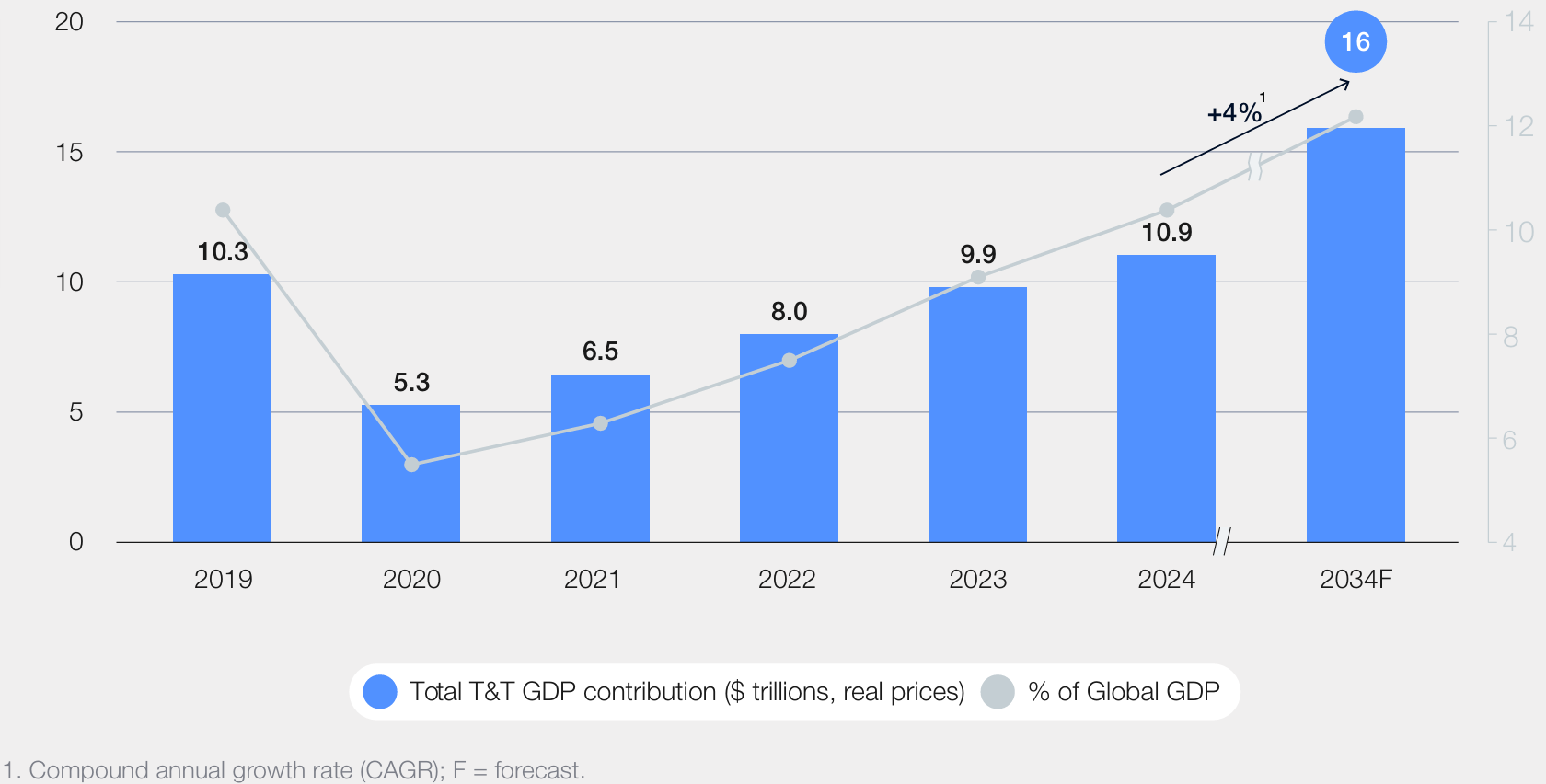
But the same forces driving tourism’s expansion are also exposing new pressures.
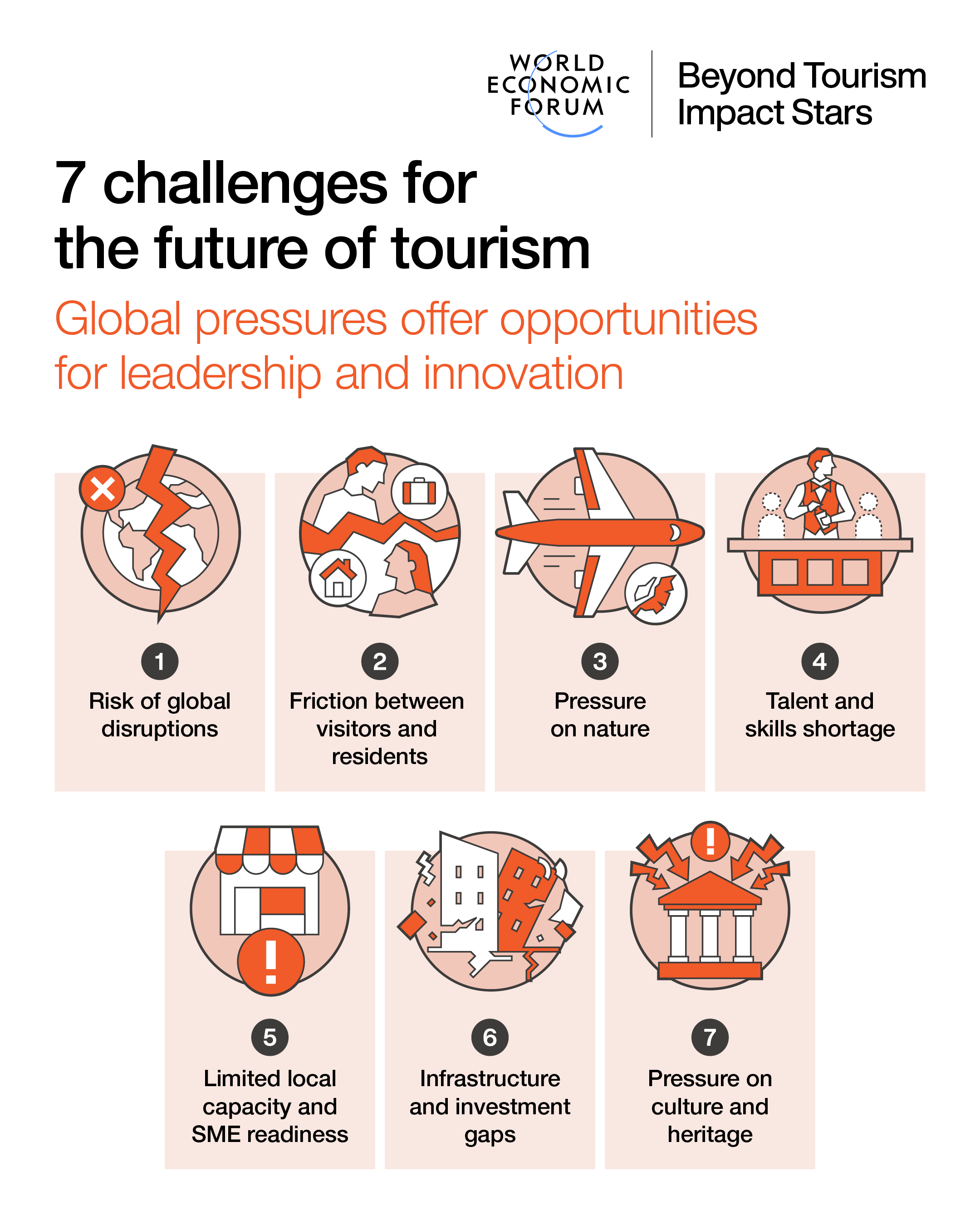
As destinations welcome growing numbers of visitors, many are grappling with rising tensions between residents and tourists, mounting pressure on ecosystems, workforce shortages, infrastructure constraints and growing vulnerability to climate, geopolitical and economic shocks.
None of this diminishes tourism’s importance. Rather, it expands how success should be understood. Alongside economic growth, more attention is being paid to how tourism contributes to community wellbeing, environmental stewardship, cultural vitality and long-term resilience.
Rather than simply being concerned with how to attract more visitors, the industry must now ensure growth creates lasting value for communities, destinations and the ecosystems on which travel and tourism depends.
Scaling travel and tourism solutions
Organizations across the travel and tourism ecosystem are already developing practical responses to these challenges.
Destinations are experimenting with approaches that spread visitor demand more evenly, support local enterprises and strengthen links between tourism and community development. Businesses are investing in workforce programmes, new partnership models and nature-positive initiatives that reduce waste, lower emissions, improve resource efficiency and protect the assets on which tourism depends.
Technology is also playing an increasingly important role. Data and digital tools are helping destinations better understand visitor flows, manage demand and make more informed decisions about infrastructure, sustainability and destination management. This enables businesses to improve operations and deliver more seamless visitor experiences.
These efforts are connected by a recognition that tourism’s most pressing challenges cannot be solved by any single organization acting alone. Effective responses increasingly depend on collaboration across businesses, governments, local communities, civil society organizations and other stakeholders whose interests are deeply interconnected.
Such initiatives can vary in scale, geography and approach. While some may address local challenges, others could transform entire destinations. Together, they point to a broader shift as the sector moves beyond identifying challenges and towards developing practical, measurable solutions.
Overcoming travel and tourism fragmentation
Successful solutions do not automatically become shared solutions, however.
Unlike some sectors where best practices can spread rapidly through common standards, travel and tourism remains highly fragmented. Businesses, destinations and communities often face similar challenges in different markets, regulatory environments and operating contexts. As a result, valuable lessons frequently remain local, even when aspects of an approach could be adapted elsewhere.
This fragmentation creates a missed opportunity. A destination that balances visitor growth with community wellbeing, or a company that develops a successful workforce or conservation model, may offer lessons well beyond its immediate market.
Sharing these approaches is not about replicating solutions exactly. Every destination and organization operates within a unique context. But greater visibility into what is working elsewhere, why it is working and how it was implemented can help accelerate learning across the sector.
Bringing solutions to a wider audience
The Beyond Tourism Impact Stars initiative has been launched against this backdrop by the World Economic Forum, the Ministry of Tourism of Saudi Arabia and Kearney, to identify private-sector initiatives that are addressing the sector’s tension points. These initiatives are already generating measurable positive impact for destinations, communities and ecosystems, while also demonstrating strong business performance.
By understanding the approaches that are helping to address some of travel and tourism’s most pressing challenges, those lessons can be shared with a wider audience.
The sector will benefit from a growing body of examples showing how tourism can create value across multiple dimensions. By highlighting what is working in practice, Beyond Tourism Impact Stars will support knowledge-sharing, encourage collaboration and help effective solutions reach a wider audience.
Building on travel and tourism innovation
It’s possible to create a more resilient, inclusive and sustainable future for travel and tourism by scaling solutions that are already delivering measurable impact. Sharing these experiences more widely will help destinations and organizations across the travel and tourism sector.
And as the sector continues to grow, its progress will depend on generating more new ideas – and on identifying, validating and scaling the approaches that deliver results.
Don't miss any update on this topic
Create a free account and access your personalized content collection with our latest publications and analyses.
License and Republishing
World Economic Forum articles may be republished in accordance with the Creative Commons Attribution-NonCommercial-NoDerivatives 4.0 International Public License, and in accordance with our Terms of Use.
The views expressed in this article are those of the author alone and not the World Economic Forum.
Stay up to date:
Sustainable Development
Related topics:


Forum Stories newsletter
Bringing you weekly curated insights and analysis on the global issues that matter.
More on Sustainable DevelopmentSee all

Cara Morton and Kiva Allgood
September 27, 2026


