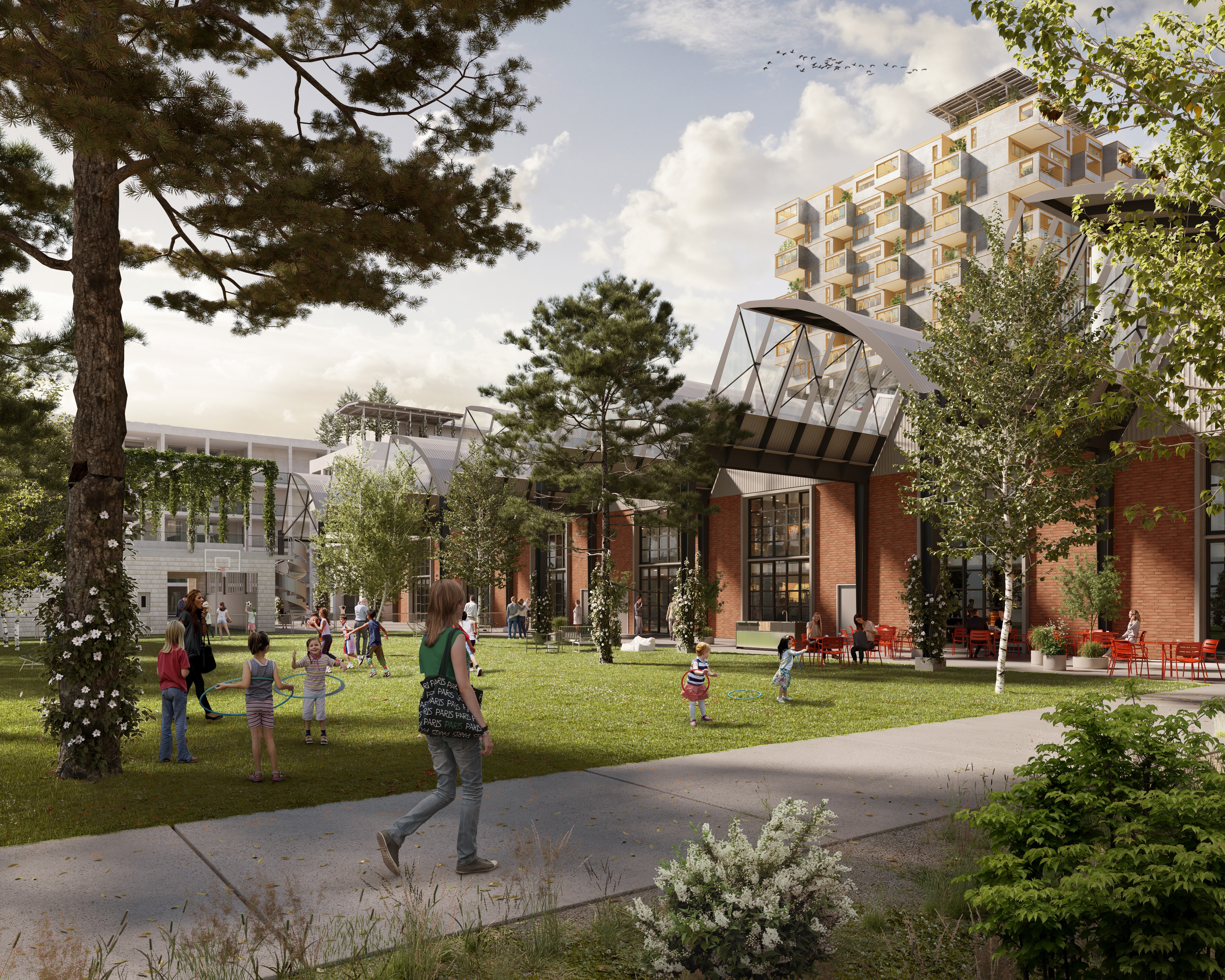
Major events like the Olympics or the FIFA World Cup can benefit host cities by driving improvements in infrastructure, public space and climate resilience.
Good urban outcomes are usually shaped through meaningful engagement with local communities, but this is often reduced to a performative exercise.
Done well, these partnerships can shape what gets built, how it is delivered and who benefits over the long term after hosting a major sporting event.
What if the real legacy of hosting a major event such as the Olympics or the FIFA World Cup is not what gets built, but how a city learns to work?
Good urban outcomes rarely happen by accident. When cities get them right, they are usually shaped through meaningful engagement with the communities and organizations closest to local needs.
Across transportation, housing, public space, climate resilience and neighbourhood revitalization, community engagement is now widely recognized as part of effective planning and implementation.
However, a significant gap remains between principle and practice. Too often, community engagement is reduced to a performative exercise – one-off consultations, late-stage feedback sessions, or procedural outreach that does little to influence decisions already in motion.
Major sporting events offer a powerful opportunity to rebalance that relationship. They concentrate political attention, investment, deadlines and public scrutiny, creating a rare chance for cities and community organizations to work differently together.
If approached intentionally, these moments can move community engagement beyond performance and into genuine partnership. Done well, these partnerships can shape what gets built, how it is delivered and who benefits over the long term.
Communities as partners in city‑making
Most cities understand the importance of community engagement for satisfying procedural requirements. Fewer embed community voices in shared prioritization, governance or delivery.
Instead, “engagement theatre” delivered after the core direction is already set creates a persistent gap between institutional ambition and lived experience. These practices betray trust, but they also demonstrate a lack of strategic insight: many cities already possess long‑standing community organizations with deep local knowledge, trusted relationships and a proven ability to deliver change on the ground.
With some groups embedded in neighbourhoods for decades, these organizations are already advancing social, economic and climate outcomes at a local scale. Too often, however, they remain peripheral to the planning and delivery of major events rather than integrated into the systems that shape their outcomes.
Treating communities as long-term partners requires a different set of questions such as when they should be involved, where authority should sit and how shared priorities can be governed over time.
Community organizations operate at a scale that enables agility and innovation. Neighbourhood‑level initiatives can pilot new policies, test partnership models and trial emerging technologies in ways that large institutions often cannot, with successful approaches replicated across cities globally.
This logic is central to Arup’s Green and Thriving Neighbourhoods (GTN) framework, which emphasizes people‑centred and neighborhood‑scale approaches as essential building blocks for healthier and more resilient cities. It also underlines how cities’ most difficult challenges cannot be addressed through top‑down planning alone.
Major events provide a practical test of this approach – can cities use moments of heightened urgency and investment not only to deliver infrastructure, but to build stronger systems of partnership that endure?
Why holding major events matters for host cities
Today’s mega-events unfold at an unprecedented scale. The Paris 2024 Games reached an estimated five billion viewers worldwide, while local communities faced pressures from surging visitor numbers, logistical complexity and public scrutiny.
Cities and their communities increasingly understand that global visibility and short-term economic uplift are no longer enough to justify the cost of hosting. There’s a growing expectation that major events should deliver lasting social, economic and environmental value for residents.
When used intentionally, host city moments can accelerate long‑planned infrastructure, unlock new governance arrangements and test more systemic ways of working. Crucially, they can also lower barriers to deeper collaboration among city agencies, sporting bodies and community organizations if those partnerships are built from the start.
The opportunity is not simply to deliver projects faster, but to strengthen the civic muscle needed to sustain progress in years beyond.
Recent mega‑events offer instructive examples of how this can play out in more productive ways.
Birmingham’s 2022 Commonwealth Games showed what is possible when community input is not just gathered but used to shape decisions from the start. Before the Games, Alexander Stadium had been a modest 7,000-seat athletics facility in a north-west Birmingham neighbourhood earmarked for regeneration.
Planning and design decisions for its redevelopment incorporated residents across multiple phases, catalysing broader investment in walking, cycling and public transport and leaving behind not just a transformed venue, but near 18,000-capacity stadium that now serves athletes and communities year-round.
The 2024 Paris Olympic and Paralympic Games demonstrated a different dimension. The city benefited from long-planned investment in a $46.7 billion rail network, improving connectivity between the city centre and previously underserved outer neighborhoods. The Olympics did not create these ambitions, but they helped accelerate delivery and brought added visibility to wider goals around housing and economic renewal.
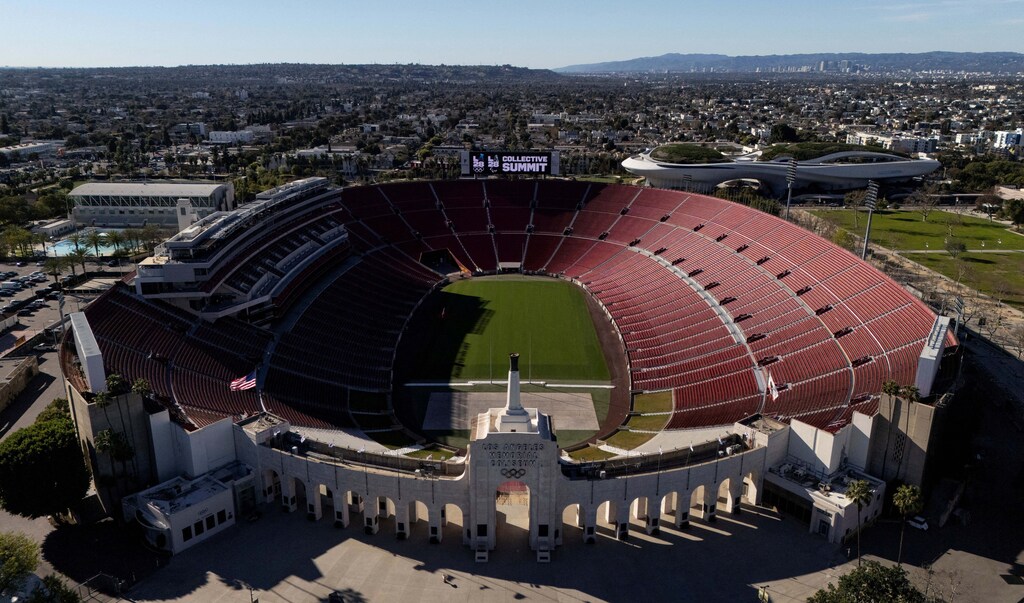
Los Angeles, in the midst of hosting a succession of major or global events, including the 2028 Olympics and Paralympics, is doing both simultaneously. Public agencies have partnered with LA28 on a transit-first Games, accelerating more than $40 billion in sustainable transportation.
Meanwhile, community-led initiatives such as the Festival Trail and long-running programs like CicLAvia show how event momentum can be turned into advocacy for potentially permanent investments in public space and local economic development. They also show how grassroots energy and institutional delivery can reinforce one another when aligned early.
Successful host cities work with the local community
For host cities and sporting bodies alike, legacy can no longer be defined solely by physical assets. While venues and infrastructure matter, the more durable legacy lies in stronger governance, deeper partnerships and repeatable ways of working across sectors and scales.
Community organizations are not simply beneficiaries of major events; they are co‑producers of their outcomes. Embedding them in planning, prioritization and governance increases the likelihood that event‑driven investments respond to local needs, deliver equitable benefits, and remain viable long after global attention moves on.
This model continues to evolve, but it points towards a more resilient approach to city‑making: one that treats major events not as interruptions, but as opportunities to test how cities can work better for everyone.
As cities around the world weigh the costs and benefits of hosting major events, the question is no longer whether communities should be involved, but how early and how seriously. The most successful host cities will be those that recognize where real capacity already exists and invite it into the heart of decision-making.
Major events offer rare moments when ambition, urgency and resources align. Used well, they can do more than deliver infrastructure. They can change how cities work, who shapes decisions and who benefits long after the closing ceremonies.