Rising financial fragmentation impacting world economy, and other finance news to know

Rising global financial fragmentation puts pressure on global economy as SpaceX launches largest IPO in history. Image: REUTERS/Brendan McDermid
- Catch up on the key stories and developments shaping the financial world.
- Top stories: Rising global financial fragmentation puts pressure on global economy; US small businesses face economic headwinds; SpaceX launches largest IPO in history.
- For more on the World Economic Forum's work in finance, visit the Centre for Financial and Monetary Systems.
1. Financial fragmention could cost world $6tn in GDP
Rising global financial fragmentation could cost the world economy over $6 trillion in lost GDP, according to a new report from the World Economic Forum and Oliver Wyman.
The report, Deepening Divides: The Cost of a More Fragmented Financial System, finds that the period 2025-2026 has been a turning point for global trade and finance, with governments raising barriers in unexpected ways, increasing risks for both businesses and countries.
The resulting fragmentation means that GDP growth is expected to reduce by between $213 billion and $307 billion, with inflation anticipated to rise by up to 0.3 percentage points.
"In a hypothetical worst-case scenario, a full economic decoupling between East and West, the negative impact to worldwide GDP could be up to $6.9 trillion," says the report.
The findings comes amid warnings from chief economists that conflict in the Middle East is causing a marked deterioration in global sentiment. Largely driven by the closure of the Strait of Hormuz, the Forum’s Chief Economists’ Outlook: May 2026 says that growth expectations have slipped as supply-chain disruption, rising energy and food prices have weakened fiscal confidence.
Economists place the relative severity of the strait closure duration above the 2025 tariff turmoil, warning a prolonged shutdown into the second half of the year could mirror the financial impact of the COVID-19 pandemic.
While a newly announced US-Iran ceasefire aims to reopen the strait, economists warn the underlying economic damage remains deeply entrenched.
2. US small businesses face mounting operational costs
In the United States, a new report from the National Federation of Independent Business (NFIB) found that small businesses are confronting a difficult economic landscape, mirroring international trend towards rising input costs and weakening sales expectations.
The NFIB Small Business Optimism Index fell 0.6 points last month, remaining below its 52-year average and signalling that domestic commerce is scaling back in direct response to the same supply chain and energy pressures hitting global markets. Meanwhile, the NFIB Uncertainty Index rose 3 points, moving significantly higher than the index's historical average.
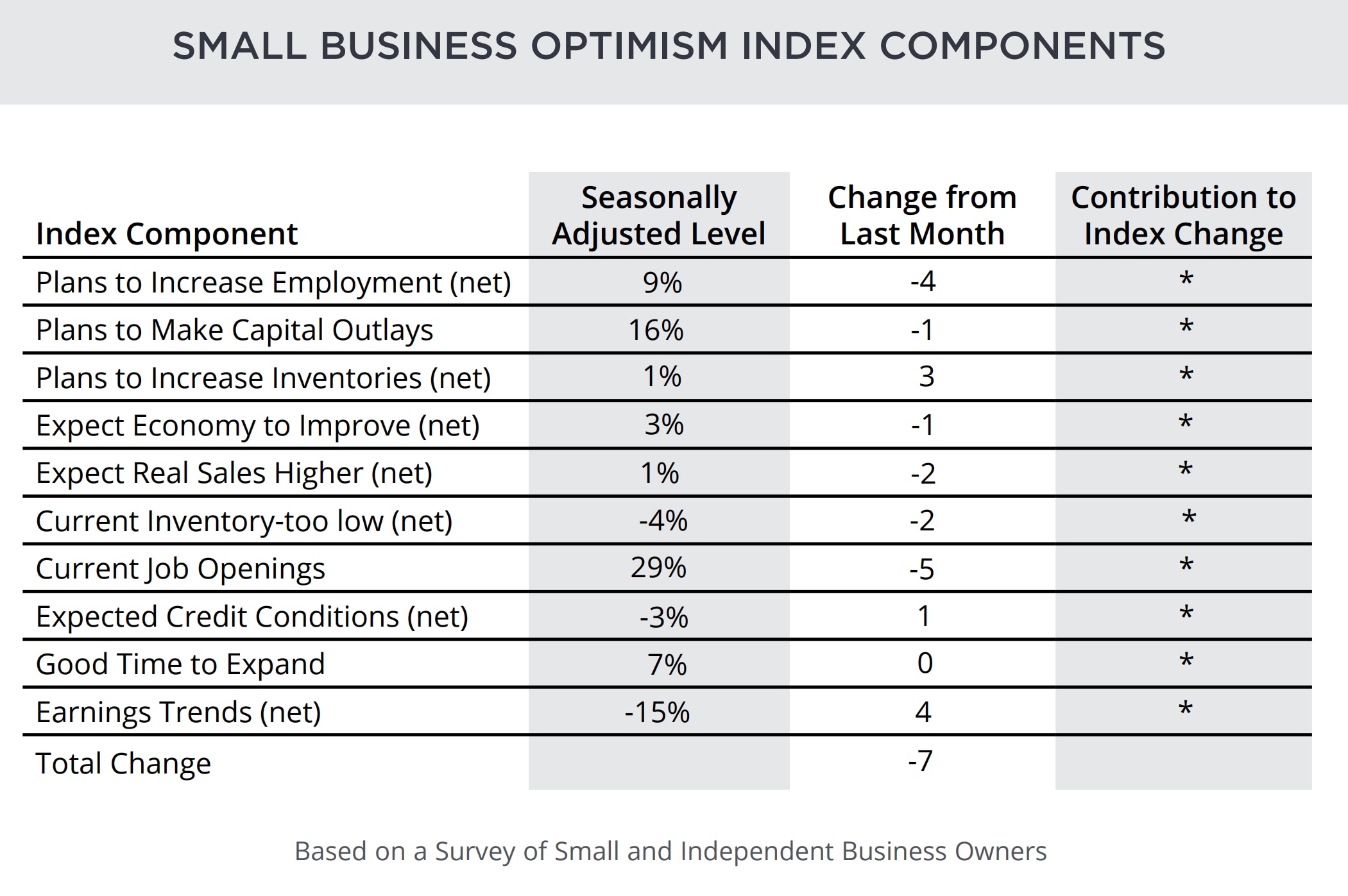
The economic headwinds have also triggered a sharp investment retrenchment. Only 16% of US small business owners plan capital outlays over the next six months – the lowest level since the financial crisis in March 2009, the NFIB says.
Moreover, unfilled job openings (29%) and future hiring plans (9%) hit their lowest levels since May 2020. A record 14% of owners cited labour costs as their top financial problem – the highest in the survey’s 52-year history – while concerns over worker quality hit a 10-year low.
To offset these payroll and fuel costs, a net 36% of owners raised average selling prices in May, and 34% plan further hikes soon. The NFIB noted these pricing trends remain too high to permit Federal Reserve interest rate cuts, adding that the central bank may consider raising its policy rate instead.

3. More finance news to know
China is preparing to launch mBridge, a digital-currency payment platform that would let countries settle cross-border transactions without relying on SWIFT or the US dollar. The project is part of Beijing’s push to expand the global use of the renminbi, though it is unlikely to challenge the dollar’s dominance in the near term.
US banking regulators are stepping up scrutiny of how lenders deploy artificial intelligence, pressing firms on data governance and vendor risks, Reuters reports. Routine bank examinations by the Federal Reserve and the OCC are now probing high-risk functions like credit underwriting, with supervisors demanding clarity on human oversight and emergency "kill switches". However, the velocity of fast-evolving frontier systems is challenging agencies' ability to keep pace, raising concerns that traditional regulatory learning and rulemaking cycles cannot keep up with the technology.
The growing use of complex debt instruments in emerging and developing economies could increase borrowing costs and slow debt restructurings, according to advisory firm Lazard in a new report. While tools such as GDP-linked bonds and total return swaps have helped countries access financing, Reuters explains, their complexity and lack of transparency can make it harder for creditors to assess risks and rank claims in the event of a default.
SpaceX has launched the largest IPO in history, raising $75 billion and pushing its market value above $2 trillion. The deal highlights strong investor demand for large-scale growth listings, according to the Financial Times.
Britain’s banks saw fraud losses rise 19% to £576.4 million ($772.8 million) last year after new reimbursement rules came into effect, according to UK Finance data. Losses from authorised push payment scams hit record levels, increasing pressure on regulators and tech platforms over their role in enabling fraud.
The FT reports that a tougher graduate jobs market is prompting more students to pursue Masters in Finance degrees, with applications up 14% last year. Universities are expanding programmes as graduates delay entry into finance roles to improve employability and gain AI-related skills amid tighter hiring conditions.
How the Forum helps leaders understand change in global financial systems
4. Read more on Forum Stories
A weakening global growth outlook and heightened stagflation risks are set to dominate the agenda as international leaders gather for the Forum’s Annual Meeting of the New Champions in Dalian, China, this month, an event also known as Summer Davos. Find out who's coming and what to expect in this article.
Major shifts in trade and investment policies by the US in January 2025 kick-started a new period of global financial fragmentation, according to this article linked to the Forum's aforementioned report. After decades of expanding free trade and sharing a global financial system, security and supply chain challenges are fostering protectionist approaches from countries, the writers say. While US industries may initially benefit, the self-reinforcing nature of restrictive policies will ultimately prove damaging to the economy.
Cross-border payments are still stuck in a fragmented system that makes international money transfers slower, costlier and more complex than they need to be, argues Mastercard’s Rasika Raina. Drawing a parallel with early aviation before global standards, she calls for a coordinated “ICAO moment” for payments – where shared rules, mutual recognition and interoperable systems could reduce friction without removing national oversight.
License and Republishing
World Economic Forum articles may be republished in accordance with the Creative Commons Attribution-NonCommercial-NoDerivatives 4.0 International Public License, and in accordance with our Terms of Use.
The views expressed in this article are those of the author alone and not the World Economic Forum.

Forum Stories newsletter
Bringing you weekly curated insights and analysis on the global issues that matter.
More on Financial and Monetary SystemsSee all

Cheukai Makari
September 16, 2026


