From port to soil: Who gets to be resilient?
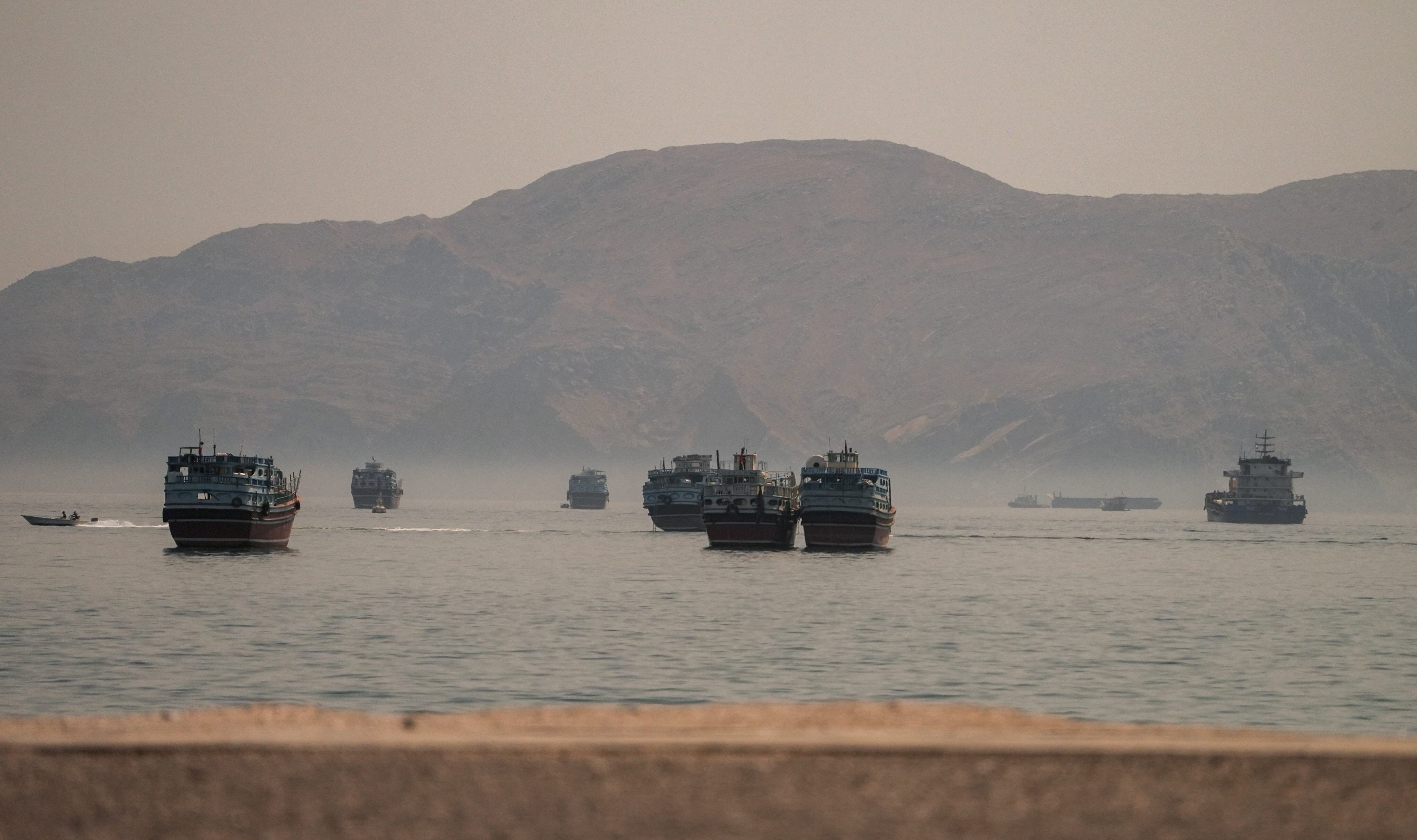
When the Strait of Hormuz closed, the shock hit the Gulf area's ports and travelled down the fertilizer route, which has unequally impacted food security. Image: REUTERS/Stringer
- A fertilizer shock exposed the unequal geography of port resilience.
- When the Strait of Hormuz closed in early 2026, the shock hit the Gulf region’s ports and from there it travelled down the fertilizer route and then impacted food security.
- Global South ports and the economies behind them bring a different starting point to the resilience conversation, their exposure to food, fuel and fertilizer shocks is often higher, while the buffers assumed in many frameworks, are less evenly available.
In late March, as the long rains arrived in Kenya, Elizabeth Wangui joined a queue outside her local agrovet. The government-subsidized fertilizer she was coming to collect was running short; to secure a single bag she would need to arrive by 7am. Wangui is one of millions of smallholder farmers across the Global South whose harvest now depends on events far outside her own field.
When the Strait of Hormuz closed in early 2026, the shock hit the Gulf region’s ports and from there it travelled down the fertilizer route. For much of the Global South, the fertilizer route is the food security route. The UN's Food and Agriculture Organization (UNCTAD) warned that the corridor carries up to 30% of the world's traded fertilizer and that traffic through it collapsed by more than 90% within days. It named Kenya, Tanzania, Mozambique, Somalia, Sudan, Egypt, India, Bangladesh and Sri Lanka among the most exposed countries. Kenya sits squarely in that exposure. It imports almost all of its fertilizer and leans heavily on Gulf supply routes.
The stakes are particularly high given the central role of agriculture in African economies. The sector employs between 60% and 70% of the workforce, with rates exceeding 80% in countries like Burundi, Malawi and Madagascar. When farming is the livelihood of most of the workforce, a fertilizer shock becomes a shock to the whole of society.
Who gets to be resilient?
By the time a price reaches a farmer at an agrovet counter, it has already been set in rooms she will never enter. A shipping line decides whether to transit the Strait or reroute. An underwriter prices the war risk. A trader holds cargo or releases it and a bank sets the cost of credit for the quarter. Each choice moves the price of a single bag of fertilizer before it reaches the soil; by the time it arrives, the planting window is closing and there is no negotiation left.
The disruption in the Strait of Hormuz reached every economy that depends on Gulf fertilizer, yet resilience turned out to be something you could buy in advance. The buyers who came through largely protected were the ones who had contracted their inputs before the conflict; exposure came down to who held the cash, credit and storage to act ahead of the price. The World Bank expects fertilizer prices to rise about 31% this year and energy at 24%, and UNCTAD warns that the countries least able to absorb that are the ones already short of fiscal space, where 3.4 billion people live in states that spend more on servicing debt than on health or education.
Sudan shows where this leads. The country depends on the Gulf for more than half its fertilizer. Farmers there are scaling back planting this season as fertilizer and fuel costs climb. They are doing so in a country where roughly 19.5 million people, more than 40% of the population, already face crisis levels of hunger and where two-thirds of people live off the land. Sudan's hunger predates this conflict and the regional shock has landed on top of it as one more cost in a system with nothing left to absorb. A disruption a wealthier importer can hedge becomes, at the bottom of the chain, a smaller harvest and a hungrier year.
Resilience beyond ports
Global South ports and the economies behind them bring a different starting point to the resilience conversation. Their exposure to food, fuel and fertilizer shocks is often higher, while the buffers assumed in many frameworks, including rerouting, insurance, reserves and fiscal space, are less evenly available. Build the standard on those assumptions and resilience becomes something only the already resilient can meet. The countries with the highest exposure begin from a different place and they have the most to teach about holding a system together without a cushion.
Arup's Port Resilience Framework for Action defines resilience as the ability of ports and their systems to "withstand and adapt to changing conditions and recover positively from shocks and stresses." It sets out ten goals across three dimensions: economy and society; leadership and strategy; and infrastructure and ecosystems. It is designed to run from national policy down to a single port. The systems approach is valuable, however, the Strait of Hormuz shock simply asks us to extend it further towards the farmers, households and inland economies whose resilience depends on what moves through the port, but may never be counted in its own performance measures. A farmer like Wangui is not a port user and not part of the port community, so she falls outside the framework's ten goals.
The Nature and People Positive Ports Framework, being developed by the World Economic Forum Accelerating Critical Transformation for Ports (ACT Ports) working group, a workstream of the Transitioning Industrial Cluster, offers a further point of inspiration. This framework is built around the idea that ports' long-term competitiveness depends on how effectively they manage climate, nature and people-related risks, while investing in the workforce and communities around them. It could, as it matures, extend that logic across the corridors and economies they serve, reaching people and places that rarely appear in a port's own performance measures.
What should change?
If the cost of disruption travels past the port, then resilience planning has to travel with it. A port that clears its berths has done part of the job; the rest depends on whether the fertilizer, fuel and food moving through it actually reach the people waiting at the other end. This means mapping the chain beyond the quay, including the inland corridors, the importers and traders and the farmers and households whose access depends on cargo that a port's own measures of resilience may never count. It also means treating fertilizer and food routes as critical infrastructure in their own right, built into early warning and contingency planning before a planting season is already at risk.
Finance also has to follow the exposure. UNCTAD's own response to this crisis pointed to rapid access to external financing, debt relief and emergency lending through development banks, so that countries with no fiscal room are not left to absorb a global shock alone. The same logic belongs inside contracts and insurance, where war risk premiums, demurrage and rerouting costs currently cascade downward until the weakest link pays the most. A fairer distribution of who carries that risk is part of what resilience should mean.
Finally, there is the question of voice. The economies that absorb these shocks first should be in the room where maritime risk, corridor priority and resilience standards are decided, present from the start, instead of being consulted only once the framework is already written. The people-positive approach, being applied to clean power infrastructure, offers a useful precedent: affected communities should shape decisions early, not only respond to projects once they are already designed. For ports, that same logic needs a value-chain lens, so the voices considered include nearby communities and the workers, traders, farmers and households whose resilience depends on what moves through them.
Our earlier piece argued that the water, energy and food nexus becomes physical at the port. What this disruption has added is that the cost of its failure does not stop there. It keeps moving, down the corridor and into the soil, landing hardest on the people with the least say over any of it. Whether the next framework is built with them or only for them remains an open question and the planting season will not wait for the answer.
The Global Future Council on Energy Nexus shares ideas and examples through its Energy Nexus Insights series. This includes blogs, articles and infographics; guides for public- and private-sector decision-makers; and sector analyses.
Don't miss any update on this topic
Create a free account and access your personalized content collection with our latest publications and analyses.
License and Republishing
World Economic Forum articles may be republished in accordance with the Creative Commons Attribution-NonCommercial-NoDerivatives 4.0 International Public License, and in accordance with our Terms of Use.
The views expressed in this article are those of the author alone and not the World Economic Forum.
Stay up to date:
Oil and Gas
Related topics:


Forum Stories newsletter
Bringing you weekly curated insights and analysis on the global issues that matter.
More on Resilience, Peace and SecuritySee all

Andrea Willige, Gayle Markovitz and Madeleine North
September 21, 2026


