What is the future of work? Defining roles for humans and AI
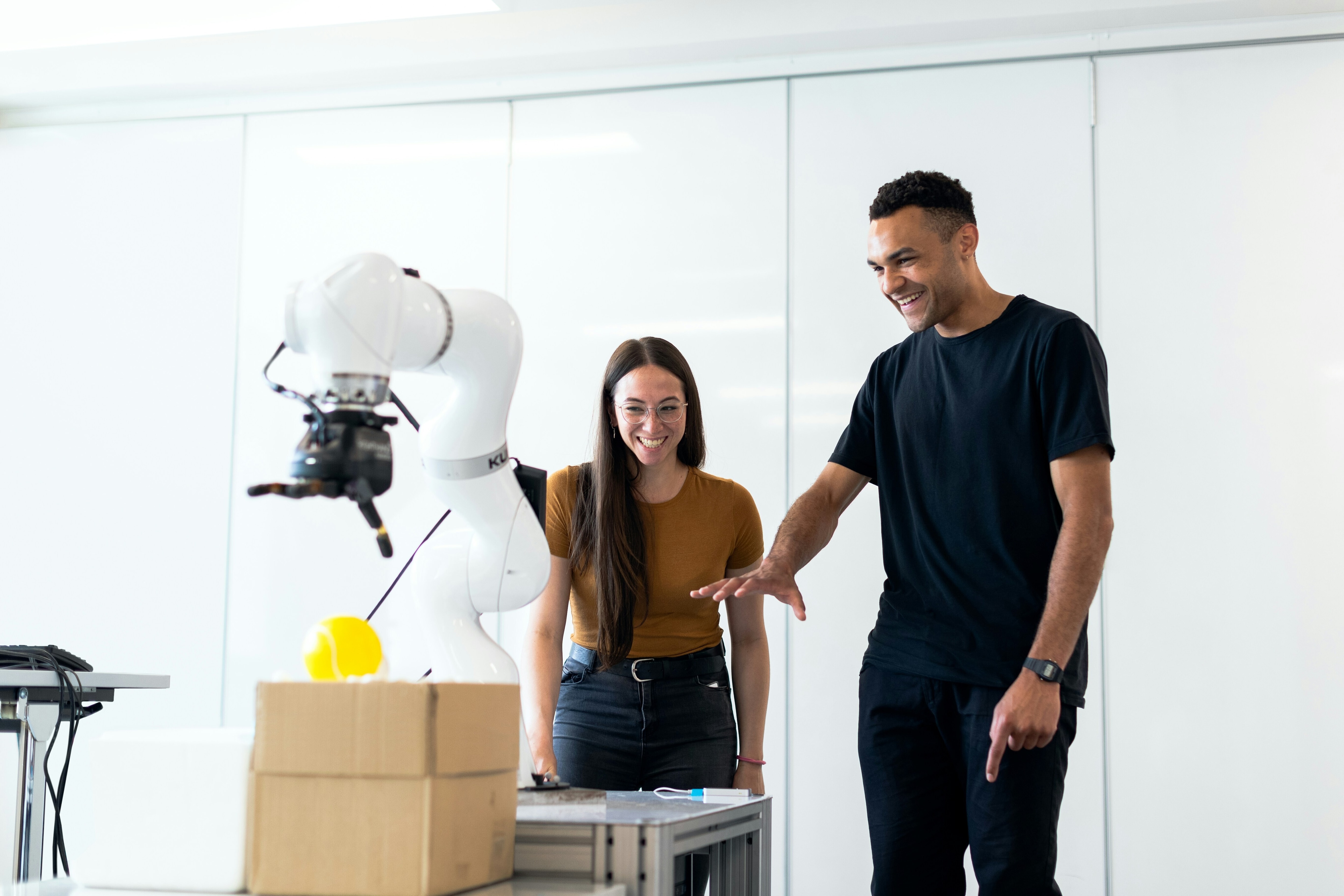
The future of work requires human oversight of AI Image: Unsplash/ThisisEngineering
- As artificial intelligence (AI) improves at tasks such as analysis, content generation and decision-making, human value will lie in defining problems, setting constraints, evaluating outcomes and making final decisions.
- Two important roles are emerging for human oversight of AI – the “AI work architect” who designs how AI should be used and the “AI steward” who is more concerned with outputs and outcomes.
- Organizations need to redesign work and training after adopting AI tools, combining AI literacy with domain expertise, process knowledge, risk awareness and decision-making authority.
Artificial intelligence (AI) does not begin with an instruction or end with a recommendation. It begins with a real-world problem and ends with a real-world consequence.
Generative AI (GenAI) has moved quickly from novelty to workplace infrastructure. It writes, summarises, translates, codes and analyses data, making many tasks cheaper, faster and increasingly automated.
The result is not only job anxiety but more practically, the question arises: which parts of human work become more important as AI takes on more execution?
The World Economic Forum’s Future of Jobs Report 2025 shows that technology, demographics and uncertainty are reshaping labour markets towards 2030. It estimates that 170 million jobs may be created, 92 million displaced and 39% of existing skill sets transformed or rendered obsolete by 2030.
Forum discussions have also highlighted the likely need for AI-enabled roles and AI literacy and judgement work.
The next step is to connect these debates through a clearer map of human and machine work. Existing debates often frame work as AI versus humans, white-collar versus blue-collar or technical versus human skills. But the bigger change lies inside the work process itself.
As AI becomes more capable, the execution layer expands: processing information, generating content, optimizing options and automating actions. Human value moves to the work around execution, where context, responsibility and trust determine whether AI creates value.

The pattern is clear: AI increasingly occupies execution. Human value moves to framing the problem, designing the conditions under which AI should operate, reviewing outputs in context and deciding what should happen next.
This new division of work matters in digital and physical settings.
What AI-era human work looks like
Conventional work often meant receiving assigned tasks, following procedures, performing routine execution, checking accuracy and escalating decisions within established rules. Against this conventional model, supply chains show the AI-era shift in practice, across digital and physical operations.
In digital work, AI can produce a demand forecast. However, human work starts earlier, by defining the forecast horizon, service level, supplier constraints and stockout tolerance. It continues later, in deciding whether the forecast should change inventory, production, procurement or customer commitments.
In physical operations, AI and automation can support warehouse operations. Yet a supervisor may notice a wet floor, an unfamiliar temporary worker or a robot movement that is technically acceptable but makes people hesitate. These details may not appear in the model but they determine whether automation is safe and accepted.
In both cases, AI may execute but humans frame, design, review and decide. The same logic applies beyond supply chains, from insurance claims and healthcare operations to public services and customer care.
2 emerging job descriptions in the AI era
This shift points to two emerging roles: the “AI work architect “and the “AI steward.” These may become dedicated roles or responsibilities embedded in existing jobs.
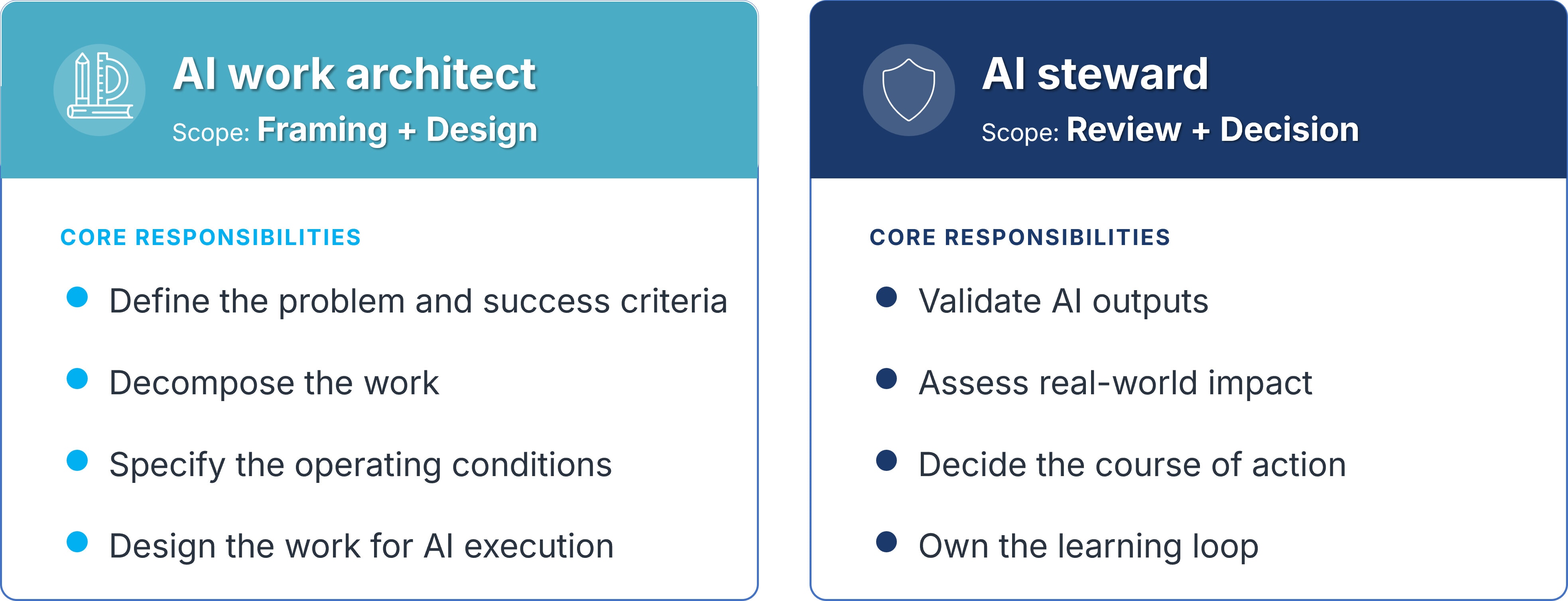
The AI work architect does not simply write prompts. This role clarifies the business problem, outcome, scope and success criteria. It decomposes work into what should be delegated to AI, what should be augmented by AI and what should remain human-led. It specifies data, assumptions, constraints, risk limits and decision rights, then designs handoffs, approval points and escalation paths.
The AI steward works after AI execution. This role validates outputs against domain knowledge, operational reality, frontline context and known exceptions. It assesses impact on customers, workers, assets, safety and trust. It decides whether to accept, modify, reject, stop or escalate AI-supported actions, and feeds lessons back into work design, governance and future AI use.
These roles are not narrow technical specialisms. They are new forms of human responsibility around AI.
What the AI-era work cycle looks like
Together, the AI work architect and AI steward form the AI-era work cycle. Future work will depend on moving between real, to AI and AI, to real.
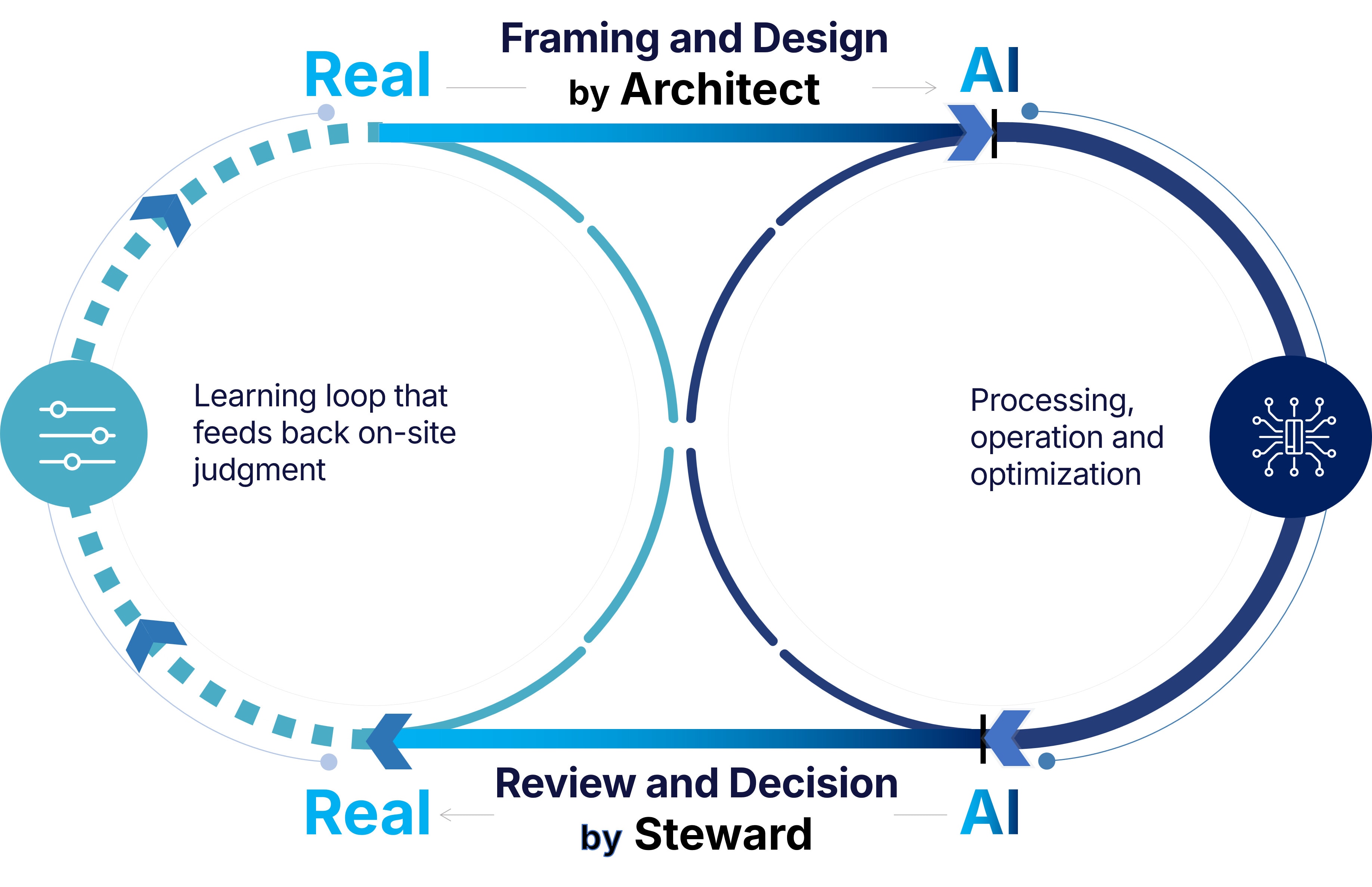
The cycle begins in reality. The AI work architect translates real-world problems into objectives, assumptions, constraints and decision boundaries, turning complex operational reality into conditions AI can process.
AI then executes. It processes information, generates outputs, optimises options or automates actions. However, execution is where human responsibility returns.
The AI steward brings AI back to reality. This role reviews outputs in context, evaluates their effects on people, assets, customers, safety and trust, and decides what should happen next. When reality reveals an exception or unintended consequence, that learning returns to the next design cycle.
AI-era work is not a position inside the AI system. It is the work around it: framing reality for AI and responsibly bringing AI back into reality.
For organizations, training should not be limited to tool adoption. It should combine AI literacy with domain expertise, process understanding, risk awareness and decision rights. People closest to the work must help redesign the work cycle because they understand the exceptions and constraints that determine whether AI creates value.
AI will redesign work. Some tasks will disappear and roles will be rebuilt. However, the future of work is not simply replacement; it is human work moving to a higher level of responsibility. If organizations define this new human role clearly, AI can elevate human potential rather than hollow it out.
This is the work of the AI era: connecting reality to AI, bringing AI back to reality and improving the cycle through human design and responsibility.
Don't miss any update on this topic
Create a free account and access your personalized content collection with our latest publications and analyses.
License and Republishing
World Economic Forum articles may be republished in accordance with the Creative Commons Attribution-NonCommercial-NoDerivatives 4.0 International Public License, and in accordance with our Terms of Use.
The views expressed in this article are those of the author alone and not the World Economic Forum.
Stay up to date:
Future of Work


Forum Stories newsletter
Bringing you weekly curated insights and analysis on the global issues that matter.
More on Artificial IntelligenceSee all

Andrew Shikiar
September 18, 2026


