How investing in nature can help protect economies from future shocks
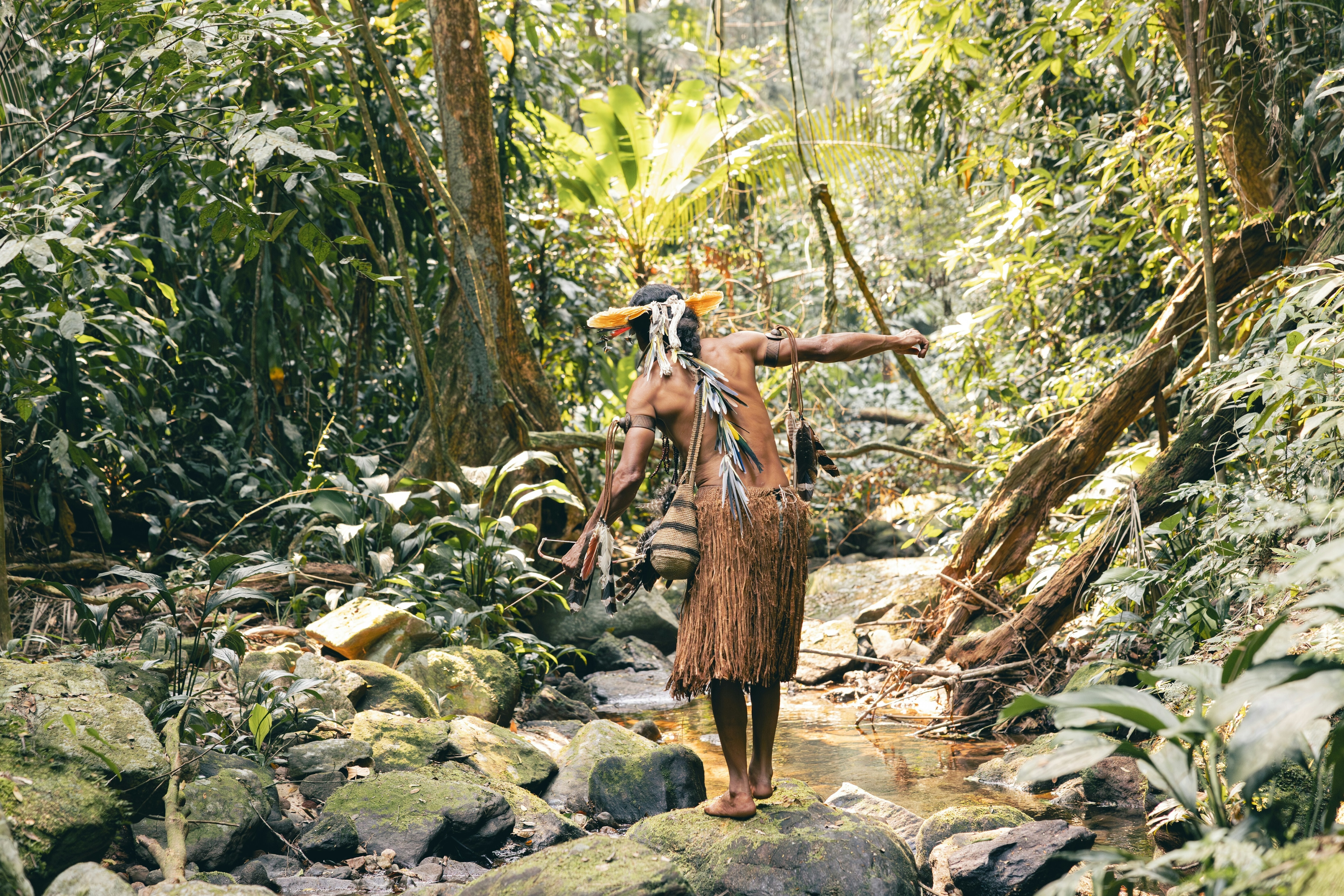
Nature finance is far from where it needs to be. Image: Unsplash/Felipe Ditadi
- Climate change, biodiversity loss and deforestation are increasing the likelihood of severe economic shocks that could surpass the impact of the 2008 financial crisis.
- Projects in Brazil and Kenya have shown how forests, healthy soils and ecosystems are critical infrastructure, restoration of which can improve food security, energy security and resilience to future crises.
- Deforestation in tropical regions has global economic consequences; initiatives such as the Tropical Forest Forever Facility can help direct more capital toward forest conservation and nature-based solutions.
Global energy security is particularly volatile right now.
Fertilizer prices have been up to 20% higher in the first half of 2026 compared to the same period last year, placing farmers and consumers under enormous financial pressure.
War is triggering inflation, squeezing companies and governments, while financial markets remain on edge from years of compounding disruption and instability.
Unanticipated shocks of this kind have a significant impact on the economy. As well as war, many are linked to climate change and the erosion of nature, which could trigger a global financial crisis worse than in 2008.
Forecasters now also warn of a “super” El Niño, which some say could lead to global temperatures likely higher than at any time in the last 120,000 years. This lethal combination could trigger unprecedented floods, droughts and crop failures across multiple regions simultaneously.
More than ever, governments and businesses must prepare and adapt to such urgent crises. Yet our natural world, which has a proven capacity to absorb shocks and increase resilience, is being depleted by a cycle of bad decisions.
There are signs of positivity, particularly in emerging markets, such as with the Eco Invest Brasil – Brazil’s foreign capital mobilization and currency hedging programme towards natural assets.
However, in general, our current financial models assume nature is stable and will provide the same return as it always has, which is not the case.
World-leading climate scientist Johan Rockstrom said, “More than three-quarters of the Earth's support systems are not in the safe zone. Humanity is pushing beyond the limits of a safe operating space, increasing the risk of destabilizing the planet.”
Not only is nature finance far from where it needs to be but capital is actually flowing in the wrong direction, exacerbating debt burdens and sidelining the Indigenous peoples and small-holder farmers trying to counter the negative actions of industry.
History has taught us that economies that proactively invest in nature and sustainable land use become more resilient following conflicts and financial shocks.
”Forests are economic infrastructure
Protection and restoration of natural systems, upon which the majority of global trade, finance and economic systems depend, should be central to the global shock response. History has taught us that economies that proactively invest in nature and sustainable land use become more resilient following conflicts and financial shocks.
For example, severe droughts in the 1970s to 1980s led to widespread desertification in the Sahel region of Africa, threatening livelihoods, exacerbating poverty and food shortages.
In 2007, the African Union led the establishment of the Great Green Wall initiative, with the aim of restoring 250 million hectares of degraded land and generating 10 million green jobs. In 2021, $16 million was pledged to build the initiative in the run-up to 2025.
Studies show that when governments fund nature restoration as critical infrastructure after experiencing shocks, they build more resilient economies.
It reduces households' vulnerability to food insecurity and strengthens natural defences, such as healthy soils that absorb rainwater during droughts and help maintain land vital to food production.
When the 1973 oil shock triggered inflation and a severe global financial crisis, the Brazilian government responded by working with industry and farmers to replace imported gasoline with a new agro-industrial logic to produce biofuels domestically.
This worked nationally, as it was used to rehabilitate degraded land while also increasing energy security, thereby protecting the country from global shocks and ensuring that the energy mix is less dependent on fossil fuels.
What happens in the tropics impacts nations everywhere
Nature loss and deforestation in tropical countries can no longer be treated as external to national economic decision-making in developed nations. We are seeing changes in tropical weather patterns and ecosystem health, rendering countries in the Global North economically exposed.
Recent analysis indicates that up to $1 billion in Europe-bound soy trade from the Amazon is at risk annually due to deforestation and climate-related drought.
The prospect of disruptions to the soy trade worth up to $146 million in Spain, $72 million in the Netherlands and $50 million in the United Kingdom strengthens the argument for leaders to recognize the long-term costs of failing to protect forests and the opportunities for investment.
Capital flows that halt forest loss and protect biodiversity can reduce economic harm and protect global economies from future financial shocks. In spite of this, wealthy nations have been slow to align funding to advance forest goals.
Momentum is building behind a wave of innovative finance solutions designed to activate the socio-bioeconomy and build a world more resilient to shocks.
Brazil reignited imaginations at the 2025 United Nations Climate Change Conference (COP30) by launching the Tropical Forest Forever Facility (TFFF), operating as a global endowment fund that pays developing nations for the ecological services their forests provide, bringing together private and public investment.
Governments have six months to raise the TFFF's $10 billion target to keep the new centre of gravity for nature finance alive and to build the private sector's trust and confidence. It’s ironic that many major economies, likely to be hit hardest by trade disruptions, have yet to commit funds to reduce this risk.
The upcoming Deforestation Roadmap will help countries identify practical pathways and national strategies to halt and reverse deforestation and forest degradation by 2030.
Other initiatives include the Global Circularity Protocol for Business from the World Business Council for Sustainable Development, which will encourage companies and investors to mitigate nature risks within their portfolios.
At COP30, I met Davi Kopenawa Yanomami, an important spokesperson Yanomami people in Brazil, and I asked him what he wanted to take away from the Global Summit. He told me in a very candid way: “The people from the market must listen to the people from the forest.”
We are at a critical juncture – invest in nature now or expect future shocks that may mirror or exceed those of the 2008 financial crisis.
Don't miss any update on this topic
Create a free account and access your personalized content collection with our latest publications and analyses.
License and Republishing
World Economic Forum articles may be republished in accordance with the Creative Commons Attribution-NonCommercial-NoDerivatives 4.0 International Public License, and in accordance with our Terms of Use.
The views expressed in this article are those of the author alone and not the World Economic Forum.
Stay up to date:
Climate Crisis


Forum Stories newsletter
Bringing you weekly curated insights and analysis on the global issues that matter.
More on Financial and Monetary SystemsSee all

Cheukai Makari
September 16, 2026


