Scaling innovation to turn ideas into impact
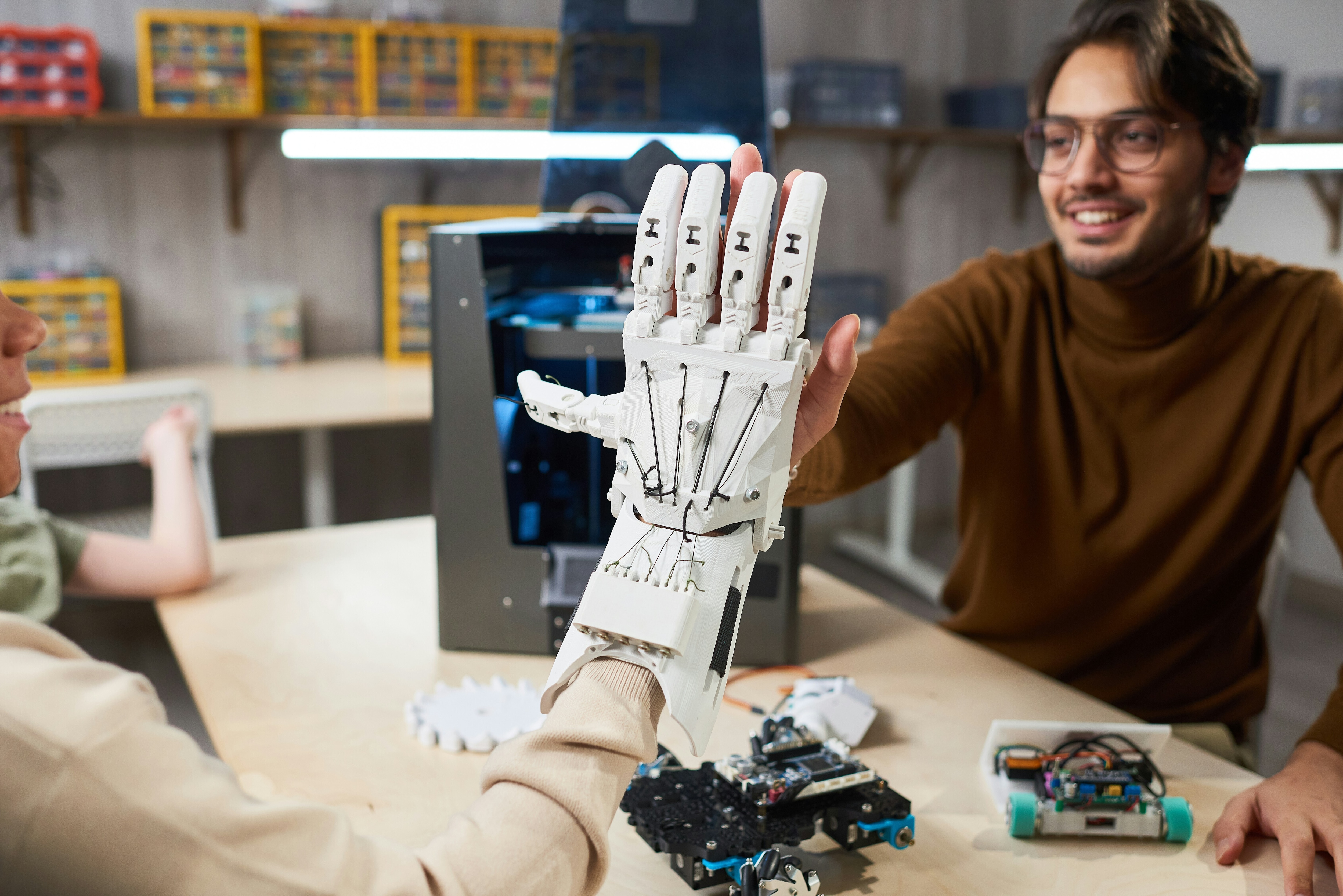
Scaling innovation requires a supportive ecosystem Image: Unsplash+/Getty Images
- To create lasting impact from innovation, it needs supportive ecosystems to help it scale, including policies, regulations, infrastructure, capital, skills, trust and collaboration.
- Entrepreneurs are key to growth as they turn ideas into real-world solutions by identifying problems, building partnerships and scaling innovations.
- This article was first published by China Daily, read it here.
We are on the cusp of a new industrial age, powered by rapid technological change and confronted with increasing complexity. The World Economic Forum's Global Risks Report 2026 highlights geo-economic confrontation as the foremost risk for 2026, while environmental threats loom large over the next decade.
Anxiety over the adverse outcomes of artificial intelligence (AI) and societal polarization has also risen in the past two years. These challenges are making economies and societies rethink how we produce, consume, work and live together.
The key question is whether humanity will seize this opportunity to build not just strong and vibrant economies but also cohesive communities and a healthy planet.
Innovating at scale requires transformational shifts at the systems level. This involves fundamental changes in structures, incentives, relationships, and operations across entire sectors so that innovation can deliver broader and more sustained impact.
Scale is not only about deploying more technology or expanding companies; it's also about translating new ideas into lasting and large-scale change. Achieving this demands a conducive environment of policies, regulations, standards, infrastructure, capital and capabilities, alongside culture, trust and cooperation.
Without these, innovation risks being confined to pilots and early adopters.
Entrepreneurship is central to this transformation. Often seen as risk-takers or disruptors, entrepreneurs are essentially pathfinders who chart new ways of thinking, interacting and operating, bridging the gap between possibility and practice. They identify market bottlenecks, service gaps and institutional frictions.
They rally talent, capital and partnerships to address these challenges, testing new approaches, adapting them to real-world problems and applying solutions that can be scaled and sustained, helping to define and shape standards and regulations.
In Asia, entrepreneurship has fueled innovation by building purpose-driven ecosystems that integrate infrastructure, skills, capital, markets and public-private partnerships to achieve resilient, sustainable and inclusive growth.
Manufacturing networks have helped smaller suppliers thrive alongside larger companies, digital platforms and logistics networks have opened new markets for micro and small enterprises, and investments in connectivity have created new models in payments, commerce, mobility and services.
China's 15th Five-Year Plan (2026-30) exemplifies how industrial upgrading, technological innovation and green development can be pursued in tandem to support structural transformation and more sustainable growth.
The development of clean energy value chains that link solar power, batteries, smart grids and electric vehicles illustrates this integration. These interconnected industries have spurred job creation, exports and local incomes while lowering energy costs, reducing emissions, improving air quality and accelerating a wider shift toward greener industry and mobility.
Around half of the AI pioneers in the World Economic Forum's MINDS (Meaningful, Intelligent, Novel, Deployable Solutions) programme are based in China. These companies have shown how AI solutions can be applied meaningfully and at scale to generate value for businesses and society.
One MINDS company in the healthcare sector, for example, has reduced patient screening time by 83%, shortened clinical site investigation cycles by 67% and improved operational efficiency in core medical scenarios by 30% through a governed enterprise AI operating model.
Such examples show that the future of manufacturing prowess and economic resilience will be defined not only by the speed of technology adoption but also by the ability to build ecosystems and redesign systems that benefit people and the planet, alongside productivity and resource allocation gains.
For innovation to scale, three interconnected and interdependent systems need to evolve: governance, business responsibility and societal readiness.
The public sector can reimagine policy levers to stimulate capital flow for innovations, try out solutions before they are scaled and harness partnerships for more co-creation between the public sector, research institutions and private enterprises.
For businesses, innovation can move from isolated success to sector-wide transformation by prioritizing ethical business practices, stakeholder value and employees' well-being.
Culture and societal readiness are also essential. For entrepreneurship to flourish, we must create environments where people have the confidence to experiment, the networks to collaborate, and the support to learn and try again.
More can be done to widen access to capital and networks, especially for women, young people and community-based enterprises.
Society should support and recognize not only high-growth technology companies but also small manufacturers, agribusinesses, care providers, logistics platforms and social enterprises that create jobs and solve local problems.
In a world marked by increasing complexities and declining multilateral cooperation, smaller and more agile coalitions of countries and companies will play a bigger role in ensuring that overall cooperation endures.
Systemic transformation is already underway, characterized by collaborations that are flexible and agile enough to acknowledge geoeconomic realities, and yet ambitious and pragmatic enough to address shared global challenges.
Ultimately, to innovate at scale is to build systems that enable more people to contribute to and benefit from transformation. In a more complex and fragmented world, collaboration must become more purposeful – connecting technology with the human touch, enterprise with social responsibility and growth with sustainability.
That momentum is already building and if we dare to dream big, we can build a future characterized by stronger economies, cohesive communities and a healthy planet.
Don't miss any update on this topic
Create a free account and access your personalized content collection with our latest publications and analyses.
License and Republishing
World Economic Forum articles may be republished in accordance with the Creative Commons Attribution-NonCommercial-NoDerivatives 4.0 International Public License, and in accordance with our Terms of Use.
The views expressed in this article are those of the author alone and not the World Economic Forum.
Stay up to date:
Innovation


Forum Stories newsletter
Bringing you weekly curated insights and analysis on the global issues that matter.
More on Technological InnovationSee all

Linda Lacina, Pooja Chhabria, Spencer Feingold and John Letzing
October 13, 2026


