Deep space is the next layer of economic infrastructure. Here's why leaders should plan for it now

If deep space exploration is possible, is time to prepare? Image: Unsplash/ün LIU
- The expanding space economy and exploration has been taking place in a narrow region in Earth's orbit but we can employ the same forces for deep space exploration.
- Deep space exploration has never been more affordable or scalable, allowing more frequent missions to avoid threats and find critical minerals that can be put back into expanding the deep space industry.
- Expanding the deep space economy requires a multistakeholder approach and shared platforms, infrastructure and governance, which can start now ready for more regular deep space exploration.
For the past two decades, the commercial space economy has been defined by what happens in Earth’s orbit. Falling launch costs, spacecraft miniaturization and the growing availability of commercial off-the-shelf components have unlocked industries that would have been difficult to imagine at the turn of the century.
Satellite broadband and Earth observation, among others, are now projected to push the space economy past $1 trillion within the next decade. But nearly all of this economic activity is assumed to take place within a relatively narrow region above Earth’s surface, from low Earth orbit to geostationary orbit.
Beyond Earth’s orbit, the picture has looked very different. Missions to the Moon, asteroids and the planets have remained largely the province of national space agencies. Each spacecraft to these destinations has typically been a bespoke project, designed for a single destination and a single set of objectives.
These missions have produced extraordinary scientific and engineering achievements but they can take a decade or more to develop and cost hundreds of millions, or even billions, of dollars.
That model is changing. A new generation of commercial companies is applying many of the same forces that transformed Earth orbit to the Moon and beyond.
Exploring deep space has already become more accessible
Deep-space missions are being made more affordable and scalable due to standardized spacecraft platforms, lower-cost launch options, autonomous navigation, more powerful software and commercially available components. The significance of this shift is larger than any single mission or even any single company.
Deep space is beginning a transition from a domain reserved for rare government-led exploration to a new layer of economic infrastructure. Governments and business leaders should begin planning for that transition now.
The most important pieces of that infrastructure – lower-cost spacecraft designed for operating in deep space – are already being built. By making deep space missions more affordable and repeatable, these platforms can lower the barriers to experimentation and access.
More importantly, they create shared capabilities that can serve many customers and applications, including some that could not have been anticipated when the infrastructure was first being built.
History illustrates the point repeatedly. Railroads were not transformative because of any single commodity they carried. Containerization did not transform global trade because of a particular product. GPS was not developed with a particular use case – such as ride-sharing, precision agriculture or mobile maps – in mind. In each case, the enduring value came from a shared capability on top of which entirely new forms of economic activity were built.
Deep space infrastructure will have a similarly enabling effect.
More frequent, lower-cost missions will expand planetary science by allowing researchers to visit more destinations and deploy more instruments at a far higher cadence than has historically been possible. Imagine the world’s national space agencies deploying dozens or more missions to more destinations across the Solar System.
Economies of scale can be exploited
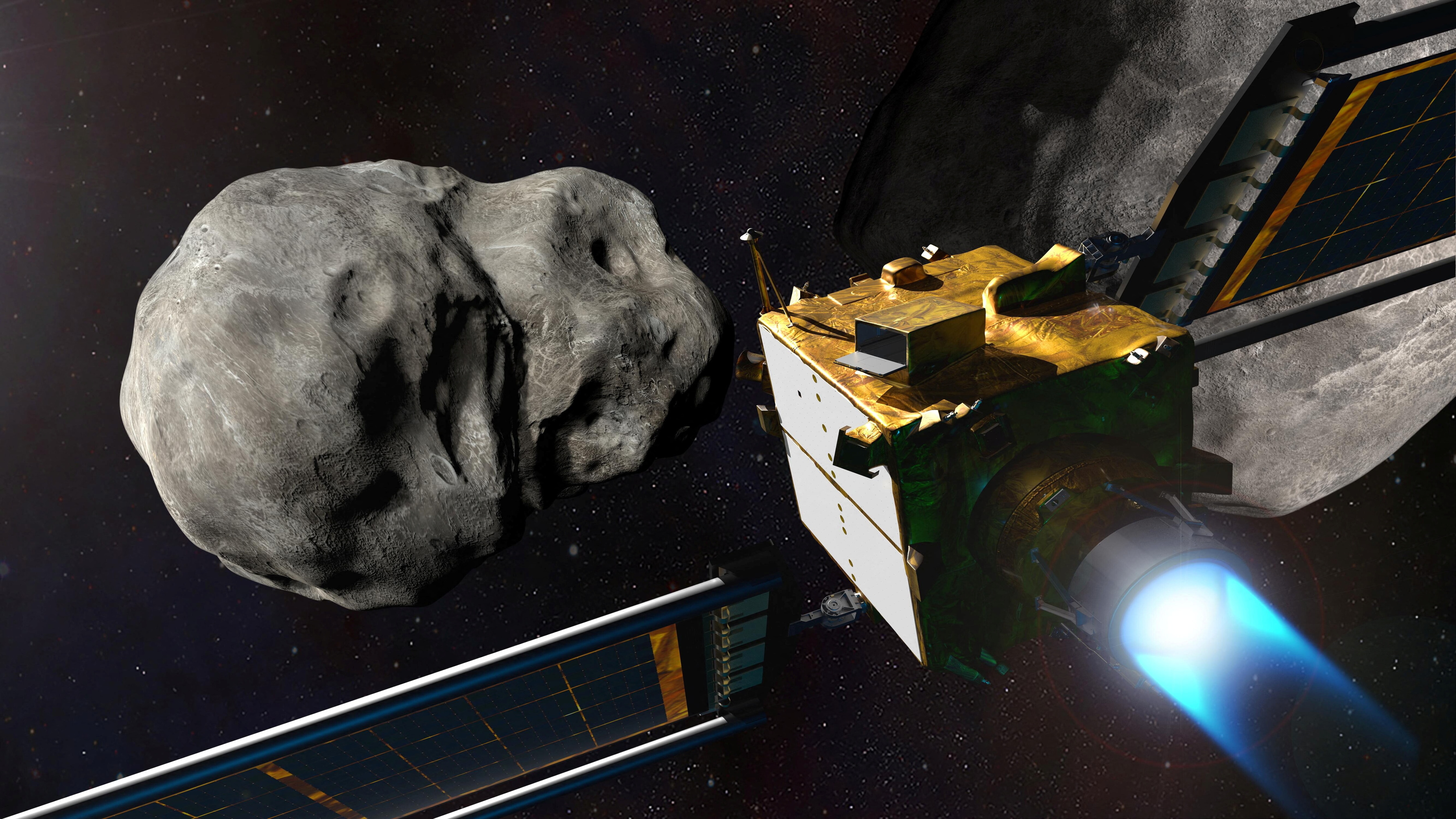
The same capabilities bolster planetary defence. Detecting a potentially hazardous asteroid is only the first step in defending Earth. Decision-makers also need to understand the asteroid’s composition, structure, mass, rotational dynamics and trajectory before determining whether an intervention is necessary, such as the one NASA deployed with its Double Asteroid Redirection Test in 2022.
During that mission, a small spacecraft nudged the asteroid moonlet Dimorphos, successfully changing its orbit at a total mission cost of around $324.5 million. That high price has made these missions rare. In contrast, affordable, rapidly deployable spacecraft will make it possible to characterize many more threatening objects earlier, improving the odds of a successful deflection.
Commercial spacecraft will eventually extract critical minerals from asteroids, adding a much-needed new source of materials essential to electronics, clean energy technologies and industrial processes.
Waiting for the market to be fully proven would be a mistake. Governments should begin incorporating deep space into procurement strategies, industrial policy, research priorities and international partnerships.
Multiple stakeholders can contribute to a viable deep space economy
Rather than treating each mission as an isolated project, public agencies can support standardized platforms, shared communications systems, interoperability and more frequent commercial missions. Procurement approaches that reward affordability and repeatability could help establish a durable industrial base rather than perpetuate a series of one-off missions.
Business leaders, meanwhile, should consider where their industries intersect with activity beyond Earth’s orbit. Communications, autonomy, robotics, energy, advanced materials, insurance and logistics all have roles to play. Companies should understand how their existing technologies and businesses fit into a more expansive space economy.
Both the public and private sectors must also engage early on questions of technical standards, traffic coordination and responsible use. By the time deep-space commerce is mature, many of the architectures and rules governing it will already have been established.
The countries and companies that invest early will shape the technical standards, commercial relationships and governance structures on which the next phase of the space economy develops.
For decades, deep space has been understood primarily as a destination for exploration. It should now also be understood as infrastructure and the time is now for responding.
Don't miss any update on this topic
Create a free account and access your personalized content collection with our latest publications and analyses.
License and Republishing
World Economic Forum articles may be republished in accordance with the Creative Commons Attribution-NonCommercial-NoDerivatives 4.0 International Public License, and in accordance with our Terms of Use.
The views expressed in this article are those of the author alone and not the World Economic Forum.
Stay up to date:
The Digital Economy


Forum Stories newsletter
Bringing you weekly curated insights and analysis on the global issues that matter.
More on Technological InnovationSee all

Mehrad Yaghmai and Judith Ketelslegers
September 21, 2026