Why fertilizer has become a geopolitical issue
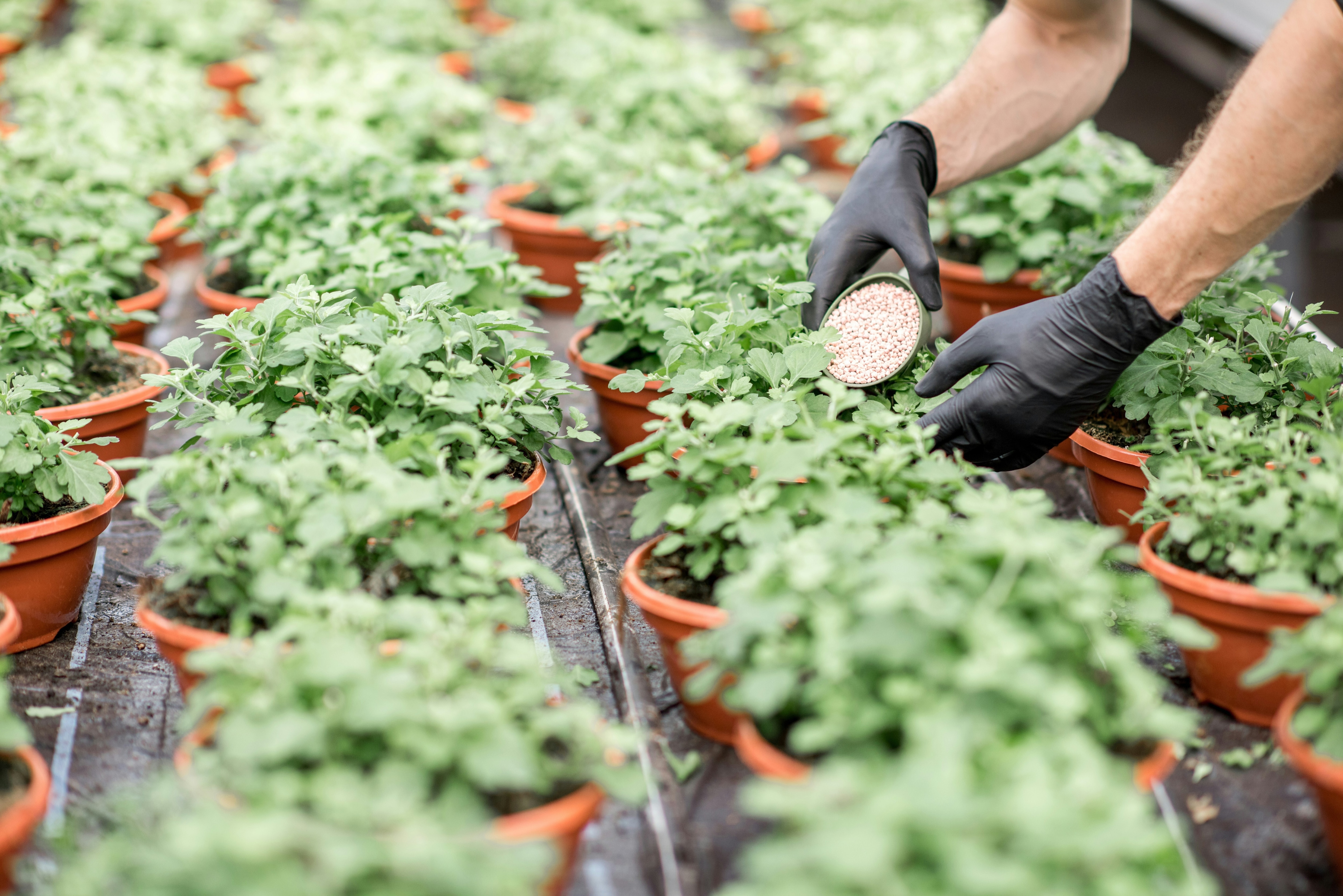
Fertilizer production can be significantly disrupted by geopolitical shifts impacting the global food supply Image: Unsplash+/Getty Images
- Fertilizer production heavily depends on natural gas, raw materials and global shipping routes; geopolitical shifts can disrupt these systems, drive volatility in fertilizer markets and impact global food production.
- When fertilizer markets become volatile, farmers often reduce or delay fertilizer use, which can lead to lower crop yields months later, creating food security problems that are realized down the line.
- Governments and industry should broaden their suppliers or trade routes, improve fertilizer efficiency through advanced agriculture methods and expand farmers' access to financing and risk-management tools.
The global food system has become more exposed to geopolitical risk. Conflict, energy volatility and trade disruptions are increasingly influencing fertilizer markets, farming costs and food production worldwide.
Four years ago, Russia’s full-scale invasion of Ukraine disrupted gas supplies to Europe, triggering an energy crisis across the continent and contributing to higher food prices.
More recently, tensions in the Middle East have seen the Strait of Hormuz become a chokepoint, disrupting one of the world’s most critical corridors for energy and essential agricultural inputs.
These are not isolated crises. What we are seeing is a stress test of a system that is deeply interconnected and highly exposed to shocks.
This moment exposes a stark reality: despite years of warnings, global supply chains for energy, fertilizers and food remain deeply fragile.
The effects of climate disruptions are already putting pressure on agricultural production.
”Fertilizers sit at the intersection of energy and food systems
Mineral fertilizers are not just another commodity traded on global markets; roughly half of global food production depends on them. Further, fertilizer production and distribution are deeply interconnected with energy markets and global trade.
Producing fertilizer requires raw materials such as potash and phosphate, as well as vast amounts of natural gas as a feedstock for ammonia, the foundation of nitrogen fertilizers. Fertilizers also depend on efficient logistics networks and stable trade routes to move nutrients from production facilities to farms around the world.
The situation in the Strait of Hormuz illustrates the scale of this interconnectedness. This narrow corridor handles a significant share of globally traded ammonia, phosphates and sulphur, alongside one fifth of global LNG trade and nearly one third of globally traded urea fertilizers.
Higher energy prices directly increase fertilizer production costs. Shipping disruptions and trade restrictions constrain supply. Market uncertainty drives volatility. Farmers then face higher and less predictable costs.
Roughly one-third of global urea trade is effectively “trapped” within the Strait of Hormuz, and as a response, urea prices have become extremely volatile. We have seen knock-on effects across fertilizer markets, with uncertainty around supply routes contributing to significant price volatility.
The situation remains highly uncertain and rapidly changing. What is clear, however, is that the nutrients lost every week this disruption continues are enough to produce billions of meals, underscoring how quickly fertilizer shocks translate into food system risks.
How affordability is becoming a growing risk
Food system disruptions are increasingly driven by market volatility and affordability pressures as much as by physical shortages. Farmers operate with tight margins and long planning cycles. Sharp increases in fertilizer prices force many to reduce application rates, delay purchases or reassess production plans altogether.
The consequences are not immediate, which can make the risks harder to detect. Because fertilizers must be applied at very specific moments in the crop cycle, reduced or delayed use may translate into lower yields in the next harvest, with impacts that cannot be fully recovered later.
This lag can create a false sense of stability even as pressure builds throughout the food system.
The burden falls disproportionately on farmers in import-dependent and lower-income economies, where access to financing is limited and price shocks are harder to absorb.
Countries in Asia, East Africa, South America and particularly sub-Saharan Africa are especially vulnerable, as their farmers have the least financial buffer and limited access to credit.
Fertilizers are part of the infrastructure that underpins global stability.
”Why resilience in food and fertilizer systems matters
The effects of climate disruptions are already putting pressure on agricultural production. At the same time, geopolitical tensions are increasing uncertainty around energy markets, industrial supply chains and global trade flows. Together, these trends create compounding risks for food systems worldwide.
Geopolitical shocks remain unavoidable and the world cannot change the fact that energy sources and raw materials are concentrated in specific regions. However, it can reduce its vulnerability to these risks. That requires strengthening industrial and energy capacity and improving the resilience of fertilizer supply chains.
Beyond responding to crises, we must start building resilient systems that can withstand them.
The response must balance short-term and long-term needs: farmers require immediate support to manage volatility, while governments and industry must invest in structural changes that make food systems more efficient, resilient and less exposed to shocks.
How we build more resilient food systems
Several practical steps can help strengthen resilience across fertilizer and food systems.
First, supply chains should become more diversified and resilient. Over-reliance on a limited number of suppliers, production regions, or shipping corridors increases systemic risk. As Europe has learned with Russian gas and fertilizers market dynamics, reducing dependence on one actor should not lead to creating new dependencies elsewhere.
More diversified supply chains are better equipped to absorb shocks and maintain continuity during periods of disruption. Preserving European production capacity is also crucial for strategic autonomy.
Second, improving fertilizer efficiency will be critical. Precision agriculture, digital farming tools and better agronomic practices can help farmers produce more with fewer inputs while also reducing environmental impact. The focus must shift from maximizing volumes to maximizing impact: making every nutrient count.
Third, farmer affordability must remain central to the discussion. Access to fertilizers only matters if farmers can finance their use. Strengthening access to credit, risk management tools and farmer support mechanisms will be essential. More targeted support, rather than broad subsidies, can help ensure assistance reaches the farmers who need it most.
Many of these solutions already exist. The challenge is to scale them at the required pace. This will require stronger coordination between governments, development institutions and the private sector, alongside greater use of data and digital tools to optimize fertilizer use.
Why food security is a strategic priority
Fertilizers are part of the infrastructure that underpins global stability.
When fertilizer supply becomes unreliable or highly volatile, the effects extend far beyond agriculture. Lower yields, higher food prices and growing economic pressure can contribute to instability across entire regions.
The opposite is also true. Reliable and affordable access to crop nutrition strengthens food systems, supports livelihoods and improves resilience to shocks.
Global food production will remain dependent on energy systems, industrial capacity and functioning trade routes. In a more fragmented world, building resilience across these systems is a strategic imperative.
Don't miss any update on this topic
Create a free account and access your personalized content collection with our latest publications and analyses.
License and Republishing
World Economic Forum articles may be republished in accordance with the Creative Commons Attribution-NonCommercial-NoDerivatives 4.0 International Public License, and in accordance with our Terms of Use.
The views expressed in this article are those of the author alone and not the World Economic Forum.
Stay up to date:
Oil and Gas


Forum Stories newsletter
Bringing you weekly curated insights and analysis on the global issues that matter.
More on Food, Water and Clean AirSee all

Krishna Kumar
September 21, 2026


