What the Middle East conflict reveals about global tourism
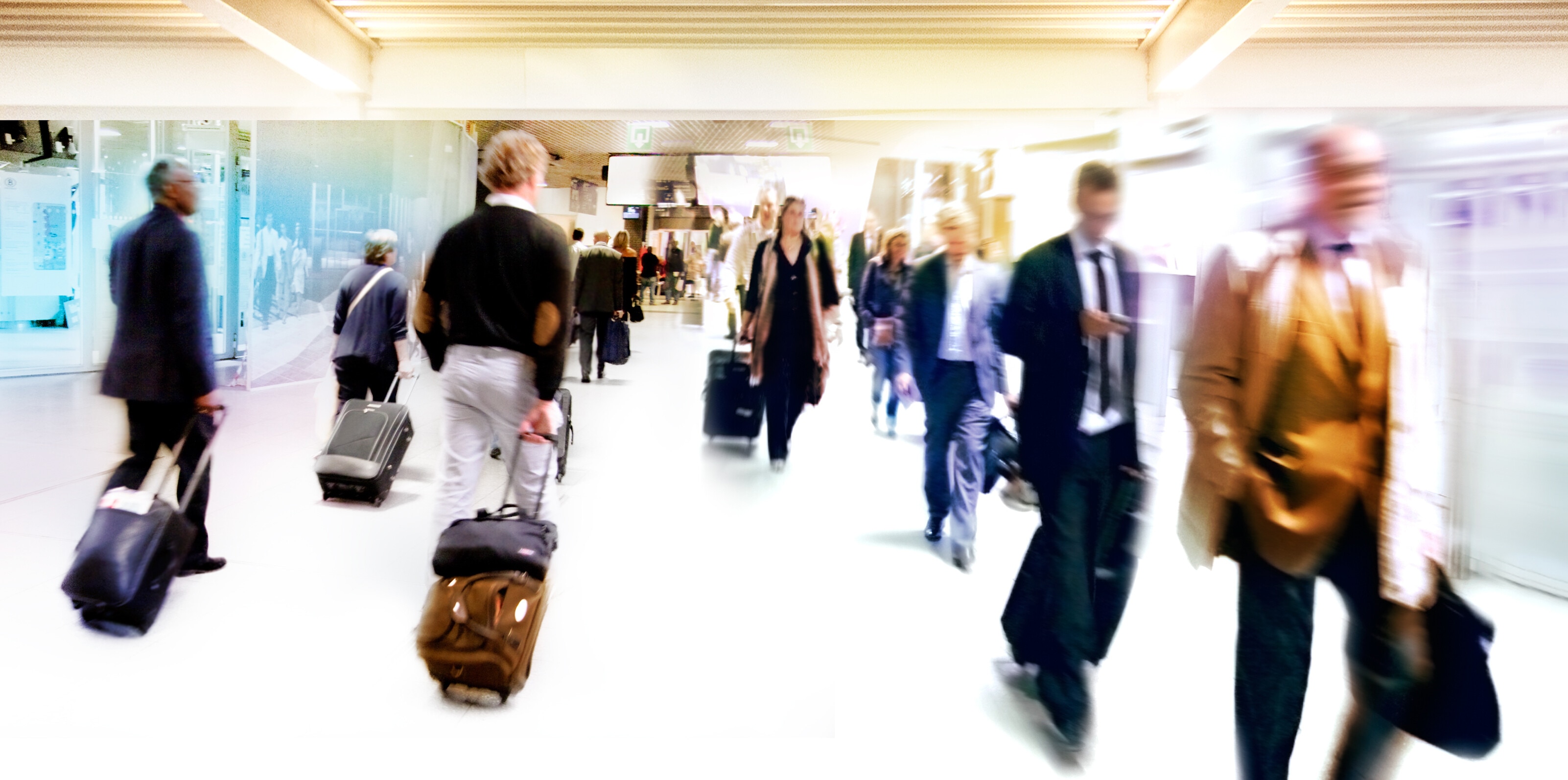
Tourism and travel should be treated like a strategic sector. Image: Shutterstock
- This year's Middle East conflict has exposed the fragility of global tourism’s reliance on concentrated aviation hubs and corridors.
- Displaced travel demand can transfer pressure to other destinations rather than create genuine resilience.
- Building a more resilient tourism ecosystem will require greater connectivity, stronger governance and better alignment with local capacity.
When conflict escalated across the Middle East in late February 2026, one of the first global industries to register the shock was travel. Within days, more than 23,000 flights had been cancelled, airports in Dubai, Doha and Abu Dhabi were operating below normal capacity, and travellers from Bali to Bangkok discovered that their journeys depended on a corridor many had barely noticed.
The disruption exposed more than an aviation crisis. It showed how global mobility depends on a concentrated set of hubs and corridors – and how deeply those networks are embedded in an industry that generated an estimated $11.6 trillion in global GDP and supported 357 million jobs in 2025, according to the World Travel & Tourism Council (WTTC). Tourism also supports activity across transport, retail, finance, culture, food systems, infrastructure and local services. Yet it is still too often treated as a standalone sector rather than as an ecosystem with infrastructure-like consequences.
The events of 2026 demonstrated how quickly a geopolitical shock can move from aviation to destinations, fuel markets and traveller confidence – and ultimately to the incomes of hotels, retailers, event organizers, local guides and small businesses far from the conflict zone.
Tourism as an early-warning system
The relationship between conflict and tourism is clear: Active war empties hotels and grounds aircraft. After October 2023, tourist arrivals to Israel fell from around 300,000 in September to roughly 38,000 by November, according to Israel’s Central Bureau of Statistics.
But equally revealing disruptions can occur without violence reaching tourists or transport infrastructure. In 2025, Canadian visits to the United States fell by roughly 25%, costing the US economy more than $8 billion in visitor spending, according to the US Travel Association. The decline reflected diplomatic tensions and political rhetoric rather than a broad change in global travel: International travel continued to expand, with an additional 80 million people travelling abroad worldwide. Tourism Economics estimated that, relative to the growth the United States might otherwise have expected, the decline represented an opportunity cost of approximately $25 billion.
These episodes illustrate the conditions to which tourism is sensitive. Physical danger can suppress travel immediately, but so can diplomatic tensions, visa restrictions and changes in how a destination is perceived. Tourism therefore often registers shifts in confidence before they appear in other economic indicators.
The Gulf: a destination that also moves the world
The Gulf’s role in global mobility makes such tourism-related vulnerability especially significant. UN Tourism recorded 95 million international arrivals to the Middle East in 2024, 32% above pre-pandemic levels. Dubai welcomed 19.5 million international overnight visitors in 2025, while Doha, Abu Dhabi and Riyadh have become major transfer points linking Europe with Asia, Africa and the Americas. Hamad International Airport, for example, reported that 74% of its passengers were in transit. Dubai processed 101 million passengers in 2024, and Saudi Arabia’s airports handled 128 million.
These hubs are not simply large regional airports. They are switching stations in the architecture of long-haul travel. Their location, airline networks and operating models make many city pairs viable. Investment is deepening that concentration: Dubai’s Al Maktoum International Airport is being developed for an eventual 260 million passengers a year, while Riyadh’s King Salman International Airport is designed to handle 120 million passengers by 2030.
When Gulf hubs contracted, rerouting was not a simple fix. Aviation networks are constrained by bilateral air-service agreements, airport slots, aircraft range, overflight permissions and crew economics. Alternative capacity was partial, slow to materialize and often more expensive. Longer routes also raised fuel and insurance costs, while air-cargo capacity fell as Middle Eastern carriers were affected.
The result was stress transfer. Demand shifted to other routes and destinations, some of which were already managing congestion, housing pressure and community concerns. A change in route can look like resilience in a headline, but moving pressure from one node to another is not the same as making the system more resilient.
What resilience actually requires
The crisis points to three forms of resilience.
First is connectivity resilience: the ability to move people and goods when primary hubs or corridors are disrupted. This requires diverse routing geographies, direct services, alternative hubs and multimodal options. Rail investment in Europe illustrates how complementary transport can provide redundancy as well as sustainability benefits.
Second is governance resilience: the ability of institutions to respond at the speed required by operators and travellers. Airlines, airports, tourism ministries, immigration authorities, insurers, payment providers, online platforms, hotels and local governments need shared information and tested mechanisms for reallocating capacity, communicating with travellers and supporting affected businesses.
Third is destination resilience: the capacity to absorb volatility without undermining the conditions that make a place attractive. That means diversifying source markets and seasons, managing visitor flows, investing in infrastructure that benefits residents and visitors, and strengthening small-business participation in tourism value chains. It also means protecting confidence, since perceptions of stability, accessibility and welcome can change before physical conditions do.
A strategic sector overdue for strategic treatment
Other sectors were reclassified after disruption made their dependencies unmistakable. Energy gained strategic reserves after the oil shocks of the 1970s. Semiconductors became central to industrial policy after supply-chain crises. Telecommunications and AI infrastructure are increasingly treated as critical systems.
The Middle East disruption revealed a comparable dependency in tourism. The industry may appear discretionary, but the systems supporting it connect economies, sustain livelihoods and move people and goods across borders. Travel and tourism should therefore be understood not only as a beneficiary of peace and prosperity, but as an enabler of economic resilience, international connectivity and inclusive growth at all times.
The practical lesson is not to reduce mobility or tourism growth. It is to build the redundancy, coordination and local capacity that allow both to endure shocks. After 2026, treating global tourism infrastructure as a strategic system is no longer a distant ambition. It is overdue.
Don't miss any update on this topic
Create a free account and access your personalized content collection with our latest publications and analyses.
License and Republishing
World Economic Forum articles may be republished in accordance with the Creative Commons Attribution-NonCommercial-NoDerivatives 4.0 International Public License, and in accordance with our Terms of Use.
The views expressed in this article are those of the author alone and not the World Economic Forum.
Stay up to date:
Middle East and North Africa
Related topics:


Forum Stories newsletter
Bringing you weekly curated insights and analysis on the global issues that matter.
More on Economic GrowthSee all

Jan-Willem Scheijgrond and Hervé Balzano
September 28, 2026